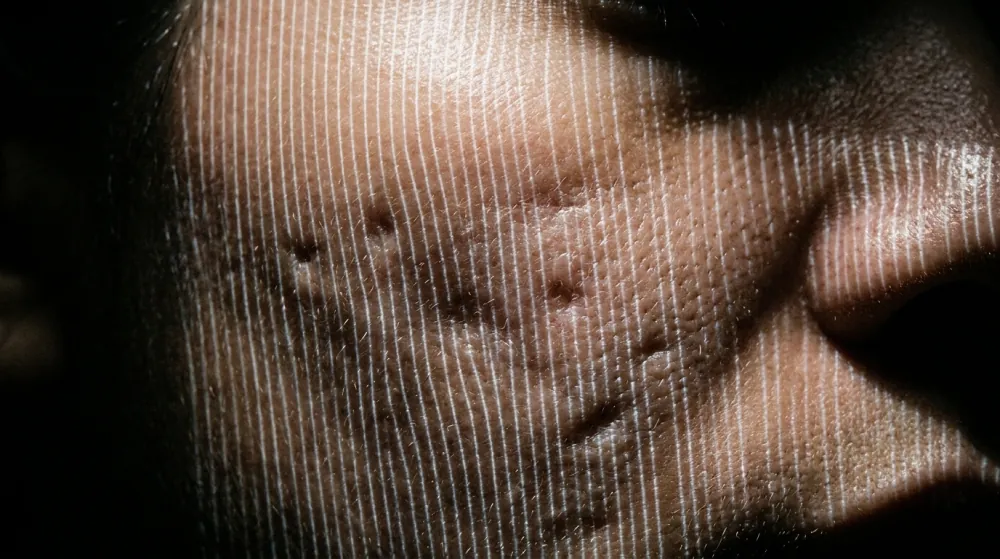
Pimple Scars: Mark or Scar, and What Each Responds To
Most "scars" after pimples are flat red or brown marks that fade. Depressions are tissue loss, and the reviewed evidence for treating them is thinner than the marketing.
Skin concerns
Blackheads, whiteheads, red pimples and deep cysts are all acne, but they form differently and respond to different things. These articles help you work out which kind of breakout you have, what is triggering it, and what actually clears it, from pimple patches and hot compresses to telling purging from a breakout. Deep, painful or scarring breakouts are a reason to see a clinician early.

Most "scars" after pimples are flat red or brown marks that fade. Depressions are tissue loss, and the reviewed evidence for treating them is thinner than the marketing.

Hormones act on every pimple, and a chin or jawline pattern does not show a hormone problem. Cycle timing is stronger evidence, and a few signs justify a blood test.

A pimple cyst can be a deep acne nodule, an epidermoid cyst or a boil. Each has a different course, squeezing makes all three worse, and deep acne scars unless treated early.

Hydrocolloid absorbs fluid from an open surface. On a closed bump no source shows it drawing anything out, and the evidence for acne is a few small studies.

Blackheads are plugged follicles, not dirt, and sources disagree about what makes them dark. Retinoids have the strongest backing, salicylic acid has less controlled data than its shelf space suggests, and extraction does not stop the process.

Heat is standard advice for deep pimples and there is almost no acne evidence for it. Here is what heat plausibly does, what has been measured, and how a warm compress turns into a burn.
Showing 1–6 of 11 articles