Skinic
A pimple cyst is, most of the time, not a cyst. A deep, painful acne lump is called a nodule or a pseudocyst, and it has no capsule. A true cyst, an epidermoid cyst, is a different structure with a wall. A boil is a third thing again, a deep bacterial infection of a hair follicle. All three get called a cystic pimple, and they have different courses.
The claim this article tests is that ice shrinks a cystic pimple overnight. The American Academy of Dermatology says ice reduces the pain and inflammation of nodules and cysts, and no source opened shows it shrinking one overnight. This article covers the three things, why popping goes wrong, why spot products rarely reach, the scarring window and when to be seen. It describes and refers. It cannot tell you which one you have, and treatment belongs with your own clinician.
Three Things Called a Pimple Cyst
| Nodular acne (pseudocyst) | Epidermoid cyst | Boil (furuncle) | |
|---|---|---|---|
| What it is | Deep inflamed acne lump with no capsule | A benign sac of keratin with a wall, from a hair follicle | A deep bacterial infection of a hair follicle |
| Feel | Firm, tender or fluctuant | Firm, mobile over deeper layers, 1 to 3 cm | Tender, hot, red lump, sometimes with a pustule |
| Clue | Other acne around: comedones, papules, pustules | A central punctum; cheesy debris can be expressed | Centred on a hair; may have several heads (carbuncle) |
| Course | Slow; typically resolves with scarring | Slow-growing; can inflame if it ruptures | Usually runs its course in about 10 days |
The table is a guide to the features sources describe. It is not a diagnostic tool, and lumps that fit no column belong with a clinician.
Nodule, Epidermoid Cyst or Boil
Nodular Acne
DermNet describes nodulocystic acne as a severe form of acne of the face and upper trunk, with solitary or multiple inflammatory nodules and pseudocysts that are firm, fluctuant or tender, and that typically resolve with scarring. It is usually a disorder of adolescence and early adult life, most common in males. What causes cystic pimples is multifactorial: sebaceous gland activity, abnormal follicle keratinisation, micro-organisms and inflammation. Specific risk factors include genetics, anabolic steroids, some drugs, whey protein supplements and haemodialysis.
Epidermoid Cyst
An epidermoid cyst is a benign cyst from the upper part of a hair follicle, with a thin wall and a filling of keratin and lipid-rich debris. DermNet says it is firm, flesh-coloured or yellowish, mobile over deeper layers, 1 to 3 cm, and often has a central punctum. "Sebaceous cyst" is a misnomer, because these cysts do not involve sebaceous glands or contain sebum. DermNet separates the acne pseudocyst, which lacks a capsule and comes with other acne signs, from a true epidermoid cyst.
A rupture, from trauma or infection, causes swelling, redness and tenderness. Most small uncomplicated cysts need no treatment, and the most effective treatment DermNet describes is complete surgical excision with an intact capsule, since leaving part of the wall behind risks recurrence.
Boil
A boil is a deep form of bacterial folliculitis, usually Staphylococcus aureus, centred on a hair follicle. DermNet says it presents as a tender red lump or pustule, a carbuncle if there are several heads, and large boils form abscesses. Cellulitis, infection of the surrounding tissue, may cause fever and illness. Most people with boils are otherwise healthy, and an estimated 10 to 20% of the population carry Staphylococcus aureus. A boil usually runs its course in about 10 days. Our article on folliculitis covers the shallower version.
Why Popping Goes Wrong
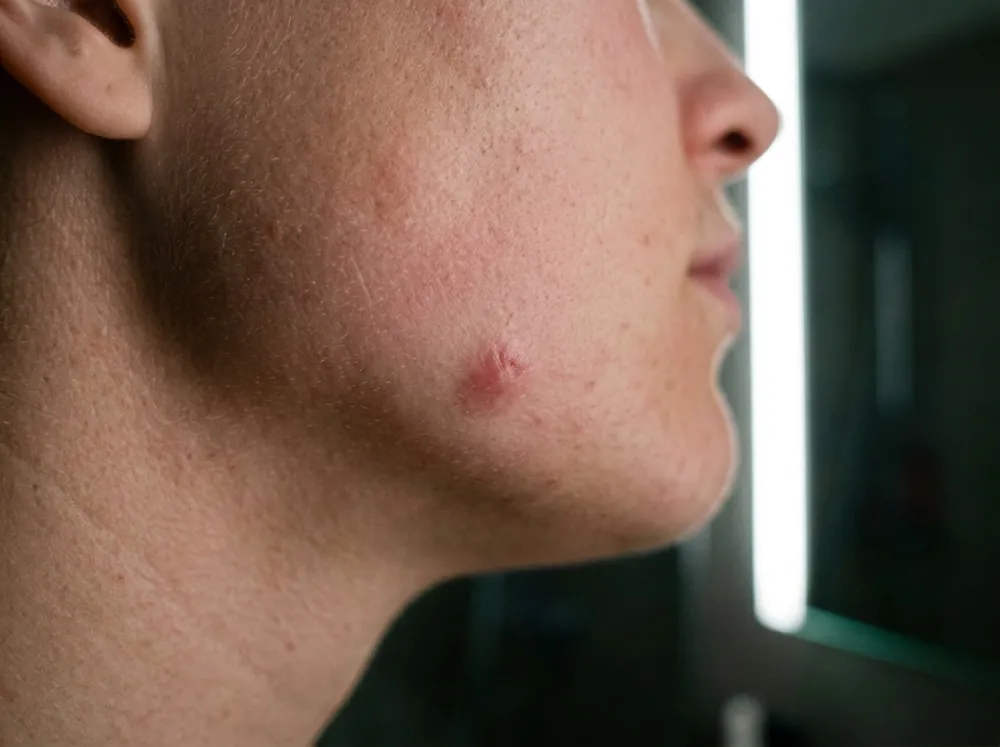
Popping a cystic pimple is a common impulse, and the Academy's pimple-popping page, linked above, lists four risks of squeezing at home: permanent acne scars, more noticeable acne, more painful acne and infection. It explains that when someone pops a pimple, some of the contents often go deeper into the skin, which raises inflammation, and that bacteria on the hands add an infection risk.
The structures explain why. A pseudocyst has no capsule, so pressure spreads pus and inflamed tissue sideways. An epidermoid cyst has a wall that has to be removed entire, so squeezing leaves the wall behind and can rupture it into the skin. A boil is an infection already in the deep follicle. DermNet says incision and drainage may be indicated for an infected epidermoid cyst, and the Academy says dermatologists can extract blackheads and whiteheads with sterile instruments, inject a large nodule with a corticosteroid that flattens most within 48 to 72 hours, or open and drain a large lesion. Our guide to hot compresses for pimples and the one on pimple patches apply the same test to other home measures.
Why Spot Treatments Rarely Reach
How to get rid of a cystic pimple is the question behind most searches, and the sources answer it with clinic treatments, not spot products. DermNet says topical treatment is usually ineffective for nodulocystic acne, which is a consequence of depth. The lump sits below the surface that a cream or patch touches. The 2024 American Academy of Dermatology acne guidelines (abstract) make strong recommendations for benzoyl peroxide, topical retinoids and oral doxycycline for acne in general, strongly recommend oral isotretinoin for acne that is severe, causes scarring or has failed standard therapy, and list adding intralesional corticosteroid injections for larger lesions as a good practice statement.
DermNet's treatment line for nodulocystic acne is oral isotretinoin commenced early to prevent scarring, for at least five months, with intralesional steroids after drainage for individual persistent or large nodules. Our guide to glycolic acid, salicylic acid and benzoyl peroxide covers what the topical actives do, and none of them is a nodule treatment.
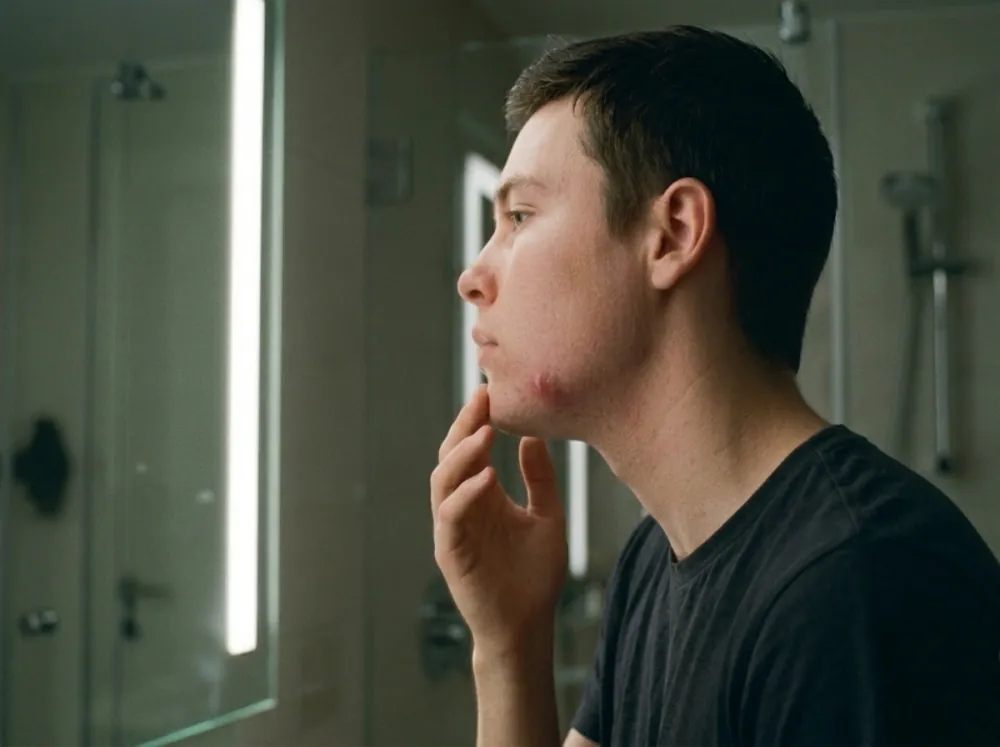
The Figure Audited: "Ice Shrinks a Cystic Pimple Overnight"
Verdict: unsupported for overnight shrinking. Ice relieves pain according to the American Academy of Dermatology, and no source opened tested ice on a pimple. Findings:
- The Academy's wording is pain and inflammation. Its pimple-popping page says some acne can be painful, especially nodules and cysts, and that ice reduces the inflammation. It does not say ice shrinks a lump or works overnight.
- The cold evidence is about clinic freezing. A narrative review of acne cryotherapy describes liquid nitrogen at about −196 °C, controlled cryogen sprays and repeated sessions, with most reports old. It says freezing reaches an anti-inflammatory effect 24 to 48 hours afterwards, that cystic lesions disappear after several sessions in some older series, and that deeper lesions respond least.
- Ice is a weaker cold. The same review notes that an ice pack needs about 20 minutes to bring the skin surface to 10 °C, and that the weak anaesthetic effect of ice compression led clinicians to other methods.
- Freezing has costs. The review reports that melanocytes are vulnerable to freezing at about −4 to −7 °C, that lighter skin patches are a common side effect, and that clinic cryotherapy can cause significant cold injury if misused. Plain ice is much less cold, and no source opened measured these effects for it.
Limits: the cryotherapy review is narrative and mostly historical, and it studied clinician-delivered methods. As reasoning, not a finding, a lump in the deeper skin is an unlikely target for a cold surface applied for minutes.
The Scarring Window
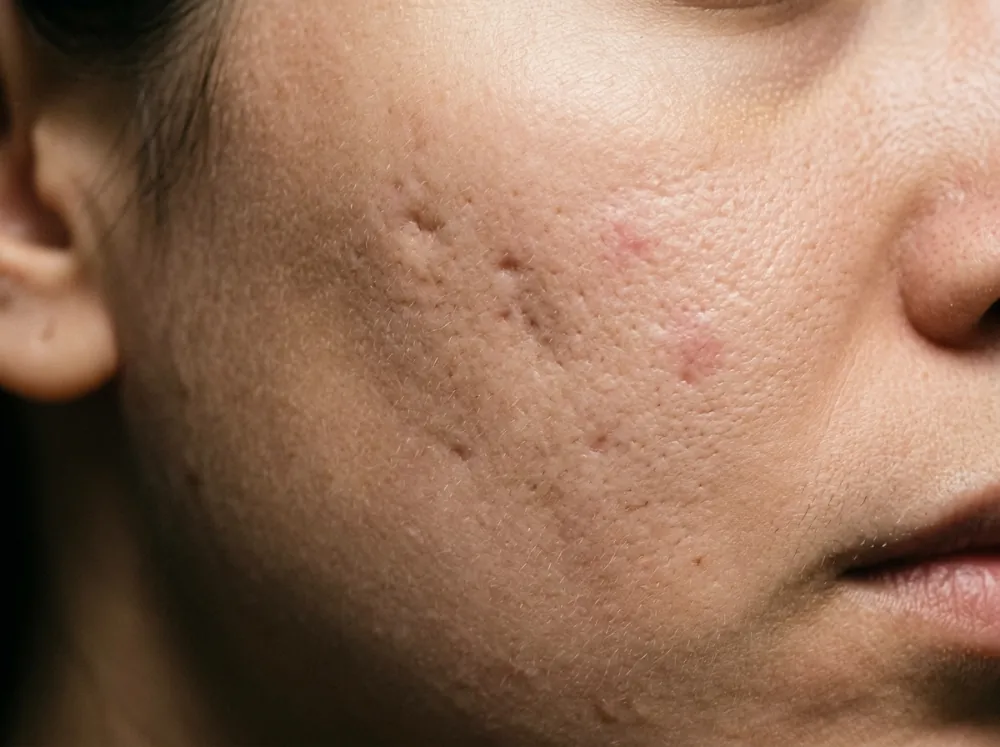
DermNet says nodulocystic acne typically resolves with scarring, and in skin of colour postinflammatory pigmentation and keloid scarring are common complications. Our article on acne in deeper skin tones covers that side.
The practical question is timing. In a US study of 1,972 people consulting a dermatologist for active acne (abstract), 43% had acne scars. The risk factors correlated with scarring were acne severity, the time between acne onset and first effective treatment, relapsing acne and male gender. Of the people with scars, 69% had only mild or moderate acne at the visit. The authors conclude that treatment delay is a key modifiable risk factor and that no treatment completely resolves scars, so prevention and early treatment remain the main strategy.
When to Get Seen
The sources point to several features that move a lump out of "wait and see":
- Deep, painful lumps that keep coming back, or that leave marks. DermNet says isotretinoin should be started early to prevent scarring.
- No improvement in four to six weeks of acne treatment. The Academy's page suggests a dermatologist at that point.
- Fever, spreading redness or feeling unwell around a lump. DermNet says cellulitis may cause fever and illness with a boil.
- A firm, mobile lump with a central punctum that has become red, hot or tender. DermNet says rupture or infection of an epidermoid cyst causes inflammation, and infected cysts may need antibiotics or drainage.
- Repeated boils. DermNet links them with the carrier state and with immune deficiency, anaemia, diabetes, smoking or iron deficiency.
- A lump that does not fit any column, or that is new in an adult with no acne history.
Conclusion
A pimple cyst is a nodule, an epidermoid cyst or a boil, and the three differ in structure, course and what a clinician can do. Squeezing worsens all three, spot products rarely reach a deep lump, ice has pain relief behind it and no overnight-shrinking evidence, and the scarring window is set by how long effective treatment is delayed.
If you want to see how a deep lump behaves, photographing it in the same place and light each day, in an album or in an app like Skinic, gives a clinician a record of its course. For deep, painful, recurring or scarring lumps, ask your own clinician.
Frequently asked questions
5 questions · tap one to open the answer
Is a cystic pimple a real cyst?
What causes cystic pimples?
Should you pop a cystic pimple?
Does ice help a cystic pimple?
When should a cystic pimple be seen by a dermatologist?
Medically reviewed by
Dr. M.M Hanaei
Aesthetic Physician, Dermatology Fellowship
- MD — Shahid Beheshti University of Medical Sciences (SBMU)
- MCC Licensure (Medical Council of Canada)
- Dermatology Fellowship, Switzerland
- Certified in advanced aesthetic procedures
Last reviewed 15 October 2026