Skinic
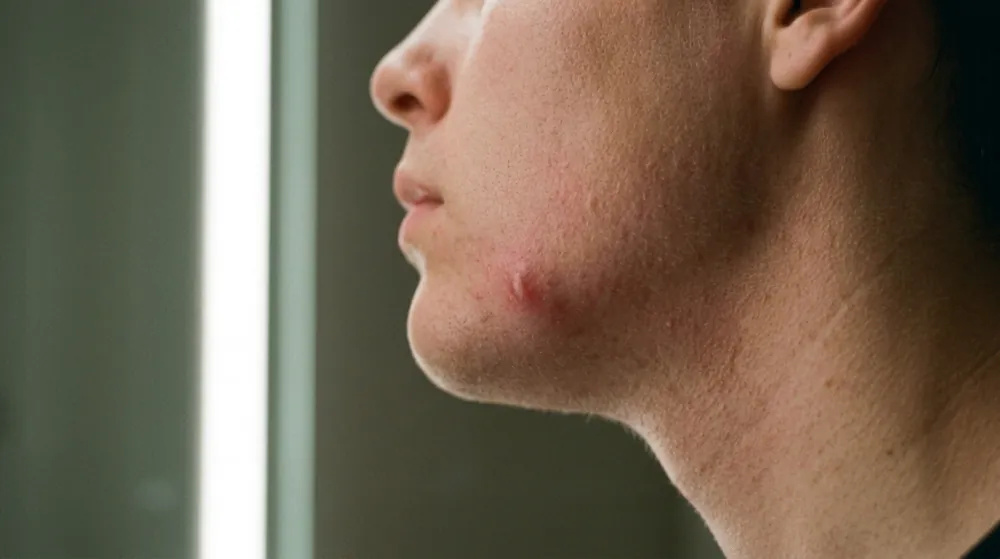
Most of what people call pimple scars are marks: flat red or brown patches that follow inflammation and fade with time. A true scar is a change in the skin's structure, usually a depression from lost collagen, and none of the sources opened shows a topical product refilling it. How to get rid of pimple scars therefore starts with deciding which of the two is there.
The claim this article tests is that vitamin C and retinol fade acne scars. It covers the difference between a mark and a scar, red and brown marks, the shapes of atrophic and raised scars, what topicals can reach, and what the procedure trials report. It evaluates claims. It does not instruct any procedure, and treatment choices belong to your own clinician.
Mark or Scar
DermNet defines scarring as the fibrous process in which new collagen is laid down to heal a full-thickness injury, such as acne inflammation. Most acne scars are atrophic: the inflammation destroys collagen and leaves a depression. A smaller share are hypertrophic or keloid, from too much collagen. Marks are different. DermNet lists post-inflammatory colour changes, erythema, hyperpigmentation and hypopigmentation, as common effects of acne lesions that may appear before or together with scars.
The distinction matters because the two behave differently. DermNet says the colour changes often improve with time, though that may take months or longer, and that acne scars are usually permanent, although they may improve spontaneously or with treatment. Scars are more likely after more inflamed acne, and DermNet says picking or squeezing raises the chance, and that research suggests smoking increases the risk of more severe scarring. A review of the topic states that the prevalence of acne scarring is not well studied and that severity usually tracks the severity of the acne. Our article on a pimple cyst covers why squeezing deep lesions is discouraged.
Red Marks, Brown Marks
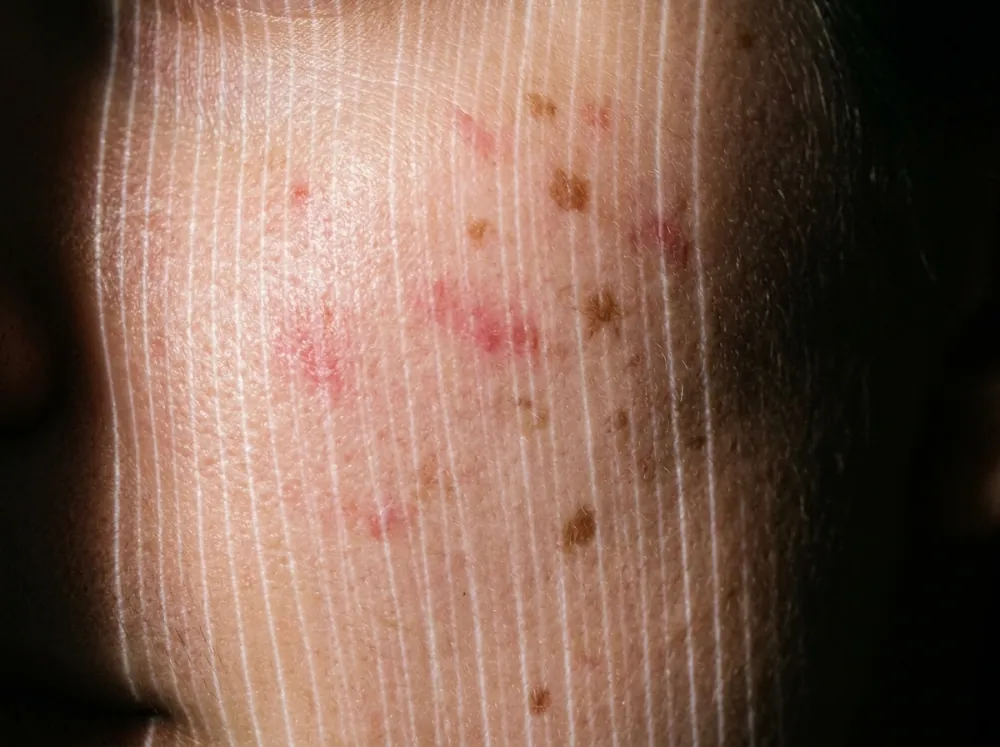
DermNet separates the two by mechanism. Post-inflammatory erythema is more common in lighter skin and is thought to relate to microvascular changes and thinning of the epidermis during wound healing. Post-inflammatory hyperpigmentation is more common in darker skin and arises when melanin is deposited in skin cells that were recently inflamed. DermNet's page on post-inflammatory hyperpigmentation says the colour is more intense and persists longer in darker skin, that sunlight can darken the patches, and that a grey-purple-brown hue suggests pigment deeper in the dermis.
Neither is a depression, and both are flat. The ordinary expectation is gradual fading, and the sources do not give a single timeline. The pigment review below describes PIH in people with darker skin as chronic once established, with an average time to resolution of 68 days in the studies that reported it and, in a cited review, months to years or permanence. Our articles on how to remove dark spots on the face and on dark marks in brown and deep skin tones cover the pigment side in depth.
The Side-Light Test
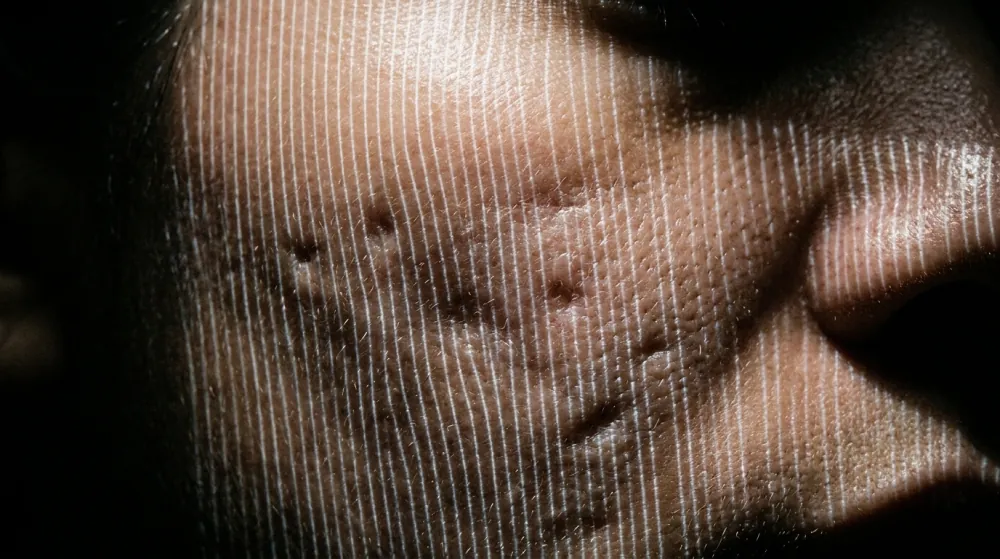
A side-light test is often suggested for separating a mark from a scar. No source opened validates one. What the sources support is the reasoning behind it, and that reasoning is labelled as such here. A mark is colour and a scar is shape. A depression casts a small shadow when light falls across it from the side, while a flat patch of colour has no shadow to cast. DermNet's description of rolling scars adds a second clue: their sloping edges can be smoothed out when the skin is stretched.
A 2018 study of 3D imaging (abstract) of atrophic acne scars states that standard 2D photography is significantly affected by lighting and shadows. That is why the same scar can look deeper or shallower from one photograph to the next, and why a result photographed in different light is a poor record of change. As reasoning, an impression from a mirror or a side-light check is a prompt to ask a clinician, who grades the scars, and not a diagnosis.
Ice Pick, Boxcar, Rolling, Raised
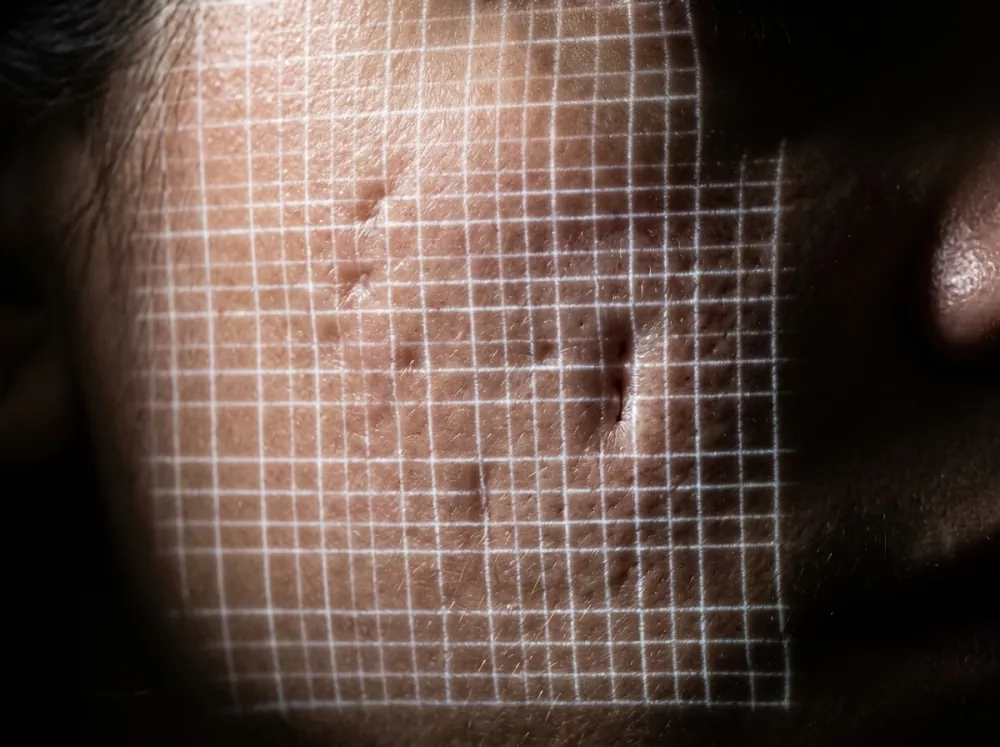
A review of acne scar classification says atrophic scars outnumber hypertrophic and keloid scars about three to one, and subclassifies them into three shapes.
| Shape | What it is | Share of atrophic scars |
|---|---|---|
| Ice pick | Narrow (about 2 mm), deep, V-shaped tract | 60% to 70% |
| Boxcar | Wider round or oval depression with sharp edges | 20% to 30% |
| Rolling | Wide, sloping, tethered, undulating | 15% to 25% |
The shares are the review's, and they sum to more than 100%, which reflects different studies and overlap. DermNet also describes perifollicular elastolysis, small pale atrophic scars around follicles that are common on the back and chest. Raised scars are less common. A hypertrophic scar is about the size of the lesion that caused it, a keloid is larger, and both occur more often along the jawline, chest and upper back, and tend to recur even after apparently successful treatment.
Our article on microneedling before and after reports a review that found rolling and boxcar scars improve most and ice pick scars are often recalcitrant. That fits the shapes: a shallow floor can be lifted from below, and a narrow deep tract is a different problem.
What Topicals Can Reach
Topicals reach the surface, and a depression is below it. That is the heart of the audit claim, and the evidence follows the split.
Marks
For marks, DermNet lists hydroquinone, azelaic acid, cysteamine, vitamin C, tretinoin, corticosteroids and glycolic acid peels, among others, for post-inflammatory hyperpigmentation, and says combinations are usually needed. It adds daily SPF 50+ broad-spectrum sunscreen and camouflage. A 2024 systematic review of PIH treatment in skin of colour pooled 48 studies of 1,356 people. Topical retinoids were the most studied, in 22% of participants, with partial improvement in 85% and no complete resolution. The authors conclude that there is a lack of robust efficacy across all treatment modalities, and that studies of vitamin C derivatives, azelaic acid and cosmeceuticals gave no results specific to skin of colour. The review had no funding.
Depressions
For depressions, the 2010 review says topical retinoids are useful in preventing acne scars and are used as home care alongside peels, and that silicone gel has a proven efficacy in preventing hypertrophic scars and keloids. None of the 24 trials in the Cochrane review below tested a topical.
Procedures (Reported)
This section reports what reviews found. It gives no settings, depths or session counts, and it does not recommend a procedure.
The Cochrane Review
The Cochrane review of interventions for acne scars included 24 trials with 789 adults and compared fractional and non-fractional lasers, fractional radiofrequency, chemical peeling, skin needling, injectable fillers and combinations. It found a lack of high-quality evidence, with poor methodology, underpowered studies and no standard way of assessing improvement. It judged moderate-quality evidence that injectable filler might be effective, but no study followed people beyond 48 weeks. It warned that two active treatments showing no difference could mean neither works without placebo or sham trials, and it did not support first-line use of any intervention. In one study, chemical peeling was not tolerable for 7 of 43 people (16%), and in another it was associated with more hyperpigmentation than needling (6 of 12 against 0 of 15, low-quality evidence).
The Network Meta-Analysis
A 2025 network meta-analysis of 68 randomised trials with 4,480 people ranked laser plus platelet-rich plasma first for one clinical scoring system, laser plus filler first for another, laser plus chemical peels first for satisfaction, and microneedling as the most tolerable for pain. It found no strong evidence that any treatment reduced the risk of erythema or post-inflammatory hyperpigmentation. The ranks are model-based positions, not sizes of benefit, and combinations came from small trials. The authors declare no competing interests.
Darker Skin and Risk
For people with darker skin the pigment review adds a caution: lasers were the only intervention giving complete resolution of PIH in a subgroup (26%), and cases of PIH exacerbation after treatment were reported. It advises that chemical peels should not be routinely recommended first-line in that group. DermNet lists the complications of scar treatment as post-inflammatory erythema or hyperpigmentation, infection and further scarring, and says active acne should be treated before scar management.
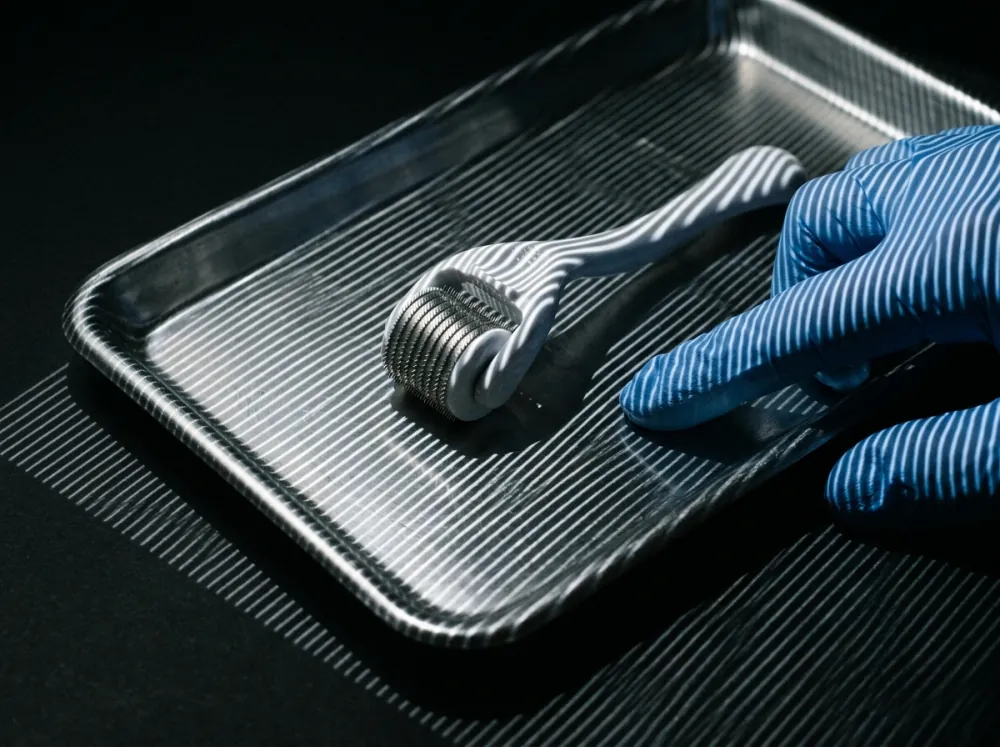
The Figure Audited: "Vitamin C and Retinol Fade Acne Scars"
Verdict: half true for marks, unsupported for scars. Separating pigment from tissue loss gives:
- For brown marks, retinoids have partial support and vitamin C has little. The skin-of-colour review found topical retinoids partly improved PIH in 85% of those treated, with no complete resolution, and found no skin-of-colour data for vitamin C derivatives. DermNet lists vitamin C and tretinoin among topical options and says combinations are usually needed. Cosmetic retinol is not tested in the sources opened.
- For red marks, nothing opened tests either. DermNet says post-inflammatory erythema relates to vessel changes and epidermal thinning and tends to improve with time. The only study found aimed at it used a radiofrequency device, not a topical.
- For depressions, no topical was tested. The 24 Cochrane trials, the network meta-analysis and the classification review describe procedures. Topical retinoids appear only as prevention or home care alongside them.
- The limit. An untested topical is not a disproved one, and a mark that fades under vitamin C or retinol may also have faded without them.
Conclusion
A pimple mark is colour and fades over months or longer; a scar is lost tissue and is usually permanent. Topicals can reach pigment, with partial evidence for retinoids and more thinly for vitamin C, and nothing opened shows one filling a depression. The procedures that do have trials rest on low-quality evidence, with one moderate-quality finding for fillers, and the reviews flag a higher risk of making pigment worse in darker skin.
If you want to see whether a mark is fading or a scar is changing, photographing it in the same light each month, in an app like Skinic or in an album, avoids the lighting trap that makes one photograph look better than the next. For scars, ask your own clinician which kind they are.
Frequently asked questions
5 questions · tap one to open the answer
Are pimple scars permanent?
How can a pimple mark be told apart from a pimple scar?
Do vitamin C and retinol fade pimple scars?
How long do red or brown pimple marks take to fade?
Which treatments are reported to help depressed acne scars?
Medically reviewed by
Dr. M.M Hanaei
Aesthetic Physician, Dermatology Fellowship
- MD — Shahid Beheshti University of Medical Sciences (SBMU)
- MCC Licensure (Medical Council of Canada)
- Dermatology Fellowship, Switzerland
- Certified in advanced aesthetic procedures
Last reviewed 17 October 2026