Skinic
Do pimple patches work? It depends on the pimple and the patch. A hydrocolloid patch, the plain kind most pimple patches are built on, is a wound dressing that absorbs fluid from a surface and holds a moist layer over it, and the published evidence that this helps acne amounts to a few small studies. For a closed bump with no opening, no source opened shows a patch drawing anything out.
The claim attached to patches most often is that they draw the pus out. As a spot treatment for a pimple, a patch has more to prove than its packaging suggests. This article follows what hydrocolloid does in wound care, what the acne studies measured, what "overnight" can mean, how medicated and microneedle patches differ, and what to look for on a label. It names no product. It evaluates claims, and it does not tell you how to treat a particular spot.
A Wound Dressing, Repurposed
How Hydrocolloid Works
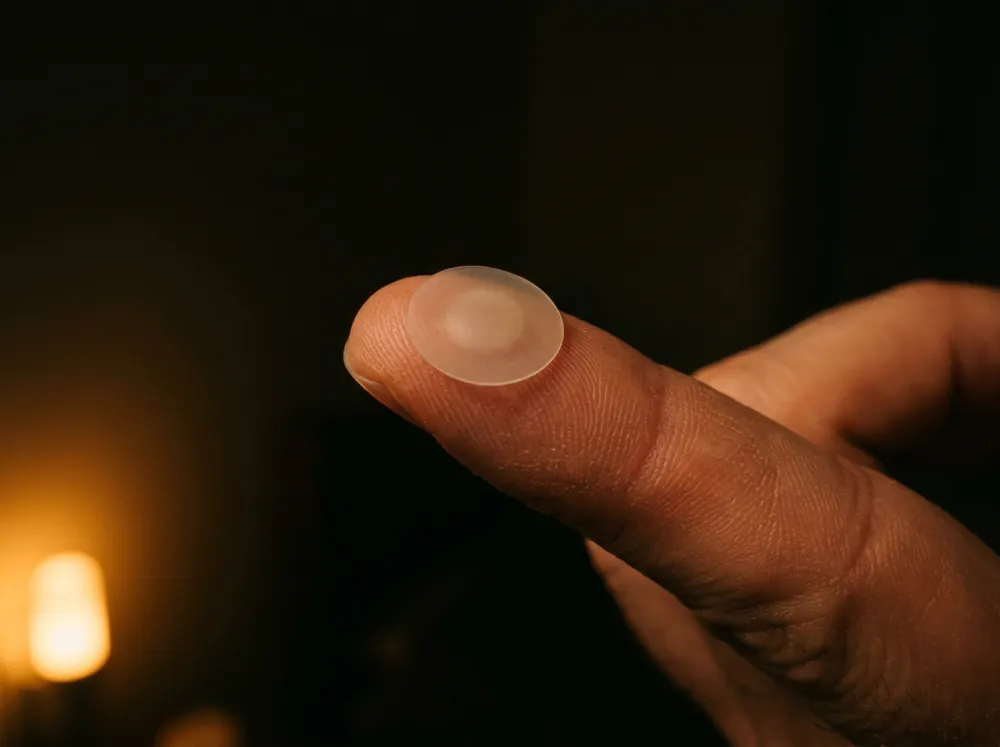
A narrative review of hydrocolloids in dermatology describes the dressing as having an inner layer that absorbs fluid from wounds and an outer layer that shields and protects the area. On contact with fluid it forms a gel-like protective layer and keeps a moist environment, which is why it is established in chronic wound care. The review says hydrocolloid patches have drawn interest for acne, and that for pressure ulcers and scar prevention the research mostly suggests similar efficacy to standard dressings.
What the Acne Studies Are
The same review states that, despite consumer demand, there is limited published research on the direct benefits of hydrocolloid in acne. It describes two reports. One is a pilot study of 20 patients with mild to moderate acne. The other is a conference abstract of a 14-day randomised study in people aged 12 to 35 with at least two inflammatory lesions, one of which could be extracted. It found improvement in texture, redness, size and elevation of the extracted pimple compared with gentle washing alone, and the review notes that the full peer-reviewed paper was not available.
The pilot study (abstract) gave 10 patients an acne dressing and 10 patients skin tape, applied every two days for up to a week. The dressing group's severity score fell from 1.8 to 0.43 and the tape group's from 1.08 to 0.8, a significantly greater reduction in the dressing group between days 3 and 7. The two groups started at different baseline scores, and the authors call for larger studies with longer follow-up.
Open Lesions vs Closed Bumps
A pimple is not one thing. DermNet lists open and closed comedones, papules, pustules (the white or yellow "squeezable" spots) and nodules, and says individual acne lesions usually last less than two weeks while deeper papules and nodules may persist for months.
That matters because a dressing that absorbs fluid needs fluid at the surface. A pustule with a head may weep or break. A closed comedone, which DermNet describes as an uninflamed skin-coloured papule, must be punctured to remove its contents, and a deep nodule has no opening at all. The hydrocolloid review reasons that the mechanism in acne "may be related" to absorbing exudate, based on wound healing, and says this needs further clinical studies.
Our guides to identifying bumps on the face and to closed comedones cover how to tell these lesions apart.
The Figure Audited: "Patches Draw the Pus Out"
No source opened shows it for a closed lesion. Findings:
- The mechanism is surface absorption. In wound care the dressing takes up exudate from an exposed surface. The review applies that reasoning to acne and says it needs trials.
- The controlled trial described in the review studied an extracted pimple. Its results are for a lesion that had already been opened, as the review summarises it, so it does not speak to a closed one.
- No measurement of fluid exists in what was opened. The pilot abstract reports severity scores, redness, oiliness and sebum levels. None of the sources measured pus or fluid leaving an intact lesion.
- Intact skin has no exit. As reasoning, not a finding: a lesion with no opening gives the dressing nothing to absorb, and DermNet's description of closed comedones fits that.
Verdict: plausible for a weeping or opened surface lesion, unsupported for a closed bump. A patch may still protect the area, which is a different claim.
What "Overnight" Can Mean
No study opened measured a pimple overnight. The pilot reported differences from day 3 to day 7, the conference trial ran 14 days, and the microneedle trial below tracked resolution in days. DermNet's two-week figure for a typical lesion is the natural course against which any result has to be set.
A patch worn overnight can cover and protect a spot for hours, which is a real thing a patch does. A shortened lesion is a claim with days, not hours, behind it in the sources opened. Our article on warm compresses for pimples applies the same test to another overnight-style claim.
Medicated and Microneedle Patches
Patches With an Active
A patch that adds an active is a different product from a plain one. The FDA's regulation on acne active ingredients lists salicylic acid at 0.5 to 2 percent, benzoyl peroxide at 2.5 to 10 percent and sulfur at 3 to 10 percent, among others. The hydrocolloid review adds that no studies suggest adding other compounds to hydrocolloid would be beneficial. Whether a given patch carries an active at those strengths is on its label. Our article on glycolic acid, salicylic acid and benzoyl peroxide covers how the actives differ.
Microneedle Patches
A randomised, double-blind trial of 35 people tested dissolving microneedle patches on four inflammatory lesions each: one with a corticosteroid at two needle lengths, one with microneedles and no drug, and an untreated control. With a single application, the median time to resolution was 4.6 and 5.25 days for the two steroid patches, 6.7 days for the drug-free microneedles and 8.1 days for the control. No adverse effects were reported.
That trial tested a research patch loaded with a steroid, and one author reports a patent licensed to a microneedle company. The lesions were mostly papules and pustules, and the authors note that the first week was followed up less often than planned. It says nothing about the contents or effect of any retail patch with needles.
The Picking Benefit
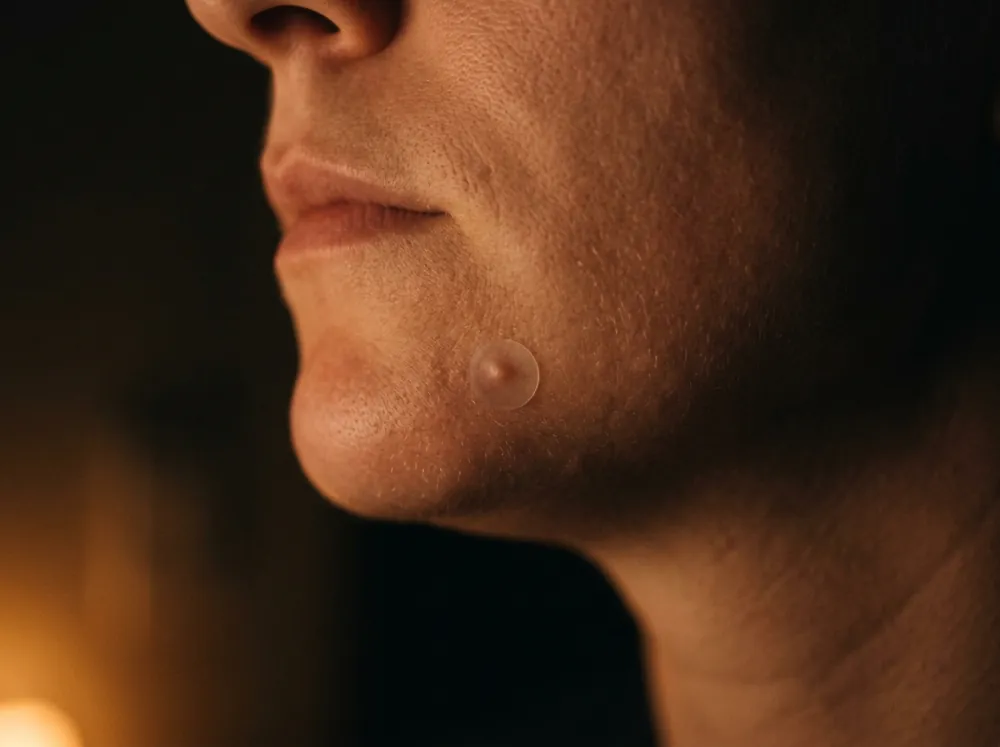
The American Academy of Dermatology advises against squeezing. A news release on deep painful pimples says to keep your hands off the face and that picking at or squeezing a nodule can make it more noticeable and raise the risk of infection, discoloration and scarring. In the same release, the Academy lists warm compresses, a topical acne ingredient and "a hydrocolloid acne patch" to protect the skin and improve healing.
This is the strongest practical case for a patch, and it rests on reasoning rather than a trial: a covered spot is harder to touch. The pilot abstract lists preventing hand touching among its aims but reports no result for it. No source opened measured whether patches reduce picking. If picking feels hard to control, a clinician can help with that directly.
What to Look For in a Patch
These are criteria for judging a claim, not a product recommendation.
- What type is it? Plain hydrocolloid, a patch with an active such as salicylic acid, or a patch with microneedles. The evidence above belongs to different products and does not transfer between them.
- What state is the spot in? An open or weeping surface lesion is where absorption has a rationale. A closed or deep bump has none in the sources opened.
- What does the label claim, and over what time? "Draws out pus" has no support for closed lesions. "Overnight" has no study behind it. A timeframe in days is the unit the trials used.
- Is an active listed, and at what strength? The FDA's listing for salicylic acid is 0.5 to 2 percent.
- How does the skin react? The review reports case reports of contact dermatitis from the adhesive in hydrocolloid dressings, and says people with sensitive or thin skin should be careful, since repeated removal may disrupt the stratum corneum.
- Does the spot last? Lesions usually pass within two weeks. A deep, painful or persistent one, or several, is a reason to ask a clinician, as the Academy advises.

Conclusion
Pimple patches in their plain hydrocolloid form absorb fluid from a surface and cover a spot. The published acne evidence is a 20-person pilot and a conference abstract, both about lesions that could be opened, and no source shows a patch drawing pus from a closed bump. Medicated patches carry an active whose strengths the FDA lists, and the one microneedle trial opened tested a steroid research patch against untreated spots.
If you are weighing a patch, photographing the spot in the same place and light each day, in an album or in an app like Skinic, shows whether it is changing faster than the usual two weeks. For painful, deep or repeated lesions, ask your own clinician.
Frequently asked questions
5 questions · tap one to open the answer
Do pimple patches work?
Do pimple patches draw out pus?
Do pimple patches work overnight?
Can a pimple patch treat a deep pimple or cyst?
Are medicated or microneedle pimple patches better than plain ones?
Medically reviewed by
Dr. M.M Hanaei
Aesthetic Physician, Dermatology Fellowship
- MD — Shahid Beheshti University of Medical Sciences (SBMU)
- MCC Licensure (Medical Council of Canada)
- Dermatology Fellowship, Switzerland
- Certified in advanced aesthetic procedures
Last reviewed 13 October 2026