Skinic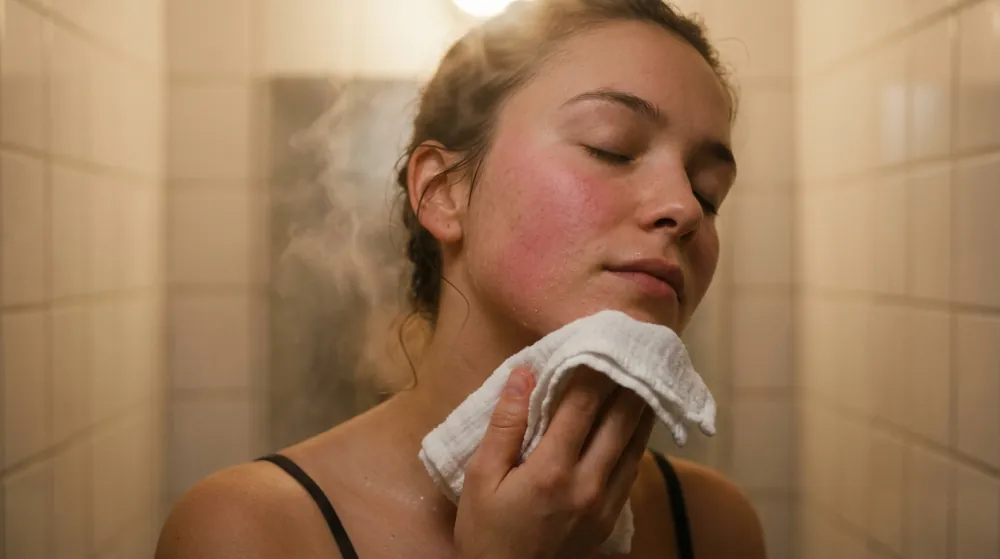
Heat is the standard advice for a deep, painful pimple, and almost nobody has tested it on one. A Cochrane review that went looking for trials of hot or warm compresses on an infected oil-gland lump of the eyelid, a related but different problem, found none.
That is the context for the hot compress for pimple advice you will see everywhere. This article separates what heat plausibly does to skin from what it cannot do to a lump under it, looks at the closest evidence, which comes from the eyelid, and covers how a warm compress turns into a burn. It audits the claim that a warm compress brings a pimple to a head. It does not tell you how to apply one.
Why Everyone Recommends Heat
The hot compress for pimple advice rests on a general habit: heat is recommended for lumps that hurt, and our reading is that two things drive it: it feels good, and the idea is plausible. Warmth increases blood flow, and a deep spot is tender, swollen and stuck. The advice appears for the eyelid too: the Cochrane review lists hot or warm compresses, lid scrubs, antibiotics and steroids as the non-surgical treatments of interest for an acute internal hordeolum, a painful infection of an eyelid oil gland.
Plausible is not the same as tested. The rest of this article is about the gap between the two.
What Heat Does to a Closed Lesion
Blood Flow
Warming skin does increase its blood flow. In research protocols that heat a patch of skin locally, a study of cutaneous vasodilation reports that heating to 39°C raised blood vessel conductance to about 48% of its maximum, and heating to 42°C to about 88% (abstract). More heat meant more flow.
Two limits apply. The study measured healthy skin in a physiology experiment, not a pimple. Our reasoning, labelled as such: an inflamed lesion is already red and tender because blood flow and immune cells have gathered there, so what extra flow adds is unmeasured.
How Warm a Compress Actually Gets
Heat at the skin surface does not stay put. A study of eyelid warming therapies measured the temperature on the inner eyelid over a 10-minute application and found peaks of 37.4°C for a warming mask and 38.1°C for a heated bag (abstract), with the devices cooling from the moment they were applied. That is the eyelid, with purpose-made devices, and a damp cloth on a jaw will behave differently. It does show that heat delivery to the skin is hard to hold steady, which matters for both the benefit and the risk.
Under-the-Skin Pimples vs Whiteheads
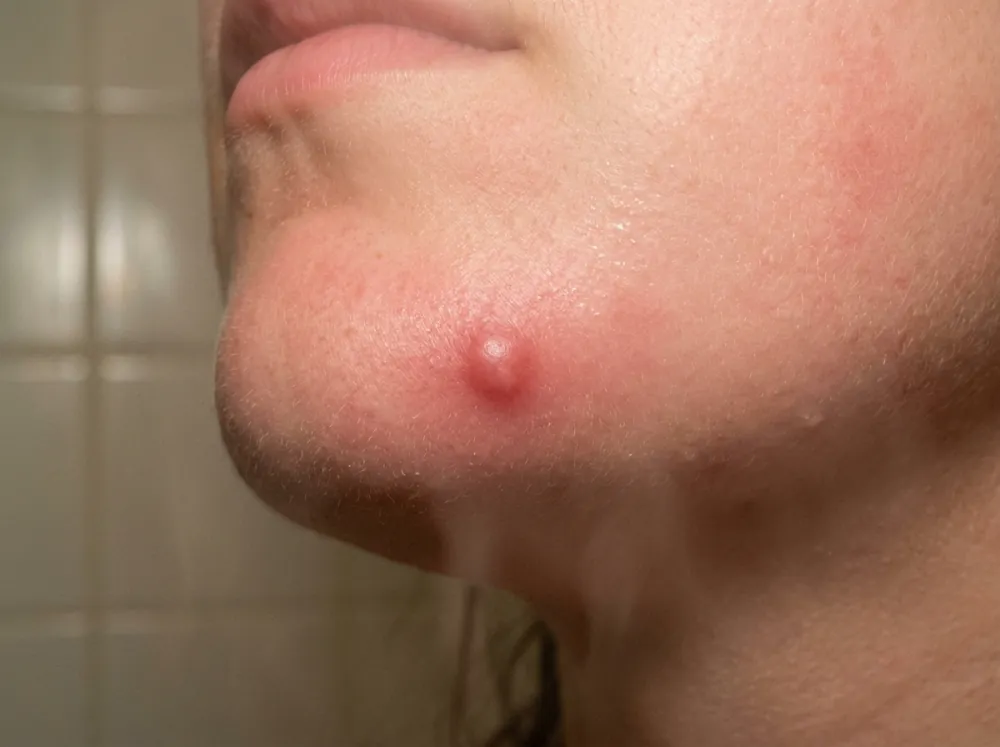
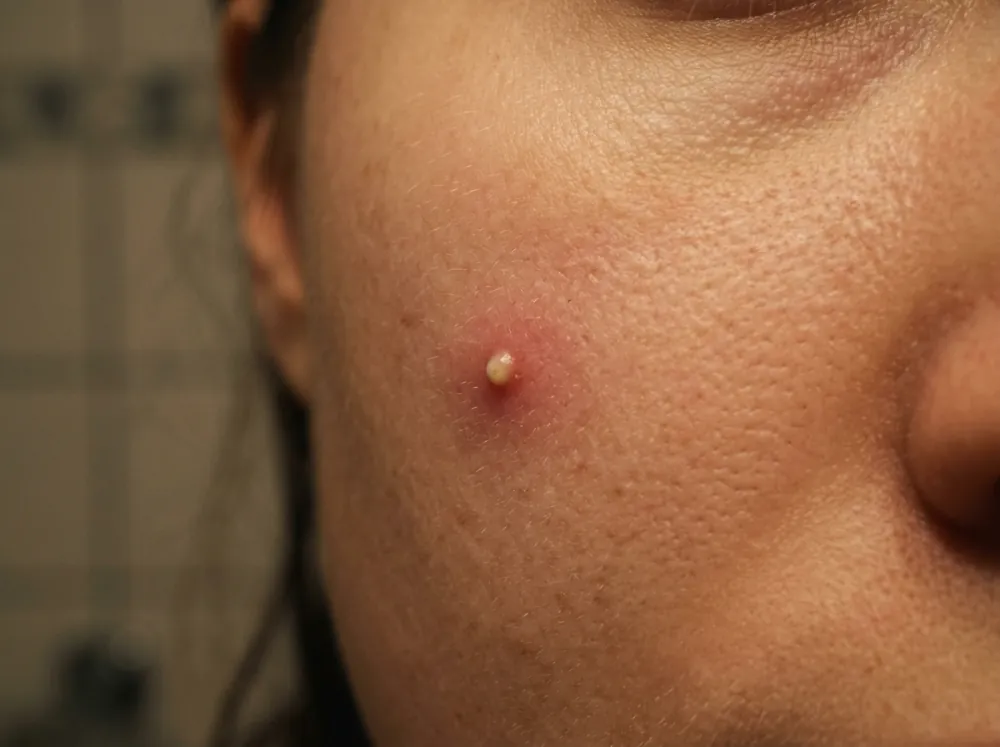
The word pimple covers different lesions, and heat is argued for only some of them. DermNet's account of acne divides lesions into superficial ones, meaning open and closed comedones, papules and pustules, and deeper ones, meaning nodules and pseudocysts.
A pustule is the white or yellow, squeezable spot. A nodule is a large, painful red lump, and a pseudocyst is a cyst-like swelling that is fluctuant, meaning it feels like it contains fluid. DermNet says individual acne lesions usually last less than two weeks, while deeper papules and nodules may persist for months.
Most of the search interest in under the skin pimples is about the deeper kind. Small closed bumps are a separate case, covered in our guide to closed comedones. The question people ask is whether heat can drain a nodule. Our reasoning, labelled as such: a nodule sits below the surface with no opening, so a surface compress has no way to empty it. Nothing we opened contradicts or confirms that.
Temperature, Time and Burns
Low Heat for a Long Time
A burn depends on two things, temperature and the time of contact. A 2023 study of low-temperature burns notes that burn degree depends on the temperature of the heat source and how long skin touches it. The study reviewed 206 patients hospitalised in Beijing between 2017 and 2021 and found that the wounds were mostly small, with 85.9% under 1% of body surface, but deep, with 98.5% third-degree. Surgery was needed in 70.9%, and 42.2% were admitted more than three weeks after the injury.
The authors say these burns are easily misjudged as superficial because the wound is small and the pain mild. The injuries came mostly from moxibustion, hot water bags and heating pads, not facial compresses. It is also a hospital sample, so it tells you the worst cases look like, not how often they happen. The lesson that carries over is the combination of low heat and long contact.
Repeated Heat Short of a Burn
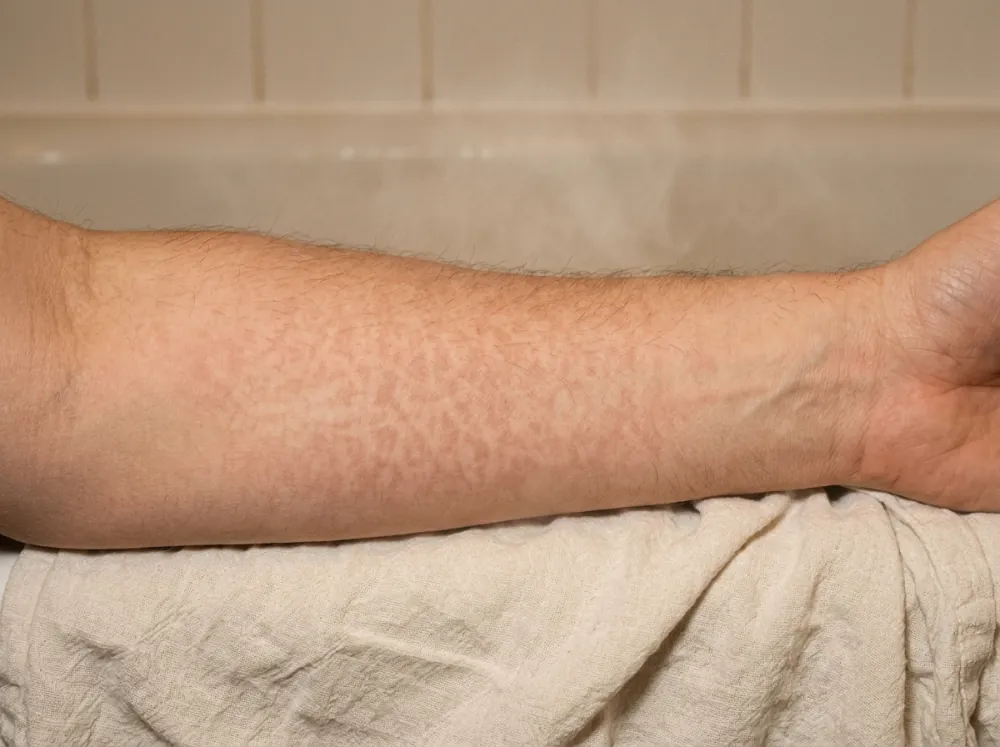
There is a gentler effect. DermNet describes erythema ab igne as a reaction to chronic exposure to heat. Limited exposure, short of a burn, causes a transient net-like or lacework redness, and prolonged and repeated exposure can cause marked redness, pigment changes and thinning of the skin. Mild cases resolve over several months. Severe, pigmented, thinned skin is unlikely to.
Its examples are heat pads and hot water bottles used repeatedly for pain, not compresses on the face. We flag it as an analogy. Facial skin is also thinner and varies by site, which our article on the layers of skin covers: the upper eyelid was 573.5 μm thick in one ultrasound study and the nose tip 1,907 μm.
When Heat Is the Wrong Tool
- Skin that flushes easily. DermNet's rosacea page lists hot and cold temperatures, including hot baths, among common triggers. A hot compress is a local version of the same trigger. Our guide to rosacea, perioral dermatitis and acne covers telling them apart.
- A bump that may not be a pimple. A cold sore starts with tingling and not with a bump, and our article on a pimple on the lip versus a cold sore explains how to tell them apart before anything is done to the spot. Our guide to identifying bumps on the face covers the other lookalikes.
- A lump that is large, very painful, hot or spreading. That is a reason to ask a clinician, not to apply heat for longer.
The Figure Audited: "A Warm Compress Brings a Pimple to a Head"
What We Searched
We searched PubMed for studies of warm or hot compresses with acne, pimples, furuncles, abscesses and folliculitis, and for heat treatments for acne. We found no trial of a compress on an acne lesion. The nearest hits were reviews of lasers and light devices, and a general review of thermotherapy in dermatology (abstract) whose abstract lists acne among many conditions without giving any result we could read.
The Closest Evidence Is the Eyelid
The Cochrane review of non-surgical treatments for acute internal hordeolum found no trials at all. Its authors write that they did not find any evidence for or against the effectiveness of non-surgical interventions, warm compresses included, and that the few references were case series and recommendations more than 20 years old. The review also notes that in many cases the lesion drains spontaneously and resolves without treatment.
That is an analogy. An eyelid oil-gland infection is not a pimple, and we mark it as one. But it is the setting where warm compresses are most standard, and even there the trial evidence is empty.
The Verdict
Unproven. A hot compress for pimple relief has a plausible rationale: heat does raise skin blood flow, and warmth can be soothing. But no study we found shows that a warm compress shortens an acne lesion, brings it to a head or drains it. The pustule stage is a head already, and a deep nodule, the kind behind most searches for how to get rid of under the skin pimples, has no opening for a compress to open. The best-documented adverse effects of heat on skin in our sources are burns and the marks of repeated exposure.
Conclusion
A hot compress for a pimple is plausible and untested, and that goes double for under the skin pimples. Heat increases skin blood flow, purpose-made eyelid warmers raised the inner eyelid only to 37 to 38°C, and no trial we could find tested a compress on an acne lesion. In the closest setting, a Cochrane review found no trials of warm compresses at all.
What the sources do document is the downside: low heat held for long enough can cause deep burns that look minor, and repeated heat short of a burn can leave a net-like mark that may last. Rosacea-prone skin is a further reason for caution.
If a lump is large, very painful, hot, spreading or lasting for weeks, ask a clinician. If you track a lump day by day, a dated photo in a notes app or an app like Skinic shows whether it is shrinking or growing, which tells you more than any compress will.
Frequently asked questions
5 questions · tap one to open the answer
Does a hot compress bring a pimple to a head?
Does heat help pimples under the skin?
Can a hot compress burn your skin?
Can repeated heat leave marks on the skin?
When is heat the wrong thing to use on a bump?
Medically reviewed by
Dr. M.M Hanaei
Aesthetic Physician, Dermatology Fellowship
- MD — Shahid Beheshti University of Medical Sciences (SBMU)
- MCC Licensure (Medical Council of Canada)
- Dermatology Fellowship, Switzerland
- Certified in advanced aesthetic procedures
Last reviewed 9 October 2026