Skinic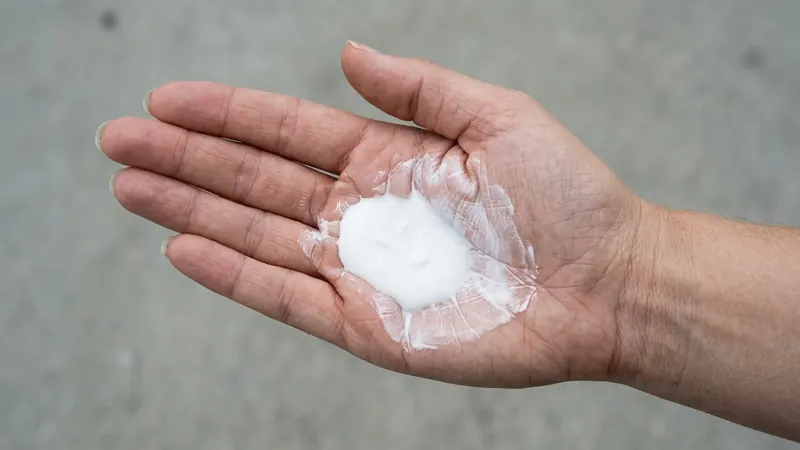
You bought the SPF 50 because it was the highest number on the shelf. You put it on most mornings. You are doing, by any reasonable standard, the thing you were told to do.
There is a decent chance you are getting somewhere around SPF 15 out of it.
Not because the product is mislabelled, and not because you are careless. Because the number on the bottle describes a specific quantity applied to your skin, and it is a considerably larger quantity than almost anyone uses. The gap between the tested amount and the real-world amount is the single biggest variable in sun protection — larger than the gap between SPF 30 and SPF 50, larger than mineral versus chemical, and larger than any brand difference.
This piece covers how much sunscreen actually delivers the protection you paid for, what your skin type does and does not change about that, what actually reaches you indoors, why reapplication is where most routines fail, and how to choose a filter system you will genuinely keep wearing.
The Number on the Bottle Assumes an Amount You Are Not Using
SPF is not a property of the liquid. It is a property of the liquid at a defined thickness.
Every SPF rating is determined by testing at an internationally agreed application thickness of 2 mg/cm². That is the laboratory condition. Apply less and you do not get a proportionally smaller amount of protection — you get considerably less than the label implies.
And almost everyone applies less. Studies find consumers typically apply between 0.5 and 1.5 mg/cm², achieving protection of perhaps one third of that stated on the product.
A third. Your SPF 50 is behaving like an SPF 15 to 17. Your SPF 30 is behaving like an SPF 10.
This reframes the whole shopping decision. Moving from SPF 30 to SPF 50 changes theoretical protection by about one percentage point of blocked UV — the arithmetic of a ratio, where SPF 30 lets through roughly a thirtieth and SPF 50 roughly a fiftieth. Moving from a thin layer to a proper one can triple what you actually get. The amount is the lever. The number is a detail. That is not only arithmetic: the authors of the one randomised trial on sunscreen and skin ageing reached the same conclusion from their own data, and said so in print.
The Two-Finger Rule, and the Realistic Version
Here is a measure you can actually use, from the same source.
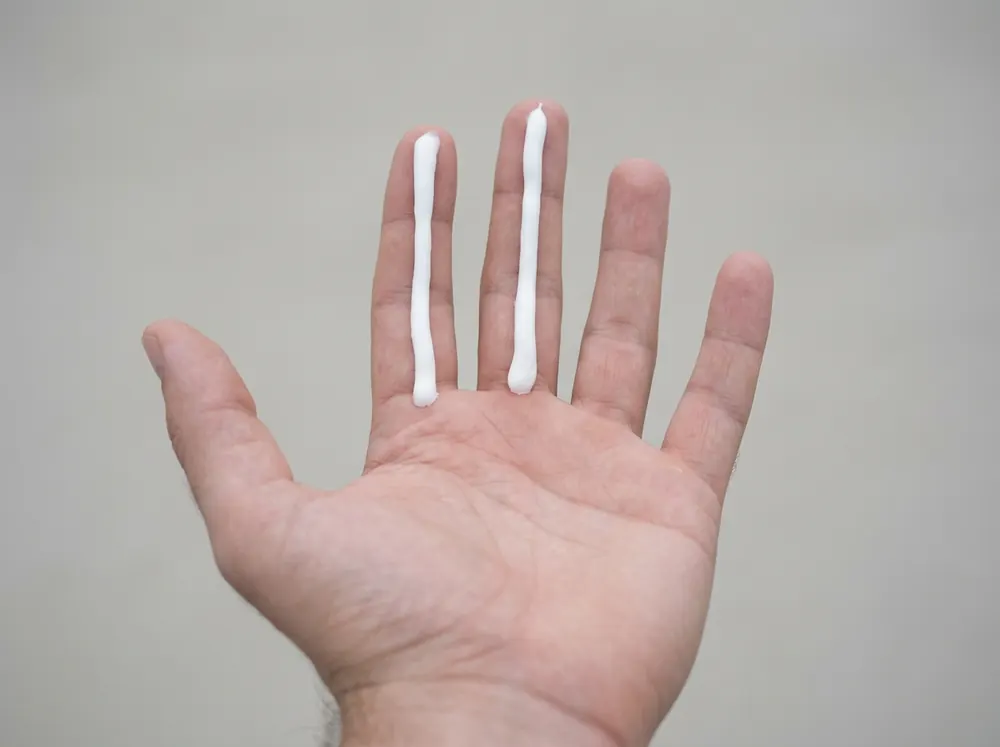
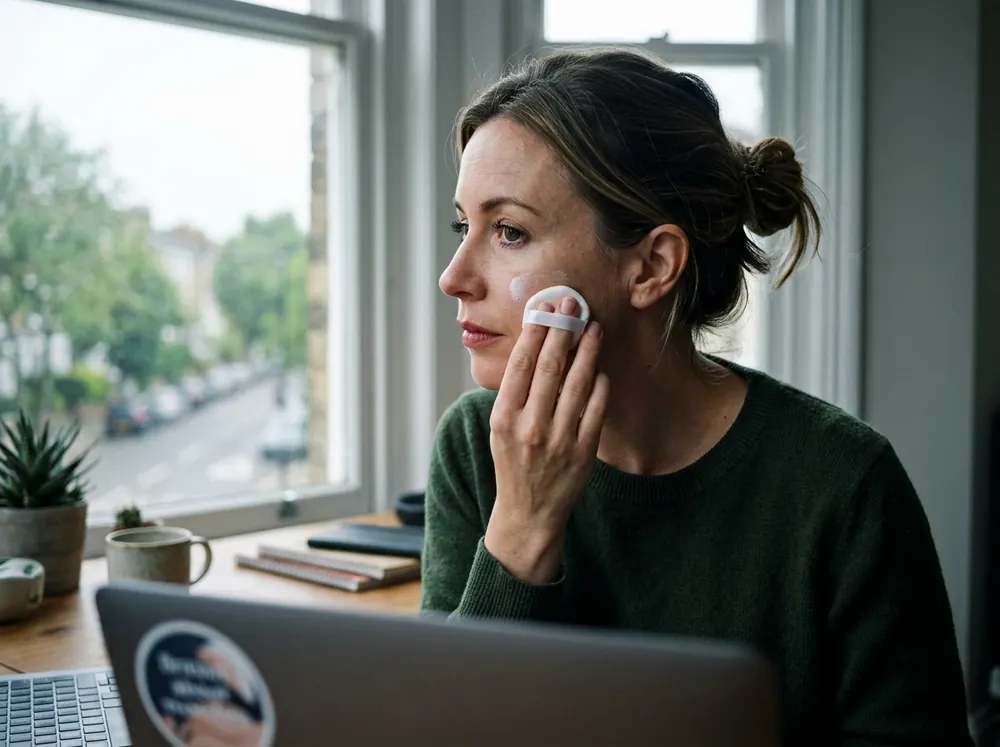
The two-finger method: squeeze sunscreen in a line along both the index and middle fingers, from the crease of the palm to the fingertips, and use that amount for each area of the body. For the face and neck, that two-finger quantity is the target.
It will look like too much. That feeling is the point — it is the amount the SPF number was measured at, and the reason people under-apply is precisely that the correct dose looks excessive. How a sunscreen feels changes how much goes on, which what "lightweight" actually measures takes apart.
Recognising that most people will not comply with a dose that generous, the authors of the guidance offer a realistic alternative: apply one finger's worth, understanding that protection will be roughly half the labelled SPF, and reapply that amount within thirty minutes.
That second application within half an hour is the most underrated move in sun protection. It is free, it takes twenty seconds, and it closes most of the gap between what you applied and what was tested. The format changes the starting point: in the one study that measured it, people applied a stick at about a third of the amount they applied lotion, which how much sunscreen stick you actually apply looks at.
What Your Skin Type Changes — and What It Does Not
This is where most sunscreen advice either overclaims or underclaims, so it is worth being precise.
Melanin does provide protection, and it is real but modest. Melanin's effectiveness as a sunscreen has been estimated at roughly 1.5 to 2.0 SPF, possibly reaching 4, corresponding to absorbing between 50 and 75% of UV radiation. At the constitutional level the difference is more substantial: black epidermis permits 7.4% of UVB and 17.5% of UVA to penetrate, against 24% and 55% for white skin, and a 2025 review puts the natural SPF of dark epidermis at around 13.4, against 3.3 for light skin.
Read those facts together. Deeply pigmented skin transmits roughly a third as much UVB as fair skin — a genuine, substantial advantage. What that advantage is worth as an SPF depends on what is being measured: about two for melanin's own contribution, around 13 for the whole of a deeply pigmented epidermis. Even the top of that range sits well below the SPF 30 and 50 this article is about.
What changes with type:
- Burn risk and photoageing rate. Types I and II carry the highest skin cancer risk with intense sun exposure, and fair-skinned individuals of types I–III are more prone to photoageing than people with skin of colour.
- Pigment consequences. For types IV to VI, the more pressing daily issue is usually not burning but pigmentation — UV deepens existing marks, drives melasma, and makes post-inflammatory hyperpigmentation more stubborn.
- Which formulation works. Higher phototypes face a real cosmetic barrier with mineral filters, covered in sunscreen without the white cast.
What does not change with type: whether you need it. Everyone accumulates UV damage; what differs is the rate and the form the consequences take. If you are unsure of your own type, Fitzpatrick skin types I–VI sets out how to place yourself honestly — and is explicit that a higher type is a difference of degree, not an exemption.
Indoors, Windows and Screens
Most of the day is spent inside, and "do I need sunscreen indoors" has a more specific answer than yes or no. It depends on what is between you and the light.
Window glass filters UV unevenly. Standard glass blocks UVB effectively, attenuates UVA only variably, and does not protect against visible light. That is why a sunny window seat does not burn you and still counts as exposure: UVA is the band that penetrates deep into the dermis and promotes collagen degradation, and it is the part that gets through.
Cars make the difference measurable. Laminated windscreen glass lets through about 2% of UVA, while plain tempered glass, the kind used for side windows, blocks only around a fifth of it. Newer cars do better: the same 2025 study measured driver's side windows blocking about 89% of UVA, against about 99% for windscreens. What gets through adds up over years. In US drivers, the left side of the head, neck and arm receives up to six times as much UV, and the left side carries more photodamage and more skin cancer.
Screens are not a meaningful source. Phones and monitors do emit blue light, but electronic devices as a group emit 99 to 1,000 times less radiance than sunlight, which the same review judges too low to make them a likely source of biologically active light. If you need sunscreen at your desk, it is because of the window beside it, not the monitor in front of it.
Visible light is where indoors still matters. Glass does nothing to it, and it drives pigmentation more in darker skin. If melasma or recurring marks are your concern, hours beside a bright window are real exposure that UV filters alone do not cover — which is the case for the tinted formulas below.
Reapplication Is Where It Actually Fails
Most people treat sunscreen as a morning task. It is closer to a consumable.
Sunscreen comes off. It transfers onto collars and phone screens, absorbs into towels, dissipates with sweat, and is physically removed by rubbing your face. None of that depends on the quality of the product.
The practical standard is roughly every two hours of continuous exposure, and sooner after swimming or heavy sweating. That figure is conventional guidance rather than a finding, and I would rather label it as such than dress it up.
Two situations where reapplication genuinely matters and people skip it:
Outdoors for a long stretch. A single morning application is not protecting you at four in the afternoon, regardless of the number on the bottle.
Hours beside glass, or driving. Sustained exposure through a window is a real situation, and the one people most often discount because it does not feel like being outside.
And the honest counterpoint: if you are inside all day away from windows, the morning application is doing its job and midday reapplication is a low priority. Advice that demands reapplication regardless of exposure is the kind that gets abandoned entirely.
Choosing a Filter System You Will Actually Wear
Adherence beats specification. A sunscreen you apply generously and reapply beats a technically superior one you apply thinly because you dislike the finish. Given the application data above, that is not a compromise — it is the better-performing choice.
Mineral Versus Chemical Is the Wrong First Question
The two-camp framing dominates sunscreen shopping and is not the useful axis. The real distinction is mechanistic: inorganic filters work by reflecting and scattering UVA and UVB radiation, while organic filters absorb UV energy and convert it to heat or harmless wavelengths.
That difference is what determines cosmetic behaviour. Scattering visible light is what produces a white cast; absorption does not. So the useful questions are whether the formula leans on inorganic filters and, if so, whether the particles are micronised — engineering these compounds into nanoparticles leads to less scattering of visible light and improvement in cosmetic appearance.
On the safety question that keeps people away from nano formulations: the same review notes those particles do not penetrate further than the stratum corneum, making absorption into the body unlikely.
What Changed in June 2026
If you have noticed that sunscreens formulated in Korea, Japan and Europe feel different, that is a regulatory difference rather than a formulation secret.
On 9 June 2026 the FDA added bemotrizinol to the US sunscreen monograph at concentrations up to 6% for adults and children from six months — the first new UV filter added since 1999. It has more than two decades of use across Europe, Australia and Asia. Seven other filters submitted under the Sunscreen Innovation Act remain unapproved, so the gap has narrowed rather than closed, but US formulations should get cosmetically better from here.
Tinted, and Why It Is Not Only Cosmetic
UV filters do not block visible light, and visible light drives pigmentation — blue light between 400 and 490 nm induces sustained pigmentation, with more pronounced effects in darker complexions.
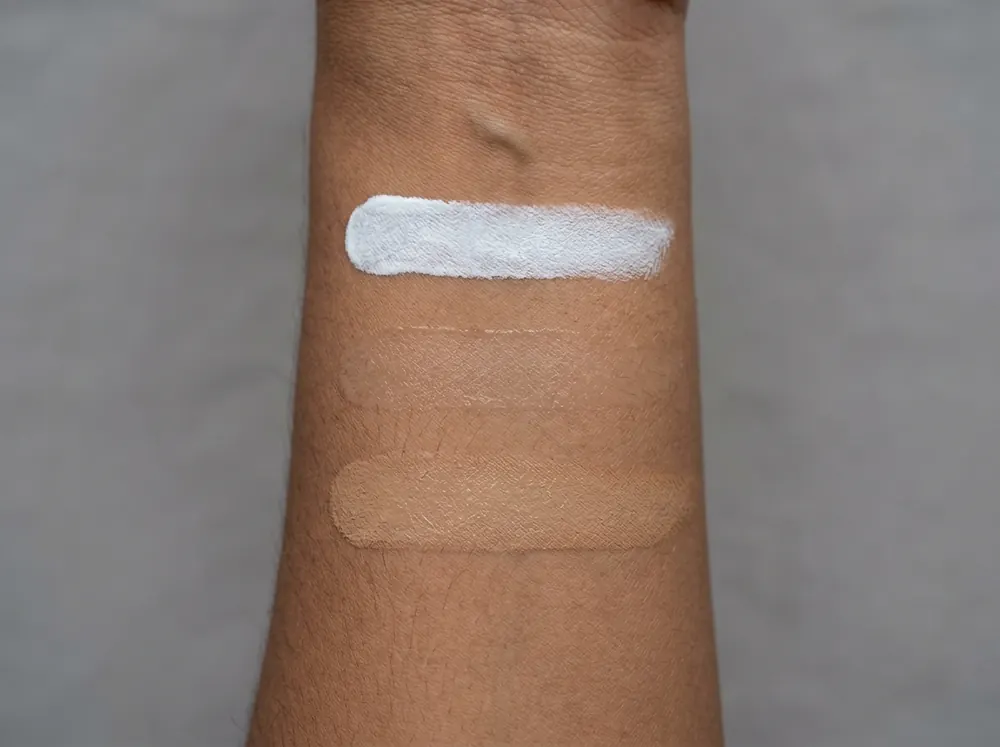
Iron oxides do block it. Tinted sunscreens containing them reduce high-energy visible light transmission by up to 84–97% when properly formulated. If pigmentation is your concern rather than burning, a well-matched tinted formula is doing something no untinted sunscreen does — and it is directly relevant to hyperpigmentation in brown and deep skin tones.
One barrier worth naming: the same review identifies inadequate shade matching across diverse skin tones and higher costs as genuine obstacles, alongside a finding that more than half of clinicians provided less photoprotection counselling to patients with skin of colour. The people for whom tinted formulas matter most are the least well served in both product availability and advice.
A Realistic Daily Standard
Not the ideal. The version worth actually holding to.
- Two fingers for face and neck, or one finger applied twice within half an hour.
- Every morning, regardless of weather. Cloud does not remove UVA, and a daily habit survives where a conditional one does not.
- Reapply when exposure is genuinely continuous — outdoors, driving, beside a window for hours. Not performatively at a desk in a windowless room.
- Pick the texture you will use generously. The finish determines the dose, and the dose determines the protection.
- Go tinted if pigmentation is your concern. It addresses a driver that UV filters leave untouched.
- Do not upgrade the number to compensate for a thin layer. It does not work that way; the arithmetic is roughly one percentage point.
And if you are also wondering whether wearing sunscreen means you will not tan, the answer is that you will, and why that is expected is worth understanding.
Judging Whether You Are Actually Doing It
Sun protection is unusually hard to self-assess, because it is a habit you perform rather than a result you see — and the consequences arrive on a timescale of decades.
Two things make it measurable. Weigh the bottle, or track how long it lasts. A 50 ml facial sunscreen applied at the correct dose daily lasts a few weeks, not months. If a bottle has been in your cabinet since spring, that is a quantitative answer about your application, not a matter of opinion.
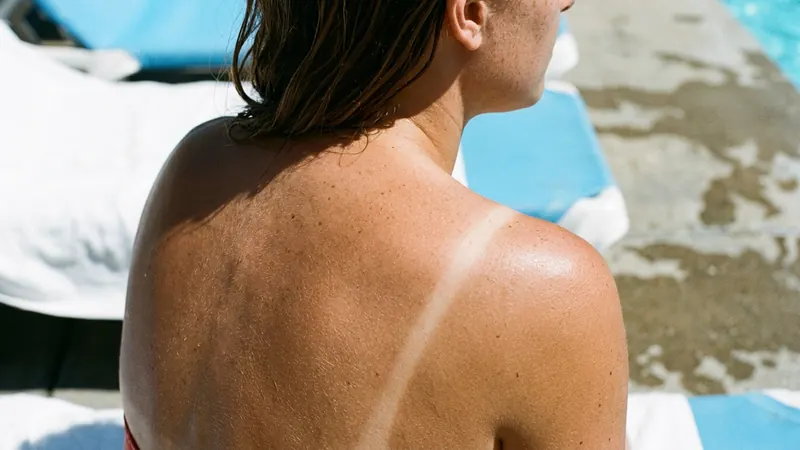
And use a tan line as your check. The boundary between routinely covered and routinely exposed skin is a controlled comparison you already have. Photograph the same two areas in the same frame, same light, same distance, at the start of summer and again at the end. Whether that record lives in a dated album on your phone or in something built for it like Skinic, it answers a question your memory cannot.
Conclusion
The SPF number is the part of sunscreen everyone optimises and the part that matters least. It is measured at a thickness — 2 mg/cm² — that almost nobody applies, and typical real-world application delivers about a third of the labelled protection. Your SPF 50 is probably working like an SPF 15.
So the first fix is quantity: two fingers for face and neck, or one finger applied twice within half an hour. That single change does more than any upgrade you can buy.
Your skin type genuinely matters, but less dramatically and in a different direction than most advice implies. Melanin is worth somewhere between an SPF of about two and, for deeply pigmented skin, around 13 — real, and nowhere near enough. What changes with type is the rate of damage and the form it takes: burning and photoageing at one end, stubborn pigmentation at the other.
Then pick a formula you will actually use generously, because the finish determines the dose and the dose determines the protection. And if pigmentation is your concern, go tinted — iron oxides block up to 84–97% of the visible light that no UV filter touches.
Check the bottle. If it has lasted since spring, you already have your answer.
Frequently asked questions
5 questions · tap one to open the answer
How much sunscreen should I use on my face?
Is SPF 50 much better than SPF 30?
Do darker skin tones need sunscreen?
How often do I really need to reapply sunscreen?
Is mineral sunscreen better than chemical?
Medically reviewed by
Dr. M.M Hanaei
Aesthetic Physician, Dermatology Fellowship
- MD — Shahid Beheshti University of Medical Sciences (SBMU)
- MCC Licensure (Medical Council of Canada)
- Dermatology Fellowship, Switzerland
- Certified in advanced aesthetic procedures
Last reviewed 18 September 2026