Skinic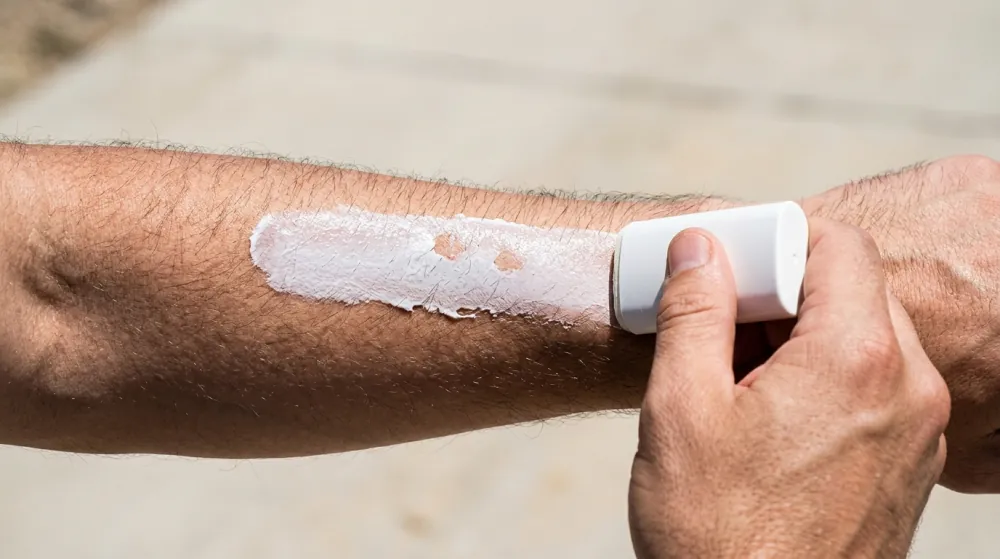
A sunscreen stick carries an SPF that, like every other format's, comes from a test at 2 milligrams of product per square centimetre of skin. In the one study that measured how people apply sunscreen sticks, a stick went on at an average of 0.35 mg/cm², against 1.1 for a lotion. That is less than a fifth of the amount the number describes.
This article looks at what has actually been measured about sticks, which is less than you would hope, and at one claim worth auditing: that a stick and a lotion with the same SPF give you the same protection. I know every study below through its abstract only, because the full texts were not open to me, and I say where authors or products have a commercial angle.
The Number Is Certified at an Amount, Not a Format
International standards put the test amount for SPF at 2 mg/cm², a figure the authors of a study on lip products refer to as the reference area density of 2.0 mg/cm². The label tells you how much UV it takes to redden skin carrying that layer, compared with bare skin. It does not tell you what you will put on.
The researchers behind a 52-person application study put it plainly: people apply less than the 2 mg/cm² needed to reach the labelled SPF, and there was little information on sprays and sticks. Our article on how much sunscreen you actually need covers the lotion side of that gap.
Even testing a stick has needed its own method. A French group adapted the laboratory SPF procedure for sticks specifically, testing 14 commercial products and sticks they made themselves. To match the SPFs on the packaging they had to determine the optimal mass to place on the test support. The abstract does not say how that mass compares with 2 mg/cm².
Why the Amount Matters More at High SPF
Protection does not fall in a straight line as the layer thins. A study of sunscreens labelled SPF 4, 15, 30 and 55, applied at 0.5, 1.0, 1.5 and 2.0 mg/cm² to 40 volunteers in each of three regions of China, found that the lower SPFs fell linearly while the higher ones fell exponentially. The authors say consumers may get even less protection than expected from a high-SPF product.
The tested range stops at 0.5 mg/cm², and a stick averaged 0.35. I cannot turn 0.35 into a number from those data and I will not extrapolate beyond them.
What the Studies Measured for Sticks
Body Sticks: 0.35 mg/cm²
In the 52-person study, participants applied lotion, spray and stick sunscreen and the researchers worked out the application thickness. The geometric means were 1.1 mg/cm² for lotion, 1.6 for spray and 0.35 for stick. Age and skin type influenced how much people used.
The authors work at ChemRisk, a consultancy, and the abstract does not state who funded the work. It is the only study I found that puts a number on body-stick application, so it carries the whole argument.
Lip Sticks: The Closest Other Data
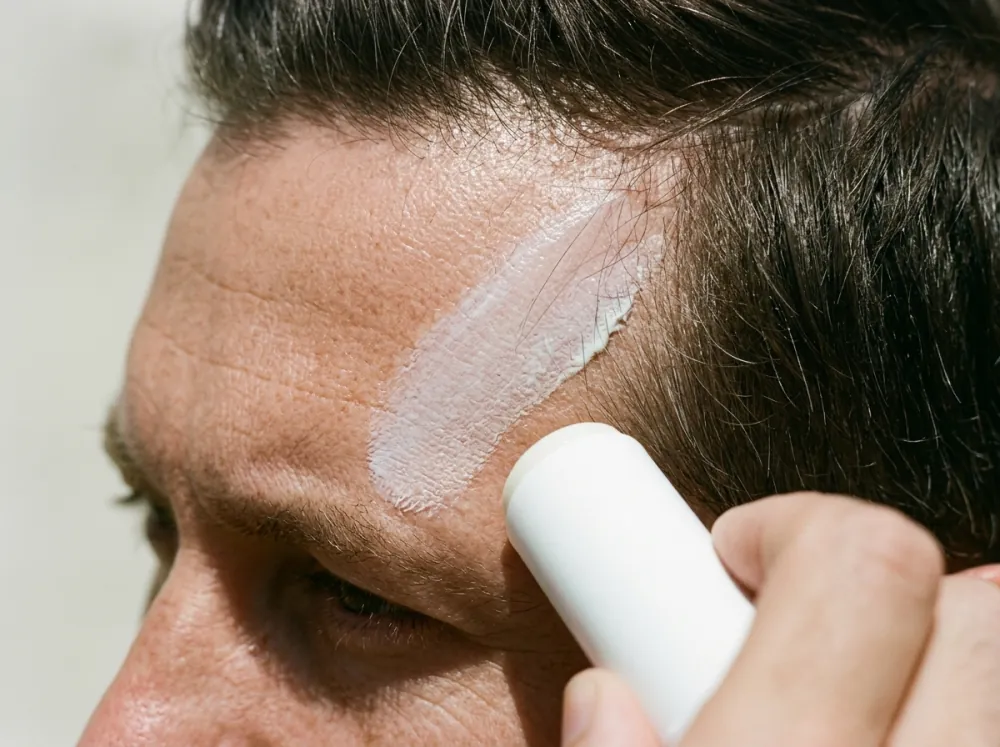
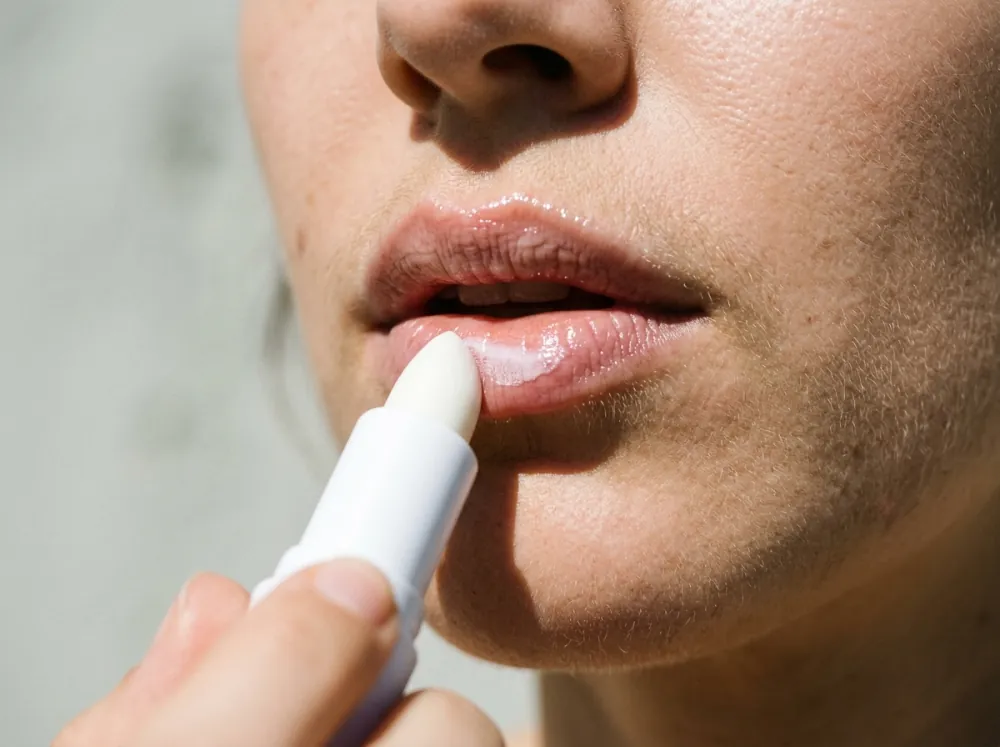
A Vienna group measured photoprotective lipsticks, which are solid sticks with the same format problem. In the laboratory, 28 panellists applied a median of 0.98 mg/cm² for one product and 0.86 for another. In a field experiment with 18 people on a six-day skiing course, the medians were 1.58 and 1.76. Only 11% and 6% of applications reached the reference 2.0 mg/cm².
A firm stick and a soft one did not differ significantly in the amount applied. The median number of applications was 2.2 and 3.0 per day. The authors concluded that lip sticks go on far thinner than the standard and proposed that SPF should be assessed at an area density reflecting real use.
Two Numbers That Disagree
The body-stick figure is 0.35 mg/cm² and the lip-stick figures are 0.86 to 1.76. These are not measuring the same thing. One covers mixed skin sites in a lab study of 52 people, the other a small, defined area, in some cases applied repeatedly outdoors over six days. I report both and do not combine them.
The honest summary is that solid sticks were applied below the tested amount in both studies, by different margins.
What the Passes Deposit
The brief for this article asked how much a single pass of a stick deposits and how many passes reach the tested amount. I could not answer either. I searched PubMed for studies of stick deposition, passes and coverage and found no study that counts strokes or measures the deposit per stroke.
What I can offer is reasoning, labelled as such. Thickness is mass per area. A stick deposits a thin film where it touches, so the amount on a patch of skin depends on how many times you go over it and how hard you press. A pass count that reaches the tested amount may exist, but nobody I found has measured it.
Pressure and Spreading Change the Film
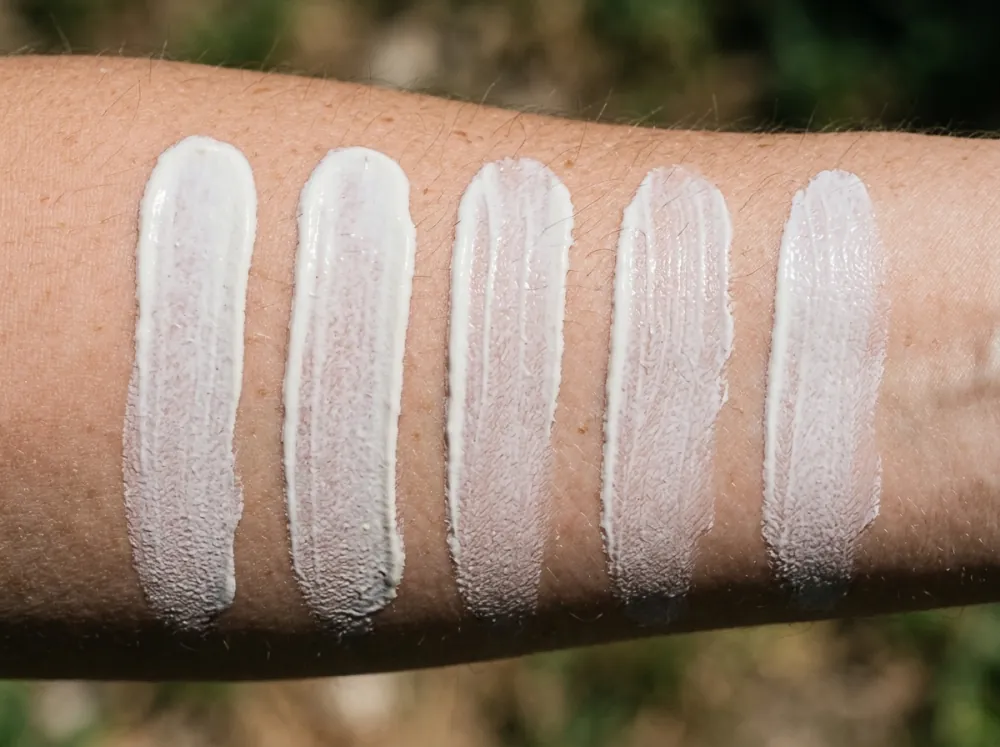
A Swiss group tested five vehicle formulations on pig ear skin and found that application pressure and spreading time affected the film thickness and the in vitro SPF. Longer spreading time and higher application pressure each lowered the in vitro SPF. The abstract does not say whether a solid stick was among the five vehicles, so I do not transfer the result to sticks, but it shows how the way a product goes on is part of what it delivers.
Why the Vehicle Is Part of the Protection
The same study found the vehicle had a significant effect. Low viscosity gave a smaller mean film thickness and a lower SPF in vitro than high viscosity, and a continuous oil phase gave the largest thickness and SPF. The authors conclude that the thickness distribution of the film explains why products with the same filters can show different SPFs.
That matters here because it undercuts the idea that two products with the same label number behave the same on skin. It is an in vitro result on pig skin, not a trial of sticks.
Where a Stick May Fit, and Where the Evidence Stops
I looked for evidence that a stick covers ears, hairlines or eyelids better than a lotion, or works better for reapplication over other products. I found none. Anything below is reasoning, not a finding.
- Small, awkward areas. Sunscreen sticks are easy to point at a small area. That is a convenience argument. No study I found measures whether it improves coverage there.
- Reapplication. A Danish laboratory study of 31 volunteers in swimwear found that applying sunscreen twice increased the amount applied at selected sites by between 13% and 100% and reduced the share of skin missed from a median of 20% to 9%. The abstract does not name the formats used, so it is evidence about repeated application, not about sticks.
- A thin deposit means more passes. If a stick deposits less per pass than a lotion, reaching a given amount takes more passes, and the lip-stick study found people reapplied only two to three times a day.
The Figure Audited: "Same SPF, Same Protection"
Result: the numbers match and the protection delivered need not. Four findings:
- The label is the same number at the same tested amount. International standards put the amount at 2 mg/cm², and the lip-product study applies that reference to sticks too.
- The amount applied is not the same. In the one study that measured it, stick 0.35, lotion 1.1 and spray 1.6 mg/cm². Lip sticks went on at 0.86 to 1.76.
- Protection is steeply tied to amount at high SPF. Linear for SPF 4 and 15, exponential for 30 and 55, over 0.5 to 2.0 mg/cm².
- The vehicle changes the film. In vitro, low viscosity gave thinner films and lower SPF at the same filter composition.
What I cannot say is how much protection a stick at 0.35 mg/cm² delivers. The data stop at 0.5. What I can say is that the same number on the label describes the same test, not the same use.
How to Judge a Stick Claim
The evidence supports a few questions.
- What is the claim about? SPF describes the test. Delivered protection depends on the amount, and for sticks that is the least measured part.
- How would you know what you applied? There is no published pass count. The only anchor is the tested amount, and the stick study shows people fall well below it.
- Is the claim about convenience or protection? Easy to carry and easy to reapply are convenience claims. Neither is evidence of better coverage.
- How high is the SPF? The steeper drop at high SPF means a thin layer costs more of a high number than of a low one.
Our piece on what lightweight sunscreen is measuring covers how feel and format interact with the amount you apply. For a different angle on the same gap, tanning with sunscreen works through it.
Conclusion
A sunscreen stick has the same SPF as a lotion because the number comes from a test at 2 mg/cm². In the one study that measured body sticks, people applied 0.35 mg/cm². Lip sticks went on at 0.86 to 1.76, and only 6% to 11% of applications reached the standard.
Protection falls more steeply with a thinner layer at high SPFs, and the vehicle shapes the film in laboratory tests. None of that was measured for sticks specifically, and nobody I found has counted how many passes a stick needs.
So the same SPF does not mean the same protection. Sunscreen sticks may suit small areas and reapplication, but I found no evidence that it does, and the thin deposit it leaves is the part to take seriously.
Frequently asked questions
5 questions · tap one to open the answer
How much sunscreen do people actually apply with a stick?
Is a sunscreen stick as protective as a lotion with the same SPF?
How many passes does a sunscreen stick need?
Is a sunscreen stick good for reapplying?
Why does the amount applied matter more at higher SPF?
Medically reviewed by
Dr. M.M Hanaei
Aesthetic Physician, Dermatology Fellowship
- MD — Shahid Beheshti University of Medical Sciences (SBMU)
- MCC Licensure (Medical Council of Canada)
- Dermatology Fellowship, Switzerland
- Certified in advanced aesthetic procedures
Last reviewed 8 October 2026