Skinic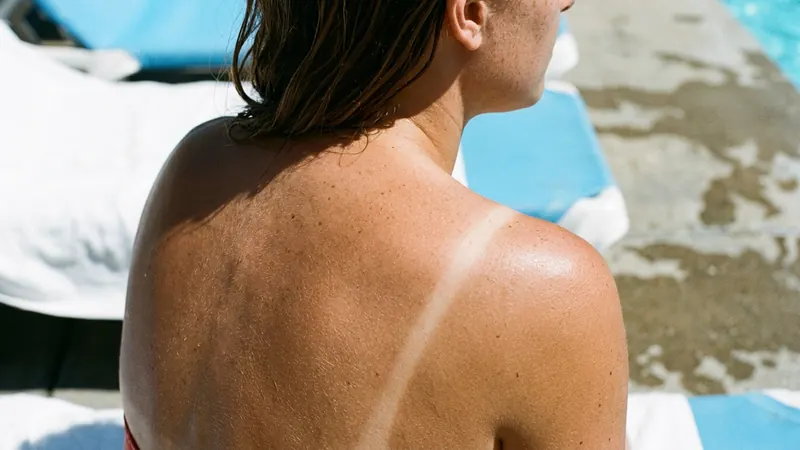
You wore sunscreen. You reapplied it, mostly. You came back from a week away noticeably browner than when you left, and now you are wondering whether the bottle was doing anything at all.
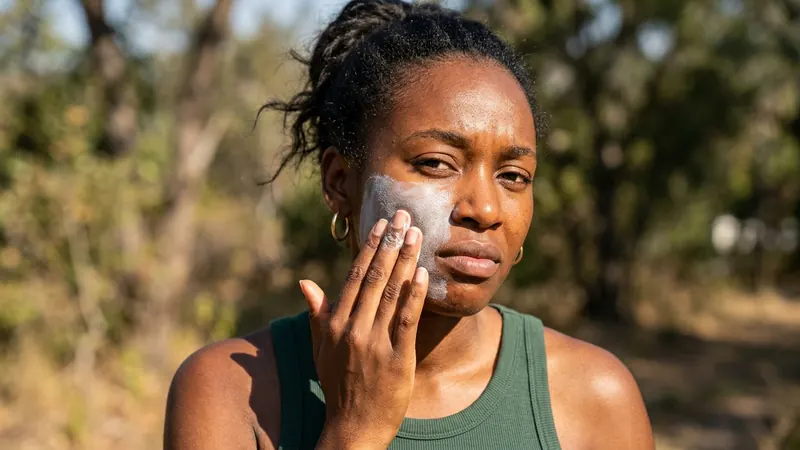
It was. Tanning through sunscreen is not a product failure — it is the expected result of how sun protection works, and it has been the expected result since SPF was defined. A sunscreen reduces the ultraviolet reaching your skin. It does not eliminate it, and nothing you can buy does.
The more uncomfortable part is the second half of the answer. A tan is not a neutral cosmetic outcome that happens alongside sun damage. It is produced by the damage. The pigment appears because your skin detected injury to its DNA and responded, which means the colour you came home with is the visible record of the thing sunscreen exists to prevent.
This piece covers why you tan through sunscreen even when you use it properly, what a tan actually is at a cellular level, the single variable that matters more than the SPF number on the bottle, and what genuinely changes if you would rather come back the colour you left.
Yes, You Can — and That Is Exactly What SPF Means
SPF is a ratio, not a barrier rating. It compares how much UV it takes to redden protected skin against how much it takes to redden unprotected skin, measured under laboratory conditions at an internationally agreed application thickness of 2 mg/cm².
Run the arithmetic on what that ratio implies. An SPF of 30 corresponds to letting through roughly one thirtieth of the UV that would otherwise reach you — about 3%. SPF 50 lets through about one fiftieth, roughly 2%. Neither is zero, and the jump from 30 to 50 buys you about one additional percentage point of blocked radiation, not a 67% improvement.
That residual few percent is where your tan comes from. Spend six hours on a beach and a small fraction of an enormous UV dose is still a meaningful UV dose. Your skin responds to what gets through.
So the honest answer to the question is: yes, you will tan through sunscreen, you were never not going to, and the product was working the entire time.
What a Tan Actually Is
Here is where the answer gets less comfortable, and more useful.
The Damage Comes First, the Colour Second
Tanning is not your skin "soaking up sun." It is a wound response.
UV striking skin produces characteristic DNA lesions, principally cyclobutane pyrimidine dimers — two adjacent bases in the DNA strand fused together where they should not be. That damage triggers a signalling cascade: the tumour-suppressor protein p53 promotes cutaneous pigmentation after UV by activating proopiomelanocortin expression, which produces α-melanocyte stimulating hormone, which binds the melanocortin 1 receptor on melanocytes and drives eumelanin synthesis.
p53 is the protein your cells deploy when DNA has been damaged. It is not a tanning hormone that happens to be involved; it is a damage-response protein, and pigmentation is one of the things it switches on.
The most telling evidence is in the wavelengths. The action spectrum that leads to tanning in human skin is identical to the spectrum that induces erythema — sunburn — and closely resembles the spectrum for forming those DNA dimers. The same wavelengths, in the same proportions, produce all three. Tanning and burning are not alternative outcomes where one is the safe version. They are two visible results of one process.
Immediate Darkening Is Not the Same Thing
There is a fast colour change — appearing within minutes to hours of exposure, mostly driven by UVA — that comes from oxidation and redistribution of melanin you already had, rather than from making new pigment. It fades within a day or two.
Delayed tanning is the one that lasts. It develops over days, involves new eumelanin synthesis through the pathway above, and is the one that requires the DNA damage signal to start it. If your colour is still there a week later, that is the second kind.
The Amount You Apply Matters More Than the Number on the Bottle
If you take one practical thing from this article, take this.
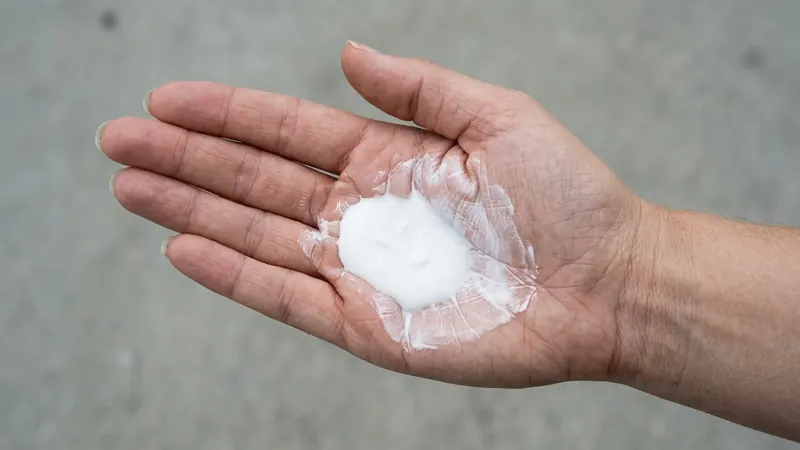
SPF is measured at 2 mg/cm². Almost nobody applies that much. Studies find consumers typically apply between 0.5 and 1.5 mg/cm², achieving protection of perhaps one third of that stated on the product.
Read that again in practical terms: your SPF 50 is behaving like an SPF 15 to 17. Not because the product is dishonest, but because the number describes a quantity you are not using. Why the feel of a formula moves that quantity is the subject of what "lightweight" actually measures.
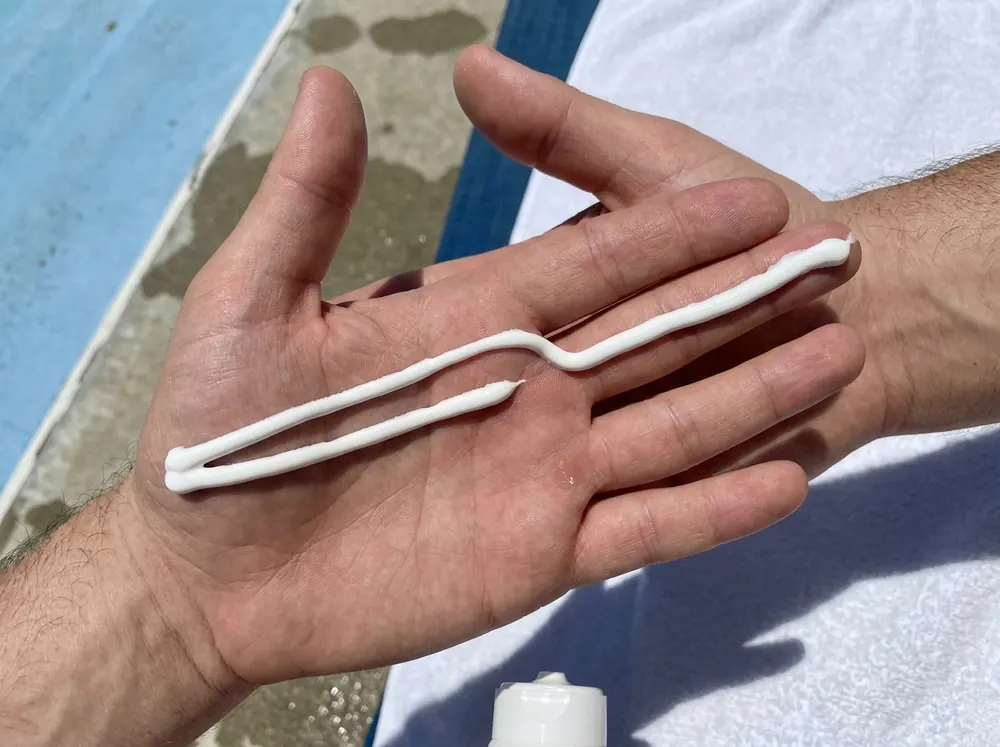
The same source offers a usable rule. The "two fingers" method means squeezing sunscreen along both the index and middle fingers, from the crease of the palm to the fingertips, for each body area. Recognising that most people will not comply with a dose that generous, the authors suggest a realistic alternative: apply one finger's worth, understanding that protection will be roughly half the labelled SPF, and reapply within thirty minutes.
That second reapplication is doing more than the first application. It is the cheapest upgrade available and it costs nothing but the product. For the format people applied most thinly in the one study that measured it, see sunscreen sticks: how much you actually apply.
"Safe Tanning" Is Not a Category
The search behind this article is usually not really "will I tan through sunscreen." It is "can I get a tan without the damage." The evidence does not support that as a category.
The pigment is downstream of the damage. There is no pathway in which your skin produces a lasting tan without first registering DNA injury and responding to it. A tan acquired slowly is a smaller dose than a burn, which genuinely matters — but it is a smaller dose of the same thing, not a different thing.
This is also why "base tans" do not work as protection. Whatever protection a tan confers, you paid for it in advance with the exposure that produced it, and the amount you receive is small: melanin's effectiveness as a sunscreen has been estimated at roughly 1.5 to 2.0 SPF, possibly reaching 4, corresponding to absorbing somewhere between 50 and 75% of UV radiation. Estimates for skin that has always been deeply pigmented run higher: a 2025 review puts the natural SPF of dark epidermis at around 13.4, against 3.3 for light skin — a measure of the whole epidermis rather than of a tan, and the two figures are best read as a range rather than a contradiction.
Even the top of that range is not close to the protection people often assume. Black epidermis permits 7.4% of UVB and 17.5% of UVA to penetrate, against 24% and 55% for white skin — a real and substantial difference, and still a long way from a sunscreen.
Why This Lands Differently Depending on Your Skin
The answer to "should I care about tanning" genuinely varies, though not in the direction most people assume.
If you burn easily, the relevant risk is the familiar one, and the tan is a signal you took more UV than you intended.
If you tan readily and rarely burn, the absence of a burn removes the feedback that tells lighter skin to get out of the sun, while the underlying exposure continues. And there is a second consequence that is often the more pressing one day to day: UV drives pigmentation problems. Existing dark marks deepen, melasma worsens, and post-inflammatory hyperpigmentation from any breakout or scratch becomes more stubborn — which we have covered in hyperpigmentation in brown and deep skin tones.
Worth knowing too: UV is not the only driver. Visible light — particularly blue light between 400 and 490 nm — induces sustained pigmentation, with more pronounced effects in darker complexions, and conventional UV filters do nothing about it. That is the argument for a tinted formula containing iron oxides, which is set out in sunscreen without the white cast.
If you are not sure which category you are in, Fitzpatrick skin types I–VI is built around exactly this question — how your skin behaves in the first hour of unprotected sun, and what it looks like a week later.
What Changes If You Want Less Colour
In order of how much difference each one makes.
1. Apply more. The gap between 0.5 and 2 mg/cm² is a bigger lever than the gap between SPF 30 and SPF 50. Two fingers per area, or one finger reapplied within half an hour.
2. Reapply on a timer, not on a feeling. Sunscreen degrades, rubs off on towels and clothing, and is removed by swimming and sweat. Two hours is the standard interval, sooner after water.
3. Move the exposure rather than only filtering it. UV intensity peaks around the middle of the day. An hour of shade between noon and three does more than an SPF upgrade.
4. Cover what you can. Fabric does not need reapplying and does not depend on how well you spread it.
5. Choose a formula you will actually use properly. A cosmetically pleasant sunscreen applied generously beats a high-SPF one you apply thinly because you dislike how it looks. That is not a compromise; given the application data, it is the better-performing choice.
6. Extend it past the beach. Incidental daily exposure accumulates. Where SPF sits in a morning routine is covered in AM vs PM skincare.
Judging It Honestly
Skin colour is one of the hardest things to assess by memory, because the change is gradual and you see it daily.
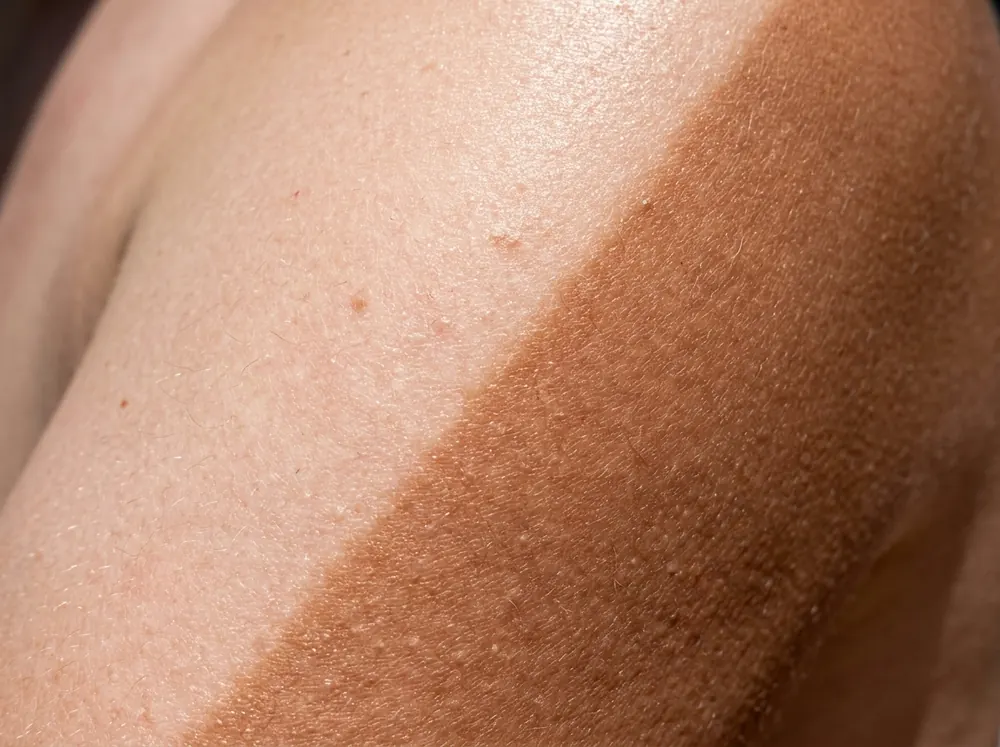
Two things make it measurable. Photograph a covered area alongside an exposed one — the inside of your upper arm against your forearm, in the same frame, in the same light. A tan line is a controlled comparison you already have, and it is far more informative than trying to remember what your face looked like in May.
Use consistent conditions. Same place, same time of day, same distance, no filters. Whether that record lives in a dated album on your phone or in something built for it like Skinic, the point is that "am I tanning more than I meant to" becomes a question you can answer with evidence rather than an impression formed in a bathroom mirror.
Conclusion
You tan through sunscreen because sunscreen reduces UV rather than removing it, and a few percent of a long exposure is still a substantial dose. That is not a defect. It is the definition.
What is worth updating is the idea that the tan itself is harmless. Pigment appears because DNA was damaged and your cells responded — the same wavelengths, in the same proportions, that cause sunburn. There is no version of a lasting tan that skips that step, which is why "safe tanning" is not a category and a base tan buys you an SPF of about two.
The single most useful change is not a higher number on the bottle. It is applying more of what you already own — two fingers per area, or one finger reapplied within half an hour — because the gap between what is tested and what people actually use is where most of your protection is being lost. How much sunscreen you actually need works through the dose, the reapplication and the filter choice in full.
And if you want to know whether any of it is working, look at a tan line rather than at your memory. It is the one controlled experiment your own body runs for you.
Frequently asked questions
5 questions · tap one to open the answer
Can you still tan while wearing sunscreen?
Is a tan from sunscreen-protected skin safer than a normal tan?
Does SPF 50 stop you tanning?
Does a base tan protect you?
How much sunscreen should I actually apply?
Medically reviewed by
Dr. M.M Hanaei
Aesthetic Physician, Dermatology Fellowship
- MD — Shahid Beheshti University of Medical Sciences (SBMU)
- MCC Licensure (Medical Council of Canada)
- Dermatology Fellowship, Switzerland
- Certified in advanced aesthetic procedures
Last reviewed 16 September 2026