Skinic
The SPF on a sunscreen is a laboratory result at a fixed amount: 2 milligrams of product per square centimetre of skin. In a study of 52 people applying their own sunscreens, lotion went on at an average of 1.1 mg/cm², spray at 1.6 and a stick at 0.35. None reached the amount the label assumes.
Lightweight sunscreen is what people search for when a sunscreen feels wrong, and I could not find a definition of the word in any source I opened. This article covers what the word is actually measuring, why that matters for protection, and one claim worth auditing: that lightweight sunscreen means less protection.
I know every study below only through its abstract, because the full texts were not open to me. I flag where authors work for commercial companies.
A Word With No Definition
A lightweight sunscreen is defined by how it feels, not by what is in it. The nearest thing to a measurement of that is sensory science. A 2021 review in Current Problems in Dermatology measured the sensory features of 73 commercial sunscreens sourced around the world using quantitative descriptive sensory analysis. It reported that only a few met the needs of the largest consumer group, which the authors call "dry touch seekers".
The same paper argues that some aspects of applying sunscreen are disliked almost universally, and that this contributes to people using too little or none at all. Both authors are listed at DSM Nutritional Products, a commercial ingredients company. The full text is behind a paywall, so I cannot tell you what funding or conflict statement it carries, and the link between dislike and non-use is the authors' argument, not something I could check.
What the research does give us is a way to split the word into parts. A 2026 study of sunscreen sensory attributes sorts them by when you notice them: the flow before application (its thickness), the flow during application (how well it spreads), and the after-feel (how it absorbs and whether skin feels sticky). Lightweight, as people use it, is a bundle of those three.
What Changes the Feel
The Formula Is a Set of Trade-Offs
A review of how sunscreens are developed says that making an effective product with an acceptable sensory feel is a major challenge, made harder by restrictions on ingredients. Its development path starts by choosing the UV filter platform, which the authors describe as the first key decision and one that constrains later choices. Then come the emulsifier system and the oils, which are chosen for sensory, rheological and film-forming roles.
So feel is not a finish painted on at the end. It is a consequence of a sequence of choices that start with the filters. The authors are listed at two Swiss consultancies, and I read only the abstract.
How Feel Gets Measured
The 2026 sensory study tested whether instruments can stand in for human panels. It found that both texture-analyser tests and simple viscometer measurements predicted the thickness and spreadability attributes well. Tribology, the study of friction between surfaces, added useful information about the after-feel, meaning absorption and stickiness.
Two of its four authors work at a Colgate-Palmolive technology centre, and I read only the abstract. My reading, which is reasoning and not a finding of the paper: if a lab can predict the sensations people call lightweight, a formulator can engineer for them. Nothing in those measurements records how much UV a product blocks.
Mineral and Organic Filters Feel Different for a Reason
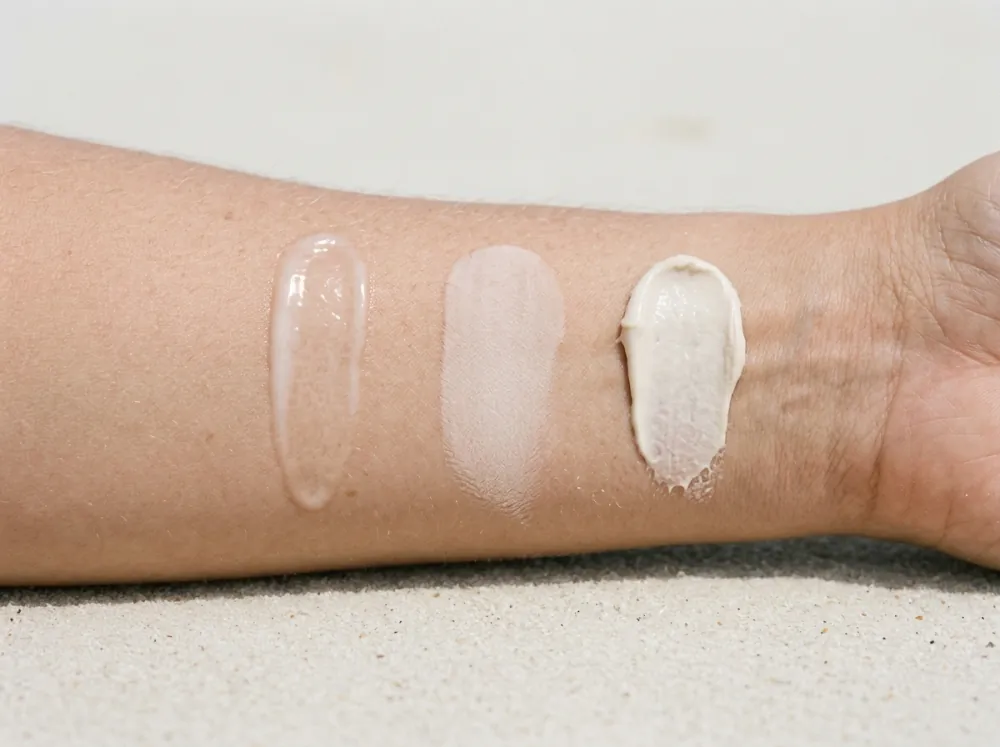
Filters differ in how they look on skin, and our article on sunscreen without a white cast covers the physics. In short, as that article reports from a review, mineral filters such as zinc oxide and titanium dioxide have large particles and high refractive indices that scatter visible light and leave a white residue. Organic filters absorb UV and do not scatter visible light, which is why they are invisible on skin.
That is an optical property, not a texture one, but it comes bundled with the filter choice. It is one reason the sensory review above treats the filter platform as the decision everything else follows.
Why Texture Is a Protection Variable
Sunscreen texture cannot change the SPF printed on the bottle. It can change what you put on your skin, and the studies below are about that.
The Number Assumes an Amount
The 52-person study states plainly that people apply less than the 2 mg/cm² needed to achieve the labelled SPF. Our article on how much sunscreen you actually need works through what that costs, and the tanning article shows the same gap from another angle.
How steeply protection falls with a thinner layer depends on the SPF. A Chinese study put sunscreens with labelled SPFs of 4, 15, 30 and 55 on 40 volunteers in each of three regions at 0.5, 1.0, 1.5 and 2.0 mg/cm², using a standard SPF protocol in three laboratories. It found that the lower SPFs fell in a straight line as the layer thinned, while the higher ones fell exponentially. The authors conclude that consumers may get even less sunburn protection than expected from a high-SPF product.
The authors of the only randomised trial of sunscreen and skin ageing reached the same view, saying the overriding factor is applying a liberal quantity.
Feel Decides Whether You Apply It
A split-face, randomised, blinded trial in Minnesota asked 139 community members to try seven commercial sunscreens and say which they would use again. People were significantly more likely to say they would use an alcohol-based spray again than two of the seven, and rated it less greasy, less likely to leave a film and less likely to leave them hot and sweaty than at least two of the others. The authors note that only a representative selection of products was tested. The abstract does not state a funding source.
That trial measured willingness to reuse a product, not how much of it anyone applied. Preference and dose are different things, and I do not treat the first as proof of the second.
Format Changes the Dose
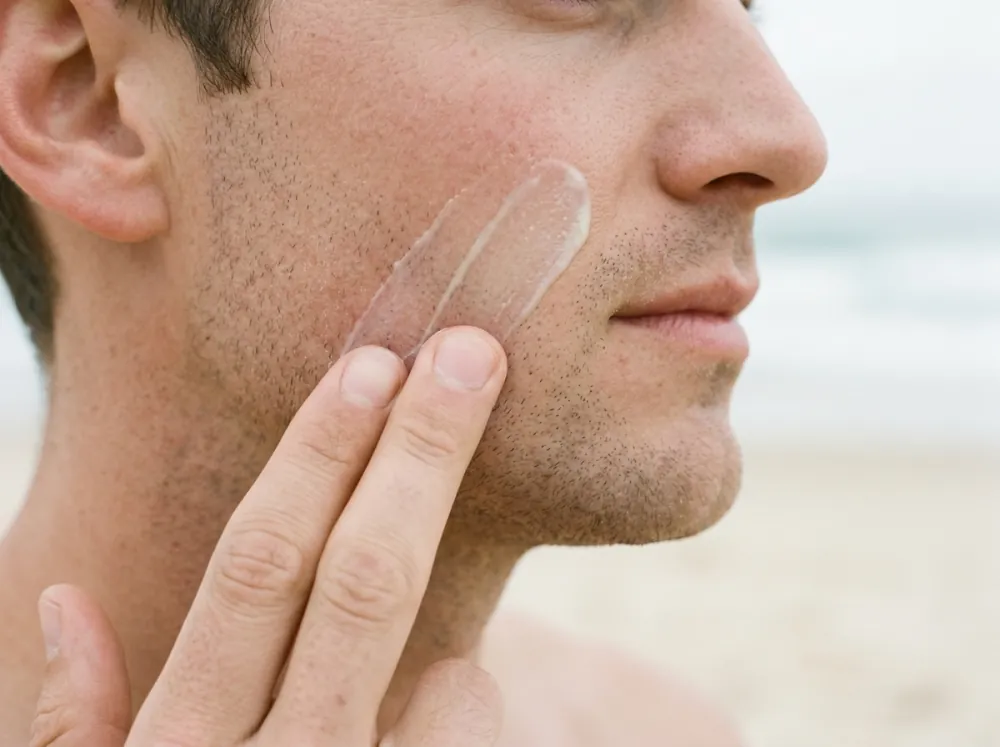
The 52-person study did measure dose. Geometric mean application thickness was 1.1 mg/cm² for lotion, 1.6 for spray and 0.35 for stick, and age and skin type also influenced how much people used. The authors work at a consultancy, ChemRisk, and the abstract does not state who funded the work.
The spray result and the preference trial come from different studies of different products, so I do not join them into a single claim. What they have in common is that both the format people like and the amount they apply move with format. A stick going on at about a third of the lotion figure is a result that matters for sticks specifically.
The Figure Audited: "Lightweight Means Less Protection"
What the Label Tests
The label's SPF comes from a test at a fixed amount per area. A fixed-amount test has no input for how a product feels, so the number does not depend on whether the product is light or rich. That is my reasoning from the way the test is described; none of the abstracts I read compares gels with creams directly.
What I Searched For and What Is Missing
The brief for this article asked whether anyone has tied sunscreen rheology or sensory properties to the amount people apply. I searched PubMed for studies connecting texture, viscosity or sensory attributes to applied quantity and found three separate links, none of them the one in question:
- Format to dose. The 52-person study above.
- Feel to avoidance. The sensory review and the split-face trial.
- Rheology to perceived feel. The 2026 instrument study.
I did not find a study that measures how a product's rheology changes the amount people put on their skin. That absence is the finding. It does not mean no such data exist, because my search covered one database, I could read some papers only at abstract level, and industry work may be unpublished.
Film Evenness Is a Real Variable
There is one place where a formula could change protection even at the same amount. A 2004 study from the Charité in Berlin applied a sunscreen to skin and measured an SPF of 8, then measured a value about ten times higher when the same amount of filter was distributed homogeneously in a solution in an optical cell above the skin. Tape strips from treated skin showed the topically applied filter was distributed unevenly.
That study compared distributions, not textures, and I read only the abstract. What it shows is that how evenly a film spreads can change protection. Whether lightweight formulas spread more or less evenly than rich ones is a separate question, and it is not answered there.
The Verdict
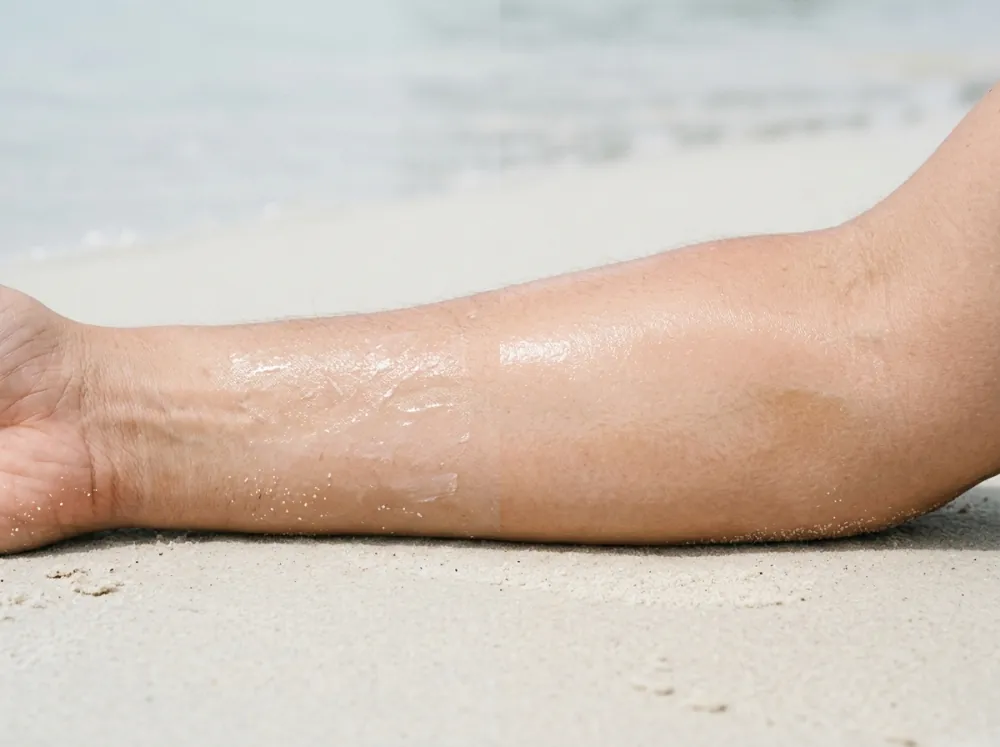
"Lightweight means less protection" fails as a general claim, and a lightweight sunscreen is not shown to protect less. The label's number does not depend on feel, and the studies I found tie protection to the amount applied and to how evenly the film spreads. Whether feel changes either one is the open question, and I found no measurement of it.
My reasoning, flagged as such: a light-feeling product that you apply at the tested amount protects better than a rich one you skimp on, and the reverse is equally true.
What the Evidence Cannot Yet Say
- No study I found links rheology to applied amount. Everything connecting feel to protection runs through two intermediate steps, and each step was measured in a different study.
- Preference is not behaviour. The Minnesota trial measured willingness to reuse, not dose.
- Commercial ties run through the feel literature. Two of the feel papers have authors at an ingredients company and a consumer-products company, and I could read only their abstracts.
- Sticks and sprays deserve their own look. In one study stick application averaged 0.35 mg/cm² and spray 1.6.
How to Judge a Texture Claim
The evidence supports a few questions.
- Is the claim about sunscreen texture or about protection? Lightweight is a sensory claim and says nothing about the SPF. The SPF says nothing about how the product feels.
- Could you apply the tested amount without hating it? The label assumes 2 mg/cm². If a texture is why you apply less, the number on the bottle no longer describes what you are wearing. Our guide to the amount covers how that looks in practice.
- Which format is it? In the 52-person study, the format alone moved the average from 0.35 to 1.6 mg/cm².
- Does the feel you want come with a cast? If the filters are mineral, the particle size matters, as the white cast article explains.
Conclusion
Lightweight has no definition I could find, and sunscreen texture has no place in the SPF calculation. In the research it is a bundle of sensory attributes: how thick a sunscreen looks, how it spreads and how it feels afterwards. Those attributes can be predicted from instrument tests, and they depend on formulation choices that start with the filters.
None of that changes the SPF, which is a laboratory result at 2 mg/cm². What feel can change is how much you apply. Format shifted average thickness from 0.35 mg/cm² for a stick to 1.6 for a spray in one study, people dislike the same sensory features across markets, and thinner layers cost more protection at high SPFs than at low ones.
The step that would connect those facts, measuring texture against applied amount, is missing from what I could find. Until it exists, the honest answer is that lightweight does not mean less protection, and it does not guarantee more.
Frequently asked questions
5 questions · tap one to open the answer
What does lightweight sunscreen mean?
Does lightweight sunscreen protect less?
Why do some sunscreens feel heavy or greasy?
Does sunscreen texture affect how much you apply?
Does a higher SPF make up for applying too little?
Medically reviewed by
Dr. M.M Hanaei
Aesthetic Physician, Dermatology Fellowship
- MD — Shahid Beheshti University of Medical Sciences (SBMU)
- MCC Licensure (Medical Council of Canada)
- Dermatology Fellowship, Switzerland
- Certified in advanced aesthetic procedures
Last reviewed 8 October 2026