Skinic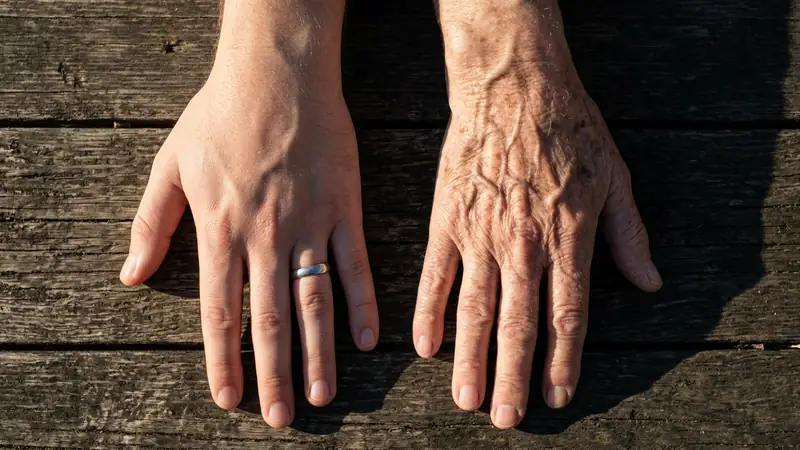
"Sunscreen is the best anti-ageing product you can buy" is repeated so often that it has stopped sounding like a claim at all. It sounds like a fact about the world.
It is a claim, and unusually for skincare, it has been tested properly — once, in a randomised controlled trial that ran for four and a half years and published in 2013. The trial found a real effect, and it is worth knowing exactly what that effect was, because the version that circulates has been rounded up considerably.
The researchers were blunt about the state of the evidence before they started. Their own opening line: sunscreen use and dietary antioxidants are advocated as preventives of skin ageing, but supporting evidence is lacking. They noted that the belief rested largely on studies in hairless mice, and that the only prior human trial involved 35 patients and found no significant difference.
So this article does what the coverage generally does not: it walks through the trial itself — what was measured, on what part of the body, in whom — then the result with its actual numbers, then the four things it does not show.
The Trial: Design, Duration, and What Was Measured
The study was the Nambour Skin Cancer Prevention Trial, run in Nambour, Queensland, at latitude 26° south — a place with a lot of sun. It was published by Hughes and colleagues in the Annals of Internal Medicine in 2013.
Who. 903 adults younger than 55, drawn from 1,621 randomly selected from a community register. Mean age 39, 58% women. The under-55 restriction was deliberate: in that age band, skin ageing is caused predominantly by photoageing rather than by growing old.
What they were assigned to. A 2 × 2 factorial design: daily sunscreen or discretionary sunscreen, crossed with 30 mg of β-carotene or placebo. The daily group were asked to apply a broad-spectrum SPF 15+ sunscreen to head, neck, arms and hands every morning, reapplying after heavy sweating, bathing, or more than a few hours outdoors. A placebo sunscreen was considered unethical, so the comparison group used sunscreen at their own discretion.
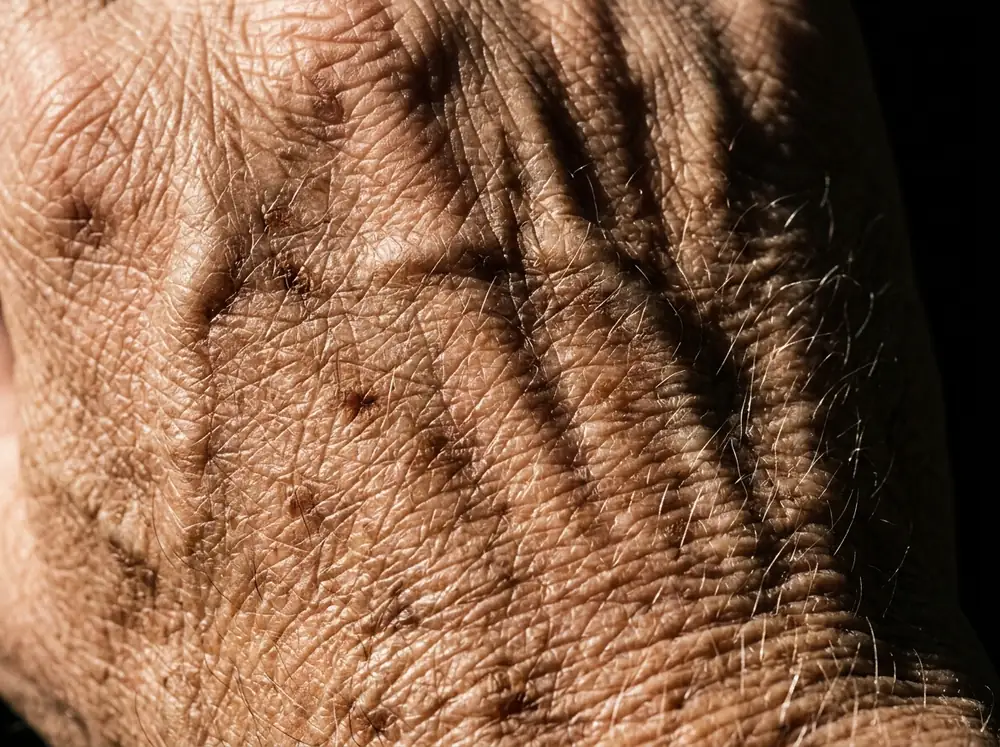
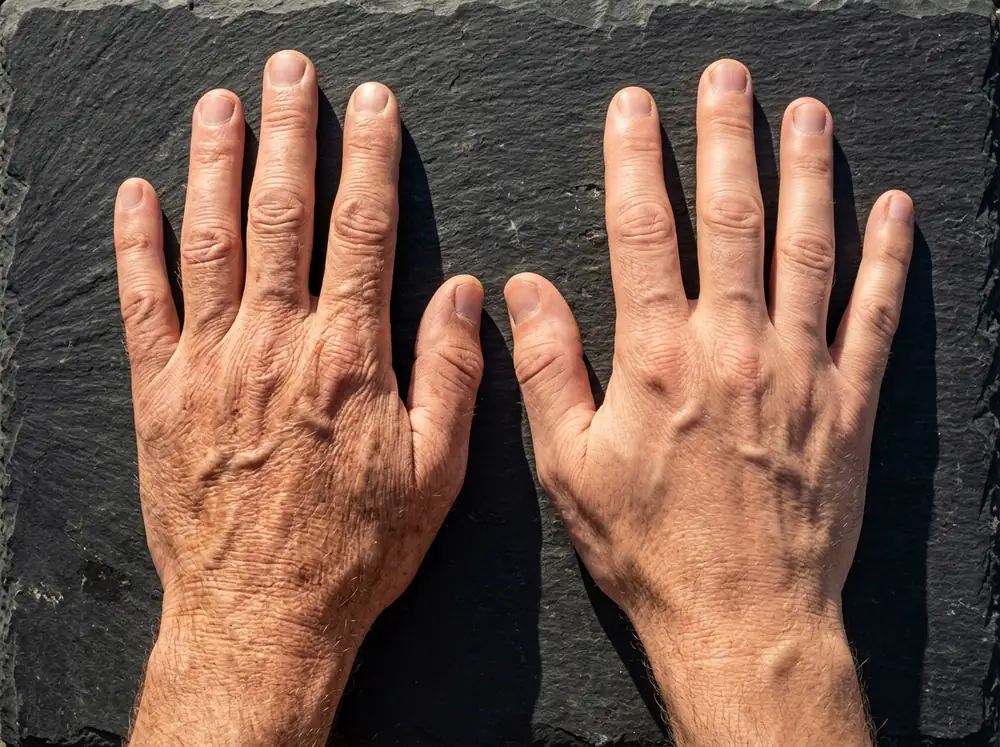
How ageing was measured. This is the detail that matters most and gets mentioned least. Trained personnel took silicone impressions of the skin on the back of the left hand, in 1992 and again in 1996. Experienced assessors, blinded to treatment allocation, graded those replicas on a microtopography scale from 1 to 6 — grade 1 being undamaged skin with fine lines evenly spaced in a two-directional network, rising through surface flattening, deepening of horizontal lines and loss of vertical lines.
Not photographs of faces. Not wrinkle counts. Silicone casts of hand skin, graded blind.
The authors defend the measure: a unit increase in microtopography grade is significantly related to visible deterioration in skin texture — coarser skin and increased wrinkling — and also correlates with risk of actinic keratoses and skin cancer. It is a reasonable proxy. It is still a proxy.
What the Result Actually Was
Two findings, and the second is the one worth quoting.
The daily sunscreen group showed no detectable increase in skin ageing after 4.5 years. Their microtopography grades did not measurably worsen across the trial.
Skin ageing was 24% less in the daily sunscreen group than in the discretionary group — a relative odds of 0.76, with a 95% confidence interval of 0.59 to 0.98.
Look at that interval for a moment, because it carries information the headline does not. The upper bound is 0.98. The effect is statistically significant, and it is significant by a narrow margin. The true effect could plausibly be a 41% reduction or a 2% reduction; 24% is the middle of a wide range.
The underlying numbers make the picture concrete. The discretionary group's odds of a worse grade in 1996 than 1992 were 1.56. The daily group's were 1.19, and that figure's own confidence interval ran from 1.00 to 1.41 — touching the line of no effect. The clean way to state it: the daily group aged measurably less than the comparison group, and did not measurably age at all.
The β-carotene arm found nothing. No overall effect on skin ageing, relative odds 0.95. The journal's editors added a caution that power was limited and a benefit or harm could not be confidently excluded — but as it stands, the supplement did nothing.
One more number worth having. By 1996, 77% of the daily sunscreen group were applying it at least three to four days a week, against 33% of the discretionary group. That is the real-world gap the 24% was bought with — not perfect daily use, but roughly double the frequency.
What It Does Not Show
Four limitations. Two are stated by the authors; two are visible in the data and rarely mentioned.
It Measured Hands, Not Faces
The outcome was microtopography on the back of the left hand. Hands and faces receive different UV doses, have different skin thickness, and age differently. The finding is that daily sunscreen retarded measurable surface ageing on hand skin over 4.5 years. Extending that to facial wrinkles is a reasonable inference, not a demonstrated result.
The Participants Were Overwhelmingly Fair-Skinned
Most participants were fair-skinned and more than 90% burned on acute sun exposure. That is a Fitzpatrick I–III population, living at latitude 26° south.
The subgroup data make this sharper. Broken down by skin colour, the relative odds were 0.60 in fair skin — a clear effect, confidence interval 0.44 to 0.83. In medium skin it was 1.19, a point estimate on the wrong side of 1. In dark skin, 0.67, but with an interval from 0.30 to 1.51 that spans no effect entirely. The test for interaction was not significant, so these differences may be noise — the dark-skin subgroup in particular was too small to conclude anything from.
What follows is a limit on generalisation rather than a finding about darker skin. This trial demonstrates the effect in fair skin at high latitude sun exposure. It does not demonstrate it elsewhere, and it does not refute it either. If you are working out where you sit, Fitzpatrick skin types I–VI sets out the scale and its limits.
It Was SPF 15, in the Early 1990s
The sunscreen was an SPF 15+ broad-spectrum formulation using the filters available in Australia in 1992. Not SPF 50, and not the modern filter systems now in use.
That cuts both ways. A higher-SPF, better-UVA-absorbing product might have done more — or the result might have been the same. The authors address it directly, and their answer is the most quotable line in the paper: whether results would have differed with a higher sun protection factor or greater UVA absorption is debatable, because the overriding factor in achieving adequate skin protection is application of a liberal quantity of sunscreen; the sun-protection factor or precise shape of the absorption spectrum is far less important.
Quantity over number, from the authors of the only trial on the subject. That is the same conclusion reached in how much sunscreen you actually need, arrived at independently.
The Power Was Modest
The authors' own stated limitation: some outcome data were missing, and power to detect moderate treatment effects was modest. The sample size was set by the size of the existing Nambour cohort rather than by a power calculation.
And in the subgroups by baseline damage, the effect did not reach significance in either direction — odds ratio 0.77 for those starting at grades 3–4, 0.90 for grades 5–6. The overall result held; the slices of it were underpowered.
Why UVA Is the Wavelength That Ages You
The mechanism explains why any of this works, and why UVA matters more here than UVB.
UVA penetrates deep into the dermis, promoting collagen degradation, whereas UVB causes DNA mutations closer to the surface. Both generate reactive oxygen species, and even one dose of UV radiation can stimulate matrix metalloproteinases — enzymes that break down collagen types I and III, the structural proteins holding skin taut.
That is photoageing, mechanically: repeated UV exposure switching on enzymes that dismantle the dermal scaffolding faster than it is rebuilt. Sunburn is the acute, visible version; this is the slow one that produces the outcome people actually mind.
Photoageing also presents differently by skin type. Lighter skin manifests earlier wrinkles, sagging and pigmentation irregularities, while darker skin shows delayed wrinkling but develops post-inflammatory hyperpigmentation and texture changes instead. So "does sunscreen prevent ageing" has a different practical answer depending on which of those you are trying to avoid — and for pigmentation specifically, hyperpigmentation in brown and deep skin tones is the more relevant piece.
What Follows for a Daily Routine
Taking the trial at exactly its strength, no more and no less:
- Daily use beat discretionary use over 4.5 years, by 24%, in fair-skinned adults under 55 at high sun exposure. That is the finding.
- "Daily" meant roughly 3–4 days a week in practice, not a perfect record. The bar is lower than the word suggests.
- Quantity mattered more than SPF number, according to the authors themselves.
- Head, neck, arms and hands were the sites treated. Hands are usually the neglected ones, and they are where the effect was actually measured.
- β-carotene did nothing. One supplement, one trial, no effect.
- Tolerability was good. Contact allergy or irritation in 3%, greasiness 1%, stinging eyes after facial perspiration 0.8%.
And the honest summary of the evidence base: one good randomised trial, in one population, measuring one proxy on one body site, finding a modest and statistically borderline effect in the expected direction. That is considerably more than most skincare claims have. It is also not the settled fact the marketing implies.
If you want to know why you still tan through sunscreen while all this is going on, that has its own answer.
Conclusion
Sunscreen does appear to retard skin ageing, and there is a real randomised trial behind the claim rather than an assumption. That already puts it ahead of most of what gets said about skincare.
The finding is that fair-skinned Australian adults under 55 who used daily SPF 15+ for four and a half years showed no detectable increase in surface ageing on the back of the hand, and 24% less than a comparison group — with a confidence interval running from 41% down to 2%.
What it does not show is that this transfers unchanged to faces, to darker skin, or to modern high-SPF formulations. Those are reasonable extrapolations, not results.
The most useful thing in the paper is not the headline anyway. It is the authors' own observation that how much you apply matters more than which number you buy — which means the version of this advice worth acting on is not "buy a stronger sunscreen" but "use more of the one you have, on your hands as well as your face, most days."
That is a smaller claim than the marketing makes. It is also one that has actually been tested.
Frequently asked questions
5 questions · tap one to open the answer
Does sunscreen actually prevent wrinkles?
How was skin ageing measured in the sunscreen trial?
Does a higher SPF prevent more ageing?
Does the sunscreen trial apply to darker skin?
Do antioxidant supplements prevent skin ageing?
Medically reviewed by
Dr. M.M Hanaei
Aesthetic Physician, Dermatology Fellowship
- MD — Shahid Beheshti University of Medical Sciences (SBMU)
- MCC Licensure (Medical Council of Canada)
- Dermatology Fellowship, Switzerland
- Certified in advanced aesthetic procedures
Last reviewed 19 September 2026