Skinic
Quick answer
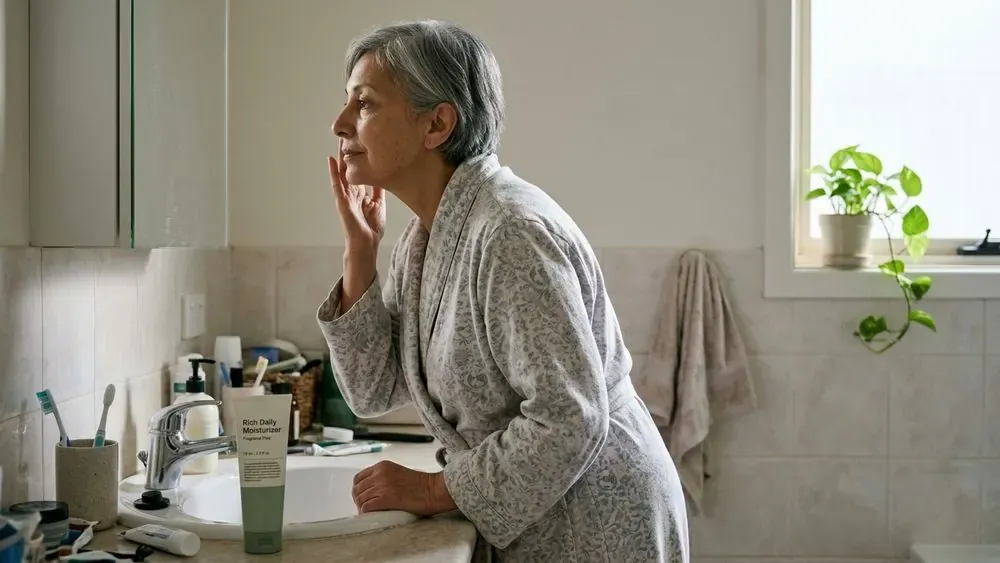
Skin makes less oil with age and repairs its barrier more slowly, so older skin usually needs a richer moisturiser, not an "anti-aging" one. Look for a mix of a water-binding ingredient and a sealing layer, and for no fragrance.
The full evidence is belowBy mid-afternoon your cheeks feel tight, though you use the cream you have used for years. Skin does change after 50. It makes less oil, especially after menopause, and it repairs its outer barrier more slowly. So older skin usually needs a richer moisturiser, not an "anti-aging" one.
Look for a water-binding ingredient plus a sealing layer, and look for no fragrance. This guide explains why and names no products.
Why does skin get drier as you get older?
Does skin really make less oil with age?
Likely, in women after menopause. A review of menopause and skin reports that oestrogen alone has been linked to fewer and smaller oil glands, and so to less oil on the skin. It also reports that oestrogen combined with progesterone has been linked to more skin oil. It notes that oestrogen applied through the skin was reported to reduce water loss and improve the barrier.
The review is a narrative one, not a trial. Some of its points rest on older or small studies. Its authors report no conflicts of interest.
Why does the skin barrier repair more slowly?
Your outer skin layer is a barrier that holds water in. A review of ageing skin says that after the barrier is damaged, recovery is significantly slower in older people. It reports more than 30% less fat in the outer layer of aged skin, and skin that is less acidic from about age 55.
Most of the detail comes from mouse studies and small human studies, and results on everyday water loss through older skin conflict. The authors report no conflicts. The picture is clear in direction: older skin loses water more easily and mends more slowly.
Does mature skin need anti-aging actives in every product?
The claim, checked
The claim: "Mature skin needs anti-aging actives in every product." We separated moisturising from treating lines.
Moisturising is one job. In a small study of 20 adults aged 65 to 82, a urea cream used twice a day for two weeks cut dryness scores from 2.5 to 0.25 and itch scores from 2.1 to 0.6. That study had no comparison group, so it cannot show the cream beats a plain one. It does show a plain moisturising ingredient can help dry older skin.
Treating lines is a different job. Our ranking of anti-aging treatments shows which options have trial data, and our guide to wrinkle creams explains the label wording. Neither says every moisturiser needs an active in it.
Actives can also work against dry skin. DermNet, a doctor-written skin site, lists redness, peeling and dry skin among the main side effects of retinoids. It suggests a sunscreen and moisturiser combination in the daytime. The review of ageing skin adds that many commercial moisturisers contain ingredients that may harm the barrier.
So we found no support for the claim. Separate the jobs.
What should the ingredient list have?
What do water-binders and sealers do?
DermNet explains three kinds of moisturiser ingredient. Humectants attract and hold water in the skin. Examples it gives include glycerine and urea. Occlusives form an oily layer on the surface. Examples include petroleum jelly and dimethicone. Emollients soften and smooth skin by filling cracks in the outer layer.
The "humectant plus occlusive" idea simply means a product with one of each, so it both holds water in and slows its loss. The sources report that fat mixtures with cholesterol, fatty acids and ceramides sped up barrier recovery in older people in small studies, and that a more acidic moisturiser improved hydration over 29 days. These are early findings, so treat them as clues, not rules.
Why choose fragrance-free?
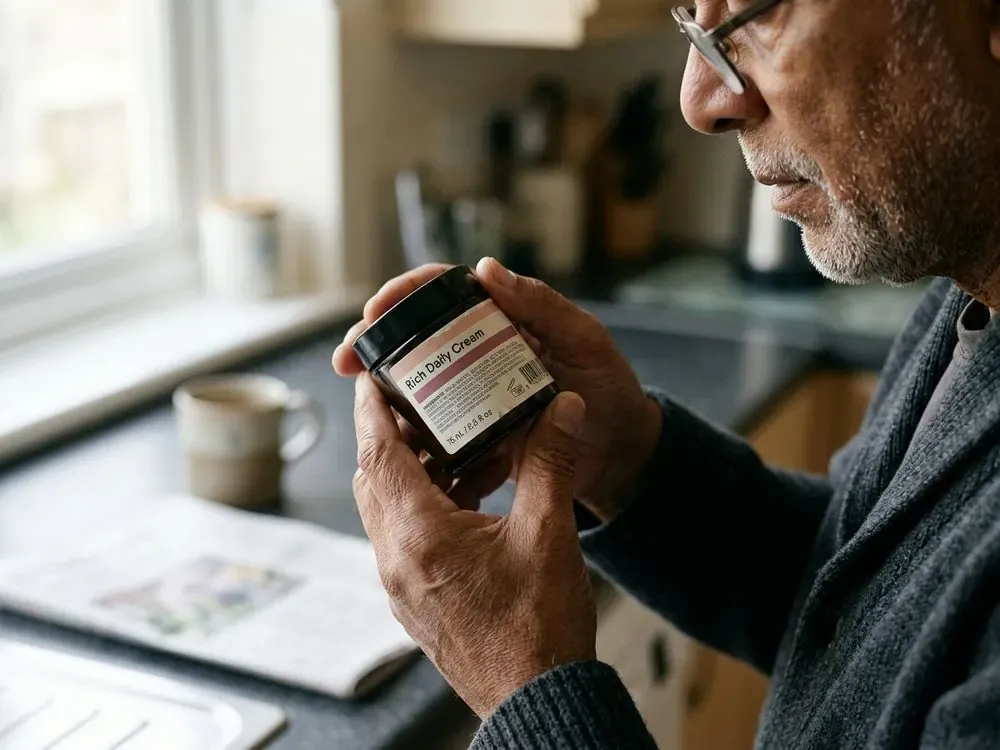
Older skin reacts more often to fragrance. A review of fragrance in consumer products says older people are more prone to fragrance allergy. It reports that cosmetics were the source in 42% of fragrance-allergic patients in one Danish study.
Watch the wording. The same review found that 21% of products marked "fragrance-free" were labelled as containing "perfume". It also found 4.7% of fragrance-sensitive patients reacted to "unscented" deodorants. Check the ingredient list for "fragrance", "parfum" or "perfume". The review is a narrative one, and its authors report no conflicts.
Cream, lotion or ointment: which texture?
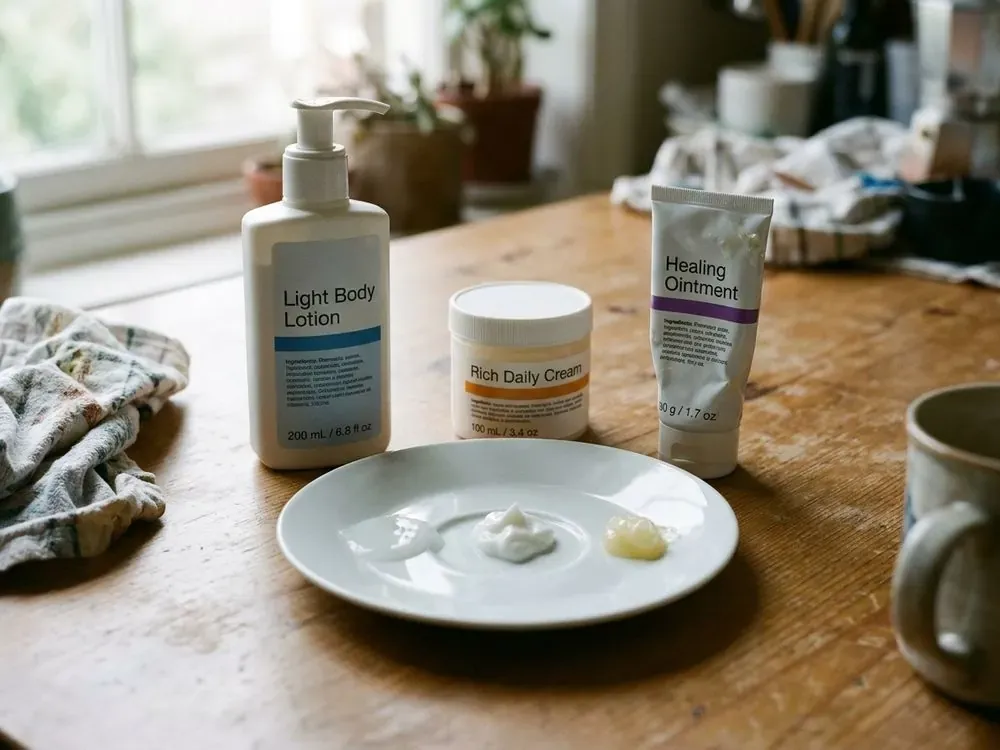
DermNet orders the three from most to least sealing.
| Texture | How DermNet describes it | Trade-off |
|---|---|---|
| Ointment | Best for dry, thick, scaly areas, with a long-lasting protective effect | Some people find it too greasy for the face |
| Cream | Suits broad use, lighter than an ointment | Needs reapplying more often |
| Lotion | Often used for mild dryness | Least sealing |
DermNet says very dry skin may benefit from a greasy, sealing moisturiser applied every couple of hours. That is advice for severe dryness, not a rule for every face.
Morning or night?
The sources do not separate day and night moisturisers, and none says one time is better. DermNet says moisturisers work best when applied straight after bathing. It also suggests a sunscreen and moisturiser combination in the daytime for people using retinoids.
All our aging guides sit in one place. Our guide to dry skin treatment and our look at how the skin barrier repairs cover the routine. For cream choices, see the best moisturiser for dry skin and urea creams.
When is dryness something else?
Sometimes dry skin is not just dry. DermNet describes asteatotic eczema, which most often affects older people. It often looks like crazy paving on the shins, with red cracks between skin plates. Thick moisturisers used several times a day are the usual treatment, and the page advises bathing less often and using a cream cleanser instead of soap.
The same page lists other causes of dry, itchy skin in older people. These include an underactive thyroid, poor nutrition, severe weight loss, and some medicines. DermNet advises a full check if dryness is new and comes with heavy scaling, weight loss or fever.
See a clinician if dryness does not improve, if skin cracks or weeps, or if you feel unwell.
Conclusion
Older skin makes less oil and repairs its barrier more slowly, so it usually needs a richer moisturiser. Look for a water-binder with a sealing layer, no fragrance, and a texture that matches how dry you are. Moisturising and treating lines are separate jobs, so a moisturiser does not need an "anti-aging" label.
If you want to see what a moisturiser is doing, keep dated notes or photos in the same light, in an app like Skinic or a notebook. See a clinician if dryness does not improve or if you notice cracks, weeping or other changes.
Frequently asked questions
5 questions · tap one to open the answer
Why does my skin feel so dry after 50?
Do I need an anti-aging moisturiser?
What should a moisturiser for mature skin contain?
Is fragrance-free better for older skin?
When is dry skin more than just dryness?
Medically reviewed by
Dr. M.M Hanaei
Aesthetic Physician, Dermatology Fellowship
- MD — Shahid Beheshti University of Medical Sciences (SBMU)
- MCC Licensure (Medical Council of Canada)
- Dermatology Fellowship, Switzerland
- Certified in advanced aesthetic procedures
Last reviewed 29 October 2026