Skinic
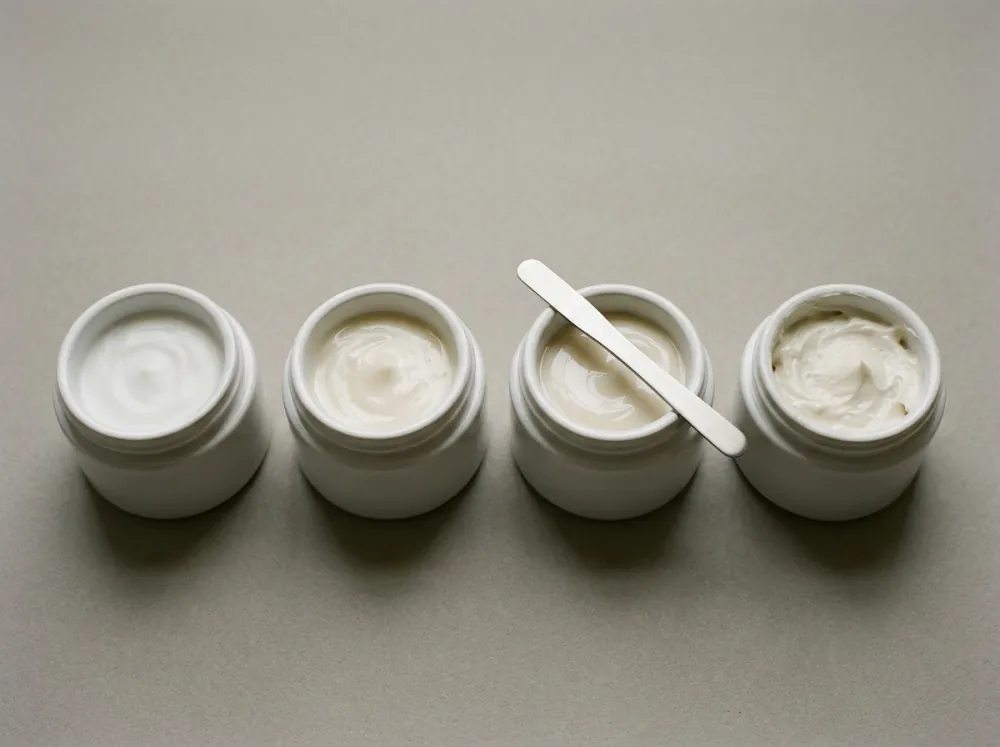
Urea cream does more than one job, and which job depends on the concentration. A review of urea in dermatology groups low strengths (2% to 10%) as moisturising, medium strengths (10% to 30%) as moisturising plus keratolytic, meaning they loosen the outer layer of skin, and high strengths (30% and above) as keratolytic and for removing thickened tissue. The bands overlap at the edges, which is the first thing to know about them.
The claim this article tests is that urea works the same at any strength. It covers what each band is used for, what the keratosis pilaris trials show, why the review that supplies the bands needs a disclosure, and what to check on a label. It names no product. It evaluates claims, and it does not tell you what strength to use.
One Molecule, Two Jobs
Where Urea Comes From
DermNet says urea is naturally present in healthy skin as one of three natural moisturising factors in the outer horny layer, the others being lactic acid and amino acids, and that dry skin conditions have markedly reduced amounts. Synthetic urea is used in preparations for scaly, itchy dry skin conditions including atopic dermatitis, psoriasis and ichthyosis.
What Concentration Changes
The review of urea in dermatology describes two broad actions. At lower strengths urea is hygroscopic: it draws and holds water, reduces water loss through the skin and acts as a humectant. At higher concentrations it denatures keratin by breaking hydrogen bonds, which loosens the dead surface layer. It also describes laboratory and animal findings that urea raises the expression of barrier genes such as filaggrin, and that it can raise the penetration of other topical drugs.
That review was supported by a company. Its journal fee was paid by ISDIN, two authors are ISDIN employees and three report consulting fees from it. This is reported, not a judgement of the findings.
The bands themselves differ between sources.
| Source | Low | Medium | High |
|---|---|---|---|
| Urea review, key points | 2–10% | 10–30% | 30% and above |
| Urea review, routine skin care | 2–20% for people without skin disorders | ||
| DermNet, available strengths | 3–40% across preparations | 10% cream most common in New Zealand | 40% solution for nail removal |
| Medium-strength review (abstract) | 15–30% |
Low Strength: Humectant
For low strengths the review points to moisturising and barrier support. It cites a randomised trial of 172 people with atopic dermatitis in which prolonged use of a preparation with 5% urea increased eczema-free time and reduced the risk of relapse by 37%, a trial of 53 people with hand eczema with similar findings, and a study of 42 people over 60 in which 5% urea increased skin hydration compared with a control emollient. For ichthyosis it reports more than a dozen trials with urea from 2% to 10%, most often 10%.
DermNet adds that the most commonly used urea preparation in New Zealand is a 10% cream, which helps urea keep water for longer in the outer layer. Our article on dry skin treatment covers where humectants sit in a routine, and the one on moisturisers for dry skin compares the three classes.
Mid Strength: Smoothing Rough Skin
Medium strengths are where the labels blur. The review lists 10% to 30% as moisturiser plus keratolytic, and a separate review of medium strengths (abstract) examined 15% to 30% urea as a single agent. It describes them as useful for hydration and keratin loosening but states that the evidence supporting these concentrations in skin disorders marked by dryness and thickening is limited. In practice, it says, they are used on limited areas where side effects are tolerable, and higher concentrations may be irritant on the face or more sensitive areas.
The urea review gives a small study of 12 people with severe dry skin on the legs, in which a 15% cream reduced water loss. A 2025 keratosis pilaris review describes 10% as typical for mild dryness and maintenance and 20% to 30% as reserved for more pronounced thickening, and reports an expert suggestion of 20% urea for keratosis pilaris.
High Strength: Keratolytic Territory
At 30% and above the review's indications change from moisturising to removing thickened skin: localised hyperkeratosis such as corns and callosities, thickened psoriasis plaques at 40% to 50%, palmoplantar keratodermas above 30%, and 40% to 50% for softening thickened nails, where it is combined with antifungals in some regimens. DermNet notes that a 40% aqueous solution can be made up by a pharmacist and has been used to dissolve and remove diseased nails, and that higher strengths and combinations with other active ingredients may be available only on prescription.
As reasoning, not a finding, these are specialist uses on thick skin rather than on a face or an arm, and no source opened supports a high-strength cream for general dryness.
Keratosis Pilaris
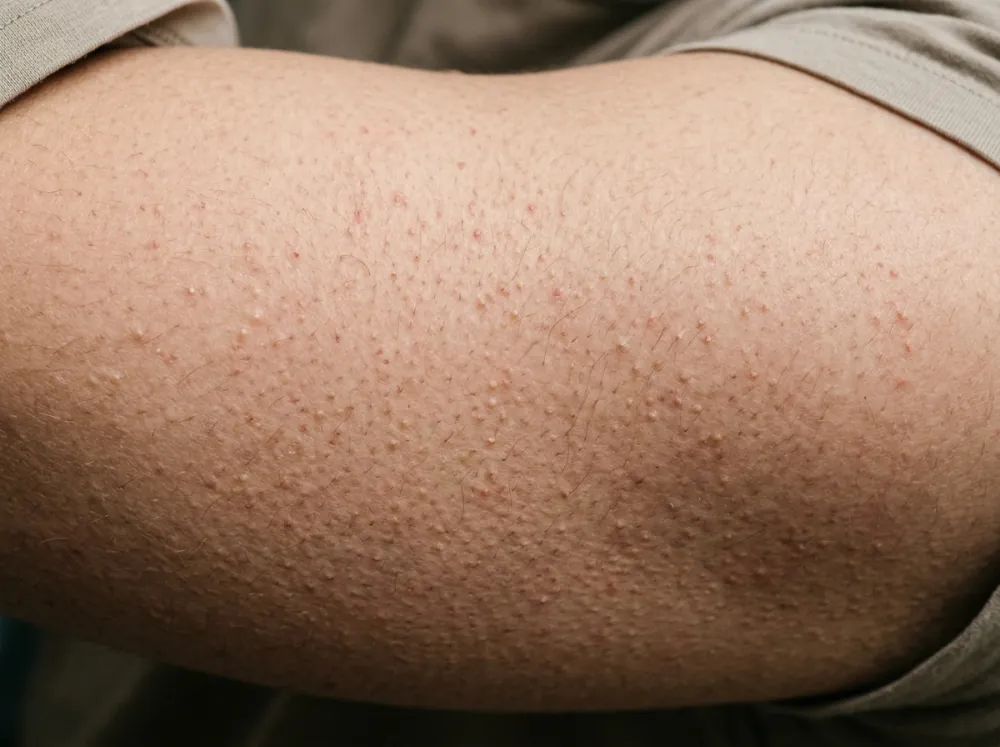
DermNet describes keratosis pilaris as a very common dry skin condition caused by keratin accumulating in the hair follicles, affecting 50 to 70% of teenagers and 40% of adults. It has no cure and often clears up during adult life. Its treatment list includes moisturising cream containing urea, salicylic acid, lactic acid or alpha hydroxy acids. Our article on bumps on the body covers telling it from folliculitis and body acne, and strawberry skin covers the leg version. A moisturizer for keratosis pilaris is a common search, and the evidence behind it is thinner than the shelf suggests.
What the Trials Are
The 2025 review of keratolytics in keratosis pilaris concludes that the evidence is limited: randomised trials are scarce, studies are small, short and often open-label, outcomes are heterogeneous, and long-term data are sparse. For urea, it identifies one study, a four-week, open-label, no-comparator trial of 30 adults using a 20% urea cream once daily. Skin smoothness and texture improved significantly at one week and four weeks, no significant adverse events were reported, and the study's abstract does not state who funded it.
Urea Against the Alternatives
The one randomised comparison identified in the sources opened tested 10% lactic acid against 5% salicylic acid creams twice daily for 12 weeks. Lesions fell by a mean of 66% with lactic acid and 52% with salicylic acid, with mild local irritation. No source opened compared urea directly with either. The 2025 review says lactic acid and urea showed particularly consistent benefits and salicylic acid has more limited direct evidence, and that effects are primarily cosmetic and need ongoing use.
The Figure Audited: "Urea Works the Same at Any Strength"
Verdict: not the same, though the exact cut-offs are conventions. Findings:
- Every source that grades urea does so by strength. The review, DermNet and the medium-strength abstract all tie moisturising to lower strengths and keratin loosening and thickened skin to higher ones.
- Irritation rises with strength. The review says mild irritation is occasionally seen and more frequent at higher concentrations, and the medium-strength review says higher concentrations may irritate the face or sensitive areas.
- The bands are not sharp. The same review gives 10% as the top of low and the bottom of medium, and gives 2% to 20% for routine care.
- No source opened compares strengths within one trial. A search for a within-study comparison of, say, 5, 10 and 20% found none, so where one band ends is a convention, not a measured threshold.
- The concentrations come from a funded review. The key-point bands are from the ISDIN-supported paper, though DermNet and the medium-strength abstract agree in direction.
The claim fails on direction. The pattern of lower humectant and higher keratolytic holds in every source, while any single number is a convention.
Stinging, and Who Should Skip It
DermNet says urea preparations are usually well tolerated, with mild stinging, itching and skin rash as side effects that normally need no attention unless they persist. The review adds that creams may have an unpleasant smell from volatile amines that fades quickly, that irritation is temporary and usually self-resolving, and that only one allergic contact dermatitis case to a high-concentration urea cream was found, probably due to another ingredient.
DermNet's cautions are specific: urea is for external use, avoid the eyes, and do not use it on broken skin (cracked or bleeding), on infected or oozing skin, or where there is severe widespread redness. For children, DermNet says a diagnosed dry skin condition with doctor advice from age one, and low-strength preparations from age three for undiagnosed dry skin. As reasoning, not a finding, stinging on freshly shaved, inflamed or scratched skin would be unsurprising from a product that loosens keratin, and the review notes irritation rises with strength.
What to Look For on a Label
These are criteria for judging a claim, not a product recommendation.
- Is the percentage stated? The bands only mean something with a number. A label that says "with urea" gives no strength, and the strengths in this article run from 2% to 50%.
- Is the strength matched to the skin? Medium strengths are described as tolerable on limited areas and potentially irritant on the face or sensitive skin; high strengths are for thick skin.
- What else is in it? The review says urea can increase the penetration of other topical drugs. As reasoning, adding lactic acid, salicylic acid or other exfoliants would stack keratolytic effects, which is a reason to know what else is in the jar.
- What is the vehicle? DermNet says a cream helps urea retain water for longer than a watery preparation.
- Is the claim about the skin or about the condition? "Hydrates" matches the evidence for low strengths. "Treats keratosis pilaris" has small, short, mostly open-label trials behind it.
- How will you judge it? Keratosis pilaris improvements in the trials were measured over weeks, and the 2025 review states effects are cosmetic and need ongoing use.
Conclusion
Urea is a humectant at low strengths and a keratolytic at higher ones, and every source opened grades it that way, with irritation rising alongside. The bands overlap, the main review was company-supported, and for keratosis pilaris the urea evidence is a single 30-person open-label trial of a 20% cream, with lactic acid holding the only randomised comparison found.
If you want to see whether a product changes anything, photographing the area in the same place and light every week, in an album or in an app like Skinic, shows more than memory. For a skin condition, ask your own clinician.
Frequently asked questions
5 questions · tap one to open the answer
What does urea cream do?
What percentage of urea cream is best for keratosis pilaris?
Is 10% urea cream a humectant or an exfoliant?
Can urea cream irritate skin?
Can you use urea cream on your face?
Medically reviewed by
Dr. M.M Hanaei
Aesthetic Physician, Dermatology Fellowship
- MD — Shahid Beheshti University of Medical Sciences (SBMU)
- MCC Licensure (Medical Council of Canada)
- Dermatology Fellowship, Switzerland
- Certified in advanced aesthetic procedures
Last reviewed 14 October 2026