Skinic
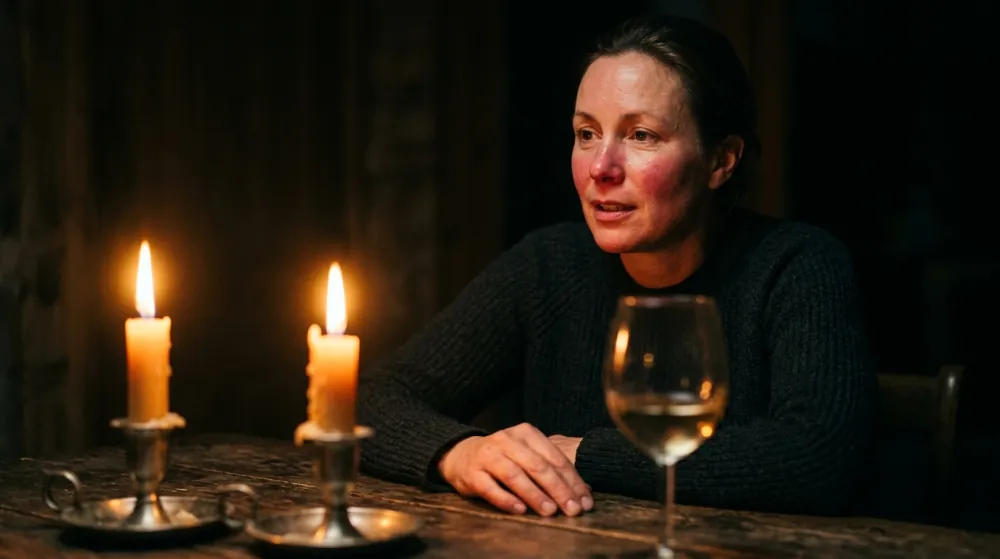
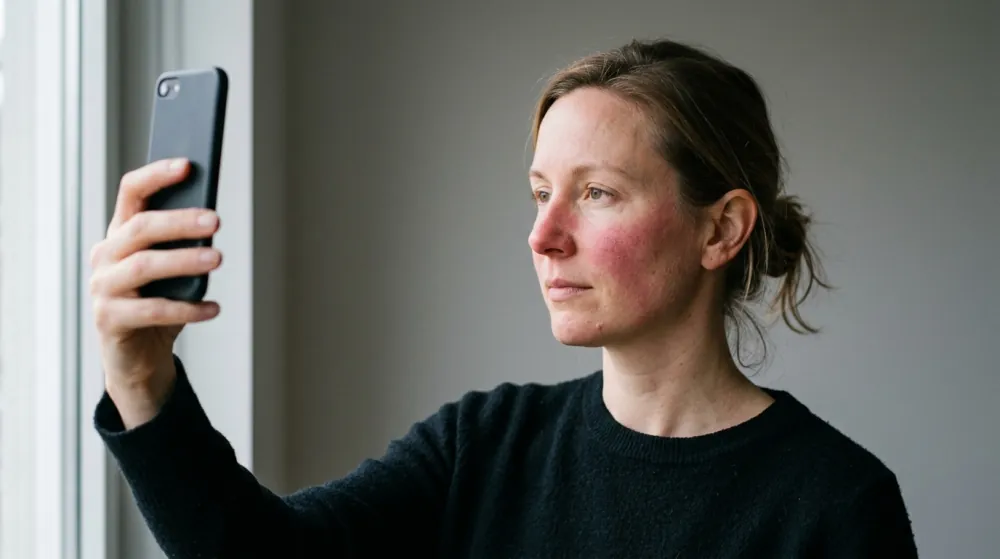
Mild rosacea on the face can look like sensitive skin: a face that flushes, stays slightly red in the centre, and stings or burns with some products. Sensitive skin is very common and rosacea is not, so most sensitive skin is not rosacea. The features that point toward rosacea are flushing and background redness that sits in the centre of the face, and they can be present before any pimples appear.
The claim this article tests is that rosacea always progresses through stages. It covers how sensitive skin and rosacea overlap, the four early signs the consensus criteria name, how flushing differs from persistent redness, what makes a change visible over months, and when to see a clinician. It describes and evaluates. It does not diagnose a face or advise treatment.
Your Skin Is Not Just Sensitive
A 2020 review of sensitive skin syndrome (abstract) describes it as a widely reported complaint defined by unpleasant sensations on exposure to stimuli that cause no reaction in healthy skin, a diagnostic challenge because the symptoms are subjective and visible signs are lacking. It reports that epidemiological studies put its prevalence as high as 60% to 70% among women and 50% to 60% among men. DermNet estimates that rosacea affects around 5% of adults worldwide.
Those two numbers settle the framing. As arithmetic, even if every person with rosacea also had sensitive skin, most people with sensitive skin would not have rosacea. It is sometimes said that a large share of sensitive skin is early rosacea, and no source opened supports that. What the sources do support is overlap: burning and stinging are listed among the minor features of rosacea, so a person with rosacea can describe their skin as sensitive.
Rosacea is a chronic inflammatory skin condition predominantly affecting the central face, DermNet says, and it most often starts between 30 and 60. Sensitive skin on its own is a description of symptoms. Rosacea is a diagnosis made from a pattern of signs.
The Four Early Signs
The global ROSacea COnsensus (ROSCO) 2019 panel, 19 dermatologists and two ophthalmologists using a Delphi method, defines the features. The criteria are funded by Galderma, and the panel states that the sponsor was not involved in the voting. DermNet summarises the rule: diagnosis needs one diagnostic criterion or two major criteria. Minor features alone do not meet it.
Flushing
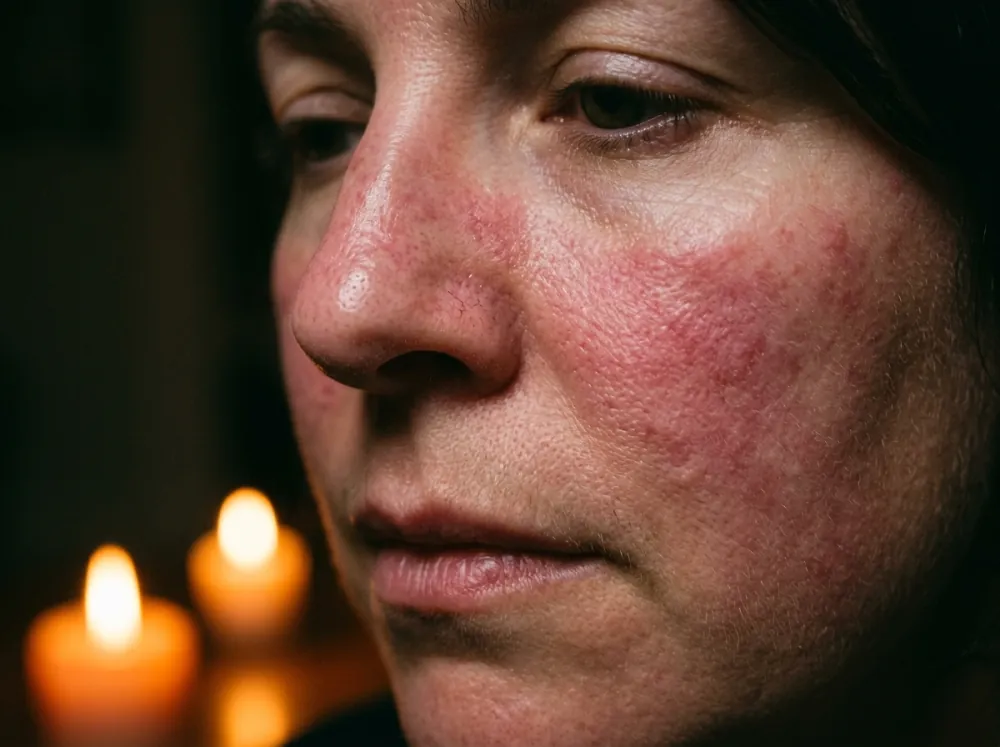
The panel defines flushing as a temporary increase in centrofacial redness that may bring warmth, heat, burning or pain. It is a major feature.
Persistent Central Redness
Background, ongoing centrofacial redness that may periodically intensify in response to triggers is the diagnostic feature. In darker skin (phototypes V and VI) the panel says erythema may be difficult to detect visually.
Burning and Stinging
These are minor features. The panel describes burning as an uncomfortable or painful feeling of heat, typically in the centre of the face, and stinging as a sharp discomfort, and says their severity is judged by duration, frequency, intensity, triggers and effect on daily life. Because they are minor, they count toward the picture and not toward the diagnosis. If your skin stings or burns but shows none of these signs, the expert definition of sensitive skin may fit better; see sensitive skin: what it means, and a routine that doesn't sting.
Dryness and Visible Vessels
A dry sensation is also a minor feature: skin that feels rough, tight, scaly or itchy. Visible vessels, telangiectases in the centre of the face and not only around the sides of the nose, are a major feature. DermNet adds that the nose and eyelid margins can be involved.
Flushing vs Persistent Redness
The difference is duration. Flushing comes and goes, and persistent redness is there between episodes and intensifies. DermNet lists triggers including ultraviolet light, temperature change, exercise, spicy food, alcohol, psychological stress, air pollution and smoking, and says calcitonin gene-related peptide may play a role in flushing and redness. Ultraviolet radiation is its most significant environmental trigger.
A cross-sectional survey of 135 people with rosacea (abstract) found flushing reported by 66%, and the cheeks were involved in all of those who flushed. Papulopustules came and went in 42% and were most often on the cheeks (80%) and the nose (67%). A 2025 review of the skin barrier and immune system in rosacea describes burning, itching and stinging as common companions of flushing and attributes the increased sensitivity of rosacea skin to barrier dysfunction and inflammatory activation. Our article on skin barrier repair covers what a compromised barrier is.
What Makes It Visible Over Months
Rosacea tends to change slowly and in cycles, so it is easy to miss from one day to the next. DermNet describes a relapsing and remitting course. The 2019 panel recommends ongoing monitoring and dialogue between clinician and patient, and developed a prototype tool, the Rosacea Tracker, from its statements. Its own descriptions of features give the things worth recording: when flushing happens, what preceded it, how long it lasted, and whether the background colour between episodes is changing. How the treatment options compare by feature is in rosacea treatments, ranked by evidence.
As reasoning, a dated record answers the question of whether the face is redder than last season better than memory does. Photographs in the same light, and a note of triggers, are what a clinician can use, and our article on what to bring to a rosacea visit covers photographing flares. Our guide to sunscreen for sensitive skin and rosacea covers the product that stings most often.

Recognition, Then Referral
This article describes. A clinician diagnoses. DermNet says rosacea is diagnosed clinically in most cases and that biopsy may be considered where the diagnosis is uncertain. Reasons the sources give for a visit:
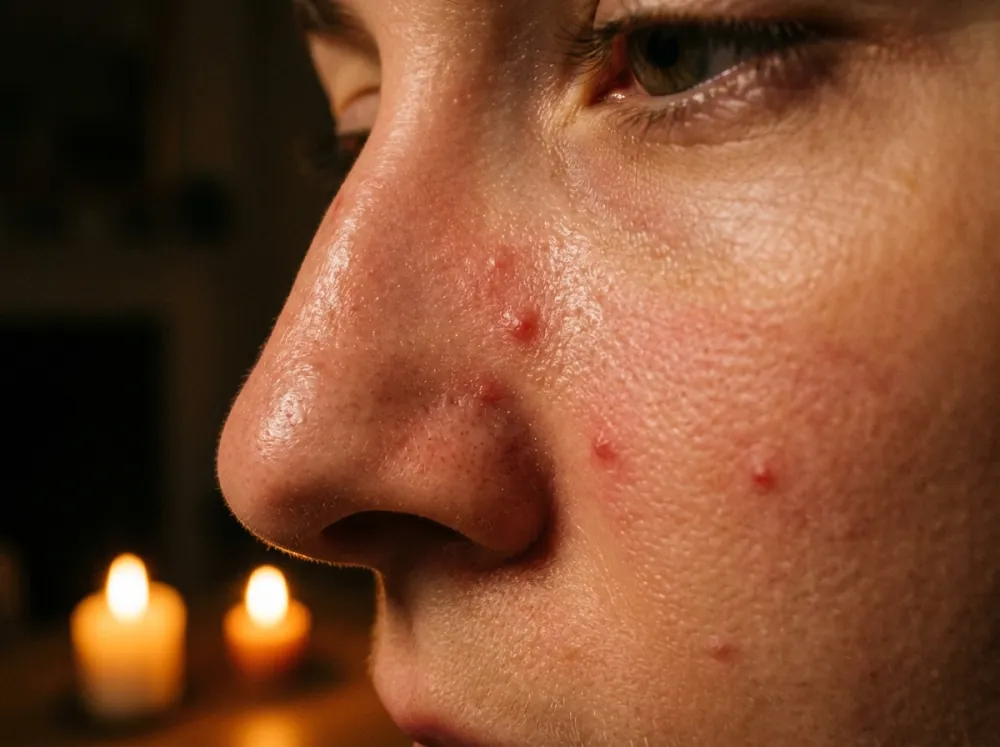
- Pimples or thickening. Inflammatory papules and pustules, and thickening of the skin (phymatous change), most often on the nose and more common in men, are major features. Our article on rosacea, perioral dermatitis and acne separates them from acne.
- Eye symptoms. DermNet says ocular features affect over 50% of people with rosacea, including dryness, foreign-body sensation, light sensitivity, conjunctivitis, blepharitis and keratitis, which can lead to long-term eyesight impairment. The 2019 panel included two ophthalmologists for this reason.
- Darker skin. DermNet and the panel say rosacea is likely under-recognised in skin of colour because melanin camouflages redness and vessels. A 2022 review says a history of facial stinging or burning, flushing, and acne treatments that failed can help the diagnosis in highly pigmented skin.
- Uncertainty. Redness has other causes, and our article on broken capillaries on the face covers one of them.
The Figure Audited: "Rosacea Always Progresses Through Stages"
Verdict: unsupported. Progression happens in a small proportion of people and is not the rule. Findings:
- The staged model has been replaced. The 2002 system sorted rosacea into four subtypes, and the survey below notes that progression between them had been implied. The 2017 and 2019 panels recommend a phenotype approach, managing each person by their presenting features instead of predefined subtypes, because the subtype approach had limitations.
- Natural history is not established. The 135-person survey states that the natural history of rosacea is unknown and that progression between subtypes had been implied but not formally evaluated. It concludes that a small proportion may progress between subtypes.
- A sequence exists among those with more than one subtype. Of people meeting criteria for at least two, 66% developed the erythematous type before the papulopustular, and 92% before the phymatous. That describes order in people who already have several features. It does not show that everyone moves along it.
- The usual description is relapsing and remitting. DermNet describes this course, with symptoms controlled by measures and treatments.
- The limit. The survey is cross-sectional, rests on recall, and drew on one region of northern Germany.
Conclusion
Mild rosacea can look like sensitive skin. Sensitive skin is common and rosacea is not, and what separates them is a pattern: flushing, background central redness, visible vessels and sometimes pimples, with burning, stinging and dryness as supporting features. Rosacea does not follow a fixed path of stages, and the honest description is a relapsing condition that changes slowly and can be missed in darker skin.
If your face flushes or stays red in the centre, noting when, with photographs in the same light each month, in an app like Skinic or in an album, gives a clinician a record to work from. For eye symptoms, pimples, thickening or redness that does not settle, ask your own clinician.
Frequently asked questions
5 questions · tap one to open the answer
Is mild rosacea the same as sensitive skin?
What are the early signs of rosacea?
Does rosacea always get worse over time?
How is rosacea diagnosed?
What does rosacea on the nose look like?
Medically reviewed by
Dr. M.M Hanaei
Aesthetic Physician, Dermatology Fellowship
- MD — Shahid Beheshti University of Medical Sciences (SBMU)
- MCC Licensure (Medical Council of Canada)
- Dermatology Fellowship, Switzerland
- Certified in advanced aesthetic procedures
Last reviewed 17 October 2026