Skinic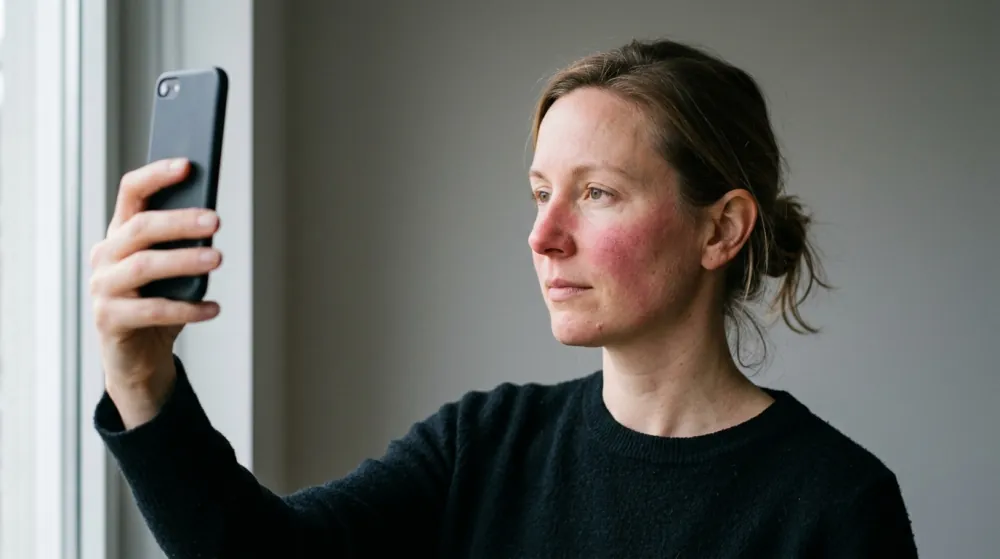
Seeing a rosacea dermatologist starts with a reassurance: DermNet states that rosacea is diagnosed clinically in the majority of cases, by looking at the face against a short list of criteria. A biopsy is not part of the routine. The National Rosacea Society's checklist for a visit includes photographs of the skin at its worst, because the skin can look different on the day of the appointment.
This article covers when it is time to book, how rosacea is diagnosed, what to bring, what treatments the guidance reports a clinician may offer, and questions worth asking. It describes a process and reports guidance. It does not diagnose you, and the decisions about treatment belong to your own clinician.
When It Is Time
Signs That Fit a Visit
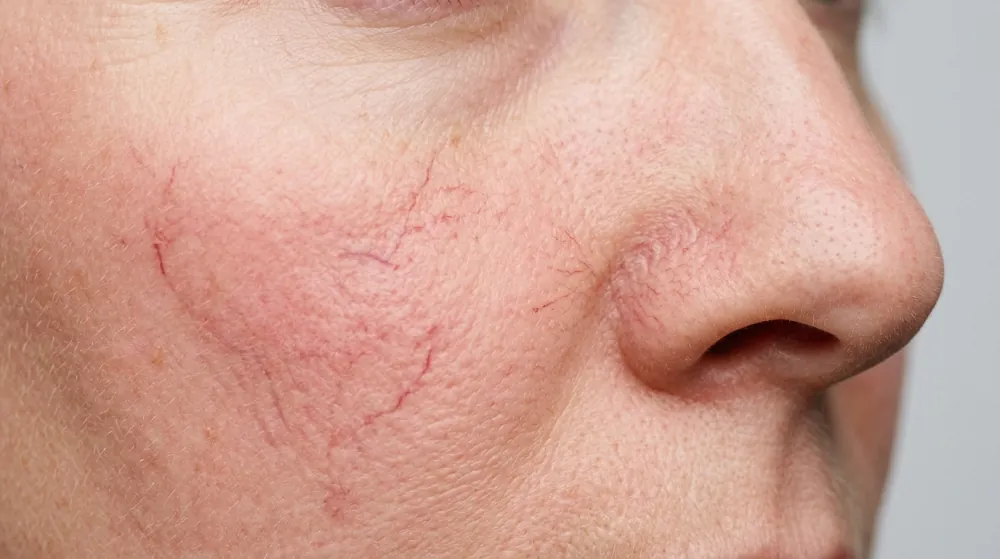
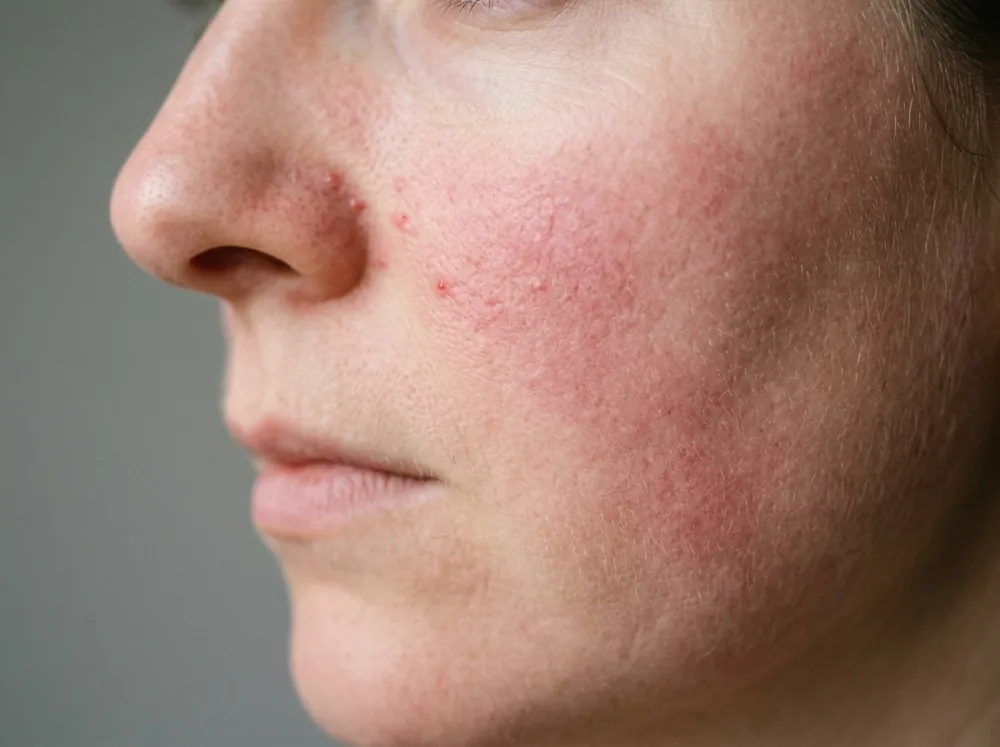
A rosacea dermatologist works from a definition that clinicians use, and its features are the reasons to be seen. DermNet lists persistent redness in the central face that is periodically intensified by triggers as a diagnostic feature. It lists flushing, inflammatory bumps and pustules, visible blood vessels and eye involvement as major features, and burning, stinging, swelling and a dry sensation as minor features.
Matching that list does not make a diagnosis, and a visit is how the question gets answered. Several other conditions look similar, and DermNet's differential includes acne, seborrhoeic dermatitis, perioral dermatitis, demodicosis, lupus, drug reactions and steroid-induced rosacea. Our article on rosacea, perioral dermatitis and acne covers how the three most-confused conditions differ.
Signs That Should Not Wait
Some features have their own urgency in the guidance.
- Eye symptoms. The American Academy of Dermatology states that when rosacea affects the eyes, treatment is essential. Mild or moderate eye involvement may be managed by a dermatologist or referred, and eye involvement that threatens eyesight is referred immediately to an ophthalmologist. A consensus panel of dermatologists and ophthalmologists lists blepharokeratoconjunctivitis, sclerokeratitis, anterior uveitis and blepharoconjunctivitis as features that need such a referral.
- Firm, round bumps or thickening of the skin. The American Academy of Dermatology says that in someone diagnosed with rosacea, these changes, most common on the nose, are a reason to see a dermatologist, and that the earlier thickening (phyma) is treated, the better.
- Redness after steroid use. DermNet lists steroid-induced rosacea in the differential and advises against topical steroids on rosacea. Our article on acne treatment that made redness worse covers how that happens.
- No response to treatment. Atypical or treatment-resistant disease is the case for a closer look, as the biopsy section below shows.
How Rosacea Is Diagnosed
What the Dermatologist Looks For
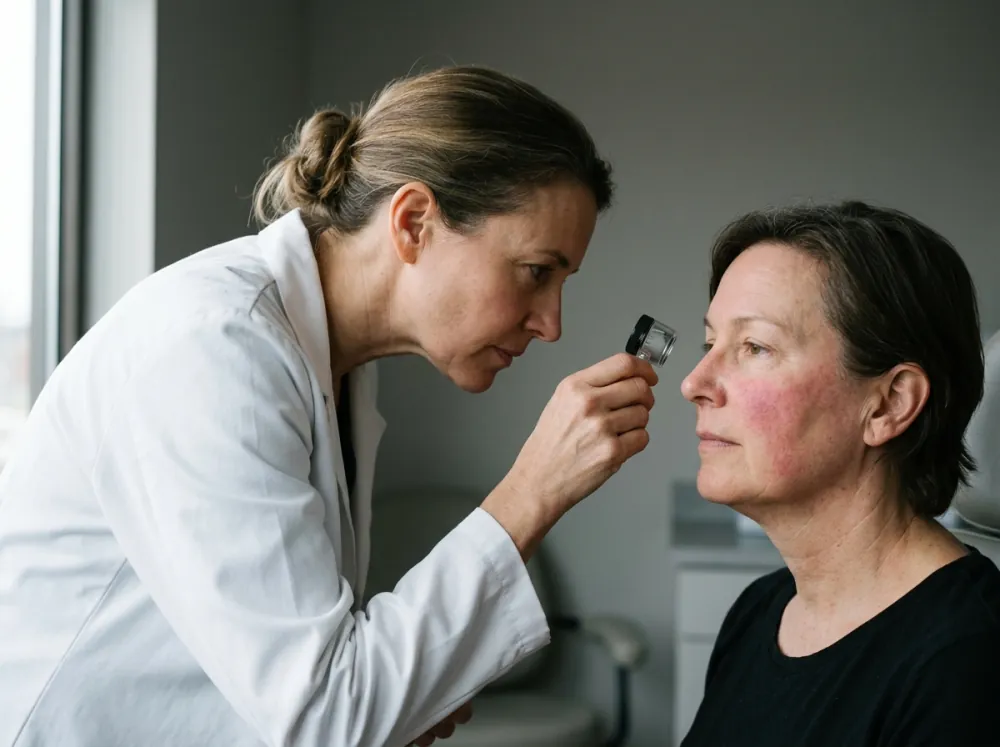
The American Academy of Dermatology states that a dermatologist diagnoses rosacea by examining your skin and eyes. Because signs of rosacea come and go, the dermatologist also asks questions. That is why history matters as much as the examination.
DermNet states the rule that is applied: diagnosis uses the criteria recommended by the 2017 global ROSacea COnsensus (ROSCO) panel, and requires one diagnostic criterion or two major criteria. The diagnostic criteria are persistent centrofacial redness with periodic intensification by triggers, and phymatous changes. The major criteria, which must be in a central facial distribution, are flushing, inflammatory papules and pustules, visible vessels (excluding the nasal alar vessels, common in adults) and ocular rosacea.
Darker Skin
Visibility changes the picture. DermNet says features may be harder to identify in skin of colour and that rosacea may be under-recognised and underdiagnosed in these patients. A 2019 consensus update states that melanin can camouflage redness and visible vessels, leading to underdiagnosis in skin phototypes V and VI. DermNet adds that in darker phototypes greater emphasis may be placed on other major and minor features.
For someone with deeper skin, a description of burning, stinging, bumps and flushing episodes is therefore more useful to bring than a hope that the redness will be obvious. The consensus panel was funded by a manufacturer of rosacea treatments (Galderma), which states it was not involved in the voting, discussion or handling of data.
The Figure Audited: "Rosacea Needs a Biopsy to Diagnose"
The claim is checked here against the current criteria.
What the Criteria Say
Verdict: the claim is false for the common presentations. DermNet states that rosacea is diagnosed clinically in the majority of cases, and the criteria above are clinical: redness pattern, flushing, bumps, vessels and eye features. The American Academy of Dermatology describes diagnosis by examining the skin and eyes and asking questions. Testing, it says, is sometimes needed to rule out another condition such as lupus.
The criteria themselves are a consensus statement, not a lab test. The 2017 ROSCO paper that DermNet cites was not opened. The 2019 update from the same panel was, and it builds on the 2017 feature descriptions. A review of rosacea classification lists the same diagnostic, major and minor features in its first table.
When a Biopsy Is Used
Biopsy has a role at the edges. DermNet says that in cases of diagnostic uncertainty a skin biopsy may be considered. The American Academy of Dermatology says a biopsy may be needed if someone might have granulomatous rosacea, a rare type, and describes the procedure as done during an office visit while the patient stays awake, with a small piece of skin examined under a microscope.
A 2025 case report shows why. An 84-year-old man with a 13-year history of a lymphoma had swollen red lesions on the nose and ears that were diagnosed as rosacea and did not respond to two courses of topical treatment. A skin biopsy showed cutaneous marginal zone lymphoma. The authors conclude that lymphoma should be considered in atypical or non-responsive rosacea-like disease. One case is an illustration, not a rate, and it involved an unusual presentation.
So the accurate statement is that a rosacea dermatologist does not need a biopsy to diagnose typical rosacea, and uses one when the picture does not fit or does not respond.
What to Bring: Triggers, Products, Photos
The National Rosacea Society lists five things to take to a dermatology appointment. Its article sets the structure here. Our articles on rosacea, perioral dermatitis and acne and acne treatment that made redness worse cover the history that matters for their own conditions.
Photos of Flares
The Society says the skin can change between making the appointment and arriving, so bring photos from when signs and symptoms are at their worst, from multiple angles, organised so they are easy to show. The 2019 consensus panel makes a similar point from the clinic side: some panellists reported challenges using the phenotype approach in daily practice and recommended photographs, record-keeping sheets and case studies to help.
Photographs are more useful when they are comparable. Whether kept in a dated album or in an app like Skinic, taking them in the same place, at the same distance and in the same light makes a difference between two dates readable. A photograph cannot say what the redness is. It shows the clinician what the skin was doing when they could not see it.
Products, Medications and Triggers
The Society's list continues in four parts.
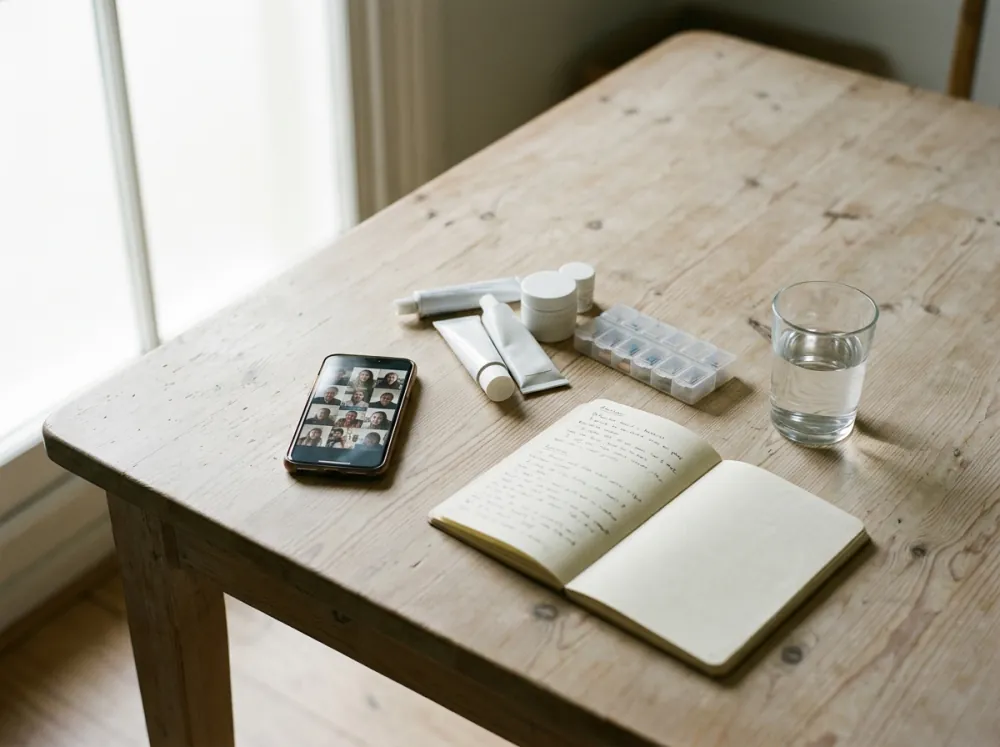
- A symptom timeline. Signs or symptoms you are noticing, how your skin has changed since a previous visit, when symptoms started and what makes them better or worse.
- Every product on the skin. Over-the-counter, prescription, and the moisturiser used for 20 years. For a large number, a photograph of them or the products themselves, ideally with the ingredient labels.
- Medications and supplements. The Society notes that anything that goes into the body can affect the skin, and asks for dosage, frequency, brand and how long each has been taken.
- Written questions. The Society suggests writing them down ahead and taking notes during or after the examination.
DermNet adds a symptom diary for finding triggers. Its listed common triggers are spicy food, hot or cold temperatures, exercise, sun exposure, cosmetic products, medications that cause blood vessels to widen, alcohol, fruits and vegetables, dairy and marinated meat products. The American Academy of Dermatology names overheating, alcohol and spicy foods as common. The two lists differ in length, and individual triggers vary, which is why a diary is recommended over a list.
Rosacea's burden is not only visible. The 2019 consensus states that rosacea can carry a high burden independent of clinical severity, that non-visible symptoms such as itch, soreness, pain or stinging can have a particularly adverse impact, and that disease burden should be discussed in consultations. A line on how rosacea affects daily life belongs in the notes.
What a Clinician May Offer (Reported)
This section reports what guidance describes. It is not a treatment recommendation, and doses, strengths and techniques are outside the article.
The American Academy of Dermatology states the aims of treatment as reducing or eliminating signs, easing discomfort and preventing worsening, and says a plan includes trigger avoidance, gentle skin care and sun protection. DermNet's general measures include education on skincare, frequent moisturising, gentle cleansers, mineral sunscreens with an SPF of at least 30, avoiding exfoliants, alcohol-based products and topical steroids, and green-tinted cosmetics to reduce the look of redness.
Treatment then follows the feature. Guidance and the evidence grading from a 2019 systematic review of rosacea interventions report the following.
| Feature | Options reported | Notes |
|---|---|---|
| Persistent redness | Topical brimonidine or oxymetazoline; intense pulsed light; vascular laser | The review rates the evidence high-certainty for brimonidine and moderate for oxymetazoline. The American Academy of Dermatology says the topicals fade colour for up to 12 hours, with best results 3 to 6 hours after use |
| Flushing | See the disagreement below | Evidence limited |
| Bumps and pustules | Azelaic acid, ivermectin, metronidazole, minocycline, low-dose doxycycline, isotretinoin | High-certainty evidence for azelaic acid and ivermectin. The Academy says topical treatment gives slight improvement in 3 to 4 weeks and noticeable change in 2 to 3 months |
| Visible vessels | Vascular laser, IPL, electrodesiccation | Low-to-moderate-certainty evidence for laser and IPL |
| Thickened skin | Low-dose doxycycline or isotretinoin to stop further thickening; surgery, laser, radiofrequency or electrosurgery to remove existing tissue | The Academy says isotretinoin cannot remove existing thickened skin and is not an option for everyone; earlier treatment is easier |
| Eyes | Dermatologist or ophthalmologist | Severe involvement to an ophthalmologist |
The sources disagree on flushing. DermNet lists topical alpha-agonists and oral beta-blockers under transient flushing as treatments recommended by the 2019 consensus. The 2019 consensus text says topical alpha-adrenergic agents and oral beta-blockers were removed from its algorithm for flushing and transient erythema, because evidence is limited, while noting clinical experience suggests they could be considered in certain situations. The same consensus added topical alpha-adrenergic agents, IPL and vascular lasers as options for persistent central redness. The accurate statement is that flushing is the feature with the weakest evidence for a drug, and that the choice is a clinician's.
The consensus also states that rosacea is a chronic disease needing long-term management, that combination therapy can help people with several features, and that using lasers or IPL in darker phototypes needs a provider experienced in that situation because it can cause dyspigmentation. The American Academy of Dermatology says that in inexperienced hands laser, light treatments or electrodesiccation can cause burns, permanent colour changes or scars, and recommends a board-certified dermatologist for procedures. Our article on azelaic acid covers the rosacea evidence for that ingredient, and our article on broken capillaries on the face covers the vessel evidence.
Questions to Ask
The 2019 consensus lists the factors it considers highest priority to discuss in consultations. They give a ready set of questions, adapted here. The list is not medical advice, and a clinician may add others.
- For tolerability, cost and effect: What side effects are likely? What will this cost over a year? How will we know it is working?
- For timing: How long before a change should show? How long is the treatment likely to last?
- For the whole plan: What skin care, trigger avoidance and camouflage go with this? Is maintenance treatment likely to be needed? What are the chances of clear skin?
- For what the visit may have missed: Do the eyes need checking? Is any current product or medicine a possible trigger? How will progress be tracked?
Conclusion
Rosacea is diagnosed by examination and history against a short criteria list, not by biopsy, though a biopsy has a role when the picture is atypical or treatment does not work. Eye symptoms, thickening skin and redness after steroid use are reasons not to wait. The treatment guidance is feature-by-feature, with the weakest evidence for flushing and low-to-moderate evidence for lasers on vessels.
A useful visit is prepared. Photographs of the skin at its worst, a list of every product, medication and supplement, a symptom timeline and written questions are what the National Rosacea Society asks patients to bring. Dated photographs taken in the same light, in an album or in an app like Skinic, give the clinician something to compare. Bring them, and ask your own clinician about the rest.
Frequently asked questions
5 questions · tap one to open the answer
How does a dermatologist diagnose rosacea?
Does rosacea need a biopsy to diagnose?
What should I bring to a rosacea appointment?
When should I see a dermatologist for rosacea?
What can a dermatologist do for rosacea?
Medically reviewed by
Dr. M.M Hanaei
Aesthetic Physician, Dermatology Fellowship
- MD — Shahid Beheshti University of Medical Sciences (SBMU)
- MCC Licensure (Medical Council of Canada)
- Dermatology Fellowship, Switzerland
- Certified in advanced aesthetic procedures
Last reviewed 10 October 2026