Skinic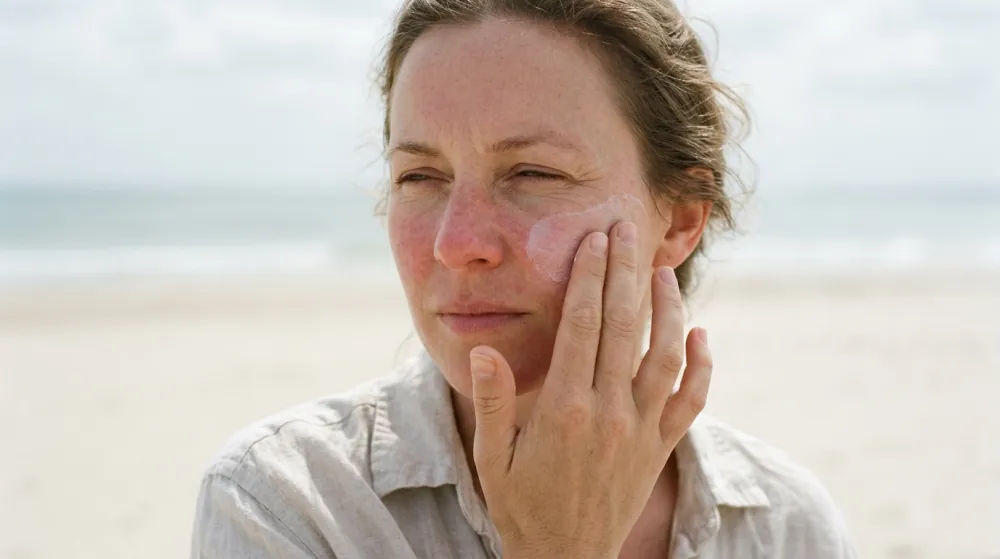
Sunscreen for sensitive skin has to start with a distinction that the labels blur: stinging is not allergy. A review of sunscreen contact sensitivity separates the transient stinging, urticaria and acne that topical sunscreens can cause immediately from the allergic contact dermatitis that develops through an immune reaction. The two have different causes and different numbers.
The claim that chemical sunscreens cause allergic reactions in most people fails on the data. In the North American Contact Dermatitis Group's 8-year analysis of 19,618 patients patch tested to benzophenone-3 and benzophenone-4, 2.1% reacted to at least one, and these were people referred for suspected allergy.
This article covers why sunscreen stings, which filters are most often implicated, the allergy claim audited, whether mineral sunscreens are gentler, what rosacea changes and what patch testing involves. It evaluates claims. It names no product, and a reaction that is severe, spreading or persistent is a question for your own clinician.
Why Sunscreen Stings
Stinging Is Not Allergy
A 2024 review states that transient stinging, urticaria and acne from topical sunscreens may happen immediately, whereas sunscreens are also a common cause of allergic contact dermatitis and photoallergic contact dermatitis. It adds that sunscreen allergy may come from the photoprotective chemical itself, from excipients or from the vehicle, and it records that PABA-containing products caused common transient stinging or burning before they declined in use.
Immediate stinging that fades is a different event from a rash that appears later. The sources in this article address both, and the allergy data below do not measure stinging.
The Vehicle Contributes
The same review says that most allergic and photoallergic reactions it describes come from the formulation around the filters: emollients, emulsifiers, surfactants, preservatives, perfumes and copolymers. That is the review's description, and it is not a measured proportion.
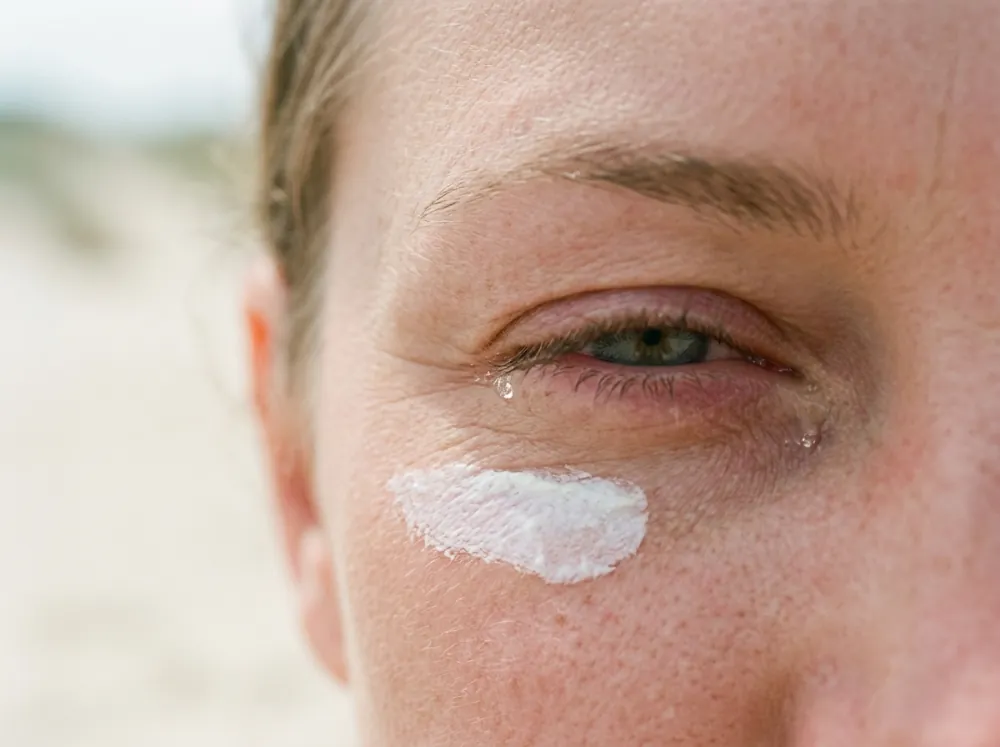
The FDA's sunscreen labelling shows that eyes are a known sensitive site. A product's Drug Facts must state that when using the product you should keep it out of eyes and rinse with water to remove it, and to stop use and ask a doctor if a rash occurs. Those are label requirements, reported as such.
Filters Most Often Implicated
The 2024 review lists the groups of UV filters it describes as contact sensitisers.
- PABA and PABA esters, the earliest filters, caused sensitivity as early as 1947 and are a reason for their decline.
- Benzophenones, including oxybenzone (benzophenone-3), are named as common contact sensitisers. The review says benzophenone-3 was a relevant allergen in 70% of positive reactions during 2003 to 2004, and that benzophenone was named allergen of the year for 2014.
- Avobenzone (a dibenzoylmethane) is described as the second most common allergen after benzophenone-3.
- Cinnamates infrequently cause allergic contact dermatitis, but are the third most common cause of photoallergic reactions after oxybenzone and avobenzone.
- Octocrylene was introduced to substitute for oxybenzone and is in most high-SPF sunscreens. The review says it has been associated with rising allergic contact dermatitis and photoallergy in adults and with contact urticaria in children, and calls it a strong allergen.
- Newer filters of the Tinosorb type and drometrizole trisiloxane are described as infrequent causes.
A review of sun protection adds that the 10-year retrospective analysis it cites, of almost 24,000 patients who had patch testing, found that 0.9% had a sunscreen allergy and 70% of those were due to oxybenzone. The review also notes that oxybenzone use continues in the US because the FDA has not yet approved alternative filters, a point our article on bemotrizinol sunscreen updates.
The Figure Audited: "Chemical Sunscreens Cause Allergic Reactions in Most People"
The plan asked for the filter contact-allergy prevalence to be checked.
What Patch-Test Clinics Found
The North American Contact Dermatitis Group patch tested 19,618 patients to benzophenone-3 (10% in petrolatum) and benzophenone-4 (2%) between 2013 and 2020. Positive reactions were found in 0.5% for benzophenone-3 and 1.6% for benzophenone-4, and 2.1% reacted to at least one (abstract). Most reactions were currently relevant, 90.4% for benzophenone-3 and 65.8% for benzophenone-4, and common sources were personal care products and sunscreens. People who reacted were more likely to have a history of hay fever (39.3% against 33.4%), of atopic dermatitis (39.8% against 30.7%) and facial involvement (37.4% against 32.2%).
The 0.9% figure for sunscreen allergy in nearly 24,000 patients points the same way. Both populations were referred to clinics for suspected allergy, so they are more likely to have a problem than people in general. No source opened gives a prevalence in the general population, and the data above therefore set an upper bound by selection, not a measurement of everyone.
What Self-Reported Allergy Turned Out to Be
A study of people who identified themselves as allergic to sunscreens found 27 self-reporters, 11 of whom agreed to photopatch testing, a procedure that patients find difficult (abstract). Eight had negative patch tests. One reacted to benzophenone-2, one had an earlier reaction to titanium dioxide and a related compound but not to the coated titanium dioxide in the study, and one had relevant reactions to benzophenone-3 and a PABA ester. None reacted to the newer filters tested. The authors concluded that true delayed-type allergy and photoallergy to sunscreens is less frequent than patients believe. It was a small study.
Verdict: the claim is false. In clinic populations selected for suspected allergy, benzophenone filters caused a positive patch test in about 2% of those tested, and sunscreen allergy about 1%. That is not most people, and "sunscreen allergy" is often something else, including irritation from the formulation. The numbers do show that allergic reactions are real and relevant when they occur, and that some filters are implicated far more than others.
Is Mineral Always Gentler
What Ingredient Lists Show
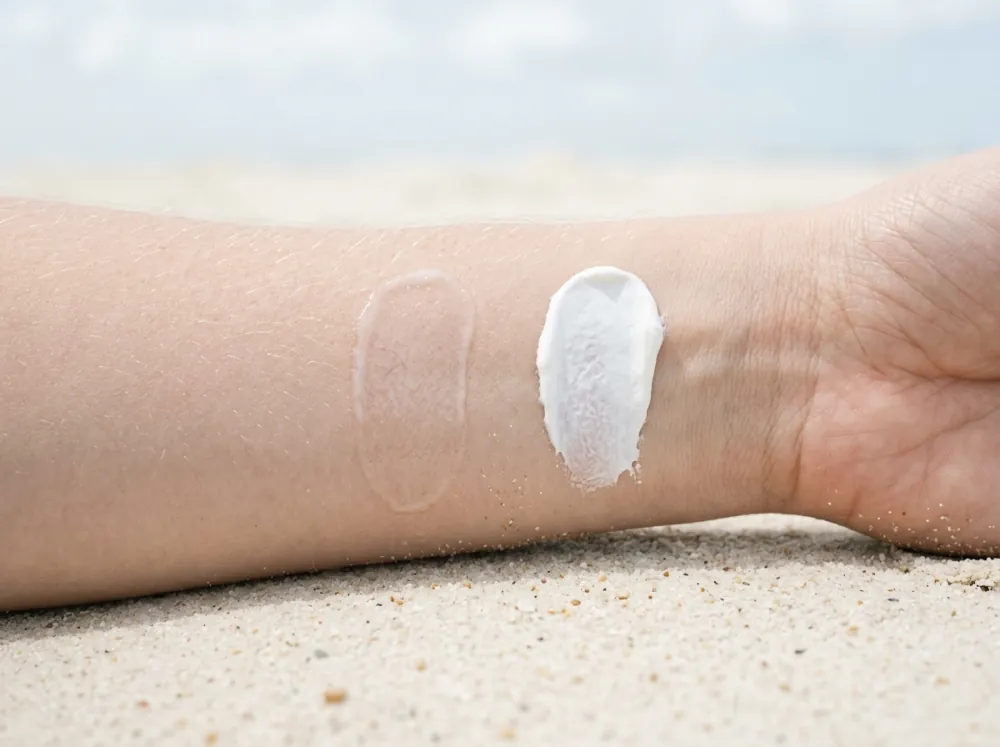
The case for a mineral sunscreen for sensitive skin has some support. The sun protection review describes inorganic filters, zinc oxide and titanium dioxide, as largely unaffected by light-induced reactions, unlike organic filters. A 2026 cross-sectional study counted allergens in the ingredient lists of 176 best-selling sunscreens from three large US online retailers, using the North American 80-allergen series for inactive ingredients. The mean was 2.51 allergens per product, and only 10 products (5.6%) contained none.
By category:
| Category | Mean allergens listed |
|---|---|
| Inorganic (mineral) filters | 1.45 |
| Combination | 3.00 |
| Organic (chemical) filters | 3.12 |
| Stick | 1.29 |
| Lotion | 2.57 |
| Spray | 2.76 |
| Tinted | 1.99 |
| Non-tinted | 2.85 |
| Face products | 2.2 |
| Body products | 2.71 |
Vitamin E was the commonest allergen (in 83% of products), then acrylate polymers (79%) and fragrance (44%, or 58% counting fragrance-related ingredients). The differences between mineral and organic products were significant.
What They Do Not Show
The plan's idea that mineral is not automatically gentler is true of products and not of the average. On the ingredient-list count, mineral sunscreens carried fewer allergens, and a mineral label did not guarantee none: some mineral products listed several, and fragrance appeared in nearly half of all products.
Three limits apply. The study counts allergens in lists, not reactions in people. It covers best-sellers on three US retailers in May 2024 and not other markets, and its authors note the lists may not reflect current formulations. And it examines inactive ingredients, so it does not compare the filters themselves. Our article on sunscreen without the white cast covers why "mineral versus chemical" is a poor frame for other reasons.
Rosacea-Specific Considerations
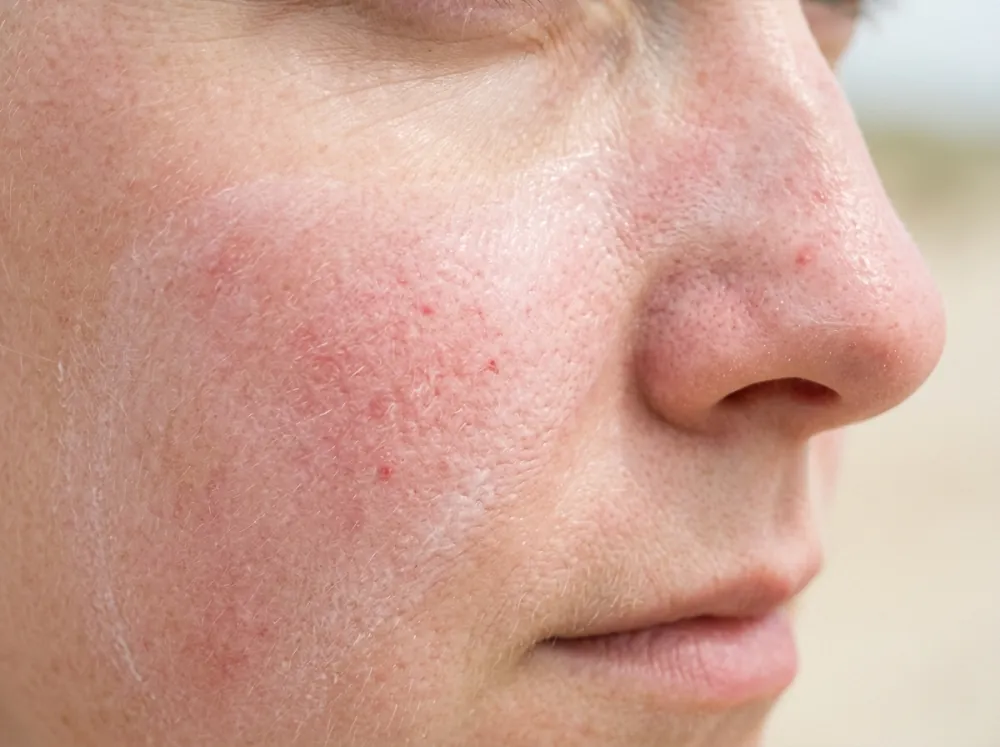
Sunscreen for rosacea is a harder question than sunscreen for sensitive skin in general, because rosacea complicates the question because the skin stings for its own reasons. DermNet lists burning and stinging as minor features of rosacea, and lists sun exposure and cosmetic products among its triggers. Its general measures for rosacea include physical sunscreens, zinc oxide or titanium dioxide, with an SPF of at least 30, which provide broad-spectrum UV and visible-light protection and may be better tolerated than chemical sunscreens. They also include avoiding exfoliants, alcohol-based topical products and topical steroids.
That "may be better tolerated" is DermNet's wording, and no trial comparing filter types in rosacea was found for this article. The ingredient-list study above gives a reason that is consistent with it, since mineral and tinted products listed fewer allergens, but it is not a rosacea study.
For redness that is part of the picture, a tinted product is covered in our article on tinted moisturizer with SPF. Our articles on rosacea, perioral dermatitis and acne and on seeing a dermatologist for rosacea cover how rosacea is diagnosed and what to bring, including every product used on the face.
Patch Testing a New Sunscreen
Patch testing is a clinic procedure. The 2024 review states that in suspected cosmetic dermatitis or photodermatitis, patch testing with a baseline cosmetic series that includes fragrances and preservatives should be done for screening, and with a sunscreen series and the suspected product for confirmation. For photoallergy, two sets of allergens are placed on the back, one set is removed after 48 hours and the site is irradiated with UVA, and the review warns that false positives and negatives are possible if the dose is chosen wrongly. It notes that some people react to a combination of filters and not to any single one, so testing with their own products may be needed.
No source opened tests a home procedure for checking a new sunscreen, and this article does not describe one. What the sources support is smaller. The label tells you to stop use and ask a doctor if a rash occurs, a rash that is allergic often appears later than stinging, and a clinician can test for what caused it. A log of every product on the face, with dates, is what makes that testing useful.
Conclusion
A search for the best sunscreen for sensitive skin returns product lists, and the sources give criteria instead. Sunscreen that stings is not necessarily sunscreen you are allergic to. Stinging, irritation from the formulation and true allergy are different, and allergy to the filters themselves was found in about 0.5% to 2.1% of patients referred for patch testing, not in most people. Benzophenones, avobenzone and octocrylene are the filters most associated with allergy, and the formulation around them contributes.
Mineral sunscreens listed fewer allergens on average, and no category was free of them, so sunscreen for sensitive skin is a matter of reading the whole ingredient list. For rosacea, DermNet's wording is that physical sunscreens may be better tolerated, and no trial of filter types was found. Photographing your skin in the same place and light after starting a new product, in an album or in an app like Skinic, with a dated product list, gives a clinician something to work with. For a reaction that is severe, spreading or does not settle, ask your own clinician.
Frequently asked questions
5 questions · tap one to open the answer
Why does sunscreen sting my skin?
Do chemical sunscreens cause allergic reactions in most people?
Is mineral sunscreen better for sensitive skin?
What sunscreen is best for rosacea?
How can you tell if you are allergic to a sunscreen?
Medically reviewed by
Dr. M.M Hanaei
Aesthetic Physician, Dermatology Fellowship
- MD — Shahid Beheshti University of Medical Sciences (SBMU)
- MCC Licensure (Medical Council of Canada)
- Dermatology Fellowship, Switzerland
- Certified in advanced aesthetic procedures
Last reviewed 11 October 2026