Skinic
Quick answer
Sensitive skin means stinging, burning or tightness from things that should not cause it. Some of it is early rosacea, eczema or an allergy, so rule those out first. A short, fragrance-free routine is the usual starting point.
The full evidence is belowYou put on a new cream and your face stings within a minute. Or the wind picks up and your cheeks burn. If that sounds familiar, "sensitive skin" is a real thing, and it is common.
Sensitive skin means stinging, burning or tightness from things that should not cause it. Some of it is early rosacea, eczema or an allergy, so rule those out first. After that, a short routine with no fragrance is the usual starting point.
Is "sensitive skin" a real thing?
What do experts say it is?
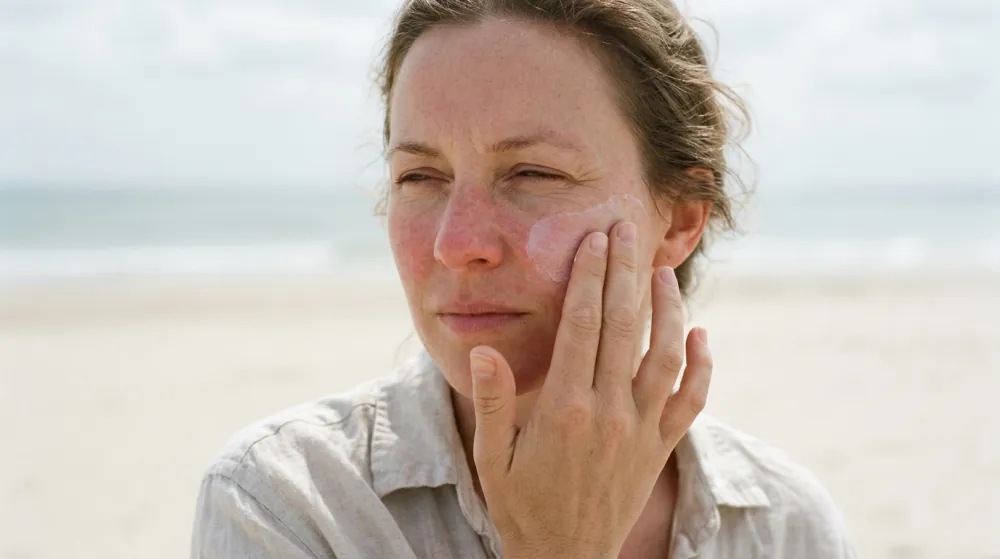
Yes. A panel of experts reached a shared definition in 2017. They call sensitive skin a syndrome of unpleasant feelings, such as stinging, burning, pain, itch or tingling. These come from things that normally should not cause them. The feelings cannot be explained by a visible skin disease. The skin may look normal or red, and the face is most often affected.
Two limits matter. The definition rests on what people feel, and no test can confirm it. The authors also call it rather general, so it may cover several conditions. Many of the authors report ties to cosmetic and drug companies, though none is employed by a cosmetic firm.
How common is it?
Very common, though numbers vary. A review of surveys reports that about 60 to 70% of women and 50 to 60% of men say they have some degree of sensitive skin. Counting only people who say moderate or very, the average falls to about 46%. The range runs from 7% to over 70% between surveys.
The wording of the question changes the answer. The review's author works for a large consumer-products company, and it draws on one unpublished company survey, so read the figures as rough.
What does it feel like, and what sets it off?
The feeling is the main sign: stinging, burning, tightness or itch, often within minutes. The expert panel lists the usual triggers. Physical ones include sun, heat, cold and wind. Chemical ones include cosmetics, soaps, water and pollution. Stress and hormone changes can play a part too.
The review of surveys adds that about half of women before menopause said their cycle affected their skin. Over 70% of postmenopausal women who called their skin sensitive said it got worse after menopause. Keeping a short diary of what you used and how skin felt can show a pattern.
Is it rosacea, eczema or an allergy instead?
Sensitive skin is a feeling, not a diagnosis of exactly what is wrong. Three other things can look or feel similar. A clinician makes the call.
Rosacea. DermNet, a doctor-written skin site, lists the main signs as flushing that comes and goes, redness that stays on the middle of the face, visible tiny blood vessels, and bumps. Burning and stinging are listed as minor features. Our guides to mild rosacea and to telling rosacea from perioral dermatitis and acne go further.
Eczema. The expert panel notes that sensitive skin is sometimes linked with atopic eczema. DermNet adds that people with atopic dermatitis are especially prone to irritation. Our article on eczema on the face describes what to look for.
Allergy or irritation from a product. DermNet separates two kinds of contact reaction. Irritant reactions cause more burning and stinging than itching and can happen to anyone with enough exposure. An allergic reaction usually shows 24 to 72 hours after contact. It tends to be an itchy, red, scaly patch where the product touched. Patch testing by a clinician is the gold standard for finding an allergy.
See a clinician if redness stays, if bumps appear, if skin weeps or blisters, or if a reaction keeps coming back.
What should a sensitive-skin routine look like?
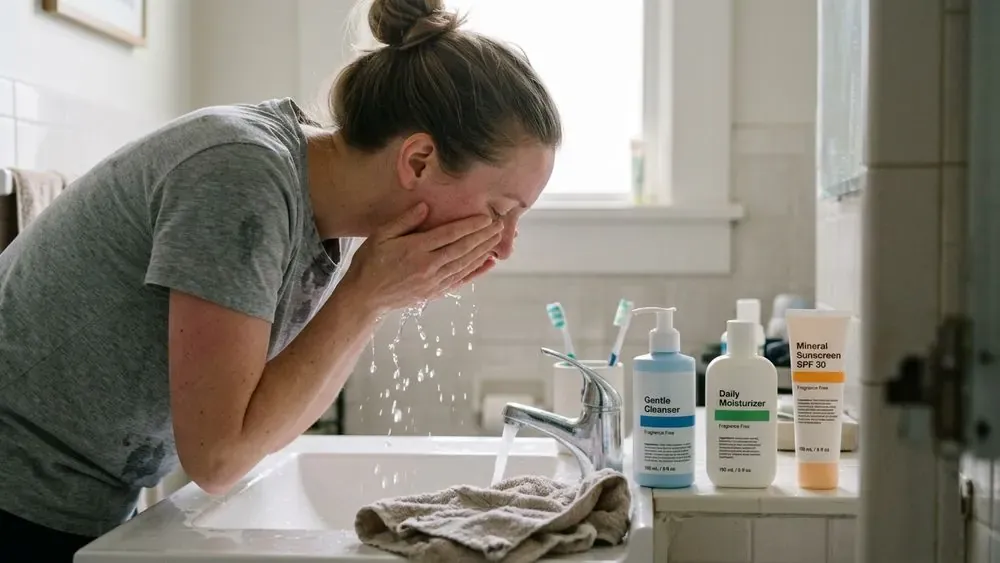
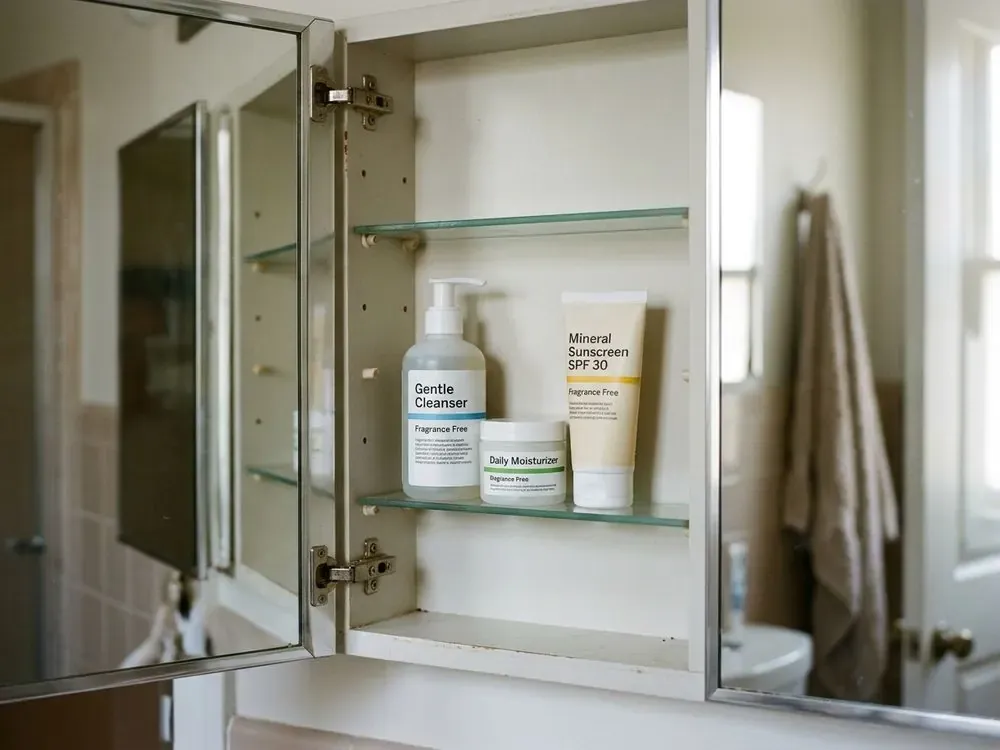
No official protocol exists. A 2025 expert statement from 12 dermatologists says there are no specific protocols for managing sensitive skin. Its suggested starting point is simple: avoid known triggers, choose fragrance-free products, and use a gentle cleanser, a moisturiser and a sunscreen.
If symptoms do not improve after 2 to 4 weeks, the statement suggests a check for rosacea or eczema and referral to a dermatologist. For harder cases it describes stopping all over-the-counter cosmetics for two weeks, then reassessing. The statement was paid for by a consumer-health company, and three authors work for it. It is a panel opinion, not a graded review.
That is the whole routine: three products, no fragrance. Our guides to sunscreen for sensitive skin and to the skin barrier cover the parts in more detail.
Which ingredients most often sting?
No source we opened ranks ingredients by how often they sting. What the sources do say:
- Water, soap and hand sanitiser. DermNet lists these as everyday irritants.
- Fragrance. DermNet names fragrance as an allergen. The panel statement says moisturisers other than oatmeal ones can contain fragrances, preservatives or harsh chemicals.
- Preservatives. DermNet names one preservative, used in wash-off hair products and baby wipes, as a cause of an itchy red face.
- Long-term retinoids and benzoyl peroxide. DermNet says these medicines can cause irritant reactions with long use.
- Some acids. The review of surveys notes that a lactic acid stinging test is positive in about 90% of women who say their skin is sensitive. It adds that the test does not predict reactions to other irritants.
Read the ingredient list, because DermNet notes that many allergens go by several names.

Do "hypoallergenic" products never cause a reaction?
The claim, checked
The claim: "Hypoallergenic products cannot cause a reaction." The FDA says otherwise. On its page about hypoallergenic cosmetics, it says there is "no such thing as a 'nonallergenic' cosmetic".
It also says no federal standard defines the word, and that it "means whatever a particular company wants it to mean". Makers do not have to prove the claim to the FDA. The FDA says it knows of no scientific studies showing that these products cause fewer reactions than other cosmetics. Parts of that page date from 2000 and from a 1978 article, so the rules may have changed. We found no newer rule.
So the word on the front of the pack tells you little. The ingredient list tells you more.
How do you test a new product?
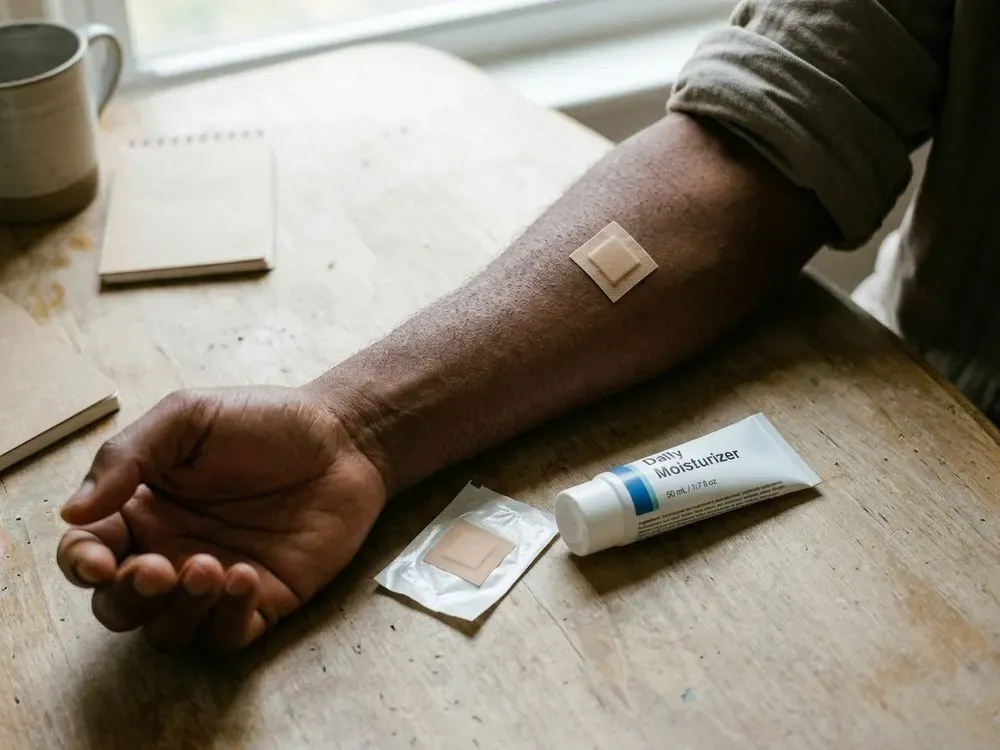
DermNet's advice on allergy is to test new products on a small patch of skin first. The timing explains the limit. An allergic reaction can take 24 to 72 hours to show, so a quick test that day can miss it.
Adding one product at a time makes it easier to see which one caused a reaction. For harder cases, the 2025 panel statement describes stopping all over-the-counter products for two weeks first. If a reaction is strong, or you cannot tell which product caused it, a clinician can arrange proper patch testing.
Conclusion
Sensitive skin is real, common and defined by how skin feels. Before assuming it is just sensitivity, think about rosacea, eczema and allergy, and see a clinician if redness, bumps or weeping appear. The usual starting point is three products with no fragrance: a gentle cleanser, a moisturiser and a sunscreen. The word "hypoallergenic" guarantees nothing.
All our skin-science guides are in one place. If you want to see how your skin reacts, keep dated notes or photos in the same light, in an app like Skinic or a notebook. See a clinician for any reaction that keeps returning.
Frequently asked questions
5 questions · tap one to open the answer
What is sensitive skin?
How common is sensitive skin?
How do I know if it is rosacea, eczema or an allergy?
Does hypoallergenic mean a product cannot cause a reaction?
What is a simple routine for sensitive skin?
Medically reviewed by
Dr. M.M Hanaei
Aesthetic Physician, Dermatology Fellowship
- MD — Shahid Beheshti University of Medical Sciences (SBMU)
- MCC Licensure (Medical Council of Canada)
- Dermatology Fellowship, Switzerland
- Certified in advanced aesthetic procedures
Last reviewed 1 November 2026