Skinic

Quick answer
Crepey skin is thin, finely wrinkled skin, mostly on the arms, neck and under the eyes. Sun damage is the main cause, with ageing, weight change and some medicines also named. Moisturisers help it look smoother for a few hours, and only prescription retinoids have longer-term trial data.
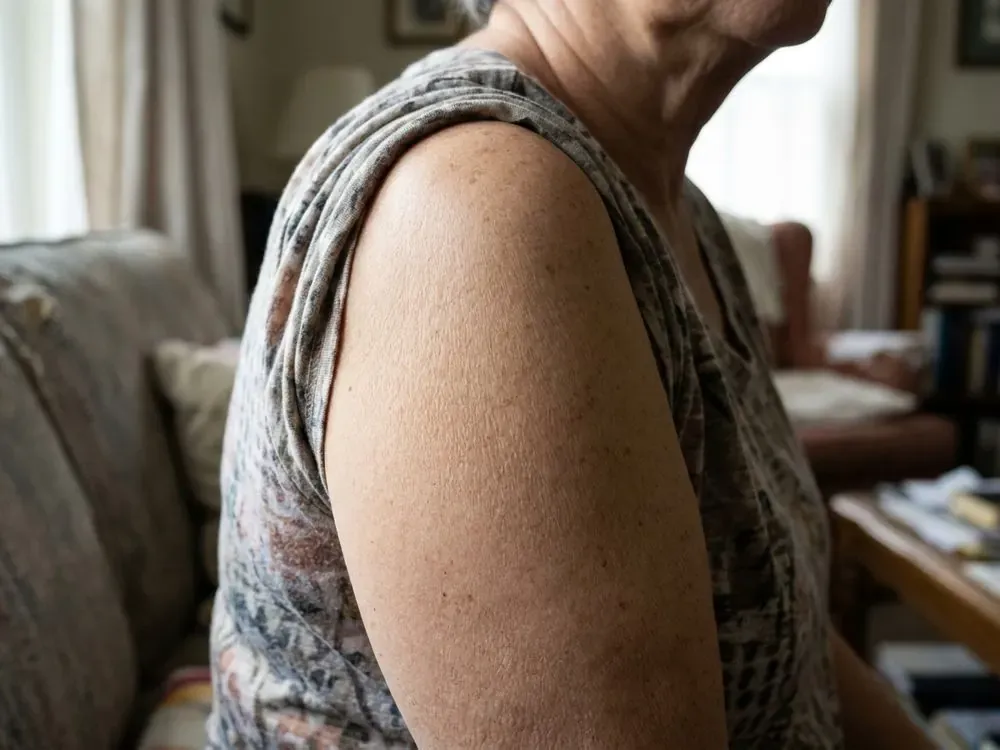
The full evidence is belowYou reach for a glass in the garden and notice the skin on your arm. It looks thin and finely creased, like crepe paper. That is crepey skin. It is common, it is a look rather than a diagnosis, and sun damage is the main cause.
Moisturisers can make it look smoother for a few hours. Only prescription retinoids have trial data over months. This guide shows what the sources say, and when thin skin deserves a check.
What is crepey skin?
What does it look like?
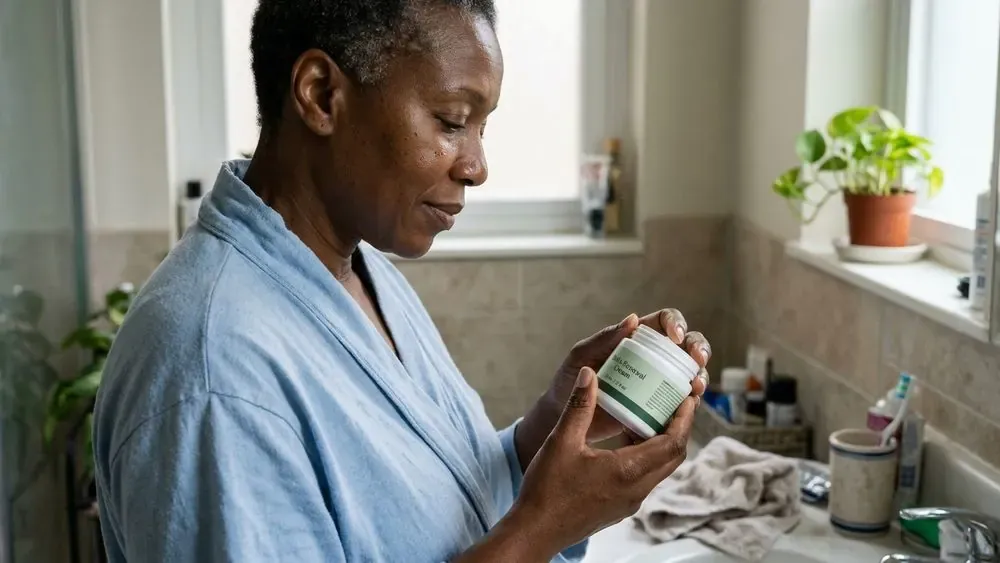
Crepey skin is a look, not a diagnosis. The Cleveland Clinic describes a thin, crinkled, crepe-paper appearance that shows most often under the eyes and on the arms. The page does not present treatment as required: it says moisturisers and other creams work well for mildly crepey skin, and keeps procedures for more significant looseness.
How is it different from ordinary wrinkles?
Ordinary lines are creases. Crepey skin is a finer, looser, papery texture across a wider patch. The page we opened does not give a medical definition, so treat "crepey" as a plain-language word for thin, finely wrinkled skin.
Where does it show up, and why there?
Why the arms, neck and under the eyes?
These are the places that get the most sun. DermNet separates two kinds of ageing. Intrinsic ageing is the slow change that affects all skin, with signs starting around age 50 to 60. Extrinsic ageing comes from outside forces such as sun and smoking, and it shows on exposed areas like the face, neck and arms.
The sun does two things. DermNet's page on solar elastosis says long sun exposure breaks down collagen and elastin, and the skin then builds up abnormal elastic tissue. A review of ultraviolet light and skin says even one dose of UV can switch on enzymes that break down collagen. Our article on sunscreen and wrinkles covers the trial evidence.
What else is named as a cause?
The Cleveland Clinic page lists ageing, weight changes, dry skin and certain medicines, such as long-term prednisone, along with smoking, alcohol, lack of sleep and stress. It says crepey skin usually starts in the 40s, but heavy tanning-bed use or large weight swings can bring it on in the 20s. DermNet says women show the signs of intrinsic ageing earlier than men, which it links to lower oestrogen after menopause.
Is it dryness or thinning?
Often both. DermNet describes intrinsically aged skin as dry, pale, smooth and thin, with fine wrinkles and possible looseness. The Cleveland Clinic lists dry skin among the causes of a crepey look. So the two can sit side by side.
The picture is less simple than "thin skin". In sun-damaged skin, DermNet says solar elastosis can look dry, thick and yellow, not thin. It also separates atrophic photoageing, with a smooth, relatively unwrinkled look, from hypertrophic photoageing, with deep furrows. A facial ultrasound study of 45 women aged 22 to 73 found that age explained less than 1% of the variation in skin thickness, while location explained about half. The study measured the face only, not the arms, and the authors say age-related thinning was not confirmed.
The card for this article planned a home pinch test to tell crepey skin from dry skin. We found no source that supports one, so we do not describe it. A clinician can judge what is going on.
What can creams actually do?
What does moisturiser do?
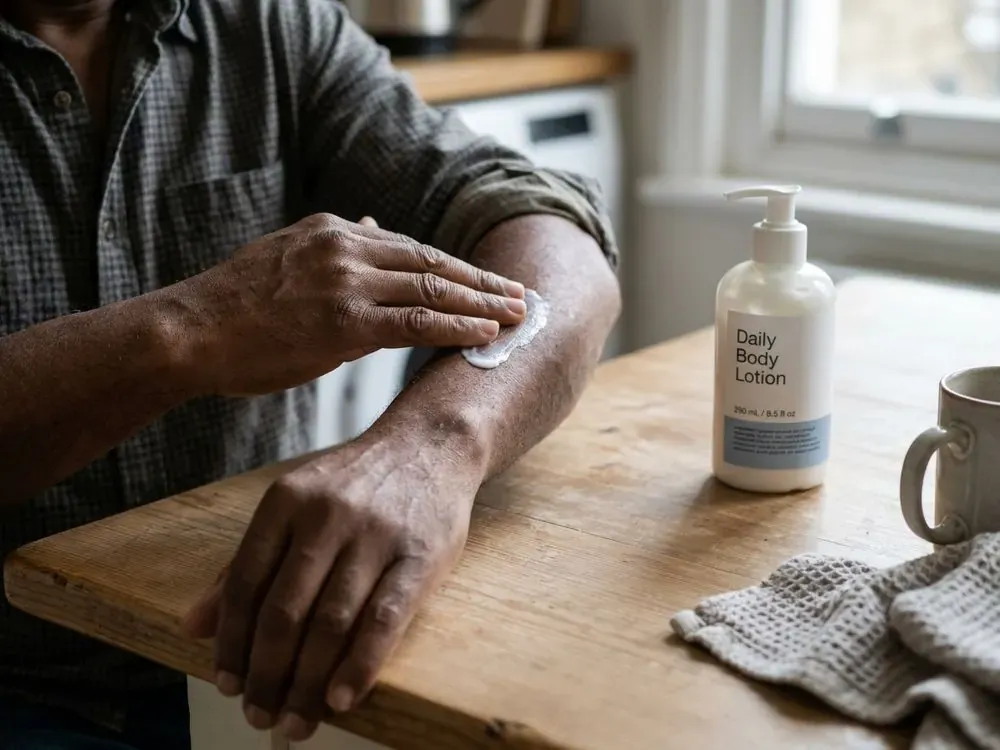
It makes skin look better for a while. The Cleveland Clinic page says moisturisers and other creams work well for mildly crepey skin, and suggests ones with hydroxy acids or hyaluronic acid. That page is a clinic's consumer article, with one dermatologist's comments, not a trial. Our guide to dry skin treatment covers how moisturisers work.
The claim, checked: "Crepey skin creams rebuild collagen"
We checked what trials show for collagen. A study of retinol on the forearms of five photoaged volunteers aged 66 to 84 found no change in collagen after 12 days, though the outer skin layer thickened. The study was very small and short. A beauty company paid for it, and three authors work for that company.
A longer study used a prescription retinoid, not a cosmetic cream. In 29 people with sun-damaged skin (abstract), 10 to 12 months of daily tretinoin cream raised the formation of collagen by 80%, while the dummy cream lowered it by 14%. A US government institute funded that trial. It shows a prescription drug can change collagen in photoaged skin. It does not show that shop creams do.
So the claim is not supported for creams sold as cosmetics. Our article on wrinkle creams explains why labels use softer words.
What helps over months?
| Option | What the best evidence we opened shows |
|---|---|
| Daily sun protection | DermNet: "Protection from solar UV is essential at all ages." Our ranking of anti-aging treatments puts sunscreen first, on the strength of one long trial. |
| Prescription retinoids | A 10 to 12 month trial raised collagen formation in photodamaged skin (abstract). DermNet says regular long-term retinoid creams reduce dryness and may reduce fine wrinkles. |
| Retinol in shop products | A 12-day, five-person study found a thicker outer skin layer but no change in collagen. Our guide to what retinol does has more. |
| Fillers, lasers, ultrasound, radiofrequency | The Cleveland Clinic page names them for more significant looseness. It gives no trial results. Our guide to skin tightening reports what trials measured. |
Early retinoid use can leave skin drier and flakier before it improves, the Cleveland Clinic page warns. A prescriber decides which medicine, if any, suits you.
When should you get it checked?
Crepey skin on its own is mostly a cosmetic change. But thin skin can also point to something else. DermNet describes dermatoporosis, a term for chronic skin weakness linked to ageing. It includes fragile skin, bruises on the forearms, star-shaped scars and wounds that heal slowly. The Cleveland Clinic page lists long-term prednisone, a steroid medicine, as a possible cause of crepey skin.
See a clinician if skin tears or bruises easily, if wounds heal slowly, if you take a steroid medicine for a long time, or if thin skin appears fast. Also see one before starting a prescription treatment, and for any mole or sore that changes.

Conclusion
Crepey skin is thin, finely wrinkled skin, and sun damage is the main cause. Moisturiser can make it look smoother for hours. In the trials we opened, only a prescription retinoid changed collagen over months, and shop creams have not been shown to rebuild it. Daily sun protection is the step with the clearest support. Thin, fragile skin is worth a check.
All our aging guides are in one place. If you want to see what is changing, keep dated notes or photos in the same light, in an app like Skinic or a notebook. See a clinician if skin bruises, tears or heals slowly.
Frequently asked questions
5 questions · tap one to open the answer
What is crepey skin?
What causes crepey skin?
Do crepey skin creams rebuild collagen?
Can moisturiser fix crepey skin?
When should thin skin be checked by a doctor?
Medically reviewed by
Dr. M.M Hanaei
Aesthetic Physician, Dermatology Fellowship
- MD — Shahid Beheshti University of Medical Sciences (SBMU)
- MCC Licensure (Medical Council of Canada)
- Dermatology Fellowship, Switzerland
- Certified in advanced aesthetic procedures
Last reviewed 7 November 2026