Skinic
A week-by-week account of retinol sounds like something the trials measured. They mostly did not. What exists is a set of efficacy trials that report when the first significant difference appeared, label wording from a related retinoid that says when irritation tends to ease, and a systematic review that finds the best-known positive retinol trials unreliable. This article lays out each stage as the sources describe it and says where the evidence stops.
The claim this article tests is that buffering retinol reduces irritation without reducing results. It covers the early weeks, the first measurable change, frequency and strength, where retinol sits in a routine, and signs it is not working. It evaluates evidence and reports label wording. It names no product and gives no schedule, and a reaction that is severe or persistent is a question for your own clinician.
Weeks 1 to 2: Irritation Starts
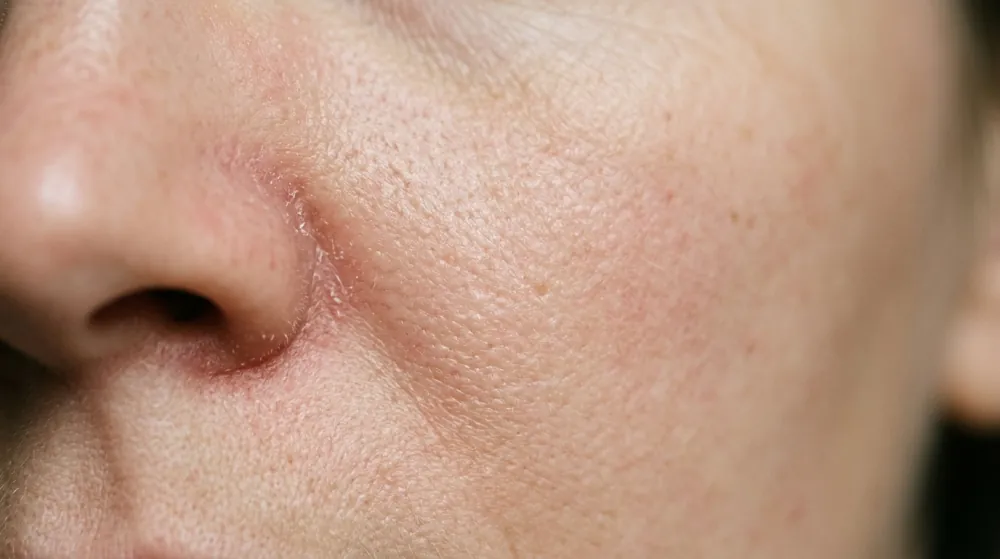
DermNet lists the side effects of topical retinoids as retinoid dermatitis (redness, peeling and dry skin), irritant contact dermatitis, sun sensitivity and, rarely, allergic contact dermatitis. It says adapalene is the least irritating topical retinoid and tretinoin the most, and that creams are less irritating than gels. Retinol sits on the cosmetic side of that spectrum, and our article on tretinoin versus retinol covers how the two compare.
No benefit has been reported this early. In the nine vehicle-controlled retinol trials in a 2021 systematic review, the earliest significant difference from vehicle was at week 4. The first fortnight is therefore the stage where cost shows and benefit does not.
Weeks 3 to 6: Adaptation
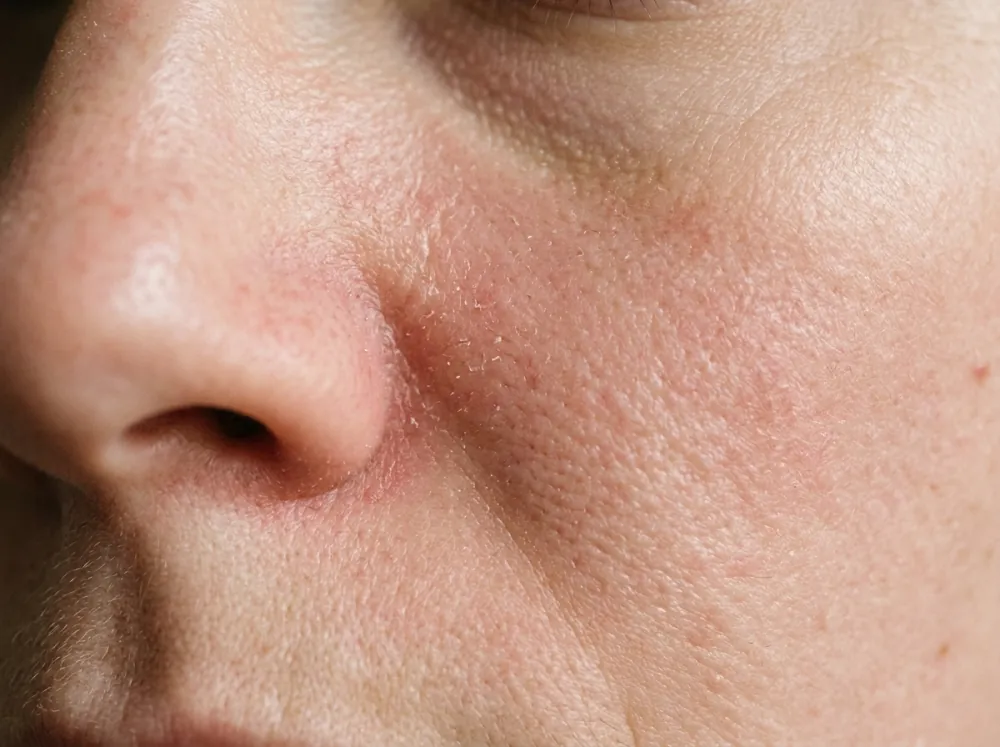
No source read here gives week-by-week irritation scores for retinol. The nearest time-course wording is on an adapalene label. The Differin gel label says redness, itching, dryness and burning are more likely in the first few weeks, that irritation usually lessens after 4 weeks of continued use, and that acne may appear to worsen before it improves. Adapalene is a different molecule, and our articles on adapalene and on purging versus breaking out report how often a true flare appears in trials.
The earliest benefit in the review sits here: one 26-week trial found fine wrinkles significantly better than vehicle as early as week 4. That is one trial, the review lists no power calculation and no pre-set primary outcome for it, and it is the earliest result, not a typical one.
Weeks 6 to 12: The First Measurable Change
What the Positive Trials Report
Where the positive trials report timing, it falls in this range. In the review, eye-area wrinkles improved from week 12 in one trial and fine lines from week 24 in the same trial, and another trial reported improvement in all eight scored features by week 24. A trial of a related retinol derivative reported periorbital wrinkles at week 12. DermNet says acne may take 12 weeks or longer to improve with topical retinoids, and the Differin label says up to 3 months of once-daily use.
What the Network Meta-Analysis Adds
A 2025 network meta-analysis of 23 trials with 3,905 people, with an average treatment period of 8 weeks (range 4 to 36), found retinol significantly better than placebo for fine wrinkles (odds ratio 14.10, 95% confidence interval 4.80 to 41.38), and not significantly better for coarse wrinkles. The authors note the trials were mostly in white participants and that industry-funded trials may report more favourable results.
What the Timeline Rests On
The 2021 review is blunt about the evidence behind timelines like these. Of nine randomised, double-blind, vehicle-controlled trials of over-the-counter retinol products, four found no significant difference from vehicle, and the other five gave weak evidence of a mild effect on fine lines only. It found major methodological flaws in those five: no power calculation, no designated primary outcome, analysis of completers only, and no correction for multiple comparisons. The author reports no funding and no conflicts.
The two reviews disagree. A 2025 review of cosmetic retinoids concludes that retinol, retinyl esters and retinaldehyde are efficacious and well tolerated, and the network meta-analysis counts retinol among the effective agents, while the 2021 review says the positive trials should not inform clinical decisions. This article reports both, and does not resolve them.
Frequency Before Strength
The plan for this article assumed that frequency should come before strength. The sources test strength more than frequency. A 12-week study of 45 women (abstract) used a step-up design, raising the strength of a retinol serum or a prescription tretinoin cream in three stages with a moisturiser, and reported parity between them at 12 weeks on investigator and subject ratings, with better dryness scores in the retinol group. That study did not compare frequencies, and its abstract does not report funding.
No source compared, say, two nights a week with nightly use. The adapalene label gives the one relevant statement: applying more than directed will not give faster or better results but may worsen irritation. That is label wording for adapalene, not a finding about retinol.
Where It Sits in a Routine
DermNet says topical retinoids are best applied at night, and that a sunscreen and moisturiser combination in the day protects against the sun sensitivity and dryness. The Differin label says to limit sun exposure, use sunscreen outdoors, avoid products containing alpha or glycolic acids that may worsen irritation, avoid waxing where it is applied, and be careful when using more than one acne medicine at once. DermNet adds that retinoids can worsen eczema, that some are contraindicated in pregnancy, and that irritation from intolerance carries more risk of post-inflammatory pigment change in skin of colour, as the 2025 cosmetic review also notes. Our articles on the night routine, on layering order and on skincare in pregnancy cover those topics.
Signs It Is Not Working for You
- No change by the trial timepoints. The positive trials report benefit between weeks 4 and 24, and the label tells acne users with no improvement after 3 months of once-daily use to stop and ask a doctor. DermNet says photodamage with tretinoin may need more than 6 months.
- Irritation that does not ease. The label says to stop and ask a doctor if irritation becomes severe, and DermNet lists retinoid dermatitis as a side effect.
- A product with no evidence behind it. The 2021 review notes cosmetic regulation does not require evidence of efficacy, and that retinol is unstable unless manufactured and stored under specific conditions, which most products are not, so little may survive on the skin. That last point is the review author's inference.
- A condition retinoids can aggravate. DermNet lists eczema.
A dated photo log in the same light is the nearest thing to a trial of one. That is reasoning, not a sourced finding.
The Figure Audited: "Buffering Reduces Irritation Without Reducing Results"
Verdict: the first half is supported, the second half is untested. Findings:
- Moisturiser eases the symptoms. A split-face study in 30 people already on tretinoin or oral isotretinoin (abstract) found a moisturiser improved dryness, roughness and peeling over 15 days. The Differin label also says a moisturiser may help.
- That study did not measure retinoid results. Its outcomes were skin comfort and dryness, not wrinkles or acne counts.
- The step-up study did not test it either. All arms used a moisturiser, so the effect of the moisturiser on results could not be separated.
- A reason to ask. The 2025 cosmetic retinoid review notes that the irritation seen with the prescription retinoid may contribute in part to the skin remodelling that improves photodamage. That is a hypothesis, and it implies that damping irritation could in principle damp the effect.
- No source tested mixing or layering. The studies applied moisturiser separately, so the common techniques of diluting or sandwiching a retinoid were not tested.
- The limit. Nothing found compared a retinoid with and without a moisturiser on efficacy outcomes.
How to Judge a Retinol Claim
- Ask for the trial. The 2021 review found four of nine vehicle-controlled trials null.
- Ask what the comparison was. A vehicle-controlled trial can show an effect that a no-treatment comparison cannot.
- Check the timeframe. A claim of results in two weeks has no support in the trials read.
- Check the skin type. The network meta-analysis was mostly in white participants.
- Ask about strength and form only as claims to verify, not as proof. The sources do not set a threshold.
Conclusion
Retinol irritation comes first and benefit comes later. In the positive trials the first significant difference appears between weeks 4 and 12, with more features by week 24, but a 2021 review found four of nine vehicle-controlled trials null and the rest flawed, while a 2025 network meta-analysis still finds retinol effective for fine wrinkles. Whether buffering costs results has not been tested.
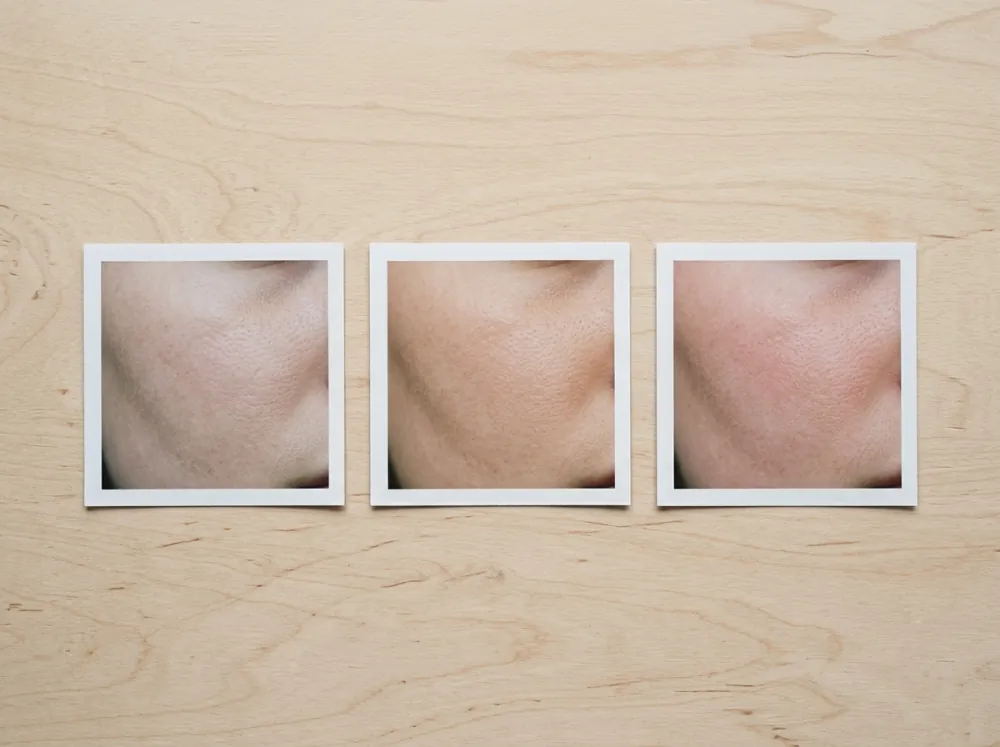
Taking a photo in the same light each week and noting what was applied, in an app like Skinic or in an album, shows which week you are in and whether anything is changing. For irritation that is severe, spreading or does not ease, ask your own clinician.
Frequently asked questions
5 questions · tap one to open the answer
What does retinol do for your skin?
How long does retinol take to work?
How long does retinol irritation last?
Does moisturiser reduce retinol results?
Does retinol actually work?
Medically reviewed by
Dr. M.M Hanaei
Aesthetic Physician, Dermatology Fellowship
- MD — Shahid Beheshti University of Medical Sciences (SBMU)
- MCC Licensure (Medical Council of Canada)
- Dermatology Fellowship, Switzerland
- Certified in advanced aesthetic procedures
Last reviewed 18 October 2026