Skinic
These three get arranged on a ladder — salicylic for mild, glycolic for stubborn, benzoyl peroxide for serious — and the ladder is the wrong shape. They are not weaker and stronger versions of the same thing. They do three different jobs, and two of them are not even in the same regulatory category.
The property that decides which one can reach your problem is not strength. It is solubility.
This article covers what each one actually does, what the evidence supports, what regulators permit an over-the-counter product to contain, and the one piece of advice about combining them that turns out to be wrong in both directions.
Three Molecules, Three Different Jobs
Strip the marketing off and the distinction is simple.
Glycolic acid is an alpha hydroxy acid and it is water-soluble. It works on the surface, loosening the bonds between corneocytes so the outermost layer sheds more readily.
Salicylic acid is a beta hydroxy acid and it is lipid-soluble. That single property is why it behaves differently: it distributes into oil rather than sitting on top of it, which is how it reaches the inside of a sebum-filled follicle.
Benzoyl peroxide is not an exfoliant at all. It is an oxidising agent whose job is to kill bacteria. Grouping it with the other two is like grouping a cleanser with a painkiller because both come in a tube.
So the useful question is not which is strongest. It is where your problem physically sits.
Water-Soluble or Lipid-Soluble: The Distinction That Decides It
A comedone is a follicle packed with keratin and sebum. To act on its contents, a molecule has to get into a lipid-rich environment and stay active there. A water-soluble acid largely does not.
DermNet describes salicylic acid's action in acne precisely: it works by softening keratin and slowing the shedding of cells inside the follicles, which prevents clogging and helps break down blackheads and whiteheads. That is follicular work, not surface work.
Glycolic acid does surface work, and does it well. That is a different and equally real job — rough texture, dullness and superficial pigmentation are surface problems, and the types of dark spots on the face are largely where it earns its place.
Benzoyl peroxide is aimed at neither keratin nor texture. It is aimed at Cutibacterium acnes, which is why it does something for inflamed papules and pustules and comparatively little for a field of closed comedones. Closed comedones have their own separate logic, and an antibacterial is not the obvious answer to them.
Matched to the problem rather than to a strength ranking:
| What you are looking at | The molecule that can reach it |
|---|---|
| Rough texture, dullness, superficial pigmentation | Glycolic acid |
| Blackheads, closed comedones, congested pores | Salicylic acid |
| Inflamed papules and pustules | Benzoyl peroxide |
| Both comedones and inflammation | A retinoid, which is a different article |
What Each One Has Evidence For
The quality of the evidence is not the same across the three, and it is worth saying which is which.
Glycolic Acid
Real clinical data, and a well-documented dose-dependent downside. A clinical and regulatory review of alpha hydroxy acids reports a study in which a 25% AHA lotion produced a 25% increase in skin thickness along with more even melanin distribution and reduced basal cell atypia.
The harm scales with the number. Patients treated with 50% glycolic acid had significantly higher rates of moderate to severe erythema, desquamation and a sensation of pulling than those treated at 20% or 30%. The review's authors state that optimal concentrations for efficacy with minimal side effects are yet to be precisely defined — which is an unusually honest thing to find in a review of a widely sold ingredient.
Salicylic Acid
Preparations run from 0.5% right up to 30%, with the high end used for warts and corns rather than faces. It is well established as a keratolytic across psoriasis, seborrhoeic dermatitis, ichthyosis and acne.
The caution worth knowing is systemic rather than local. DermNet lists rare salicylate toxicity — confusion, nausea, vomiting, dizziness, headache, rapid breathing — which is a reason not to treat large areas of the body with high concentrations, and a reason the face-appropriate range is narrow.
Benzoyl Peroxide
This one has the most interesting data, and a practical finding almost nobody reports.
Researchers took 70 viable C. acnes isolates from 95 acne patients — 41 antibiotic-resistant, 29 susceptible — and measured how long benzoyl peroxide needed to be in contact with them to kill them, at four concentrations.
| BPO concentration | Median contact time for a bactericidal effect |
|---|---|
| 1.25% | at least 60 minutes |
| 2.5% | 15 minutes |
| 5% | 30 seconds |
| 10% | 30 seconds |
At one minute of contact, 1.25% killed the isolates in 70% of cases, 2.5% in 93.4%, and 5% and 10% in 100%.
Now apply that to a benzoyl peroxide face wash. The authors do it themselves: low-concentration cleansing formulations are likely ineffective for killing C. acnes, and 2.5% should be left on at least 15 minutes before rinsing if it is being used that way. A 2.5% wash lathered and rinsed in twenty seconds is not delivering the effect it is sold for. It is a real finding with an obvious consumer consequence and it appears on almost no page about benzoyl peroxide.
One more thing separates benzoyl peroxide from every antibiotic: it does not breed resistance. A review of retinoid and antimicrobial combinations notes that benzoyl peroxide can prevent bacterial resistance, and cites a study in which clindamycin alone increased bacterial counts by more than 1,600% after sixteen weeks while the combination with benzoyl peroxide reduced both total and clindamycin-resistant counts significantly more.
That review carries an educational grant from Galderma and its senior author declares consulting relationships with Galderma and others. The resistance finding is well supported elsewhere, but the disclosure belongs next to the claim.
What the Regulator Actually Permits
Here is where two of these three stop being cosmetics.
Benzoyl peroxide and salicylic acid are both over-the-counter drugs in the United States, governed by FDA OTC Monograph M006 for topical acne drug products. The monograph names every permitted active and its exact range:
- Benzoyl peroxide, 2.5 to 10 percent
- Salicylic acid, 0.5 to 2 percent
- Sulfur, 3 to 10 percent
- Resorcinol, 2 percent, and resorcinol monoacetate, 3 percent, each only in combination with sulfur
Glycolic acid is not on that list at all. It is a cosmetic ingredient, which is a different legal category with different rules — the AHA review above records the FDA capping over-the-counter AHA at no more than 10% at pH 3.5 or higher, against an EU limit of 4% glycolic at pH 3.8 or above. Same bottle, different product, depending on the jurisdiction. The distinction between a cosmetic and a drug is doing real work here, and it is the reason two of these three come with legally mandated warnings and the third does not.
And the monograph is blunt about combining them. Two facts follow directly from the text.
Only two combinations of actives are permitted at all — resorcinol with sulfur, and resorcinol monoacetate with sulfur. Benzoyl peroxide plus salicylic acid is not a monograph combination.
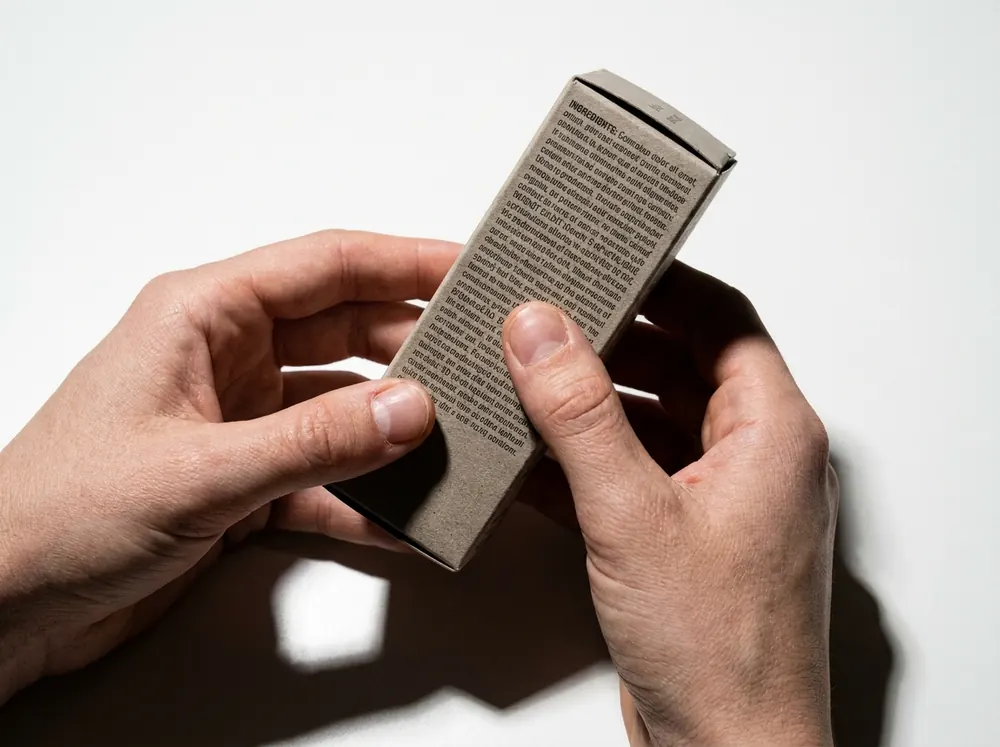
Every monograph acne product must carry this warning, word for word: skin irritation and dryness is more likely to occur if you use another topical acne medication at the same time, and if irritation occurs, only use one topical acne medication at a time.
That is the regulator's own answer to "can I stack these", printed on the box by law, and it is on the package of nearly every acne product sold.
The benzoyl peroxide labelling adds more that people discover the hard way: avoid contact with hair and dyed fabrics, which may be bleached by the product; avoid unnecessary sun exposure and use a sunscreen; and if going outside, apply sunscreen after using it. The directions say to start at once daily and increase gradually, and to drop back to every other day if bothersome dryness or peeling occurs.
There is even an optional sensitivity test in the monograph: apply sparingly to one or two small affected areas for the first three days. It is optional for the manufacturer, which is why you have probably never seen it.
The Advice About Retinoids That Is Wrong in Both Directions
Now the claim this article set out to check: benzoyl peroxide deactivates retinoids, so never use them together.
It is repeated everywhere as a flat rule, and the flat rule fails immediately on one observation — adapalene and benzoyl peroxide are sold co-formulated in a single tube.
A meta-analysis of six randomised controlled trials covering 2,970 patients assessed a fixed-dose gel of adapalene 0.1% with benzoyl peroxide 2.5%. Success — clear or almost clear on investigator global assessment — was 37.67% against 17.49% for vehicle, a relative risk of 2.25 with a 95% confidence interval of 1.73 to 2.92. You cannot co-formulate two ingredients that destroy each other and then run six trials showing the result works.
The authors give the reason plainly: adapalene is stable when combined with benzoyl peroxide even in the presence of light, unlike tretinoin.
So the real shape of it is:
- Adapalene with benzoyl peroxide: fine. Demonstrably so, in a product built on exactly that combination.
- Tretinoin with benzoyl peroxide: a genuine stability concern, and the reason the two were historically separated.
On the second point, an honest limit. The primary stability experiment behind the tretinoin concern is a 1998 British Journal of Dermatology paper, and it sits behind a paywall at three separate publishers. The specific degradation percentages that circulate come from secondary reporting rather than from a readable primary source, so they are not quoted here. What is reportable is the conclusion carried forward into the meta-analysis above by authors who did read it: adapalene is stable with benzoyl peroxide in light, and tretinoin is not.
The blanket rule is wrong in both directions at once. It over-restricts adapalene, and by lumping retinoids together it obscures a real formulation issue with tretinoin.
Why Combining Them Usually Goes Wrong Anyway
Stability is the narrow question. Irritation is the one that actually ends most routines.
All three of these damage the barrier as a side effect of working, and the effects are additive. The monograph's mandatory warning exists because that is the predictable outcome. DermNet independently advises not combining salicylic acid with benzoyl peroxide, retinoids or other exfoliating agents without a physician's guidance.
The failure pattern is familiar. Skin gets worse, the reader concludes the routine is not strong enough, and adds a fourth thing. Stinging, tightness and a diffuse redness that stops at the edge of where you applied are not the treatment working — and the difference between that and skin clearing out is the question worth answering properly before you change anything.
The monograph's own directions describe the correct move and nobody follows it: start at once daily, increase only if needed, and reduce to every other day if dryness or peeling becomes bothersome. Frequency is the dial. Adding molecules is not. Choosing between them starts further back than the shelf suggests — sorting actives by what they target rather than by what the bottle is called is the step before any of this.
This is the same failure as a ten-step routine with a different cast — more actives, more suspects, more barrier damage, and no way to tell which one caused what.
Which to Start With, By What You Are Treating
One active. Chosen by where the problem sits, not by how strong it sounds.
- Blackheads and congested pores — salicylic acid, because lipid solubility is the only property here that reaches inside a follicle. Face products sit at 0.5 to 2% under the monograph, and 2% is the ceiling.
- Inflamed papules and pustules — benzoyl peroxide, at 2.5 to 10%. Leave-on at 2.5% is reasonable; a low-concentration wash rinsed immediately is not doing the job the contact-time data describes.
- Rough texture, dullness, superficial pigmentation — glycolic acid, at a concentration you can check against the limits above rather than assume.
- Both comedones and inflammation — this is retinoid territory rather than any of the three, and if a retinoid is involved, which one decides whether benzoyl peroxide can sit alongside it.
Then leave it alone long enough to judge. Acne treatment takes two to three months before efficacy can be assessed, and almost every routine that fails does so by being changed at week three.
Conclusion
The gentle-to-strong ladder is a merchandising convention. The actual distinction is physical: glycolic acid is water-soluble and works on the surface, salicylic acid is lipid-soluble and works inside the follicle, and benzoyl peroxide is not an exfoliant at all — it is an oxidising antibacterial that happens to be sold on the same shelf.
Two of the three are regulated as over-the-counter drugs with named concentration ranges and mandatory warnings. The third is a cosmetic. That difference explains most of what is confusing about the category.
Three findings worth carrying away. A 2.5% benzoyl peroxide wash needs about fifteen minutes of contact to do what a 5% leave-on does in thirty seconds, so rinsing it off immediately wastes it. The FDA's own labelling tells you to use one topical acne medication at a time if irritation occurs — it is printed on the box. And "never use benzoyl peroxide with a retinoid" is wrong: adapalene is stable with it and the two are sold in the same tube, while tretinoin is the retinoid the caution was actually about.
Pick the one that can physically reach your problem. Use it at a frequency your skin tolerates. Give it three months.
Frequently asked questions
5 questions · tap one to open the answer
Should I use glycolic acid or salicylic acid?
Does a benzoyl peroxide face wash actually work?
Can you use benzoyl peroxide with a retinoid?
What concentration of salicylic acid and benzoyl peroxide is allowed over the counter?
Can I use salicylic acid and benzoyl peroxide together?
Medically reviewed by
Dr. M.M Hanaei
Aesthetic Physician, Dermatology Fellowship
- MD — Shahid Beheshti University of Medical Sciences (SBMU)
- MCC Licensure (Medical Council of Canada)
- Dermatology Fellowship, Switzerland
- Certified in advanced aesthetic procedures
Last reviewed 27 September 2026