Skinic
The ten-step routine is usually defended or attacked as a single object, which is the one thing it definitely is not. It is ten different propositions, and they do not share an evidence base. Some of them are among the best-supported interventions in skincare. Some are formulation categories that got promoted to routine steps. One of them, done in the wrong order, can measurably dry your skin out.
So this is an audit rather than a verdict — each step taken on its own terms, with what the literature actually supports, and a plain ruling at the end of each. Then what a shorter version keeps.
Nothing here is about Korean skincare being good or bad. Several of the most rigorous formulations available are Korean, and the routine's underlying instinct — gentleness, consistency, sun protection — is better than what it replaced. The problem is the count.
The List You Are Following Is Not the List That Was Published
Start with the document itself, because almost nobody does.
The phrase enters circulation with an article titled "The 10-Step Korean Skincare Routine", published on Into The Gloss in April 2014 and written by Charlotte Cho, co-founder of Soko Glam — a US retailer selling Korean beauty products to a US audience. She presents it as the routine she adopted while living in Seoul.
Here is that original list against the one that circulates now:
| # | As published, 2014 | As it circulates today |
|---|---|---|
| 1 | Eye makeup removal | Oil cleanser |
| 2 | Oil cleanser | Foam cleanser |
| 3 | Exfoliator | Exfoliant |
| 4 | Refresher (toner) | Toner |
| 5 | Essence | Essence |
| 6 | Ampoule | Serum or ampoule |
| 7 | Sheet mask | Sheet mask |
| 8 | Eye cream | Eye cream |
| 9 | Moisturiser | Moisturiser |
| 10 | Night cream | Sunscreen |
Two things fall out of that comparison, and both are worth more than the argument people usually have about this routine.
The original was an evening routine. It ends in night cream and contains no sunscreen at all — which means the version circulating today has quietly swapped in the single best-evidenced step in skincare and dropped the one with the least. The modern list is better than the published one. That is not the direction this story is usually told in.
And the author never said to do all ten every day. In the same 2014 article she states plainly that sheet masks and exfoliating packs are not really a daily thing, and that on a rushed night the priority is simply removing the day's makeup. The "ten products, every night, non-negotiable" reading was not in the source. It accumulated afterwards, in the retelling.
So the number is not a Korean tradition and was never presented as a daily minimum. It is a magazine headline from 2014 that outlived its own caveats.
None of which settles whether the steps work. The useful question is still: which of the ten do something your skin would notice if it were missing?
The Audit, Step by Step
Steps 1 and 2: Oil Cleanse, Then Foam
Verdict: the second cleanse is well supported. The first one is plausible and untested.
Cleanser choice genuinely matters, and the evidence is about what you wash with rather than how many times. A review of cleansers in dermatological practice notes that classic soaps sit at pH 9 to 10, against skin's physiological pH of 4 to 6.5, and that skin washed with synthetic detergents showed well-preserved lipid and protein regions compared with significant damage to both after washing with soap. Washing twice daily with an alkaline soap at pH 10.2 reduced the stratum corneum cell layer and caused attrition of intercellular lipids in people with atopic dermatitis.
The same review is direct about over-washing: vigorous scrubbing with soap and water several times a day reduces oiliness but leads to aggravation of acne.
What it does not contain is any assessment of two-step or oil-first cleansing. No controlled trial comparing single with double cleansing appears in the dermatology literature. The rationale is chemically sound — sunscreen filters and long-wear makeup are lipid-soluble and a water-based surfactant shifts them poorly — but "sound rationale, no trial" is a different status from "supported", and the pages claiming specific percentage improvements for double cleansing do not cite anything traceable.
Step 3: Exfoliant
Verdict: real, and the most likely step to be overdone.
Alpha hydroxy acids have a genuine mechanism and genuine clinical data. They break the bonds between surface corneocytes, and at higher concentrations there is evidence of dermal effect — one study cited in a clinical and regulatory review of AHAs found a 25% AHA lotion produced a 25% increase in skin thickness, with more even melanin distribution.
The regulatory limits are the most useful thing in that review, because they tell you what an over-the-counter product can legally be. The FDA caps over-the-counter AHA at no more than 10% at pH 3.5 or higher, with 30% glycolic at pH up to 3 reserved for professional use. The EU is far stricter: glycolic acid up to 4% at pH at least 3.8, lactic acid up to 2.5% at pH at least 5. The same bottle can be a different product depending on where it was sold.
Dose-dependent harm is documented too: patients given 50% glycolic acid had significantly higher rates of moderate to severe erythema, desquamation and a sensation of pulling than those at 20% or 30%. The authors state that optimal concentrations for efficacy with minimal side effects are yet to be precisely defined.
A step that works and scales into irritation is exactly the kind you should not be doing daily because a numbered list implies you should. It is also the step most likely to leave you wondering whether your skin is purging or reacting, because hydroxy acids are one of only two ingredient classes that can genuinely do the former.
Step 4: Toner
Verdict: the original reason for it has largely gone.
Toner exists because of the pH problem above. When everyone washed with alkaline soap at pH 9 to 10, a mildly acidic wipe afterwards had a clear job: shift the residue and bring the surface back toward physiological pH.
Modern syndet and lipid-free cleansers are formulated at neutral or slightly acidic pH already. The residue toner was invented to remove is mostly not being left. That reasoning follows from the cleanser review rather than being stated in it, so treat it as an inference — but it is the inference the ingredient lists support.
What is sold as toner today is usually a watery humectant formula, which is a real thing. It is just not a distinct step. It is a thin moisturiser with a different name on it.
Step 5: Essence
Verdict: a formulation category, not a function.
There is no clinical literature on "essence" as an intervention, because it is not one. It describes a viscosity and a price point. Functionally it is the same class of thing as the toner above it and the serum below it: water, humectants, sometimes a low concentration of an active.
That is not an accusation of uselessness. Humectants do something. It is an observation that steps 4, 5 and 6 are frequently three instances of the same category being counted as three steps — and, as the next section explains, stacking them has a specific failure mode.
Step 6: Serum or Ampoule
Verdict: real, and this is where the actives live.
If any step is going to change your skin, this is the one carrying the ingredient that does it — a retinoid, vitamin C, niacinamide, azelaic acid. The evidence belongs to the specific molecule, not to the step, which is why "use a serum" is not advice and "use this ingredient at this concentration" is.
Step 7: Sheet Mask
Verdict: transient by design.
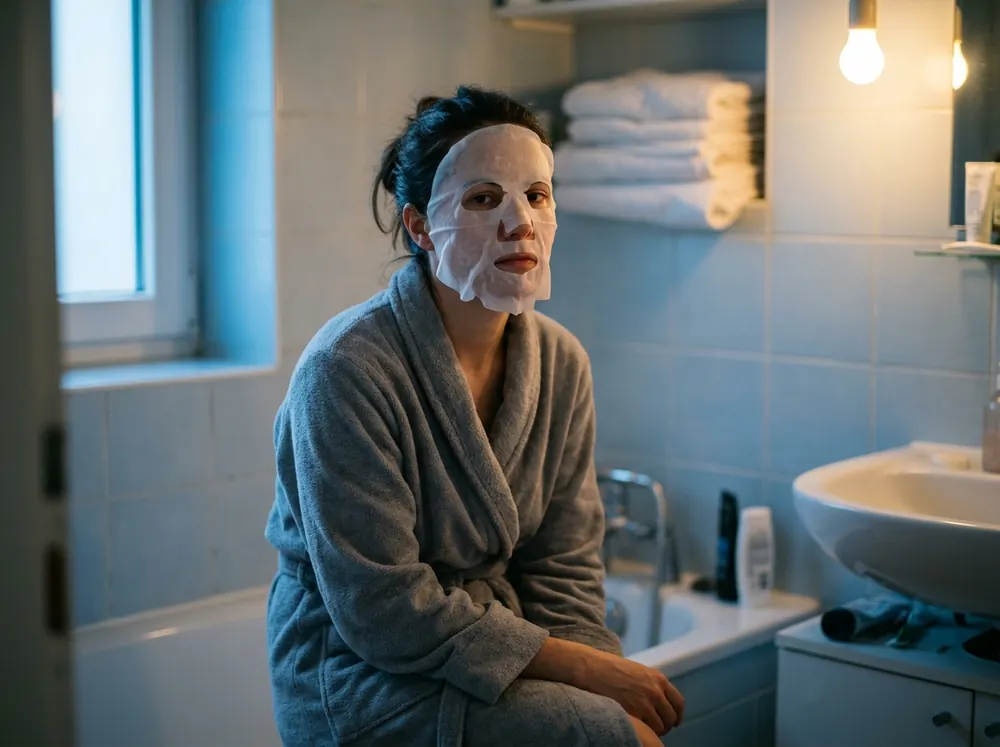
A sheet mask works by occlusion: it holds water against the skin and slows evaporation for twenty minutes. That produces a real, measurable, short-lived rise in surface hydration.
A six-week study of a hydrogel facial mask used three times weekly found median hydration rising from 68 to 72 units at week six — statistically significant, and notably larger in the participants who started drier. But TEWL showed no statistically significant change across the study, and the authors are candid about the mechanism: a single mask application does not induce lasting changes but temporarily modifies the skin microenvironment. Effects were transient and consistent with occlusion-driven modulation rather than sustained post-application effects.
It was 15 people, open-label, with no placebo or comparator, and five of the authors were affiliated with the company developing the formulation. The authors say all of this themselves.
So: pleasant, mildly hydrating while it is on, cumulative only in a small way with regular use, and not doing anything structural.
Step 8: Eye Cream
Verdict: the skin really is different. That argues for gentler, not necessarily extra.
This is the step most often dismissed as marketing, and the anatomy does not support dismissing it. A high-frequency ultrasound study mapped 38 facial sites in 45 women aged 22 to 73 at 75 MHz with 21 μm resolution. The results are unambiguous:
| Site | Median thickness |
|---|---|
| Upper eyelid | 573.5 μm |
| Lower eyelid | 807.5 μm |
| Forehead | 1,480–1,593 μm |
| Nasal ala | 1,744 μm |
| Nasal tip | 1,907 μm |
The upper eyelid is roughly a third the thickness of the nasal tip (how thickness differs across the layers of skin) and well under half the forehead. Anatomical location accounted for about 50% of the variance in skin thickness.
That is a genuine physical difference, and it is a reason to put something milder around the eye than on the cheek — lower active concentrations, less fragrance. It is not by itself evidence that a separate product is required, and no study here shows an eye-specific formulation outperforming a gentle facial moisturiser applied carefully. The honest version: the area needs different treatment, which may or may not need a different jar.
Step 9: Moisturiser
Verdict: real, and the mechanism is worth knowing.
Moisturiser ingredients fall into three groups, and the standard clinical summary separates them cleanly. Humectants — glycerin, hyaluronic acid, urea — attract and bind water. Occlusives — petrolatum, dimethicone, lanolin, mineral oil — form a physical barrier that reduces evaporation; petrolatum is the most effective, reducing water loss through the epidermis by nearly 99%. Emollients — shea butter, ceramides — fill gaps between corneocytes and smooth the surface.
Most of what is sold combines all three. The point of the step is the occlusive fraction, and that is what the earlier watery steps do not provide. Which brings us to the one genuine failure mode in the whole sequence. What an ingredient label tells you covers reading for these three categories.
Step 10: Sunscreen
Verdict: the best-evidenced step in the routine, by a distance.
Nothing else in the ten has a randomised controlled trial behind it. Sunscreen does. This is the step to protect if the routine has to shrink, and how much you actually need is a separate question from which one you buy.
Why Layering Watery Layers Can Backfire
Here is the part that turns a harmless excess into an actual mistake.
Humectants draw water. The clinical summary above is specific about where from: they can hydrate the skin if humidity is above 70%; more commonly, they draw water from the deeper epidermis and dermis. And then the sentence that matters most in this whole article:
Some humectants can increase TEWL and exacerbate skin dryness without concomitant use of an occlusive moisturiser. That is the reference's own sentence, not a gloss on it.
Read the ten steps against that. Toner, essence and serum are frequently three humectant-led watery layers in sequence. In a dry room, in winter, in air conditioning — anywhere below 70% humidity — those layers are pulling water upward out of the deeper epidermis, and unless something occlusive goes on top and stays there, that water leaves.
This is the mechanism behind an experience a lot of people have and misread: adding more hydrating products and getting drier, then concluding they need more hydrating products. The fix is not another watery layer. It is the occlusive step, applied properly, and fewer things underneath it. Which step goes first and why it matters covers the sequencing logic in general.
What Ten Products Cost You Beyond Money
Two costs, and the second is the one nobody prices in.
Reaction risk rises with ingredient count. The clinical moisturiser summary advises selecting fragrance-free products, because moisturisers with more chemicals increase the likelihood of allergic reactions. That logic does not stop at moisturiser. Ten products is a larger ingredient surface than three.
The scale of the underlying problem is real but worth stating precisely: patch-test data on cosmetic allergy estimates that 1 to 5.4% of the population is sensitised to a cosmetic ingredient. In one patch-tested series, face creams were the leading culprit product at 20%, ahead of hair dyes at 14% and soaps at 12% — and the face was the affected site in 56% of cases. Most people will never react to anything. A minority will, and they are disproportionately reacting to facial products.
And ten products make the culprit unfindable. This is the practical cost and it applies to everyone, not just the sensitised minority. If your skin reacts while you are using ten things, you have ten suspects, and the only way through is to strip back and reintroduce one at a time over weeks. A three-product routine has three suspects and resolves in days. The diagnostic cost of a long routine is paid precisely when you can least afford it.
Glass Skin, Honestly
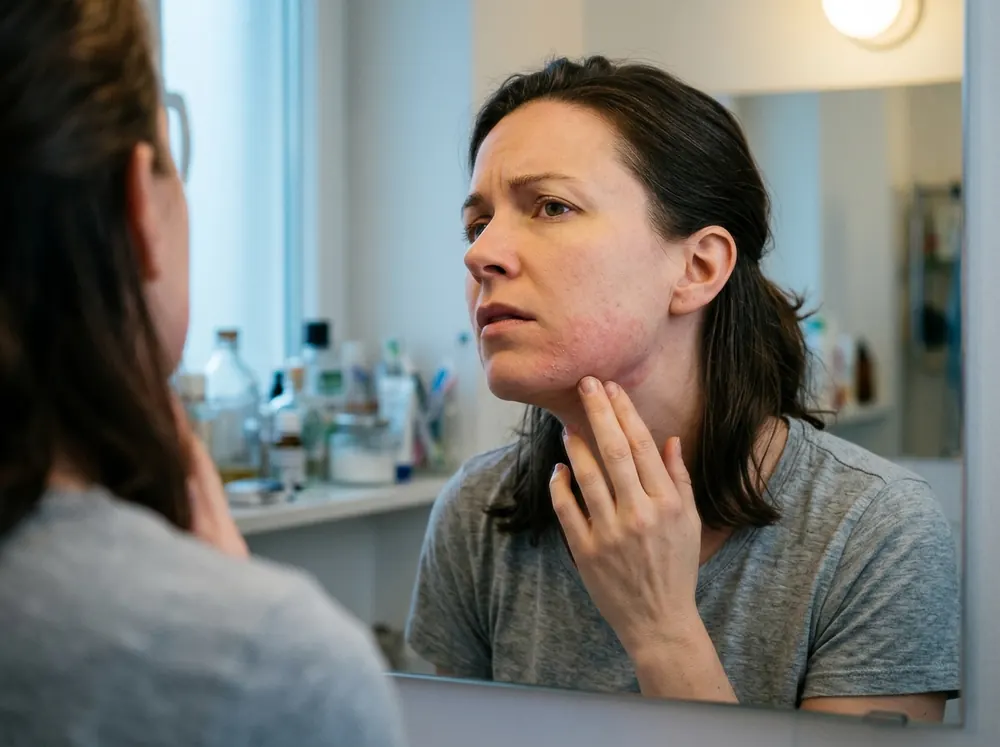
The goal attached to this routine is a smooth, wet-looking, highly reflective surface. Part of that is achievable and part of it is photographic, and it is worth separating them.
The achievable part: a well-hydrated, smooth stratum corneum reflects light more evenly than a rough, flaking one, and the steps that get you there are the occlusive and the exfoliant — two steps, not ten. That is mechanistic reasoning rather than a cited finding, and it is flagged as such.
The photographic part is not small. The same problems that make treatment before-and-after photographs unreliable — light angle, camera distance, expression, selection — apply in full to the images that sell this aesthetic, and to those you can add a layer of retouching that clinical photographs at least nominally forbid. A published study of cosmetic before-and-afters found photographic conditions favoured the flattering image in 97% of top posts. Social media beauty imagery is not held to a lower standard than that. It is held to no standard.
What Survives the Audit
Ranked by the strength of what sits behind them:
- Sunscreen. The only step with randomised trial evidence for a long-term outcome.
- Moisturiser, with an occlusive fraction. Mechanism understood, effect measurable, and the step that makes everything above it work rather than backfire.
- A cleanser that is not alkaline soap. The comparative data on lipid and protein preservation is clear.
- One active, in whatever vehicle. The evidence belongs to the molecule.
- An exfoliant, intermittently. Real effect, real dose-dependent irritation, regulated concentrations worth checking.
That is a four-to-five product routine, and it contains every step in the ten with a controlled trial behind it.
The remaining five — oil cleanse, toner, essence, sheet mask, eye cream — are not frauds. Two are duplicates of the humectant step, one is a pleasant transient occlusion, one has a sound but untested rationale, and one addresses a genuine anatomical difference in a way no study has shown requires its own product. If you enjoy them, they are cheap pleasures with low risk. They are not what is changing your skin. Building a routine from scratch without overcomplicating it is the version to start from.
Conclusion
The ten-step routine is not wrong so much as miscounted. Four or five of the steps carry the evidence. The rest are variations on one category, a transient effect, and a reasonable idea nobody has tested.
The single most useful finding in the audit is also the least intuitive: layering watery humectant-heavy products in a dry room without sealing them in can increase water loss rather than reduce it. The routine's own logic — more hydration steps means more hydration — runs backwards under the conditions most people apply it in. That is not a marketing criticism. It is in the clinical reference.
And the rest of the cost is diagnostic. Ten products is ten suspects. When your skin does something you did not ask for, the length of your routine is exactly how long it will take to find out why.
If you want the short version: wash gently, use one active, seal it, wear sunscreen. Everything else in the ten is optional, and now you know which is which.
Frequently asked questions
5 questions · tap one to open the answer
Do you really need all 10 steps of the Korean skincare routine?
Can layering too many hydrating products dry your skin out?
Is double cleansing actually necessary?
Is eye cream a marketing invention?
How long do sheet masks actually work for?
Medically reviewed by
Dr. M.M Hanaei
Aesthetic Physician, Dermatology Fellowship
- MD — Shahid Beheshti University of Medical Sciences (SBMU)
- MCC Licensure (Medical Council of Canada)
- Dermatology Fellowship, Switzerland
- Certified in advanced aesthetic procedures
Last reviewed 20 September 2026