Skinic
You can feel them before you can see them. Run a hand across your cheek and the surface is not smooth — there is a field of small raised bumps under otherwise normal-looking skin. In the mirror, in flat bathroom light, they barely register. In daylight, at an angle, your whole cheek reads as textured.
You have been treating them with salicylic acid for six weeks. Nothing much has changed.
Closed comedones are genuinely acne — unlike milia, unlike sebaceous filaments, and unlike the other look-alikes in every bump on your face, identified — which is why the frustration is so particular. You picked a reasonable product from a reasonable category and it is technically aimed at the right condition. It is simply aimed at the wrong stage of it.
This piece covers what a closed comedone actually is, why salicylic acid underperforms on this specific lesion when it works well elsewhere, how to tell one from a milium, and what the location of yours — cheeks, chin, hairline — tells you about the cause. It also covers the timeline, which is the single most common reason people conclude a treatment has failed when it has not yet had a chance to work.
Small, Skin-Coloured, Endless: What a Closed Comedone Actually Is
A comedo is a plugged follicular opening. Comedones form when the cells lining the sebaceous duct proliferate through cornification while sebum production increases, and the resulting debris blocks the duct.
The difference between the two kinds is simply whether the surface stays open. An open comedone — a blackhead — has a dilated opening and darkens through exposure to air. A closed comedone has an intact surface over the top, so it stays an uninflamed, skin-coloured papule and reads as texture rather than as a spot.
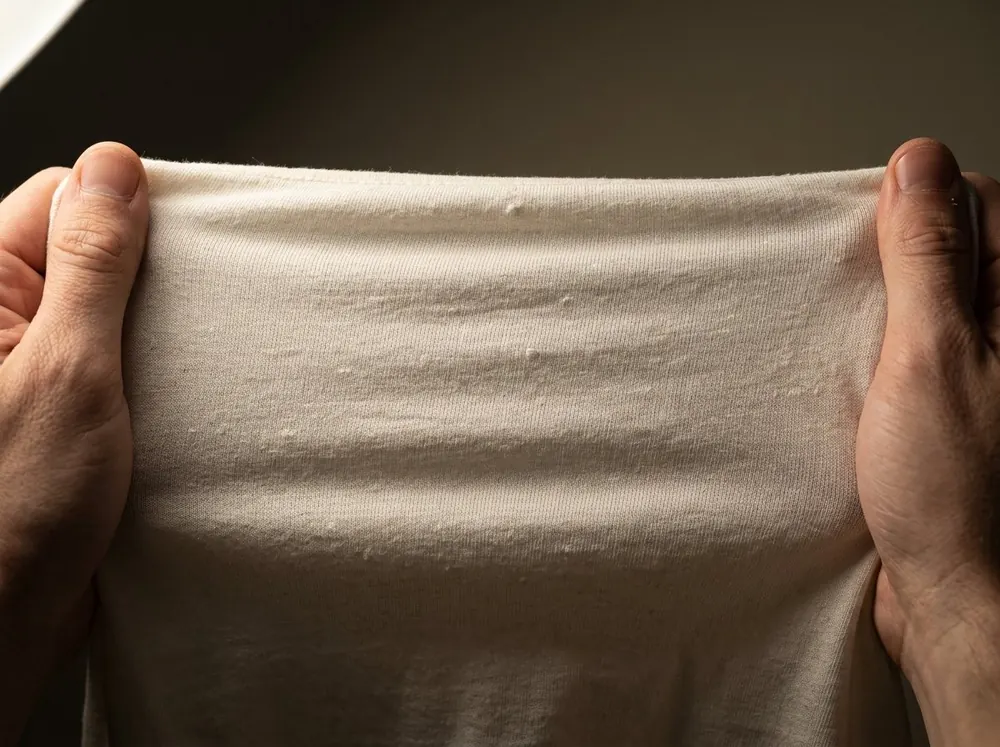
There is a practical diagnostic trick here that clinicians use and almost nobody publishes: closed comedones become more apparent with gentle stretching of the skin. Pull the skin of your cheek taut with two fingers and look at it in daylight from an angle. Lesions that were invisible under flat light stand out clearly. This is far more reliable than squinting into a magnifying mirror, and it is how to tell whether you actually have a field of closed comedones or simply normal skin texture you have started scrutinising.
They also cluster rather than appear singly, and comedonal acne as a pattern most often affects the forehead and chin — though cheeks are extremely common too, for reasons covered further down.
Why Salicylic Acid Underperforms Here
Salicylic acid is not a bad choice. It is an incomplete one, and the reason is mechanical.
Salicylic acid works in acne because it is lipid soluble, which lets it penetrate pores and exfoliate within the follicular opening rather than only across the surface. That is a real advantage over water-soluble acids, and it is why it outperforms glycolic acid on oily, congested skin.
But notice what that mechanism assumes: an opening to penetrate. On an open comedone there is a dilated pore and the acid goes where it is needed. On a closed comedone the surface has sealed over, so the acid is working through an intact layer of skin to reach a plug underneath it. It still does something — it is still exfoliating, still keeping other follicles clear — but it is no longer working with the direct access that makes it effective elsewhere.
The second problem is that salicylic acid is acting on lesions that already exist. It does not change the process producing them. That is a retinoid's job: topical retinoids reduce microcomedone formation and are comedolytic, working by normalising desquamation through regulating keratinocyte proliferation and differentiation — which is precisely the cornification step that creates the plug in the first place.
So the honest summary: salicylic acid manages the field. A retinoid changes what the field produces. For closed comedones specifically, the second is the one that shifts the picture, which is why six weeks of acid alone so often leaves things looking much as they did. Why salicylic acid can reach inside a follicle at all, and what the other two shelf actives can and cannot do, is a question of solubility rather than strength.
One more thing worth knowing, because people reach for it next: antibiotics are not usually very effective for this pattern of acne. Comedonal acne is a plugging problem, not primarily an inflammatory or bacterial one.
Closed Comedones vs Milia: The Distinction That Changes the Plan
These two get confused constantly, and the consequence is real — one responds to treatment over months and the other will not respond to anything you can buy.
A closed comedone is a genuine follicle with a genuine duct that has been plugged. The passage exists and is obstructed. A milium is a small cyst containing keratin, arising as an epidermoid cyst from vellus hair follicles — a sealed sac with no duct at all.
| Closed comedone | Milium | |
|---|---|---|
| Structure | Plugged follicle, duct exists | Sealed keratin cyst, no duct |
| Colour | Skin-coloured, slightly raised | Distinctly white or pearly |
| Feel | Soft to firm, slightly diffuse edge | Hard, sharply defined, like a grain |
| Where | Forehead, chin, cheeks | Eyelids, under-eye, cheeks |
| Over months | Changes — resolves, or inflames | Often unchanged for years |
| Responds to a retinoid | Yes, slowly | Not once established |
| Clears by squeezing | No, and it may inflame | No, there is no exit |
The most useful line in that table is the second from the bottom. If you can say with confidence that a bump has looked identical since spring, you are probably looking at a milium — and milia need a different approach entirely. If the field of bumps shifts around, with some resolving and new ones appearing, that is comedonal behaviour.
Why There, Specifically: The Transfer Routes
This is the part that makes the article actionable, because location is rarely random.
Hair Products, the Hairline and the Temples
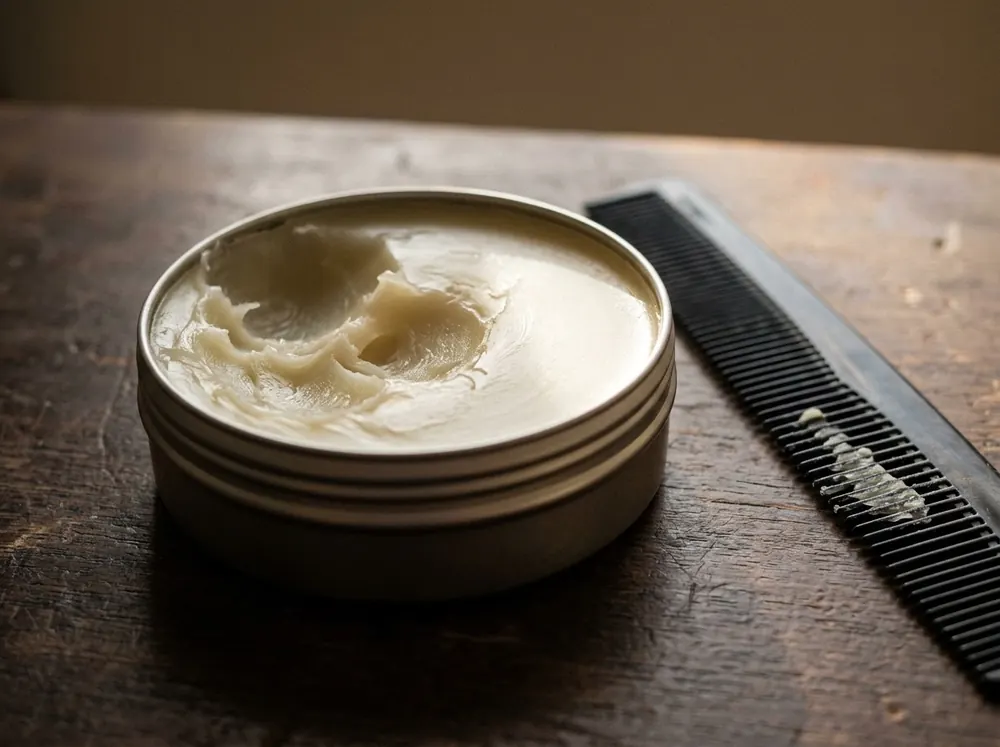
Heavy oils, pomades and other comedogenic hair products can lead to persistent comedonal and inflammatory lesions, especially on the forehead and temporal regions. This is well enough recognised to have its own name — pomade acne — and it is badly underdiagnosed, because nobody suspects the product they put in their hair of causing the bumps on their forehead.
The tell is the distribution: a band of congestion that follows the hairline, heaviest at the temples and across the top of the forehead, thinning as it moves toward the centre of the face. If that is your pattern, the audit is your hair products, not your skincare. Leave-in conditioners, styling creams, dry shampoo and anything applied near the roots all transfer onto the forehead through the day, and onto the pillow overnight.
We have gone through the forehead pattern in more detail in why you keep breaking out on your forehead.
The Pillowcase and the Side You Sleep On
Closed comedones concentrated on one cheek are worth taking seriously as a clue. Whatever is on your pillowcase — hair product, residue from a rich night cream, leftover detergent or fabric softener — spends seven hours pressed against one side of your face under the weight of your head.
The test is cheap and definitive enough to be worth doing before you change any product: switch your pillowcase every two or three days for a month, and switch which side you sleep on if you can. If the asymmetry softens, you have your answer.
Phones, Hands and the Chin
Chin and jawline congestion has two common contributors that are not hormonal.
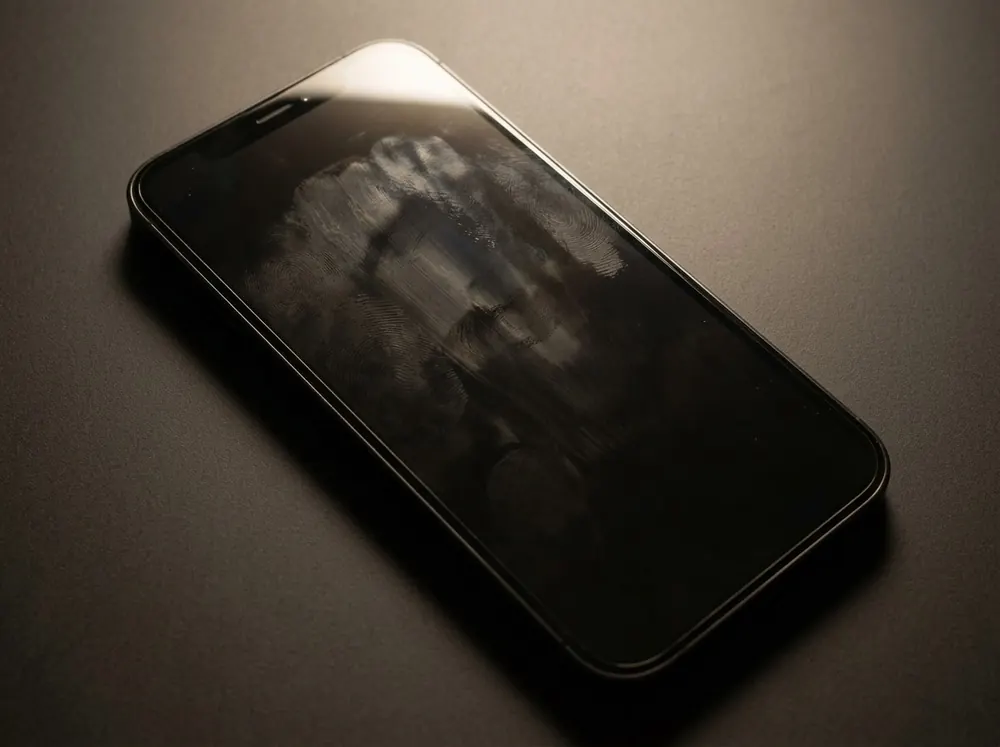
A phone screen spends its day collecting oil from fingers and then gets pressed against a cheek and jaw. And resting a chin or jaw in a hand while working is one of the most repetitive and least noticed contact habits there is — mechanical and occlusive practices including repetitive face touching and pressure contribute to frictional acne, where barrier impairment is a key driver of lesion development. Whether massage tools on the cheek belong in that category is not settled; what the face massager evidence shows covers the one study that saw delayed breakouts after facials that included massage.
Neither is dramatic. Both are sustained, daily, and in exactly one place — which is what produces a localised field of closed comedones rather than scattered lesions.
A Realistic Timeline
Here is the reason most people conclude that a treatment has failed.
Comedonal acne improves slowly. Clinical guidance is explicit that improvement is gradual, over weeks to months — and closed comedones are the slowest part of the picture, because you are waiting for existing plugs to resolve while the retinoid works upstream on the formation of new ones.
Practically:
- Weeks 1–4. Often worse before better. Retinoids typically cause irritation and dryness in the first few weeks that improves with persistence, and a wave of existing lesions may surface.
- Weeks 4–8. The first honest assessment point. New lesion formation should be slowing.
- Weeks 8–12. Where the texture change becomes visible to you rather than only measurable.
- Beyond 12 weeks. If nothing has shifted at all with consistent use, that is the point to involve a clinician rather than to escalate on your own.
Judging a retinoid at ten days is judging lesions that were already in progress before you started. Almost every "this made my skin worse" verdict is delivered inside that first month.
What Actually Works, In Order
- Audit the transfer routes first. Hair products, pillowcase, phone, hands. This is free, it addresses cause rather than symptom, and for a meaningful number of people it is the whole answer.
- Add a topical retinoid, slowly. Two or three nights a week to begin with, applied to the whole area rather than to individual bumps, building up as tolerated. It works on formation, which is the lever that matters here.
- Keep salicylic acid as support, not as the main event. It manages the surface and keeps other follicles clear. It is not going to resolve an established field on its own.
- Protect the barrier while you do it. A compromised barrier makes everything above harder to tolerate and slower to work.
- Give it twelve weeks. Then reassess properly, against a record rather than a memory.
What not to do: escalate the acid, add a scrub, extract at home, or change the routine every fortnight. Squeezing a closed comedone does not empty it — the contents have to be punctured to come out — and pressing on an intact one drives the contents sideways into surrounding tissue, which converts a bump nobody could see into an inflamed lesion that may leave a mark. That risk is higher in deeper skin tones, where post-inflammatory pigment is more frequent and more severe.
Where a retinoid sits in your routine matters too, and we have set that out in skincare routine order explained.
Tracking It Properly
Everything above runs on a twelve-week timescale, and twelve weeks is far longer than human memory for skin texture.
This is the specific failure mode: at week five your skin looks about the same as it did, you conclude nothing is working, you change the routine, and the clock resets. Repeat that three times and a year has gone by without a single treatment ever getting a fair run.
The fix is a fixed reference. Photograph the same area in consistent conditions — same spot, same distance, same daylight from the same angle, no filters — and, for closed comedones specifically, photograph with the skin gently stretched, since that is what makes them visible in the first place. Whether the record lives in a dated album on your phone or in something built for it like Skinic, the value is having something to compare against at week twelve that is not your impression of how things were in week one.
Conclusion
Closed comedones are real acne, which is why the frustration of treating them with acne products and getting nowhere is so specific. The mismatch is one of stage, not of category: salicylic acid acts on lesions that already exist, through a surface that has sealed over them, while the thing producing new ones carries on unchanged.
Start by stretching the skin in daylight to see what you actually have, and check the pattern. A band along the hairline points at hair products. One cheek points at a pillowcase or a phone. A chin points at your hand.
Then fix the transfer route, add a retinoid slowly across the whole area, keep the acid as support rather than as the strategy, and — the hardest part — leave it alone for twelve weeks before deciding whether it worked.
Most closed comedone routines do not fail. They get replaced at week five by someone who cannot remember what week one looked like.
Frequently asked questions
5 questions · tap one to open the answer
What is the fastest way to get rid of closed comedones?
Why isn't salicylic acid working on my closed comedones?
Can you squeeze out closed comedones?
Why do I get closed comedones only on my cheeks?
Are closed comedones the same as milia?
Medically reviewed by
Dr. M.M Hanaei
Aesthetic Physician, Dermatology Fellowship
- MD — Shahid Beheshti University of Medical Sciences (SBMU)
- MCC Licensure (Medical Council of Canada)
- Dermatology Fellowship, Switzerland
- Certified in advanced aesthetic procedures
Last reviewed 12 September 2026