Skinic
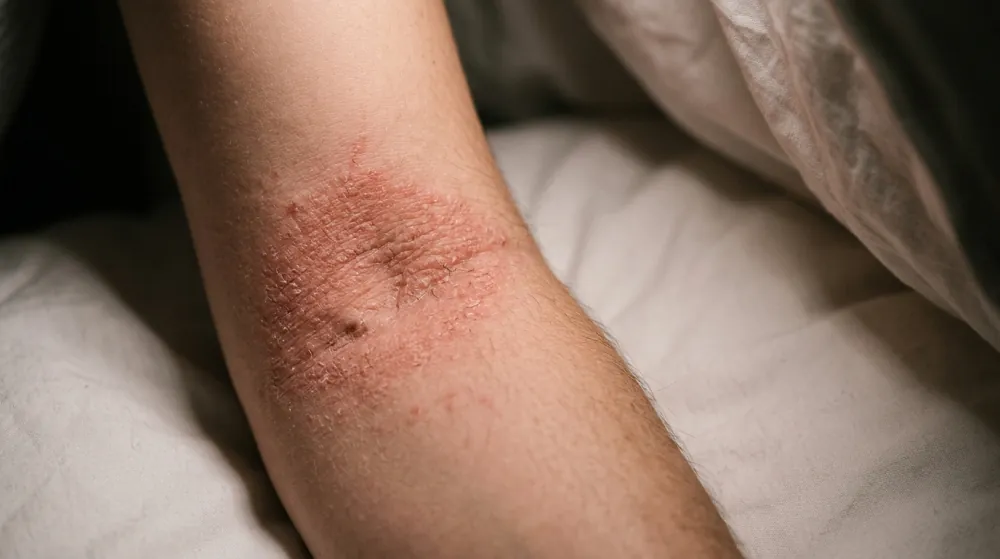
Eczema has no cure, and its treatments sort into tiers of evidence. Moisturisers have the strongest everyday evidence, topical anti-inflammatory medicines have the strongest evidence for clearing a flare, and several popular remedies, such as bath additives and exclusion diets, have little or none. Which tier a treatment sits in matters more than which product it comes in.
This article ranks treatments by the evidence for them in atopic eczema, the commonest kind. It gives sourced guidance on moisturisers and triggers, and it reports prescription options by class without strengths, doses or schedules, because those belong to a prescriber. Eczema that is infected, blistering, spreading fast or accompanied by fever is a reason to be seen the same day.
What "Treatment" Covers
DermNet describes the aim of treatment as control, not cure: atopic dermatitis involves genetic and environmental factors, there is no known cure, and treatment divides into general measures, topical treatments and systemic treatments. The table ranks the options by what the sources report.
| Tier | Option | Evidence reported |
|---|---|---|
| 1 | Moisturisers and emollients | Fewer flares, longer time to flare, less steroid use; many low-quality trials |
| 2 | Topical anti-inflammatories (steroids, calcineurin inhibitors, newer creams) | Many trials, mostly short and at high risk of bias; potent steroids among the most effective |
| 3 | Systemic prescription medicines | Moderate-certainty comparisons for newer biologics and oral drugs, in moderate-to-severe disease |
| 4 | Bath additives, exclusion diets in unselected people | No benefit shown |
Eczema on particular sites needs its own handling, and our articles on eczema on the face and hand eczema cover them, while eczema versus psoriasis covers telling the two apart.
Emollients: The Strongest Everyday Evidence
What the Cochrane Review Found
A Cochrane review of 77 trials with 6,603 participants found that moisturisers reduced flares (6 studies, risk ratio 0.33), prolonged the time to flare (a median of 180 days against 30 in one comparison), and cut the topical steroid needed (about 9 grams less in two studies). Investigator-rated severity was lower with moisturiser (12 studies, high-quality evidence). A moisturiser combined with an active treatment beat the active treatment alone (3 studies, moderate quality).
The limits are in the same review. Trials averaged under 7 weeks, 36 of 77 were at high risk of bias, 46 were funded by drug companies, and the improvement in one scale did not meet the threshold for an important difference. Urea-containing and oat-containing creams caused more adverse events in single studies. The authors found no reliable evidence that one moisturiser is better than another.
What the Sources Advise
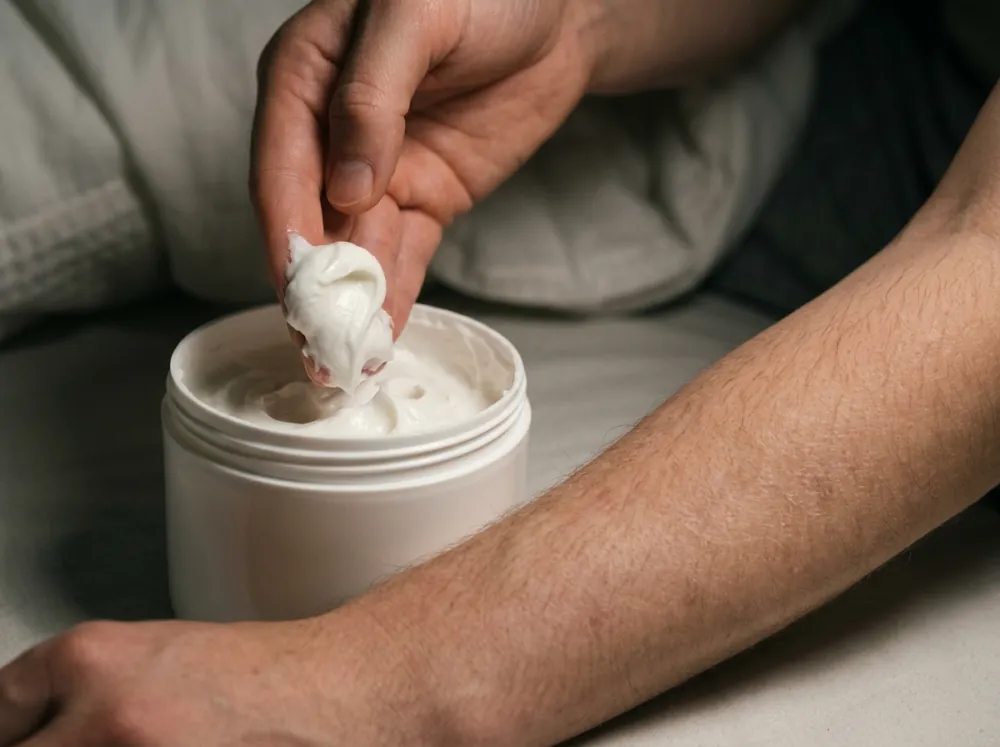
DermNet says emollients and moisturisers are essential for all types of dermatitis, are to be continued long term even when the skin looks and feels comfortable, and should be applied liberally, with 2 to 3 times a day recommended. It says leave-on products are best applied directly after bathing, that the greasier the product the better in general, although preference matters, and that products left on the skin should be free of sodium lauryl sulphate, contain few ingredients and avoid fragrances. It adds that paraffin-based products soaked into clothing are a fire hazard, that moisturisers make skin slippery in the bath and when holding babies, and that a product causing contact dermatitis should be stopped. The frequency of bathing does not seem to affect eczema activity.
Our articles on dry skin treatment and on the best moisturiser for dry skin cover the dry-skin side, and the one on skin barrier repair covers how the barrier is measured.
Triggers
DermNet's general measures say to avoid triggers that directly inflame the skin where possible, naming fabrics, chemicals, humidity and dryness, and to look after the psychological effects of eczema, for which counselling and cognitive behavioural therapy can help. It describes atopic dermatitis as a condition in which genetic and environmental factors interact and in which not every trigger can be manipulated. The sources opened do not rank triggers by strength, and none tested a trigger-avoidance programme in a trial.
Our article on hand eczema sets out how irritant, allergic and atopic types differ, which matters because the first step with a suspected allergic cause is testing by a clinician.
Prescription Options (Reported)
This section reports evidence tiers. It gives no strengths, doses or schedules, and a prescriber chooses among them.
Topical Anti-Inflammatories
A Cochrane network meta-analysis of 291 trials with 45,846 participants compared topical corticosteroids, calcineurin inhibitors, phosphodiesterase-4 inhibitors, JAK-inhibitor creams and others. Potent topical corticosteroids, a higher-strength calcineurin inhibitor and a JAK-inhibitor cream ranked among the most effective for clinician-reported signs, with moderate confidence, and mild corticosteroids and the PDE-4 inhibitors ranked among the least. Application-site reactions were most likely with calcineurin inhibitors and one PDE-4 inhibitor, and least likely with corticosteroids. Short-term use of corticosteroids, median 3 weeks, showed no evidence of skin thinning or pigment change in the trials that measured them.
The review's own caveats are large. Most trials were industry-funded (68%) or did not say, the risk of bias was high in 242 of 272 trials, the median treatment was 21 days, the network analysis was possible only for short-term outcomes, and most participants were white. Sensitivity analyses changed some rankings.
Systemic Medicines
A living network meta-analysis of 97 trials with 24,679 participants, with searches to November 2023, found moderate-certainty evidence that lebrikizumab is similar to dupilumab in adults for signs, symptoms and quality of life up to 16 weeks, with dupilumab more likely to reach treatment-success thresholds. It reports that upadacitinib and abrocitinib numerically had the highest relative efficacy, and that safety comparisons were imprecise. Trials in children are sparse, and the lead authors report consulting and grant ties to eczema organisations and bodies, and one author consultancy income from a firm paid by pharmaceutical companies.
DermNet lists methotrexate, azathioprine, ciclosporin and mycophenolate as long-term options for severe disease that take weeks to work and need monitoring, and a short course of oral steroids for a flare, with long-term use avoided. These are reported, and a specialist decides.
Popular Remedies, Audited
Bath Additives
The BATHE trial randomised 483 children aged 1 to 11 in 96 practices to emollient bath additives or none for 12 months, both on top of usual care including leave-on emollients. Eczema control scores did not differ meaningfully (a difference of 0.41 points, 95% confidence interval −0.27 to 1.10, against a threshold of 3), and secondary outcomes and adverse effects did not differ. The authors found no evidence of clinical benefit from adding them.
Exclusion Diets
A Cochrane review of nine trials with 421 participants found no benefit of an egg and milk free diet, an elemental diet or a few-foods diet in unselected people with atopic eczema. It found some possible benefit of an egg-free diet in infants with suspected egg allergy and a positive specific antibody test, in one study. It rates the trials as methodologically weak.

The Figure Audited: "Eczema Is Caused by Food Allergy"
Verdict: unsupported as a general cause. Food allergy can aggravate eczema in a subset, and the evidence is weakest where the claim is made most often. Findings:
- Eczema is described as multifactorial. DermNet and the Cochrane review both say genetic and environmental factors combine, and no single cause is named.
- Exclusion diets do not help unselected people. The Cochrane review of nine trials found no benefit of egg and milk exclusion, elemental or few-foods diets.
- A subset may benefit. One study in infants with suspected egg allergy and a positive antibody test found improvement with an egg-free diet. The review calls the studies methodologically weak.
- DermNet states the relationship is complex. Food allergies may exacerbate atopic dermatitis, avoidance diets do not cure it, and avoidance may make it worse. It says food allergy testing is needed if there is concern of an immediate, life-threatening reaction.
- The limit. The exclusion-diet review searched older literature, and no source here tested a diet in people with proven food allergy and eczema at scale.
When to Get Seen Urgently
DermNet describes eczema herpeticum as a disseminated viral infection most often seen as a complication of atopic dermatitis, with fever and clusters of itchy, painful blisters or punched-out erosions, often on the face and neck, with the person unwell and local lymph nodes swollen. It calls it one of the few dermatological emergencies, says prompt antiviral treatment should avoid hospital admission, and says severe cases can involve the eyes, brain, lungs and liver and can rarely be fatal. It advises an ophthalmologist for suspected eye or eyelid involvement.
The treatment page adds that bacterial superinfection with crusting often merits a short course of oral antibiotics and that swabs guide treatment. So the article's guidance, built on those descriptions, is that the signs that mean being seen the same day are blisters or punched-out sores with fever or feeling unwell, weeping, crusting or pus, rapid worsening, pain beyond the usual itch, and any eye involvement. A flare that is simply worse than usual is a reason to book a visit.
Conclusion
The ranking is: moisturisers, topical anti-inflammatories, systemic medicines for severe disease, and then remedies with no shown benefit. Moisturisers reduce flares and steroid use and are worth using long term, the choice among them is not backed by evidence, and prescription creams are the main way a flare is cleared. Bath additives did not help in a 12-month trial, exclusion diets did not help unselected people, and food allergy is not established as the cause.
Noting what was applied, when, and how the skin looked the next morning, in an app like Skinic or in a notebook, shows a clinician more than recollection. For blisters, fever, spreading sores or any eye involvement, ask your own clinician the same day.
Frequently asked questions
5 questions · tap one to open the answer
What is the best treatment for eczema?
Do moisturisers help eczema?
Does food allergy cause eczema?
Do bath additives help eczema?
When is eczema an emergency?
Medically reviewed by
Dr. M.M Hanaei
Aesthetic Physician, Dermatology Fellowship
- MD — Shahid Beheshti University of Medical Sciences (SBMU)
- MCC Licensure (Medical Council of Canada)
- Dermatology Fellowship, Switzerland
- Certified in advanced aesthetic procedures
Last reviewed 18 October 2026