Skinic

Quick answer
See a dermatologist for acne if you have deep, painful lumps, scarring, or no improvement after a few weeks of over-the-counter care. You do not need severe acne to go. Bring a dated photo log and a list of what you have tried.
The full evidence is belowYou have tried a wash, a spot treatment and a few weeks of patience, and the breakouts are still there. Is it time for a specialist? You do not need severe acne to see a dermatologist. Deep, painful lumps, scars, or no change after weeks of home care are clear reasons.
This guide lists the signs, what to bring, and what a dermatologist can offer. It reports treatment types only. Your prescriber decides what suits you.
When is it time to book?
What are the plain signs?
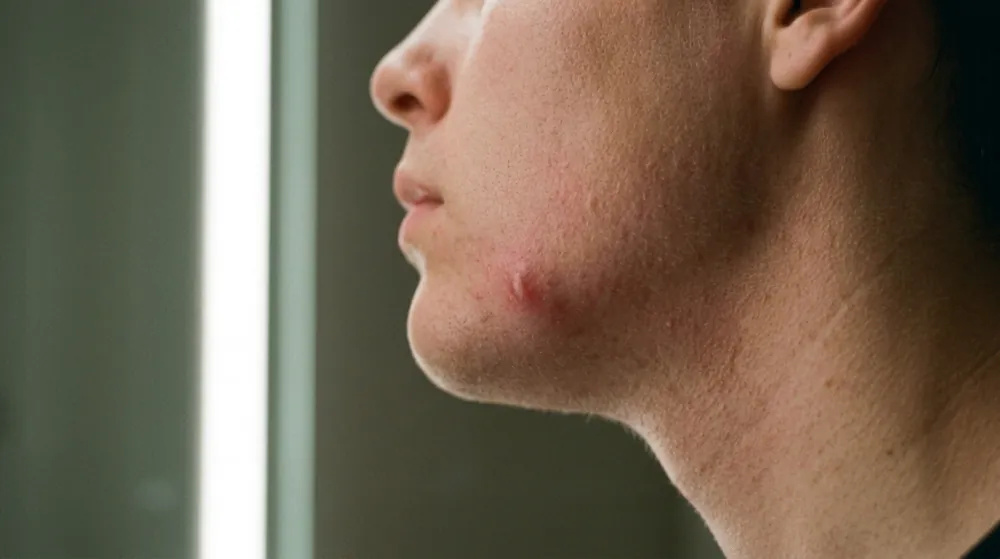
Health services give a short list. The NHS says to see a GP if you have acne and you have tried treating it yourself but it is not getting better, or if you have lots of spots, or spots that are deep, painful or causing scars. It adds signs of infection, such as hot, swollen, red skin, and acne that affects your mental health. It notes that redness is harder to see on brown and black skin.
The American Academy of Dermatology (AAD) lists cysts or nodules, which are deep blemishes that can scar, and acne that does not clear with over-the-counter treatment. It also lists acne that makes you uncomfortable and that you want to clear. Dark marks that keep forming after spots heal are not listed as a sign on the pages we opened. DermNet does note that such marks can last long after a spot has gone.
Do you need severe acne to go?
No. The AAD says many people with acne can benefit from seeing a dermatologist and that you do not have to have severe acne.
Do you have to try everything over the counter first?
The claim, checked
The claim: "You have to try everything over the counter first." We checked what the guidelines say about when to move on.
We found no rule that every product must be tried first. The 2024 AAD guideline for acne has 18 recommendations and 5 good practice statements, built on a systematic review (abstract, below). Its abstract says oral isotretinoin is strongly recommended (abstract) for severe acne, for acne that causes psychosocial burden or scarring, and for acne that has failed standard oral or topical treatment. So severity, scarring and emotional burden count, not only a failed list of products.
Scarring is part of the reason. A commentary on acne scars says acne of any severity can lead to scarring. Among people with scars, nearly a third had almost clear or mild acne. The authors name a family history of scarring and delayed treatment as key risk factors. They urge early, effective, sustained treatment. The commentary was paid for by a drug company, and both authors report ties to drug firms.
A US survey of dermatology patients points the same way. In 1,972 patients (abstract), 43% had acne scars. Time from first spot to first effective treatment was linked to scarring. Even so, 69% of those with scars had only mild or moderate acne at the visit. The survey shows a link, not proof that delay causes scars.
So the claim does not hold. The AAD does give a home-care timeline, covered below.
What happens at the first appointment?
The sources we opened do not describe a typical visit step by step. Two things they do say are useful.
First, grading. DermNet, a doctor-written skin site, says acne is graded as mild, moderate or severe by counting spots: fewer than 30 total spots is mild, 30 to 125 is moderate, and more than 125 is severe. It adds that treatment depends on age, sex, and the extent and severity of the acne.
Second, in-person checks. The commentary on scarring prefers face-to-face assessment, because video quality can limit how well inflammation is seen. It also names a four-question tool that covers the worst acne you have had, how long you have had it, family history of scars, and whether you pick spots. Expect questions like these.
What should you bring?
No source we opened gives a packing list. These items follow from what clinicians are said to assess.
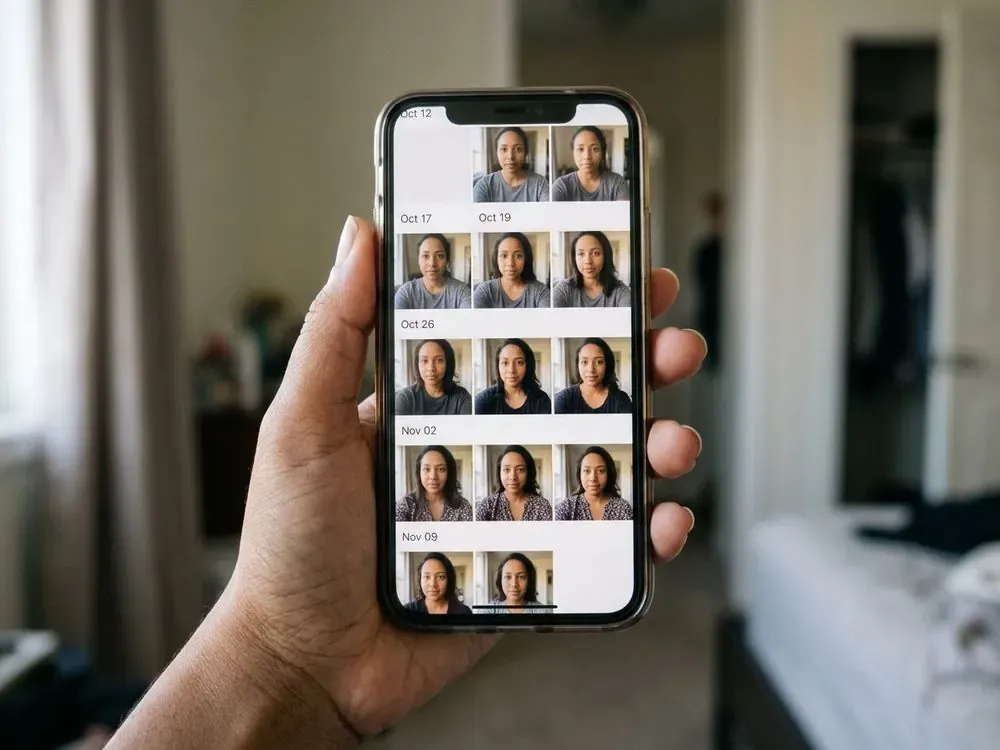
- Dated photos in the same light. They show how acne changes over weeks, which one visit cannot. Our guide to the rosacea visit uses the same idea.
- A list of what you have tried, with dates. The AAD says to give a treatment at least 4 weeks to work, so dates show whether a product had a fair trial.
- Your history. The worst it has been, how long you have had it, whether close family have scars, and whether you pick or squeeze spots.
- Questions and worries. Include how acne affects your mood, because the NHS lists mental health as a reason to book.

What can a dermatologist prescribe? (reported)
This section reports what sources say. It does not tell you what to use. The prescriber chooses.
| Type | What the sources say |
|---|---|
| Skin treatments (creams, gels, lotions) | The 2024 AAD guideline abstract gives strong recommendations for benzoyl peroxide, topical retinoids and topical antibiotics. The NHS lists retinoid and antibiotic skin treatments. |
| Oral antibiotics | The guideline abstract gives a strong recommendation for one oral antibiotic and conditional ones for others. It also has a good practice statement to limit systemic antibiotic use. |
| Hormone-based treatments | The guideline abstract gives conditional recommendations for the combined pill and for an anti-androgen tablet. DermNet lists anti-androgens such as the pill for moderate acne. |
| Isotretinoin | Strongly recommended for severe acne, acne with scarring or psychosocial burden, or acne that fails standard treatment (guideline abstract). DermNet says severe acne may need a course. |
| Procedures | DermNet lists lasers and lights for mild acne. The guideline abstract has a good practice statement on steroid injections for larger lesions. |
The strong and conditional labels come from the guideline's GRADE method, which rates how sure the evidence is. They are not instructions for you. Some of these medicines carry important rules. Ask your prescriber about side effects before you start.
How long before you see a difference?
Slower than most people hope. The AAD says to give a treatment at least 4 weeks to work. Improvement should show within 4 to 6 weeks, and clearing can take two to three months or longer. It warns that switching products every few days can irritate skin and cause breakouts. It also says to keep using a treatment that is working, even after skin clears, to prevent new breakouts.
DermNet adds that single spots usually last less than two weeks, but deeper lumps can stay for months. The scarring commentary says some people find it hard to keep treatment going beyond six months, so ask early about a plan.
What questions should you ask before you leave?
Good questions help you check the plan against what the sources say.
- What is this treatment meant to do, and what will you notice first?
- How long should you wait before judging it?
- What side effects are common, and which mean you should call the clinic?
- What happens if nothing changes, and when is the review?
- Is there anything here that should not be combined with what you already use?

Conclusion
You can see a dermatologist before acne is severe. Deep painful lumps, scars, signs of infection, or no change after several weeks of home care are all sensible reasons. A dated photo log and a list of what you have tried make the visit more useful. Prescription options come in a few types, and your prescriber chooses among them.
Our guides to telling kinds of bumps apart, deep cysts, acne scars and hormonal pimples go deeper, and all our acne guides are in one place. Keep dated notes or photos in the same light, in an app like Skinic or a notebook, and see a clinician if acne is deep, painful, scarring or affecting your mood.
Frequently asked questions
5 questions · tap one to open the answer
When should I see a dermatologist for acne?
Do I have to try over-the-counter products first?
What should I bring to a dermatology appointment for acne?
What can a dermatologist prescribe for acne?
How long does acne treatment take to work?
Medically reviewed by
Dr. M.M Hanaei
Aesthetic Physician, Dermatology Fellowship
- MD — Shahid Beheshti University of Medical Sciences (SBMU)
- MCC Licensure (Medical Council of Canada)
- Dermatology Fellowship, Switzerland
- Certified in advanced aesthetic procedures
Last reviewed 6 November 2026