Skinic
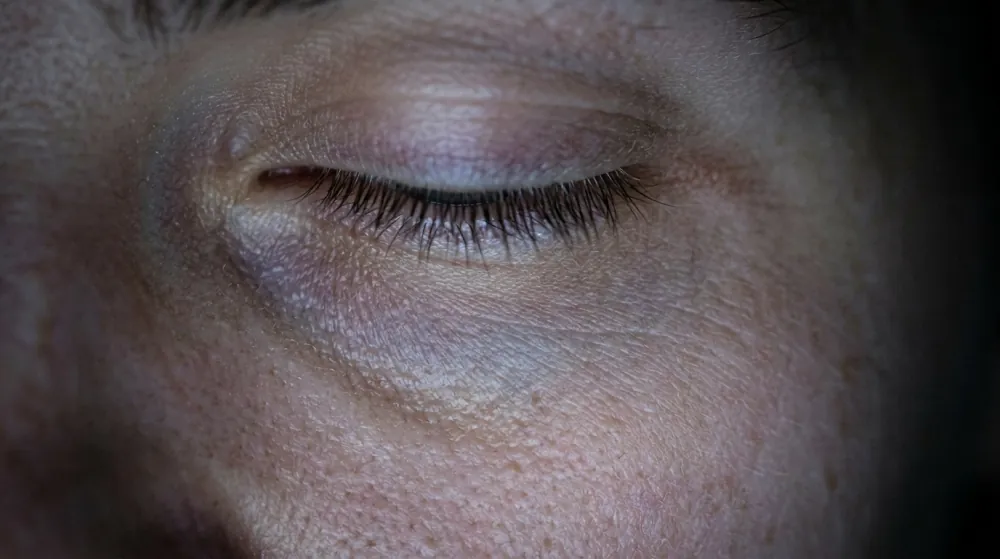
Types of dark circles come down to three causes, pigment, thin skin over visible vessels, and shadow from the shape of the face, and most dark circles are a mix of them. In a study of 65 people that classified dark eye circles with a Wood's lamp and ultrasound, 78% were mixed type (abstract), 14% vascular, 5% pigmented and 3% structural.
That matters for the claim this article tests, that a caffeine eye cream fixes dark circles. A product aimed at one cause will leave the others in place. This article covers the three kinds, two tests that sort them, why eyelid skin shows everything, the claim audit, and what each kind is reported to respond to. It evaluates claims and names no product. It cannot tell you which kind you have.
Three Kinds of Dark
A review of treatments for infra-orbital dark circles lists the factors that contribute: excessive pigmentation, shadowing from tear troughs and infra-orbital fat herniation, shadowing from laxity and wrinkles, and thin, translucent skin over the orbicularis oculi muscle with visible veins. Grouped by what you would see, they come to three.
| Kind | What is going on | What it looks like |
|---|---|---|
| Pigment | Extra melanin, often after eczema, allergy, rubbing or injury; some are constitutional | Brown or grey crescent that does not change with light |
| Vessels | Thin, translucent skin showing the blood-filled tissue and veins beneath | Blue, purple or pink tone |
| Shadow | A groove, hollow or bag casting a shadow | Dark where a dip or bulge is; changes with light and angle |
The review says infra-orbital fat herniation does not itself create dark circles, but a protruding fat pad deepens the tear trough and makes them look worse. It also says pigmentation after allergic conditions such as atopic dermatitis is common, because of the rubbing, and that dark circles in children with allergic rhinitis may reflect venous stasis.
The types of dark circles are grouped differently in different studies. A 200-person Indian clinic study sorted them as constitutional (51.5%), post-inflammatory (22.5%) and others, while the 65-person study above used pigmented, vascular, structural and mixed. Neither system is standard, which is why the tests below describe features and not labels.
The Stretch Test
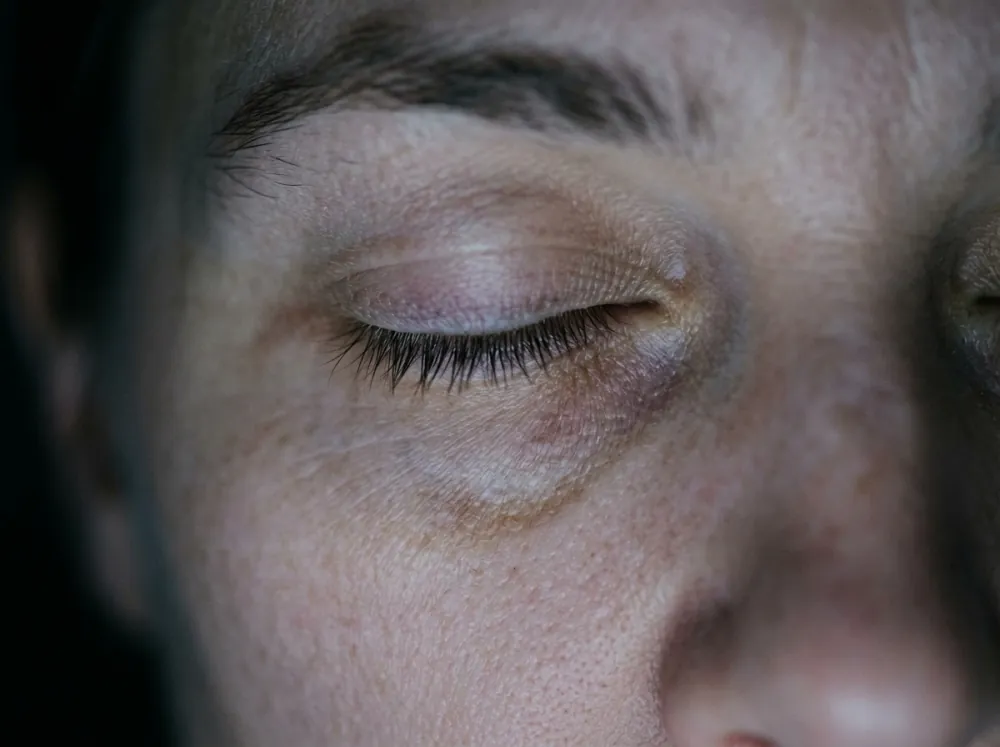
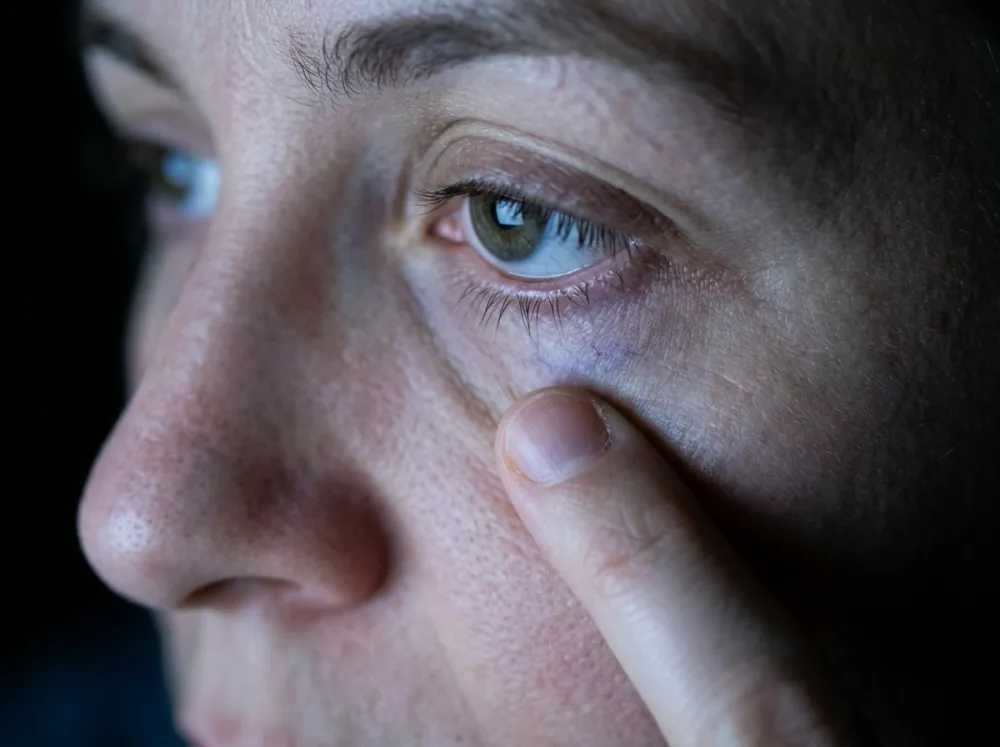
A stretch test reveals pigment. In an expert framework for assessing lower eyelid dark circles, the practical advice to bring out pigmentation is to use a bright light on the skin and stretch the lower eyelid skin; any pigment is then clearly visible, and so is the vascular colour showing through thin skin. The same instruction appears in the Indian clinic study, which used an eyelid stretch test alongside Wood's lamp examination.
How to read it follows from what the test does. Stretching flattens the skin, so shadow from a groove or bag diminishes. What is left is colour. Brown that stays is pigment, and blue or purple that stays is vessels seen through thin skin. The framework paper is expert opinion built from a literature review, a 39-practitioner survey and a focus group, and it was developed with support from a filler manufacturer. It describes a clinical habit, not a validated diagnostic test.
The Light Test
A light test reveals shadow. The same framework says to accentuate dark circles caused by structural deficits or eye bags, use an overhead light directly above the person or dim the ambient light. It adds that overhead lighting worsens the appearance of dark circles while direct lighting may mask them, and that asking the person to look up, without changing facial position, makes eye bags more prominent.
So the test is a comparison: look in a mirror under a light from above in a dim room, then under bright, direct light. Darkness that deepens overhead and fades in front lighting is shadow. Darkness that stays under both is colour. As reasoning, not a finding, photographs taken under the same two lights would let the comparison be made later.
Our article on hyperpigmentation in deep skin tones covers how pigment shows and persists in deeper skin, where the pigment kind is more common.
Why Eyelid Skin Shows Everything
Eye bags vs dark circles is a common confusion, and both are made more visible by the same thing: the eyelid is the thinnest skin on the face. A high-frequency ultrasound study of 45 women mapped 38 facial sites and found the upper eyelid thinnest at a median of 573.5 μm and the nose apex thickest at 1,907 μm, with the lower eyelid next thinnest. Location explained about half the variation in thickness (η² = 0.52), and age under 1%. Our article on the layers of skin covers the numbers.
The expert framework adds that lower eyelid skin is thin, inelastic, low in collagen, elastin and glycosaminoglycans, and dry because it has few sebaceous glands, and that thin skin makes underlying pigment and dilated vessels more likely to show. With age, loss of elasticity brings folds, edema, laxity and wrinkles that deepen the visible grooves. Lines in the same area are covered in wrinkles under the eyes.
Habits and conditions appear alongside this in clinic data. In the 200-person Indian study (Fitzpatrick types I to IV, 81% female), 40% reported inadequate sleep, 32.5% frequent eye rubbing, 33% had atopy, 63% a family history, and 50% had anaemia. These are associations in a clinic sample and do not show cause. Our article on the 10-step Korean routine covers why the skin round the eye may call for gentler products.
The Figure Audited: "Caffeine Eye Cream Fixes Dark Circles"
Verdict: unsupported as stated. Partial reductions are reported in multi-ingredient products, and no source opened isolates caffeine. Findings:
- Most dark circles have more than one cause. In the 65-person study, 78% were mixed type, so a single-mechanism product leaves the rest.
- Topical trials are positive but small and mixed. A 30-year review of topical therapies for periorbital dyschromia (abstract) found 22 studies, 13 of them non-randomised and 7 randomised, and says all reported statistically significant results with topicals including caffeine, acids, vitamins and growth factors. As reasoning, a literature in which every included study is positive is a reason for caution.
- The caffeine figures are modest and come from blends. A 2025 trial report quotes earlier studies: a formulation containing vitamin C, caffeine, peptides and botanical extracts reduced the appearance of dark circles by 12.5% at four weeks and 20% at twelve, and a caffeine and vitamin K pad gave a 16% response after 28 days. Both are multi-ingredient, so caffeine's own contribution is unknown, and the numbers are second-hand.
- The report that quotes them is company-owned. Its author founded and directs the company that makes the serum it tested, which reported a 47.9% pigment reduction over six weeks in an unblinded study. The author discloses this.
- Structure does not respond to a cream. The review of treatments says tear-trough dark circles in young people mostly improve by filling the tear trough, and that severe fat herniation is harder. The expert framework notes that pigmentation will not be improved by filler. Each kind has its own reported route.
The claim fails on its scope. Caffeine in a cream may do something modest for some circles. No source shows it fixing circles caused by pigment, a groove or a bag.
What Each Kind Responds To
Pigment
The review of treatments lists topical options for post-inflammatory pigment: hydroquinone and tretinoin, arbutin, corticosteroids for the underlying dermatitis, vitamin C and E, kojic acid and azelaic acid, and reports a low-fluence Q-switched 1,064 nm laser as effective for dark circles with excessive pigmentation. The 2025 trial report cites a 1% arbutin gel that reduced pigmentation by 43.5% against 7.1% for placebo, and a 5% niacinamide cream that reduced pigmented spots by 11% over four weeks; both are second-hand. Our articles on tretinoin and retinol and vitamin C stability cover two of these.
Vessels and Thin Skin
The review names thin, translucent skin and visible veins as causes but offers no cream for them. It describes fractional lasers and radiofrequency devices as possibly suitable for dark circles with loose, wrinkled lower-eyelid skin. For vascular colour specifically, none of the sources opened reports a topical with trial evidence.
Shadow and Volume
For tear troughs and hollows, the review describes hyaluronic acid filler as the main option for tear troughs and mild fat herniation, with fat resection or blepharoplasty described for fat herniation, and the framework paper notes that fillers in this area are popular but challenging and carry a high rate of complications. Choosing among these belongs with a clinician, and the framework says careful assessment can identify who may be improved without filler.

Conclusion
Dark circles are pigment, vessels or shadow, and in the 65-person study 78% were a mix. A stretch test in bright light separates colour from shadow, and a light test from above separates shadow from colour. Eyelid skin is the thinnest on the face, which is why it shows everything. An eye cream for dark circles, caffeine or otherwise, has modest figures from multi-ingredient blends and none that isolates one ingredient, and each of the types of dark circles has its own reported route.
If you want to see whether anything is changing, photographing the same eye under the same two lights each month, in an album or in an app like Skinic, shows more than a mirror at a different hour. For dark circles that appeared suddenly, are one-sided, or come with other symptoms, ask your own clinician.
Frequently asked questions
5 questions · tap one to open the answer
What are the types of dark circles?
How can you tell what kind of dark circles you have?
Do caffeine eye creams work for dark circles?
What is the difference between eye bags and dark circles?
Can lack of sleep cause dark circles?
Medically reviewed by
Dr. M.M Hanaei
Aesthetic Physician, Dermatology Fellowship
- MD — Shahid Beheshti University of Medical Sciences (SBMU)
- MCC Licensure (Medical Council of Canada)
- Dermatology Fellowship, Switzerland
- Certified in advanced aesthetic procedures
Last reviewed 15 October 2026