Skinic
The tretinoin vs retinol question starts with chemistry: the two sit one step apart, and they are sold under different laws. The FDA-approved label for the tretinoin cream sold for wrinkles states that it does not eliminate wrinkles, repair sun-damaged skin or reverse photoageing. And the claim that retinol is 20 times weaker than tretinoin does not appear in the abstracts of either paper it is cited to.
This tretinoin vs retinol comparison covers how the molecules relate, what each category allows on a label, what the trials show for each, the source of the 20 times figure, why irritation follows dose, and what the labels report about pregnancy. It describes products and evidence. It does not tell you which to use, and the decision to use a prescription retinoid, in pregnancy or otherwise, belongs to your own clinician.
One Receptor, Several Molecules
Retinoids are a family built on vitamin A. A review of retinoids in skin ageing describes retinol and its natural derivatives, retinaldehyde, retinoic acid and the retinyl esters, plus many synthetic relatives. Retinoic acid is also called tretinoin. The oxidation of retinol's alcohol end gives retinaldehyde, and a further oxidation gives retinoic acid.
Retinoic acid is the molecule that acts. A study in cultured human skin cells found that retinol's activity depends on being converted to retinoic acid, which then activates nuclear retinoic acid receptors (abstract). Blocking the receptors reduced retinol-induced activity by 80%, and blocking the conversion reduced it by 86% to 98%.
The Conversion Ladder
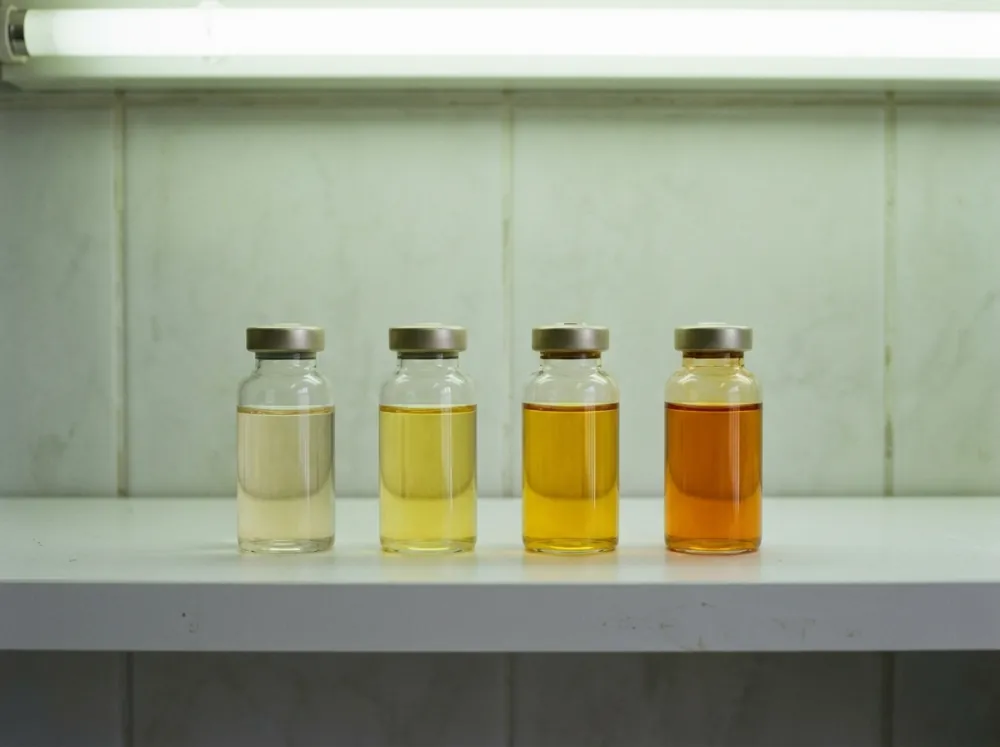
The ladder runs from retinyl esters to retinol to retinaldehyde to retinoic acid. Each rung is one conversion from the next, and the chemistry is real.
What Cells Do With Retinol
In that same cell study, human keratinocytes turned retinol mostly into retinyl esters, 60% of the labelled material after a short pulse and 90% after a 48-hour chase. Only low levels became retinoic acid. The ladder is a controlled, leaky process, and most of what enters the skin cell is stored.
What Skin Does With Retinol
In living skin, a 1995 study applied retinol, up to 1.6%, and retinoic acid, 0.025%, to the buttock skin of volunteers under occlusion for four days. Retinol thickened the epidermis 1.5-fold and retinoic acid 1.6-fold, but retinol produced no measurable retinoic acid in the skin and only trace redness, against a 3.7-fold rise in redness with retinoic acid (abstract). The authors concluded retinol may act as a prohormone: similar changes in the skin without measurable retinoic acid or irritation.
The ladder idea, that each step down trades potency for tolerance, is therefore partly supported. The exchange rate is the question, and it comes up below.
Drug or Cosmetic: What the Category Means
In the United States
Which category a product falls into is decided by its intended use, as our article on medical-grade skincare explains from the FDA's own pages. Tretinoin is an approved prescription drug. Its labelling is specific about what it is for.
The FDA-approved label for tretinoin cream at 0.1%, 0.05% and 0.025% says it is indicated for the treatment of acne vulgaris and that the safety and efficacy of long-term use for other disorders have not been established. It is marked prescription only.
A second label, for tretinoin cream at 0.02%, covers photoageing, and its wording is narrow. It is indicated as an adjunctive agent for the mitigation of fine facial wrinkles in people who use comprehensive skin care and sunlight avoidance programmes. It states in capitals that it does not eliminate wrinkles, repair sun-damaged skin, reverse photoageing or restore more youthful skin. It also says it has not demonstrated a mitigating effect on coarse or deep wrinkling, tactile roughness, mottled hyperpigmentation, lentigines or skin laxity.
Retinol has no such label. It is sold as a cosmetic ingredient, and the FDA does not approve cosmetic claims in advance.
In the European Union
The EU treats retinol as a cosmetic ingredient with a ceiling. A European Commission draft regulation sent to the Council in November 2023 notes that retinol, retinyl acetate and retinyl palmitate were not regulated under the Cosmetics Regulation and are used as skin conditioning agents. It cites the EU scientific committee's 2022 opinion, which set maximum concentrations for vitamin A in cosmetics of 0.05% retinol equivalent in body lotion and 0.3% in other leave-on and rinse-off products, and proposes those limits plus a warning label about total vitamin A intake.
We understand the draft was adopted in 2024, but we did not open the final Official Journal text, so treat the limits as proposed and check the final regulation. The draft's passages we read do not mention pregnancy.
| Tretinoin | Retinol | |
|---|---|---|
| US category | Prescription drug | Cosmetic ingredient |
| What the label may claim | Acne (cream, gel); fine facial wrinkles as an adjunct (0.02% cream) | No pre-approved claims |
| Strengths on US labels | 0.1%, 0.05%, 0.025% (cream); 0.025%, 0.01% (gel); 0.02% (wrinkle cream) | No label standard |
| EU position | Not covered here | Cosmetic with proposed ceilings: 0.3% RE (most products), 0.05% RE (body lotion) |
What Each Has Trial Data For
Tretinoin
For acne, the label directs the cream to the skin where lesions appear and says results should be noticed after 2 to 3 weeks, though more than 6 weeks may be needed. For photoageing, the label reports that the 0.02% cream was tested in five trials with 324 evaluable patients on tretinoin and 332 on vehicle over 24 weeks. Only two of the five provided adequate demonstration of efficacy for fine wrinkles, and no two adequately demonstrated efficacy for coarse wrinkling, mottled pigmentation, roughness or laxity.
The label adds that in the vehicle-controlled studies many patients in the vehicle group achieved the palliative effects on fine wrinkles with sun avoidance and emollient creams. In a single study of 107 darkly pigmented participants, minimal or mild improvement in fine wrinkling occurred in 43% of vehicle users against 29% of tretinoin users. The label notes this may reflect the small size of the study.
Retinol
The review of retinoids in skin ageing reports that retinol studies include a controlled trial of a retinol formulation showing improved fine wrinkles at 12 weeks, and a study of 53 people aged 80 or over in which 1% retinol for seven days reduced collagen-degrading enzymes and raised collagen synthesis in tissue samples. It also reports that a 48-week trial of retinyl propionate cream (0.15%) in 60 people, at the ester end of the ladder, showed no significant improvement over placebo.
There is a head-to-head trial. A split-face study in 65 completers compared retinol lotions at 0.25%, 0.5% and 1.0% with generic tretinoin creams at 0.025%, 0.05% and 0.1%, one concentration pair per group, for 12 weeks. Both improved photodamage and the study found no significant differences in efficacy between them.
That trial was funded by the maker of the retinol lotions, two of its authors are employees, and the retinol was a sustained-release formulation with irritation-control ingredients. A trial this small finding no difference does not show the two are equal. We read the full text; the efficacy tables are images, so we cannot give the means.
The Figure Audited: "Retinol Is 20 Times Weaker Than Tretinoin"
The tretinoin vs retinol potency figure is quoted on retinol cream pages and tretinoin cream pages alike, so it is worth tracing.
What the Two Papers Measured
The 20 times figure appears in a 2006 review of retinoids in skin ageing, which states that retinol is 20 times less potent than tretinoin and cites two papers. We read the abstracts of both.
The first is the 1994 cell study. It measured the concentration at which retinol and retinoic acid half-maximally suppressed an enzyme and activated a reporter gene in cultured skin cells. For both, retinol needed 10 times the concentration (abstract). The ratio is 10, not 20.
The second is the 1995 skin study above. It compared 1.6% retinol with 0.025% retinoic acid, a 64-fold difference in concentration, and found similar epidermal thickening. It gives no potency multiplier in the abstract.
What the Trials Found at Matched Strengths
The head-to-head trial was designed around a different figure. Its authors describe retinol as generally considered about ten times less potent and tested concentration pairs at that 10 to 1 ratio. Its text says an earlier trial used retinol at about 44 times the tretinoin concentration and did not support the conversion theory.
Verdict: the multiplier is not a constant. The figure of 20 is not stated in the abstracts of the papers it is cited to. The cell study gives 10, the skin study compares strengths 64 apart, and trials at 10 to 1 and 44 to 1, both involving the retinol's manufacturer, found no significant differences. Label percentages are by weight of ingredient, so our reasoning is that a retinol cream percentage cannot be read as a tretinoin one.
Irritation Is Dose
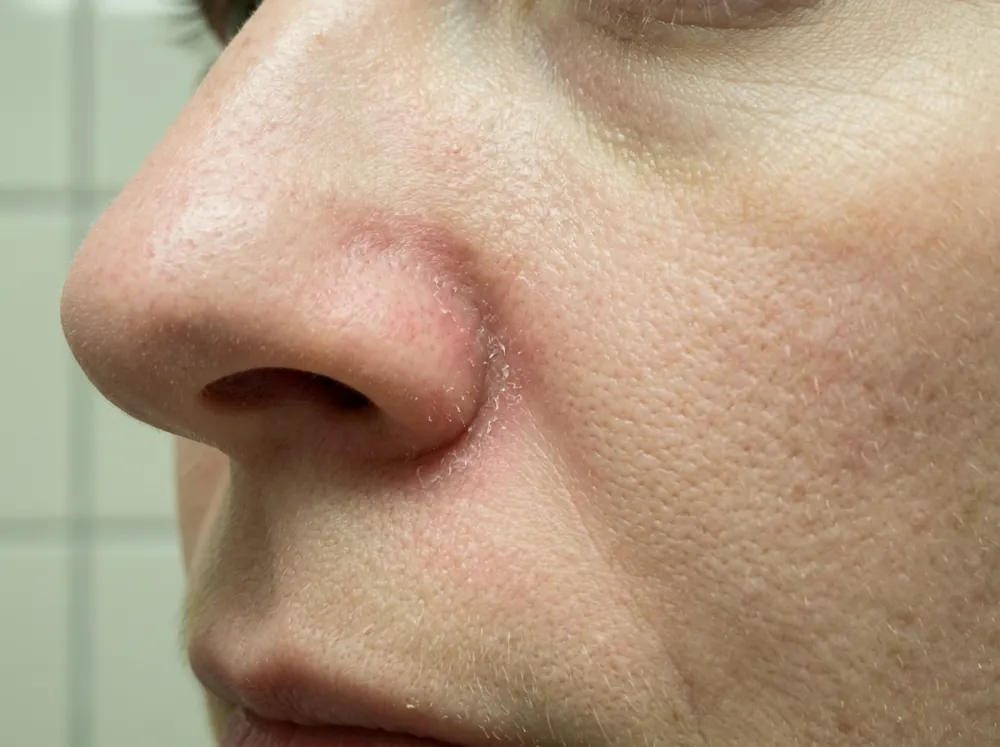
The skin study found retinoic acid raised redness 3.7-fold against vehicle at 0.025%, while retinol up to 1.6% produced only trace redness. The review of retinoid studies reports a six-person 14-day study in which retinol caused considerably less water loss, redness and scaling than retinoic acid.
The tretinoin labels treat irritation as something to adjust by dose. The acne label says that a temporary stop or a lower frequency can be followed by resuming, and that changes of vehicle, concentration or frequency should be monitored by careful observation. It also says that in the first weeks an apparent exacerbation of inflammatory lesions may occur, which it attributes to the drug acting on deep, previously unseen lesions. Our article on purging versus breaking out reports how often that flare actually happened in trials. The wrinkle label calls the 0.02% cream a dermal irritant.
In the head-to-head trial, redness, dryness and stinging stayed mild or below throughout and rose from baseline at week 4 for all products, with no significant increases by week 12.
Pregnancy: What the Labels Report
This section reports what regulators and labels say. It does not say that any retinoid is safe, and a prescriber is the right person to ask.
The two tretinoin labels differ. The acne label says there are no adequate and well-controlled studies in pregnant women and that tretinoin should be used during pregnancy only if the potential benefit justifies the potential risk to the fetus. The wrinkle label says the cream should not be used during pregnancy and tells prescribers not to use it if the patient is pregnant or attempting to become pregnant.
Both labels give the same background. Oral tretinoin is teratogenic in several species, and topical tretinoin in animal tests gave equivocal results. Both report that 30 human cases of temporally associated congenital malformations were reported over two decades of clinical use of the original formulation, five of them in the rare category holoprosencephaly, with no definite pattern and no causal association established, and that the significance of these reports for fetal risk is not known.
That is the regulatory position as the labels state it. Our article on pregnancy-safe skincare sets out what specialist bodies say about topical retinoids, including where they disagree with each other. For retinol, we found no pregnancy statement in the sources we opened.
Conclusion
Retinol, retinal and tretinoin are one family and one pathway, and retinoic acid is the molecule that acts. Tretinoin is a prescription drug whose labelling is specific, including a photoageing label that disclaims most of what the category is marketed for. Retinol is a cosmetic ingredient with no pre-approved claims and, in the EU, proposed concentration ceilings.
The trials show both can improve photodamage in small studies, but the head-to-head comparison was funded by the retinol maker and cannot establish equality. The 20 times figure is not stated in the abstracts it is cited to, and measured ratios range from 10 to 64 depending on what is compared.
Irritation tracks dose and frequency, which is why labels allow adjustment, and pregnancy is the topic where labels and specialists need to be read in full. If you are pregnant, planning a pregnancy, or choosing between a prescription retinoid and a cosmetic one, ask your own clinician.
Frequently asked questions
5 questions · tap one to open the answer
What is the difference between tretinoin and retinol?
Is retinol 20 times weaker than tretinoin?
Is tretinoin a drug and retinol a cosmetic?
Does retinol work as well as tretinoin?
Can you use tretinoin or retinol while pregnant?
Medically reviewed by
Dr. M.M Hanaei
Aesthetic Physician, Dermatology Fellowship
- MD — Shahid Beheshti University of Medical Sciences (SBMU)
- MCC Licensure (Medical Council of Canada)
- Dermatology Fellowship, Switzerland
- Certified in advanced aesthetic procedures
Last reviewed 9 October 2026