Skinic
Most actives do one thing. Azelaic acid turns up in three separate conversations — acne, pigmentation and rosacea — and it is genuinely doing something in all three, which is unusual enough to be worth explaining properly.
It is a dicarboxylic acid, and the yeast Malassezia furfur makes it: azelaic acid occurs naturally as a by-product of that organism's metabolism — the same organism behind the fungal acne mimic that confuses so many people. That is a pleasing piece of biology and not otherwise relevant.
What is relevant: two of the three claims most often made for it do not survive checking, and the reason it matters for most readers is not the reason usually given.
How It Works, and the Claim With No Evidence
The mechanisms are unusually well characterised for a skincare active.
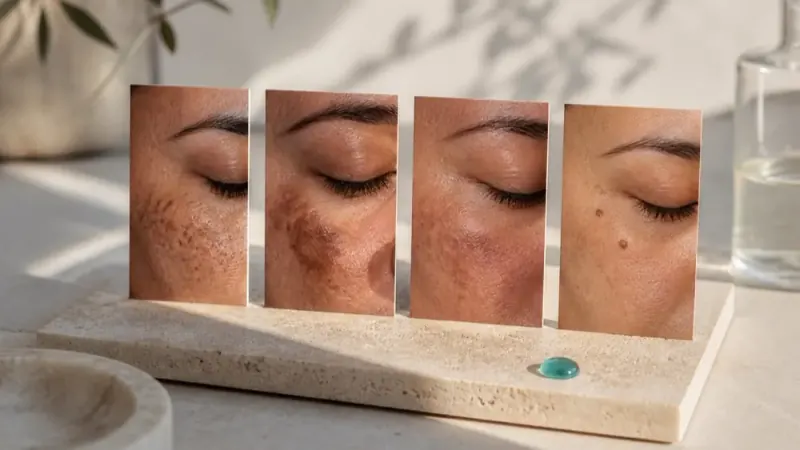
On pigment, azelaic acid inhibits tyrosinase — the enzyme that converts tyrosine toward melanin — by two routes. A 2025 review of its mechanism of action describes direct competitive inhibition, where a carboxylate group competes with L-tyrosine for the binding site, plus an indirect route through the thioredoxin system, where free-radical scavenging raises reduced thioredoxin, itself a potent tyrosinase inhibitor. Kojic acid reaches the same enzyme by a different route, which where kojic acid sits among pigment actives sets out.
On acne, it works on bacteria and on keratin. It lowers intracellular bacterial pH and inhibits the respiratory chain and anaerobic glycolysis, and it competitively inhibits thioredoxin reductase, blocking the deoxyribonucleotides needed for DNA synthesis. Separately it arrests keratinocytes in the G0 phase and reduces the size and number of keratohyalin granules.
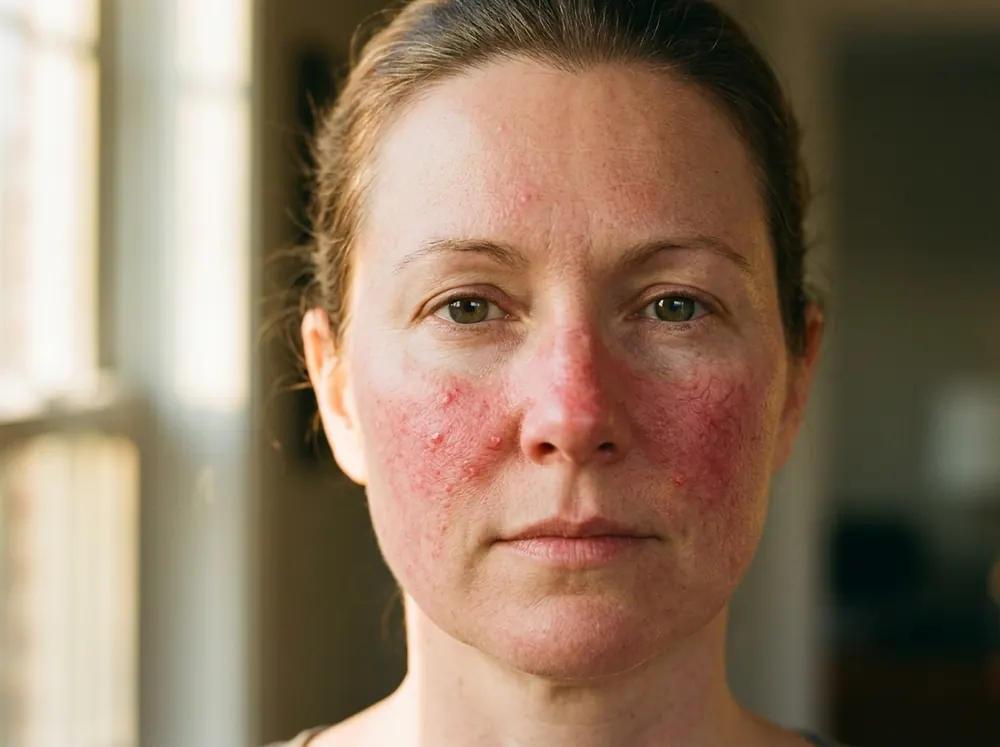
On rosacea, the mechanism is specific and satisfying. Azelaic acid directly inhibits kallikrein 5 and the cathelicidin antimicrobial peptide gene, reducing LL-37 — the peptide whose proinflammatory and angiogenic effects sit at the centre of rosacea's pathology. It also induces PPAR-γ, preventing NF-κB's p65 subunit translocating to the nucleus.
The Selectivity Claim
Here is the first thing that does not hold up.
Almost every page about azelaic acid says it is selective for hyperactive or abnormal melanocytes — that it targets overactive pigment cells and leaves normal skin alone, which is why it supposedly cannot lighten you unevenly the way hydroquinone can.
That 2025 mechanism review contains no evidence for it. It describes antiproliferative and cytotoxic effects on melanoma cell lines in a time- and dose-dependent way, and does not distinguish normal from pathological melanocytes anywhere.
DermNet points the other way entirely: azelaic acid "may cause skin lightening (hypopigmentation) that is more apparent in darker skin tones." If it were genuinely selective for hyperactive melanocytes, that would not happen. For anyone treating hyperpigmentation in brown and deep skin tones, this is the more useful warning.
What It Does for Acne
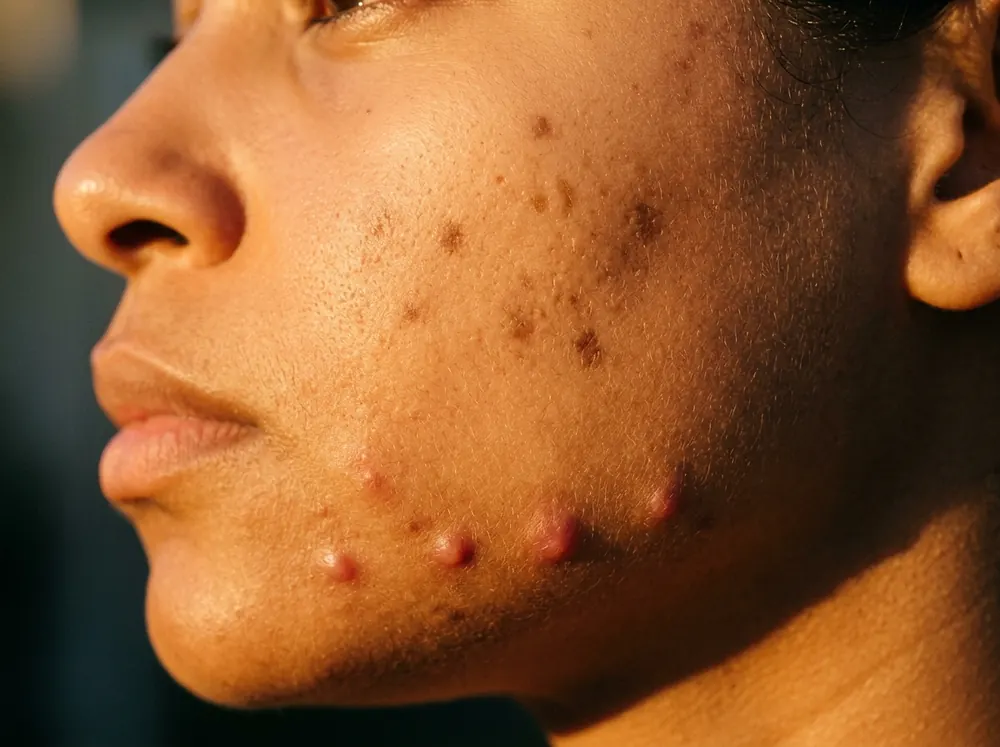
Real, moderate, and not the strongest option — which is the part usually left out.
Twelve weeks of twice-daily 20% cream produced significant reduction or normalisation of intra- and interfollicular hyperkeratosis. Against other topicals, the picture is mixed and honest:
- Versus retinoic acid — both significantly reduced comedone counts against placebo.
- Versus adapalene — comparable effectiveness for maintenance therapy.
- Versus 1% benzoyl peroxide with 1% clindamycin — azelaic acid was less effective.
That third line matters. If your problem is inflammatory acne and you tolerate benzoyl peroxide, azelaic acid is probably not the stronger choice — and the solubility logic behind which acid reaches which problem applies here too.
Where It Earns Its Place
Tolerability, plus the pigment effect. In a 12-week trial of 251 participants, median Dermatology Life Quality Index fell from 9 to 5, with 90% of doctors and patients rating tolerance as very good or good. For acne that leaves marks — which is most acne in deeper skin tones — treating the spot and the mark with one product is a real advantage that a stronger antibacterial does not offer.
What It Does for Rosacea
This is the strongest evidence in the article, and the most surprising.
A network meta-analysis of 19 randomised trials covering 8,075 patients with moderate-to-severe papulopustular rosacea ranked topical treatments by improvement in investigator global assessment. Azelaic acid 20% came first, with the highest effect size of any agent — an odds ratio of 8.54 and a P-score of 0.97, ahead of ivermectin 1% at 0.88 and metronidazole 0.75% at 0.62.
Two Caveats on That Ranking
Both belong immediately next to it.
The confidence interval is enormous: 2.48 to 29.45. A point estimate of 8.54 inside an interval that wide is a signal of few trials or small ones. The direction is convincing; the magnitude is not.
Azelaic acid 15% ranked fourth, at a P-score of 0.53 — below metronidazole. The two concentrations of the same drug landed at opposite ends of the table, which is either a real dose effect or an artefact of which trials existed.
Supporting data is more settled. A 961-subject trial of 15% foam against vehicle over 12 weeks found IGA improvement of 32.0% against 23.5%, inflammatory lesion reduction of 61.6% against 50.8%, and erythema improvement of 61.5% against 51.3%, all at P<0.001. Against metronidazole in 251 participants over 15 weeks, azelaic acid showed a significant advantage on both investigator- and patient-assessed efficacy.
If you are working out whether what you have is rosacea, perioral dermatitis or acne in the first place, that comes before any of this — the three are routinely confused and the treatments diverge sharply.
The Hydroquinone Comparison, Audited
Now the claim this article was commissioned to check: azelaic acid is as effective as 4% hydroquinone for melasma.
It traces to a 1991 trial. Baliña and Graupe compared 20% azelaic acid with 4% hydroquinone cream in 329 women, double-blind, with broad-spectrum sunscreen used in both arms. The results, as reported in the review above:
| Outcome | 20% azelaic acid | 4% hydroquinone |
|---|---|---|
| Overall improvement | 64.8% | 72.5% |
| Reduction in lesion size | 71% | 78% |
| Improvement in pigment intensity | 84.2% | 89.2% |
The original trial reported no significant difference between treatments on any of those measures. So the claim is defensible — but look at the table. Every point estimate favours hydroquinone, by seven or eight percentage points each time. "No statistically significant difference" in a 1991 trial is not the same as equivalence, and it never was.
Two limitations belong with that table. The 1991 paper sits behind a publisher paywall and could not be opened, so these figures are as the review above reports them. And secondary sources disagree on the trial's duration, with the original abstract describing 24 weeks and the review describing 24 months — so the duration is left out here rather than guessed at.
The Real Difference Is Access, Not Effect
Here is what almost every comparison gets wrong, and it is worth stating plainly because it points the opposite way from the usual telling.
The standard story is that azelaic acid is the safe alternative to a dangerous drug. The American Society for Dermatologic Surgery Association's position statement on topical hydroquinone does not support that framing:
- "There have been no reported incidences of cancer from topical application of hydroquinone in humans." The FDA's 2006 concern rested on a two-year study of oral administration in rats.
- "The causal effect of products containing hydroquinone and skin darkening (cutaneous ochronosis) is unclear." Whether it results from hydroquinone alone, from other substances in those formulations, or from the much higher concentrations sold in some countries is, in the society's words, yet to be established.
- Serious and fatal side effects have not been reported at concentrations such as 4%.
The society explicitly opposes additional restrictions on hydroquinone that are not supported by clinical evidence. It is also an interested professional body arguing against restrictions on a drug its members prescribe, which is worth holding alongside the statement rather than instead of it.
What has changed is availability. As of September 2020, hydroquinone is available in the United States only on prescription, following the CARES Act reform of the FDA monograph process. In the European Union it has been prohibited in cosmetic products for far longer.
So the honest summary: hydroquinone probably still edges it on efficacy, its safety reputation is worse than the specialist evidence supports, and azelaic acid's real advantage is that you can actually get it. For most readers that is decisive — an ingredient you can buy beats a marginally better one you cannot. It is just a different argument from the one being made on your behalf. If pigment is the problem, the type of dark spot determines what will work more than the choice between these two does.
One more piece of evidence that will matter to some readers. Azelaic acid is frequently described as acceptable in pregnancy — often citing the old FDA "category B" label, which is worth treating carefully, since the FDA withdrew the letter categories in 2015 and they never applied to over-the-counter products in the first place. What the literature does report is a study of 28 pregnant women using 15% gel twice daily for four months, in which 92.9% to 96.4% of cases showed disappearance or lightening of pigmented lesions. Melasma in pregnancy is common and most of the alternatives are off the table.
10%, 15%, 20%: Why Higher Is Not Simply Stronger
The concentrations look like a ladder. They are not.
Over the counter you will find 10%. Prescription strengths are 15% gel and 20% cream. The instinct is that 20% is the strong one.
But the 15% gel uses micronised azelaic acid, and the mechanism review gives the delivery figures: the gel "delivers a significantly higher fraction of the active ingredient into the viable skin layers compared to the cream (25.3% vs. 3.4%)."
Seven times more of the active reaching the layers where it works, from the lower-percentage product. The number on the tube describes what is in the tube, not what gets into your skin — and the systemic load differs too, at 5.8% for the 15% gel against 16.3% for the 20% cream.
Hold that against the rosacea ranking, where 20% cream came first and 15% gel came fourth. Those two findings sit awkwardly together, and smoothing it over would be dishonest: better penetration did not translate into a better ranking in that analysis, which may reflect the trials available rather than the drugs. It is a genuine open question, and the practical consequence is that you cannot read potency off the percentage. That holds across the category, not just here — concentration and vehicle beat the name on the bottle more often than not.
Tolerability, and the Stinging Nobody Warns About
Azelaic acid is generally well tolerated, and "generally" is doing some work.
The characteristic adverse effects are transient stinging, burning and itching. In the rosacea meta-analysis the reported rates were face burning or stinging in 5.50%, pruritus in 2.97% and application-site pain in 2.50%.
And a finding that cuts against the gentle reputation: in that same analysis, azelaic acid 15% was the only agent with a statistically significant increase in adverse events — an odds ratio of 1.95, confidence interval 1.30 to 2.93. Ivermectin, metronidazole and minocycline showed no significant increased risk.
There is no photosensitivity and no significant systemic reaction reported. Worsening asthma has been reported and is worth knowing if that applies to you.
On timing, DermNet is realistic in a way product pages are not: some improvement should be seen after one month, with maximum results after six months of continuous use. Six months. Most people stop long before that and conclude it did not work.
Conclusion
Azelaic acid is one of very few actives with a genuine claim on three different problems, and the mechanisms behind each are specific rather than hand-waving — tyrosinase inhibition for pigment, bacterial and keratinocyte effects for acne, and kallikrein-5 and cathelicidin suppression for rosacea.
The evidence is strongest where people look for it least. It topped a network meta-analysis of 19 trials and 8,075 patients in papulopustular rosacea, on a very wide confidence interval. It is moderate for acne and less effective than benzoyl peroxide with clindamycin, which the marketing does not mention.
Three things to take from the audit. The selectivity claim has no evidence behind it — it can lighten normal skin, and that shows up more in deeper tones. A higher percentage is not simply stronger, because the 15% gel delivers roughly seven times more active into viable skin than the 20% cream. And the hydroquinone comparison is real but narrower than quoted: every point estimate in that 329-woman trial favoured hydroquinone, and the specialist position is that hydroquinone's safety reputation outruns its evidence.
Which leaves the genuine case for azelaic acid, and it is a good one. It treats the spot and the mark left behind with one product. It is acceptable in pregnancy when most alternatives are not. And you can buy it, which in the United States hydroquinone no longer is.
Just give it six months.
Frequently asked questions
5 questions · tap one to open the answer
Is azelaic acid as good as hydroquinone for melasma?
Is 20% azelaic acid stronger than 15%?
Does azelaic acid only target overactive pigment cells?
How long does azelaic acid take to work?
Is azelaic acid safe in pregnancy?
Medically reviewed by
Dr. M.M Hanaei
Aesthetic Physician, Dermatology Fellowship
- MD — Shahid Beheshti University of Medical Sciences (SBMU)
- MCC Licensure (Medical Council of Canada)
- Dermatology Fellowship, Switzerland
- Certified in advanced aesthetic procedures
Last reviewed 6 October 2026