Skinic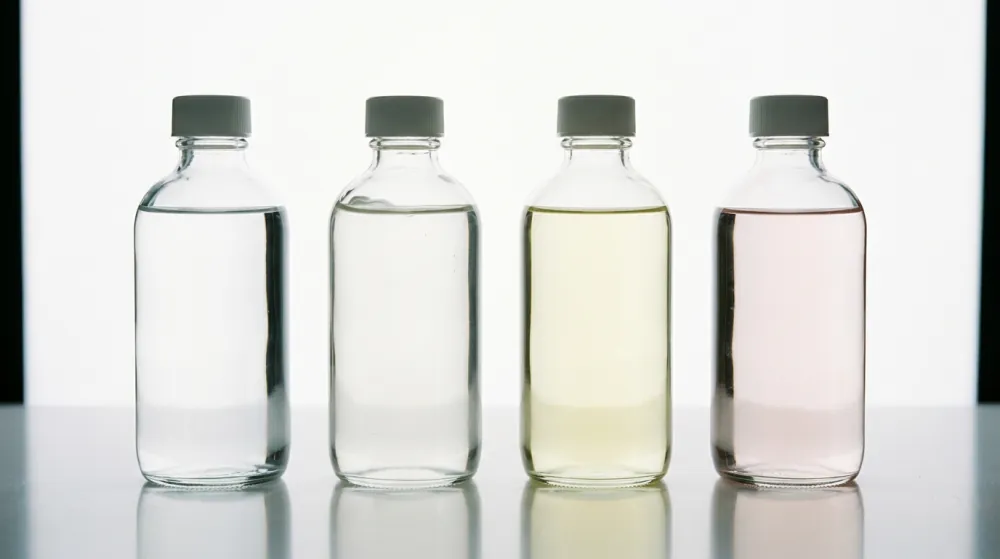
What is toner, and what does toner do for your face? The answer depends on which toner is meant, because the word covers at least four different products: an astringent, a hydrating layer, an acid exfoliant and a pH adjuster. None of the sources opened for this article defines toner, so the word is best read as a marketing term, and each of the four needs its own test.
The two claims most often attached to toner do not hold up as stated. The FDA defines an astringent as a drug applied to the skin for a local and limited protein coagulant effect, and its monograph lists no claim about pores. And the pH rationale comes from the era of alkaline soap: soap has a pH of 8.5 to 11, against 5.5 to 7 for modern syndet cleansers, and in a study of tap water, the skin's pH returned to its natural level by itself within about 6 hours.
This article covers what toner is, the pH story, hydrating toners, acid toners, astringents and alcohol, the two claims audited and whether you need one. It evaluates claims. It names no product and does not tell you what to use.
One Word, Four Products
What toner is for depends on its kind. A toner can be any of the following, and each has a different test.
| Kind | What it is | What to test it against |
|---|---|---|
| Astringent | A liquid meant for a local, limited protein coagulant effect | The FDA's definition and its permitted claims |
| Hydrating toner | A watery humectant layer | Humectant evidence |
| Acid toner | An exfoliant in liquid form | Alpha-hydroxy acid concentration and pH rules |
| pH adjuster | An acidic rinse meant to bring the surface back to normal | Evidence on skin pH and cleanser pH |
Our articles on the ten-step Korean routine and on skincare routine order place toner within a full routine. What follows tests each kind.
The pH Story and Why It Is Dated
Where the Story Came From
A review of soaps and syndets states that the skin's pH is between 4.0 and 6.0, and that soap, made through saponification with a strong base, has a pH typically in the range of 8.5 to 11.0. A syndet, a synthetic detergent, has a pH of 5.5 to 7.0, and a newer class of syndets built from sulfosuccinate and acyl isethionate has a pH of 5.0 to 5.5. The review says the skin's pH and the soap's do not overlap, while the skin's and the syndet's do.
The same review reports that an acidic skin pH keeps resident bacteria attached to the skin, whereas an alkaline pH promotes their dispersal. That is the argument behind rebalancing: wash with soap, push the surface alkaline, then correct it.
What Skin Does on Its Own
A multicentre study of 330 people measured skin surface pH on the forearm before and after 24 hours without showering or cosmetics. The average fell from 5.12 to 4.93, and the authors estimate the natural skin surface pH is about 4.7 (abstract). They found that soaps have a profound effect on skin pH, and that plain tap water, with a pH around 8 in Europe, raised skin pH for up to 6 hours before it returned to its natural value. Skin with a pH below 5 had better barrier, moisturisation and scaling measures than skin above 5.
So the concept is real: pH matters, and alkaline products and even tap water displace it. The surface returns by itself within hours. No source opened tested whether a toner speeds that recovery or whether the speed matters. As reasoning, not a finding, a syndet in the 5.0 to 5.5 band leaves less to correct than soap at pH 9.
Hydrating Toners
Many products sold as toner are watery humectant liquids. A humectant study measured how glycerin solutions hold water: the moisture-retention capacity of glycerin increased with concentration from 0 to 60%, a solution of 60 to 70% showed no weight change while evaporating, and above 70% it took up moisture. The study used gravimetric analysis, transepidermal water loss analysis and differential scanning calorimetry on solutions. It was not a trial on faces.
What it supports is limited: humectants hold water in the laboratory, more at higher concentrations. The concentration of humectant in a toner is not stated in the sources opened, and a thin, watery liquid contains less than the solutions tested. Our article on moisturisers for dry skin covers the three classes of moisturiser and what a humectant needs to work.
Acid Toners Are Exfoliants
A toner with glycolic, lactic or salicylic acid is an exfoliant in liquid form, and it follows the rules of an exfoliant. A review of alpha-hydroxy acids reports the limits regulators have set. In the United States, a 2005 FDA guidance recommended no more than 10% AHA at a pH of 3.5 or higher for over-the-counter cosmetic use, with either an SPF in the formulation or a label telling users to use sunscreen. The European scientific committee recommended glycolic acid at up to 4% with a pH of at least 3.8, and lactic acid at up to 2.5% with a pH of at least 5.
The review also says the optimal concentrations for efficacy with minimal side effects have not been precisely defined, and that irritation, redness and other effects are more likely at higher concentrations or when AHAs are combined with other treatments. Our article on glycolic acid, salicylic acid and benzoyl peroxide covers how the three differ.
An acid toner is therefore not a gentle prelude to the rest of a routine. It is one of the exfoliating steps, and it counts as one. Our article on skincare routine order covers sequencing.
Astringents and Alcohol
The FDA's monograph for skin protectant drug products defines an astringent drug product as a drug product applied to the skin or mucous membranes for a local and limited protein coagulant effect. Witch hazel is among the permitted astringent active ingredients, and the claim the monograph allows for it is that it relieves minor skin irritations due to insect bites, minor cuts or minor scrapes. The required warnings include avoiding contact with the eyes, and stopping use and asking a doctor if the condition worsens or symptoms last more than 7 days.
The monograph lists no claim about pores. An astringent in the regulatory sense is a protein-coagulating drug for minor irritations, which is a different product from a cosmetic toner sold to "tighten" the face.
Alcohol is the other part of the astringent image. DermNet's general measures for rosacea advise avoiding alcohol-based topical products, along with exfoliants and topical steroids. That is advice for a condition in which skin stings and flushes easily. No source opened measured what an alcohol-containing toner does to healthy skin's barrier, so this article does not claim it either damages or spares it.
The Figure Audited: "Toner Closes Pores and Restores pH"
Does Toner Close Pores?
No source opened supports it. DermNet describes enlarged pores as depressions in the facial skin surface that contain one or more openings to the ducts carrying sweat and oil. The factors it lists for large pores are increased sebum production, hair follicle size, comedogenic products, loss of skin elasticity with age and sun damage, and it states that treatments focused on preventing and shrinking large pores are not very effective. The treatments it names are avoiding pore-clogging creams, weight loss, chemical peels, topical nicotinamide, plant-derived copper chlorophyllin complexes, L-carnitine and topical retinoids. Astringents are not on the list, and the FDA monograph has no pore claim.
As reasoning, not a finding: a protein-coagulating astringent could produce a temporary tight feeling, which a user might read as pores closing. No source measured pore size after a toner. The description of a pore as a depression with duct openings does not describe a structure that opens and closes.
Does Toner Restore pH?
The kernel is real, and it is old. Soap at pH 8.5 to 11 and even tap water at about pH 8 raise skin pH, and skin with a pH below 5 had better barrier measures. A pH-adjusting rinse was a reasonable response to soap. But the surface returned to its natural value on its own in the study, within hours after water, and syndet cleansers now sit at 5.5 to 7.0 and below.
Verdict: "closes pores" is not supported, and "restores pH" is a rationale from the soap era that no study opened tests for toner. Neither claim is shown to be false by direct trial. Neither has been shown true either.
Do You Need One
No source opened shows that adding a toner step improves outcomes. Which kind it is decides what it could do.
- A hydrating toner is a humectant layer, which a moisturiser also provides. It is a preference, not a requirement.
- An acid toner is an exfoliant. It should be judged as one, with its concentration and pH, and counted among the actives.
- An astringent toner is defined by the FDA for minor irritations. The pore and "tightening" claims are not supported.
- A pH-adjusting toner addresses a problem that is largest with soap. With a cleanser near skin pH there is less to adjust, and the skin recovers by itself.
Labels rarely say which kind a toner is, so the ingredient list is the guide: humectants such as glycerin, acids such as glycolic, lactic or salicylic, astringents such as witch hazel or alcohol. Our article on cleansers for oily skin covers cleansing without stripping, which removes most of the reason for the pH-adjusting kind.
Conclusion
What does toner do for your face? It depends on the toner. An astringent is a defined drug category with no pore claim. A hydrating toner is a thin humectant layer. An acid toner is an exfoliant with concentration and pH limits. A pH adjuster answers a problem that was larger when people washed with soap, and skin returned to its natural pH by itself in the one study opened.
The pore claim is unsupported, the pH claim is old, and no source shows a toner step improves skin. If you are curious whether a product changes anything, photographing your skin in the same place and light before and after, in an album or in an app like Skinic, shows more than memory does. For a skin condition, ask your own clinician.
Frequently asked questions
5 questions · tap one to open the answer
What does toner do for your face?
Does toner close pores?
Do you need toner to restore your skin's pH?
Is toner necessary in a skincare routine?
Are acid toners the same as exfoliants?
Medically reviewed by
Dr. M.M Hanaei
Aesthetic Physician, Dermatology Fellowship
- MD — Shahid Beheshti University of Medical Sciences (SBMU)
- MCC Licensure (Medical Council of Canada)
- Dermatology Fellowship, Switzerland
- Certified in advanced aesthetic procedures
Last reviewed 11 October 2026