Skinic
Quick answer
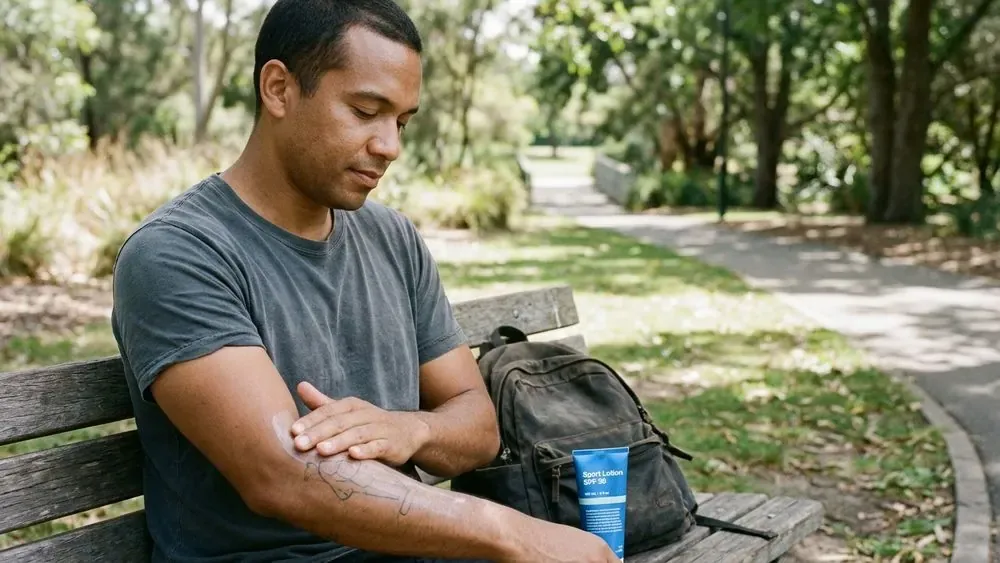
Sunlight can fade some tattoo inks, so daily sunscreen is a good habit for tattooed skin. Dermatology sources point to an ordinary broad-spectrum, water-resistant sunscreen, not a special tattoo one. A brand-new tattoo is a healing wound and needs the artist's aftercare first.
The full evidence is belowYou have had your tattoo for a few summers, and the lines look softer than they did. Was it the sun? Sunlight can fade some tattoo inks, so a tattoo is one more reason to wear sunscreen. The sources we opened point to an ordinary broad-spectrum, water-resistant sunscreen, not a special "tattoo" one.
There is one clear exception. A brand-new tattoo is a healing wound, and it needs the artist's aftercare before any sunscreen routine.
Does the sun really fade tattoos?
What do lab and mouse studies show?
Yes, in part. The American Academy of Dermatology says that ultraviolet (UV) light can fade some tattoo inks. A book chapter on ink chemistry says part of the fading comes from pigments breaking down in light. In the lab, ink broke down under sunlight and even under ordinary visible light. Ink broke down faster than the pure pigment did.
The only test in living skin used a mouse. A red pigment under simulated sunlight for 32 days dropped by about 60% in the skin. The chapter's authors warn that lab tests and mouse skin do not match human skin.
Has fading been measured in people?
Not in anything we opened. The same chapter reports no measurement of fading in people. We also found no human trial of sunscreen and tattoo colour. So "sun fades ink" rests on the AAD's advice, lab tests and one mouse study. It is likely, but it is not measured in people.

Do you need a special tattoo sunscreen?
Dermatology sources do not ask for one. The AAD says to use a broad-spectrum, water-resistant sunscreen with an SPF of 30 or more, put on 15 minutes before going outside and reapplied at least every two hours. The FDA says the same basics in its sunscreen guidance: choose broad spectrum with an SPF of at least 15. Our guide to sunscreen by skin type explains how much you need.
The claim, checked: "Tattoo sunscreens protect ink better than regular sunscreen"
We looked for evidence behind this claim and found none. No trial we opened compares a tattoo-marketed sunscreen with a regular one. The AAD page recommends the same type of sunscreen for tattooed skin as for any skin.
The label rules explain why. The FDA says "broad spectrum" means help against both UVA and UVB light, and that SPF mainly shows UVB protection. Those are the labels to compare. The FDA page we read describes no tattoo category. A "tattoo" label on a tube may tell you about the marketing rather than about extra protection. Our guides to broad-spectrum sunscreen and mineral versus chemical filters cover how to read the filters.
One more point from the FDA: "there's no such thing as 'waterproof' sunscreen". All sunscreens wash off in the end, which is why reapplying matters.
What about a brand-new tattoo?
A new tattoo is a healing wound. One consumer health article, medically reviewed, says the skin should heal fully by the end of week three. It advises keeping the tattoo out of the sun until healed, and covering it with clothing when it may be in the sun. It also says not to put sunscreen on a tattoo that is still healing. The article itself says its advice rests on anecdotal evidence, not on research.
Aftercare advice varies a lot. A study of 700 American aftercare sheets (abstract) found the content "vary tremendously". Only about half (49.9%) said when to contact the tattooist, and fewer than one in five (19.4%) said when to contact a doctor.
So follow your artist's aftercare. See a clinician for signs of infection. The medically reviewed article lists a tattoo that is warm, inflamed and painful to touch, or oozing pus.

Which colours fade or react most?
Sources talk about two different things: fading, and reactions to sun. They do not give a ranking of colours for fading.
| Question | What the sources say |
|---|---|
| Which pigments break down in light? | In lab tests, azo pigments broke down in sunlight. Phthalocyanine, quinacridone and dioxazine pigments were fairly stable. |
| Which colours react to sun? | DermNet: yellow tattoos made with cadmium sulfide are at most risk. Red can react too. |
| Which colours cause most reactions overall? | DermNet: red, especially mercury-based red. Black, blue, purple and green are far less often involved. |
Ink is not made to one standard recipe. DermNet says its makeup is hard to pin down and changes over time. So a colour name on a chart cannot tell you which chemical sits in your skin.
How much sunscreen does a tattoo need?
The sources give general sun advice, not a tattoo-only amount. The AAD advice above is the most specific: broad spectrum, water-resistant, SPF 30 or more, on 15 minutes before going out, and again at least every two hours. The FDA adds that you should use enough to cover the whole area, and reapply more often if you are swimming or sweating.
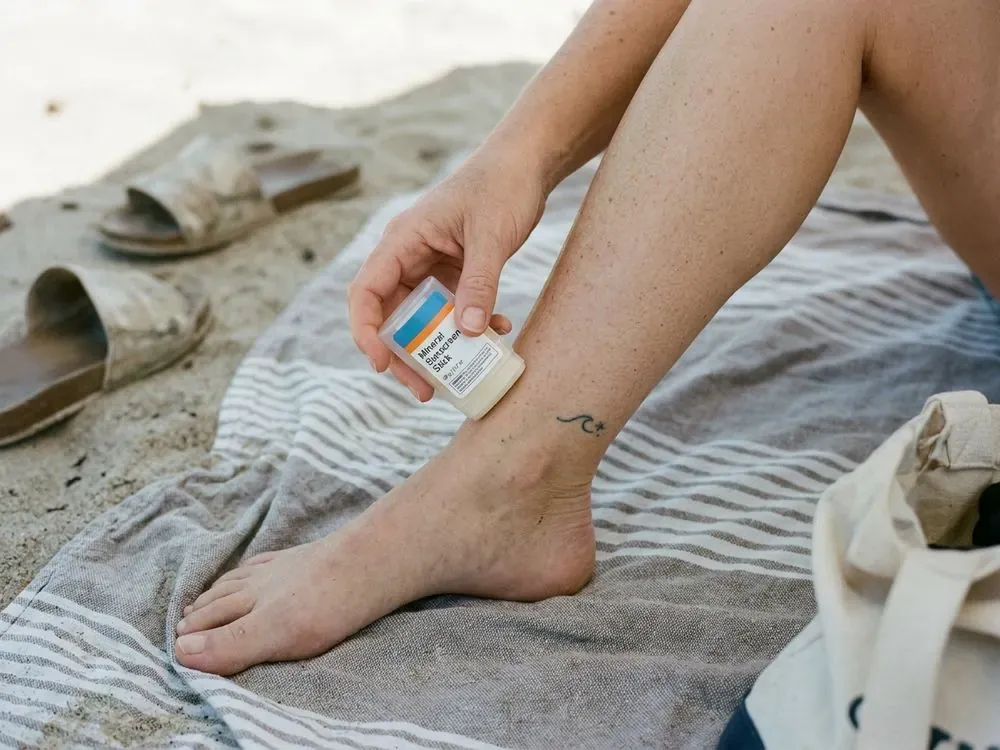
The AAD also says to avoid tanning beds and sunlamps, which can fade ink and raise skin cancer risk. Our guide to sunscreen sticks looks at one format people use on small areas. All our sun protection guides are in one place.
Can a tattoo get sunburned or itchy in the sun?
Some people get a reaction in tattooed skin after sun, and the cause can be the ink itself. DermNet describes sun-triggered reactions as swelling and redness around the tattoo. The AAD says that for some people, UV light may react with the ink and cause a painful skin reaction. It adds that reactions can start straight after a tattoo or years later.
If a tattoo swells, itches or changes after sun, see a clinician. The AAD advises seeing a board-certified dermatologist for any reaction or any change in tattooed skin. Our guide to sun rash covers other reasons skin flares in the sun.
Conclusion
Sunlight can fade some tattoo inks, though no study we opened measured it in people. The sources agree on the basics: an ordinary broad-spectrum, water-resistant sunscreen and shade. No source shows that a "tattoo" label adds protection. A new tattoo is the exception, because it is a wound and needs the artist's aftercare first.
If you want to see how a tattoo changes, keep dated notes or photos in the same light, in an app like Skinic or a notebook. See a clinician if a tattoo swells, itches or changes, or for any sign of infection.
Frequently asked questions
5 questions · tap one to open the answer
Does the sun fade tattoos?
Do I need a special sunscreen for a tattoo?
Can I put sunscreen on a new tattoo?
Which tattoo colours fade fastest in the sun?
Why does my tattoo itch or swell in the sun?
Medically reviewed by
Dr. M.M Hanaei
Aesthetic Physician, Dermatology Fellowship
- MD — Shahid Beheshti University of Medical Sciences (SBMU)
- MCC Licensure (Medical Council of Canada)
- Dermatology Fellowship, Switzerland
- Certified in advanced aesthetic procedures
Last reviewed 27 October 2026