Skinic
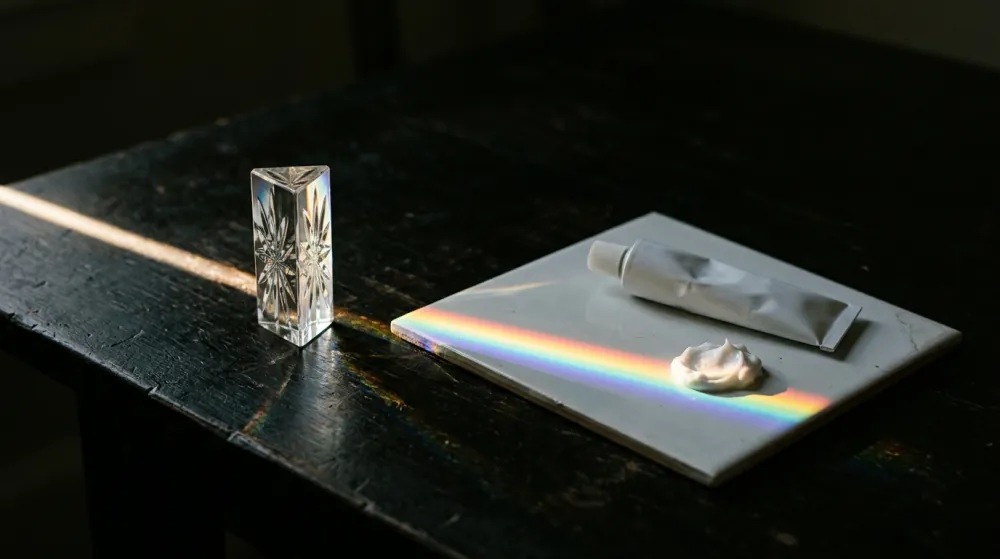
"Broad spectrum" on a US sunscreen label is a pass/fail result from a laboratory test with a threshold of 370 nm. It confirms that UVA protection exists and rises with SPF, and it prints no UVA number. SPF is mostly a UVB sunburn measure, PA and the European UVA ratio are the UVA yardsticks, "sunblock" was removed from US labels in 2011, and UPF is the rating for clothing.
The claim this article tests is that SPF 100 blocks twice as much as SPF 50. It covers what the broad spectrum test measures, what it leaves out, how SPF, PA and the EU ratio differ, why sunblock disappeared, and how UPF is set. It reports regulatory positions as written. It names no products and issues no clearance.
What Broad Spectrum Tests
The Test
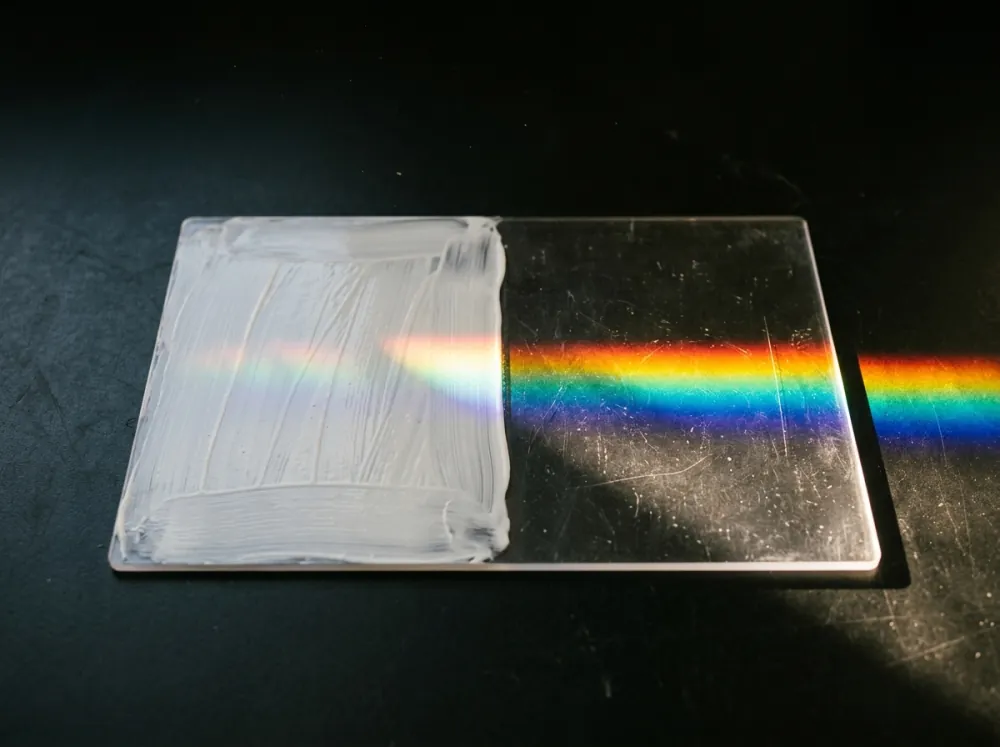
The US rule was finalised in 2011. Its preamble says a sunscreen is labelled broad spectrum if the finished product has a critical wavelength of at least 370 nm. The critical wavelength is the wavelength below which 90% of the product's total UV absorbance, from 290 to 400 nm, is found. FDA explains that a product offering mainly UVB protection would score below 320 nm, and one covering both UVB and UVA would score between 320 and 400 nm.
FDA chose the method because it is simple, reproducible and inexpensive, and because the European Commission, the American Academy of Dermatology, the American Society for Dermatologic Surgery and the Skin Cancer Foundation recommend it. It is a single in vitro test, one of the changes from the 2007 proposal, which had asked for two tests and a star rating.
What a Pass Earns
A pass puts "Broad Spectrum SPF" followed by the number on the front of the pack, in one continuous line of text. Products that pass with SPF 15 or higher may state that, used as directed with other sun protection measures, they decrease the risk of skin cancer and early skin aging. A product that is not broad spectrum, or is broad spectrum below SPF 15, must carry a Skin Cancer/Skin Aging Alert saying it has been shown only to help prevent sunburn. FDA adds that products that do not pass may be misbranded if they make UVA claims.
The status today is narrower than the 2011 headline. FDA's current questions and answers, current as of 10 September 2026, say the 2011 labelling and effectiveness rule carries into the deemed final order that now governs sunscreens, which creates an optional broad spectrum claim. A 2021 proposal would require every sunscreen at SPF 15 and above to pass broad spectrum, with a new UVA I to UV ratio of 0.7 or higher. FDA says labelling remains among the provisions it is still working through.
What Broad Spectrum Does Not Tell You
A Number That Rises With SPF, but Not a Number
FDA states that, among broad spectrum products, UVA protection must increase as SPF increases. Its example is that a Broad Spectrum SPF 40 product provides more UVB and UVA protection than a Broad Spectrum SPF 20 one, whereas a non-broad-spectrum SPF 40 may not provide more UVA protection than SPF 20. So the plan's premise, that the term says nothing about UVA, is half right: it guarantees direction, and it states no amount. FDA declined to require a UVA star rating, and the European Commission does not recommend displaying the UVA value either.
What Independent Testing Found
A 2022 laboratory study tested 51 US sunscreens, all labelled broad spectrum, using the in vitro ISO 24443 method. About 94% would be expected to pass the current US test, 67% the proposed UVA I to UV test, and 35% the EU ratio. The average unweighted UVA protection factor was just 24% of the labelled SPF, and in vitro SPF averaged 59% of the label. The study is in vitro, and the ISO method was not built to match in vivo SPF. Its authors work for the Environmental Working Group, which ranks sunscreens and has commented to FDA, and the lab testing was funded by a foundation grant. Whether a 'tattoo' sunscreen adds protection over a regular broad-spectrum one is checked in sunscreen for tattoos.
A Threshold Built Around 290 to 370 nm
FDA's 2011 reasoning was that most harmful effects of the sun come from 290 to 370 nm and that 370 to 400 nm is less harmful on the available action spectra. By 2026 the same agency describes its 2021 proposal as responding to growing evidence of significant harms from UVA exposure. The threshold therefore reflects the evidence of 2011, and the direction since is toward measuring more UVA. Our article on sunscreen for hyperpigmentation covers why a test that stops at 400 nm leaves visible light unaddressed.
SPF Is Mostly UVB
SPF is the ratio of the minimal erythemal dose on protected skin to the dose on unprotected skin, in the European Commission's 2006 Recommendation. The Recommendation states that SPF refers only to protection against the radiation that causes erythema, mainly UVB, and that sunscreens should nonetheless protect against UVA as well. FDA's rule says the same in other words: SPF values only reflect protection against the portion of the spectrum that causes sunburn.
Both documents tie the number to an amount. Tests apply 2 mg/cm², which the Recommendation equates to six teaspoons, about 36 g, for an average adult body. It says consumers usually apply less and that halving the quantity may cut protection by as much as two-thirds. FDA makes the same point about lab percentages, saying an SPF 15 that absorbs 93% in the laboratory may do significantly worse in use, chiefly through under-application. Our article on sunscreen by skin type works through the amount.
PA and PPD
The European Ratio
The Recommendation defines the UVA protection factor as the ratio of the minimum UVA dose that induces persistent pigment darkening on protected skin to the dose on unprotected skin. It sets the minimum UVA protection factor at one third of the labelled SPF, with a critical wavelength of 370 nm. It also groups SPF labels into four categories: low (6, 10), medium (15, 20, 25), high (30, 50) and very high (50+, which means a measured SPF of 60 or more). The Recommendation is addressed to Member States and does not itself bind products.
PA Grades
Japan's PA system also rests on persistent pigment darkening. A 2026 overview of regional SPF rules describes four grades, PA+ for some UVA protection through PA++++ for very high, set by Japan Cosmetic Industry Association standards that are voluntary but widely followed. The sources opened do not give the cut-offs for each grade, so none are stated here. Our article on bemotrizinol compares the four yardsticks and shows how to read an imported label.
Why "Sunblock" Left US Labels
FDA's 2011 rule agrees with submissions that "sunblock", "waterproof" and "sweatproof" are false or misleading claims. It calls them exaggerations of performance that FDA does not think can be substantiated, and codifies them as prohibited terms. The European Commission's Recommendation reaches the same place from another direction: no claim should imply 100% protection, such as "sunblock", "sunblocker" or "total protection", because no sunscreen can filter all UV radiation and, as of 2006, there was no conclusive evidence that sunscreen prevents melanoma. It adds that sunscreens should carry warnings that they do not give full protection.
The word survives in shop language. Both texts treat it as an overclaim.
UPF on Clothing
UPF is the clothing counterpart of SPF. A 2023 laundering study explains that a UPF rating is assigned from the UVA and UVB blocked by the fabric, with fabric rated good, very good or excellent if it blocks at least 93% of UV. Under the ASTM 6544 practice the label carries the lowest value found after 40 launderings, standing in for two years of consumer use.
The same study tested seven garments sold with UPF claims. Five held steady over 50 washes. Two lost 70% to 78% of their UPF, one of which disclosed a nano zinc finish and one of which disclosed nothing. It is a small study, in cold-water washes, and its authors have a patent pending on a textile without chemical UV finishes. As reasoning, a UPF label is only as good as the garment's behaviour after washing, which is why the 40-wash rule exists.
As reasoning, UPF and SPF are different tests on different materials that use the same arithmetic, so UPF 50 passes about 2% of UV just as SPF 50 lets through about 1/50 of the burning dose. Our article on tanning with sunscreen covers what SPF does and does not stop in skin.
The Figure Audited: "SPF 100 Blocks Twice as Much as SPF 50"
Verdict: false as a statement about how much UV is blocked, and half true as a statement about sunburn in the laboratory. Findings:
- Blocked share. SPF is a ratio, so an SPF 50 sunscreen lets through about 1/50 of the erythema-causing dose and SPF 100 about 1/100. That is 98% against 99% absorbed, as reasoning from the definition. The EU Recommendation gives the same arithmetic for lower values: SPF 15 absorbs 93% of UVB and SPF 30 absorbs 97%.
- Sunburn. The same Recommendation says protection from sunburn is linear, so SPF 30 protects twice as well from sunburn as SPF 15. By that reading SPF 100 lets through half as much burning dose as SPF 50, in a laboratory at 2 mg/cm².
- Use. Real application is lower, and halving the quantity may cut protection by up to two-thirds. A split-face trial of 199 people (abstract) in Colorado natural sunlight found 55.3% more sunburned on the SPF 50+ side and 5% on the SPF 100+ side after about 6 hours, a single-day exposure. An author is affiliated with a consumer-products company. That result is a trial of actual use and not a doubling.
- The sources disagree on high SPF. The 2006 EU Recommendation says SPF above 50 does not substantially increase protection. FDA says evidence since 2011 shows additional clinical benefit up to SPF 60, and proposes capping labels at 60+ with formulation up to 80. The current US order has no limit. Neither number says anything about UVA.
Conclusion
Broad spectrum is a pass/fail test, SPF is a sunburn ratio tested at an amount few people apply, PA and the EU ratio say how much UVA is covered, sunblock is an overclaim in both the US and the EU, and UPF rates cloth. SPF 100 does not block twice as much as SPF 50, and in the laboratory it does let half as much burning dose through. What the label cannot tell a reader is how much UVA protection sits behind the words.
Writing down a product's SPF, its broad spectrum statement and any PA or UVA-PF value, in a note or in an app like Skinic, makes products comparable later. For skin that burns easily or a mark that is changing, ask your own clinician.
Frequently asked questions
5 questions · tap one to open the answer
What does broad spectrum sunscreen mean?
Is SPF 100 twice as good as SPF 50?
What is the difference between sunblock and sunscreen?
What do PA++++ and UVA-PF mean?
What is the difference between UPF and SPF?
Medically reviewed by
Dr. M.M Hanaei
Aesthetic Physician, Dermatology Fellowship
- MD — Shahid Beheshti University of Medical Sciences (SBMU)
- MCC Licensure (Medical Council of Canada)
- Dermatology Fellowship, Switzerland
- Certified in advanced aesthetic procedures
Last reviewed 16 October 2026