Skinic
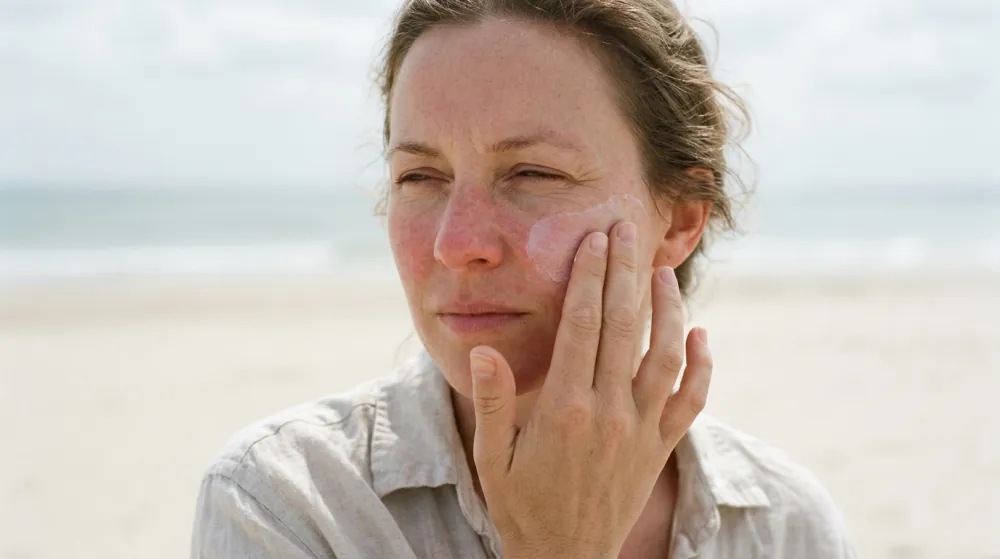
A sun rash is usually one of three things: heat rash, a sun allergy called polymorphic light eruption, or sunburn. They overlap in what they look like and differ in timing, so how soon the rash appeared, where it is and what it feels like do most of the sorting.
The name "sun poisoning" makes this harder. DermNet lists it as a synonym for polymorphic light eruption, along with "sun allergy", while it is also commonly used for severe sunburn. The claim this article tests is that sun poisoning is an allergy, and the answer depends on which condition the name is attached to. This article covers the three reactions, the signs that need care today, and prevention. It describes and refers. It cannot tell you which one you have.
Three Reactions After a Day Outside
| Heat rash | Polymorphic light eruption | Sunburn | |
|---|---|---|---|
| Cause | Blocked sweat ducts in heat and humidity | Abnormal immune reaction to UV, mostly UVA | Direct UV damage and inflammation |
| Onset | During or after sweating | Hours to 1–2 days after sun | Redness appears at 2–6 hours |
| Look | Tiny itchy red bumps or clear beads | Itchy bumps, blisters, patches or plaques | Hot, painful red skin; blisters if severe |
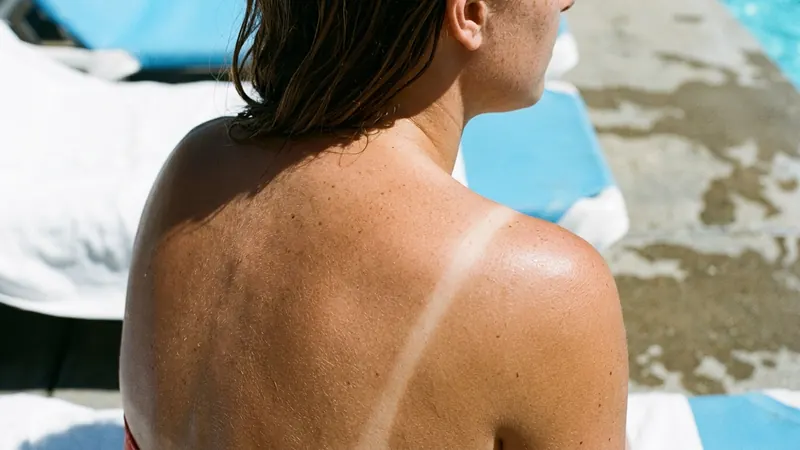
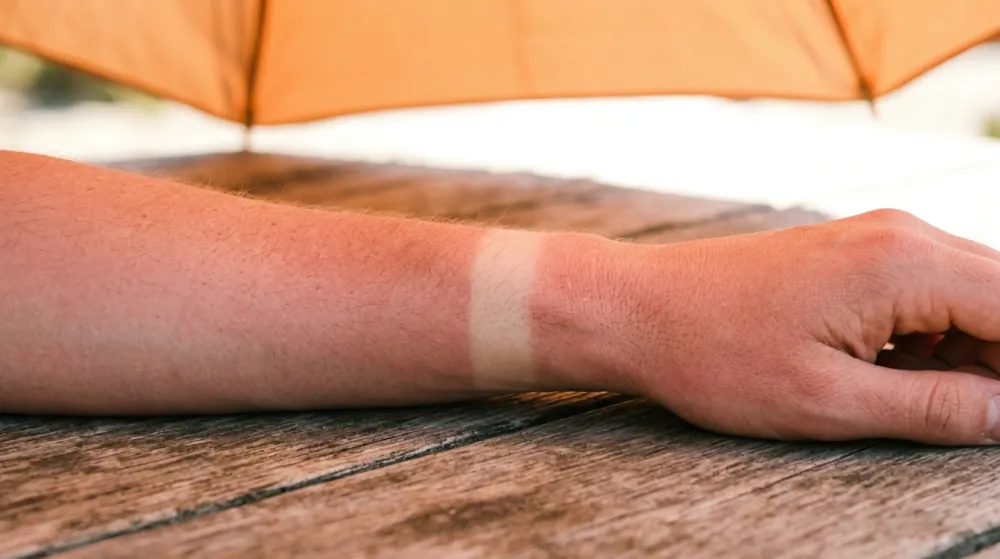
| Where | Neck, upper trunk, scalp, folds, tight clothing | Sun-exposed arms, chest, legs; the face and hands less often | Wherever UV hit; clothing leaves a pale outline |
| Course | Eases when cool | Days to weeks; recurs in spring | Peaks at 12–24 hours; settles in 3–7 days |
| Needs UV? | No, heat is enough | Yes | Yes |
The table summarises the DermNet pages on miliaria, polymorphic light eruption and sunburn. Two further sun-triggered rashes are worth knowing: solar urticaria, hives that appear within minutes of sun, and drug-induced photosensitivity, covered below.
Heat Rash: Blocked Sweat Ducts
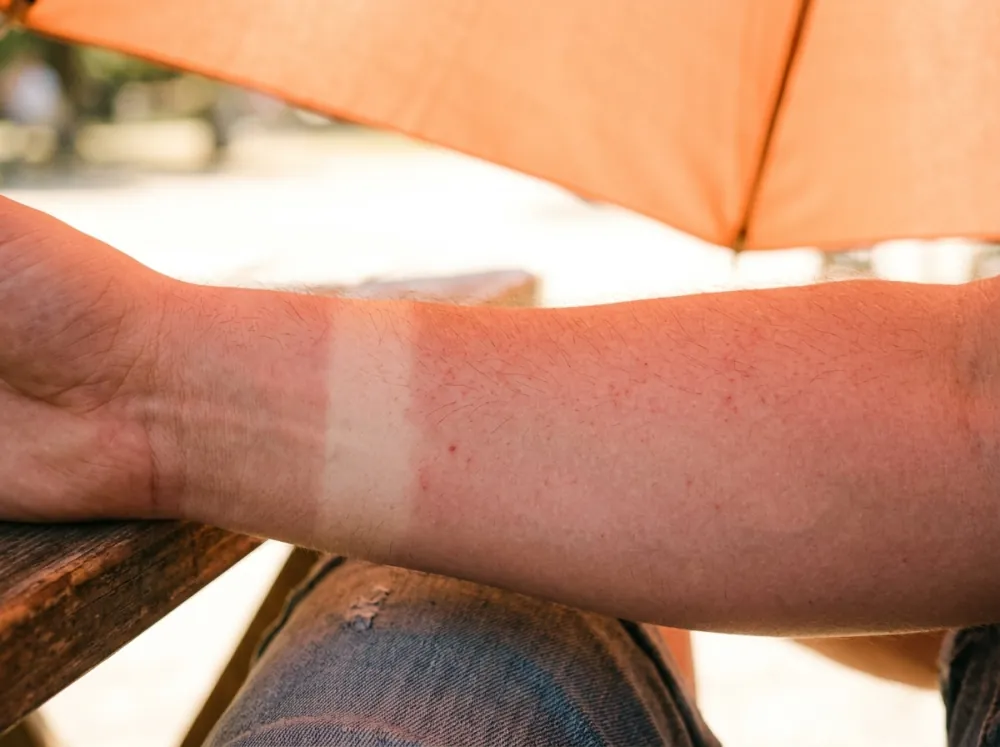
DermNet defines miliaria, also called heat rash, sweat rash or prickly heat, as blockage or inflammation of the eccrine sweat ducts, common in hot, humid climates. It has three types by depth. The superficial type, miliaria crystallina, gives 1 to 2 mm clear blisters that look like beads of sweat. The common type, miliaria rubra, gives red 2 to 4 mm itchy bumps with background redness, and in adults it often affects the upper trunk, scalp, neck and areas rubbed by clothing. The third, miliaria profunda, is rare.
Contributing causes DermNet lists include a hot humid environment, intense exercise, fever and non-porous or synthetic clothing against the skin. Heat rash is diagnosed from its typical appearance, and complications include secondary bacterial infection. The sources opened for this article describe heat rash on the head, neck and trunk and do not single out the face, though heat rash on the face is a common search. Our article on acne in hot, humid climates covers the other face problem that heat and sweat bring.
Polymorphic Light Eruption
Polymorphic light eruption (PMLE) is, per DermNet, a seasonal acquired photodermatosis that appears in spring and early summer. It is most often first seen at 20 to 40 years old and is four times more common in women than men. DermNet says UVA causes 75 to 90% of cases, that UVA passes through window glass and some sunscreens do not block it, and that the cause is thought to be a delayed hypersensitivity reaction to unknown, UV-induced antigens in the skin.
The rash appears within several hours to 1 to 2 days of sun, as itchy papules, eczema-like patches, tiny blisters, hives or target-like lesions, always the same type in one person. It is patchy and symmetrical on the arms, lower legs, V of the neck and chest, and the dorsal hands and face are uncommon sites, possibly because of "skin hardening" from chronic exposure. It lasts days to weeks, can worsen with more sun before it settles, and resolves without scarring. In darker skin the most common form is grouped pinhead-sized papules. DermNet adds that it recurs, tends to become milder as summer goes on, and in 60% of people improves or resolves over 15 years.
"Sun Poisoning" Is Severe Sunburn, and Sometimes Not
Claim audited: "Sun poisoning is an allergy."
Verdict: it is true of one meaning and false of the other. Findings:
- Where "sun poisoning" means polymorphic light eruption, "sun allergy" is an accepted name. DermNet lists both as synonyms and describes a delayed hypersensitivity reaction.
- Where it means severe sunburn, it is not an allergy. DermNet describes sunburn as an acute inflammatory reaction to excess UV, where DNA damage triggers inflammatory mediators and at high doses damaged cells die, and its severe form has blistering, second-degree burns and systemic symptoms: nausea, vomiting, headache, fever and chills.
- The sources opened for sunburn do not use the term. The DermNet sunburn page and the NHS sunburn page never say "sun poisoning". The lay use for severe sunburn is not stated in any source opened for this article, so it is reported here as common usage and not as a finding.
- The name is the problem. A rash that appears in minutes is more like solar urticaria, and a rash on someone taking certain medicines may be drug-induced.
So what is sun poisoning? It is a name, not a diagnosis. Because the name is ambiguous, the features decide: how soon after sun, whether it is itchy bumps or a hot painful burn, and whether there are blisters or whole-body symptoms.
Solar Urticaria and Medicines
Solar urticaria, per DermNet, is a rare form of hives in which skin swells within minutes of UV exposure from sun or artificial light and clears, usually within minutes to hours, after shielding. If large areas are affected the loss of fluid into the skin can cause light-headedness, headache, nausea and vomiting.
Drug-induced photosensitivity is a rash on sun-exposed skin in people taking photosensitising medicines, either phototoxic (the more common, often a sunburn-like reaction) or photoallergic. DermNet's examples include fluoroquinolone and tetracycline antibiotics and non-steroidal anti-inflammatory drugs, and its sunburn page lists drug-induced phototoxicity among causes of exaggerated sunburn-like reactions. Retinoids and alpha hydroxy acids also thin the stratum corneum and lower the threshold for sunburn. A rash after a new medicine and sun is worth mentioning to a pharmacist or clinician.
Signs That Need Care Today
These are taken from NHS advice. The NHS is the UK health service, so its phone numbers are not repeated here. Elsewhere, use your local urgent-care or emergency number.
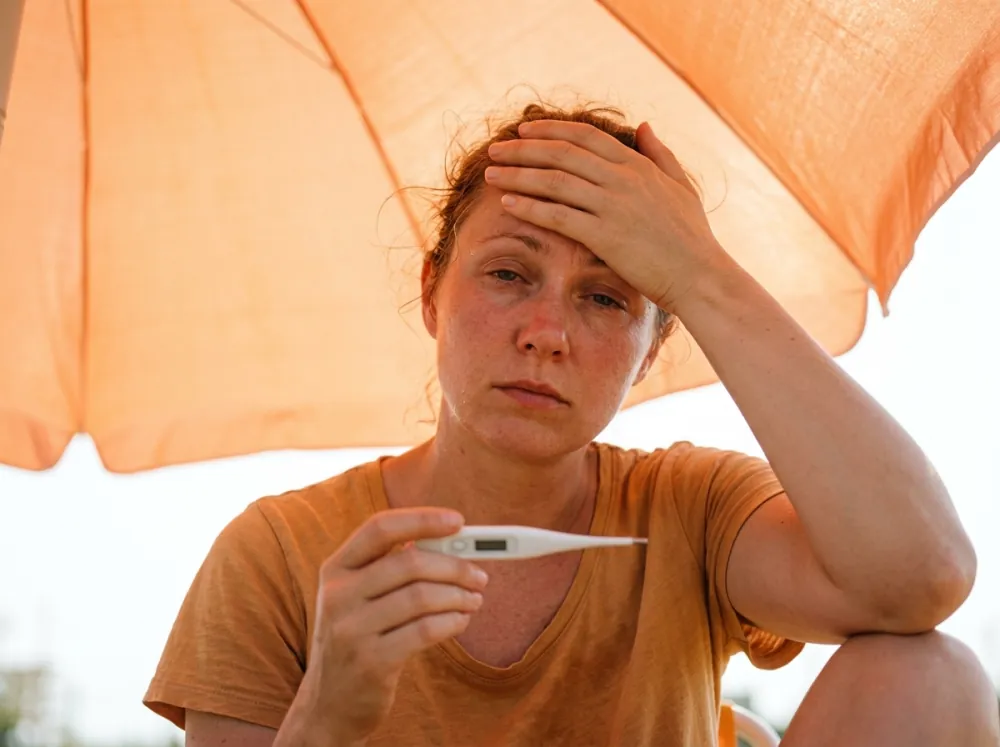
After time in the sun, the NHS says to get urgent medical advice if:
- the skin is blistered or swollen
- the temperature is very high, or you feel hot, cold or shivery
- you feel very tired, dizzy or sick
- you have a headache
- you have muscle cramps
- a baby or young child has sunburn
The NHS adds that severe sunburn can lead to heat exhaustion and heatstroke, which can be very serious. Its page on heat illness treats heatstroke as an emergency requiring an emergency call, and its signs are: still being unwell after 30 minutes of resting in a cool place and drinking, a very high temperature, hot skin that is not sweating and may look red (harder to see on brown or black skin), a fast heartbeat, fast breathing, confusion and lack of coordination, a seizure, or loss of consciousness. It says not to drive yourself to hospital.
DermNet's list of complications of severe sunburn goes further: dehydration, electrolyte imbalance, secondary infection, shock, or death. DermNet notes that sunburn redness may be less evident in darker skin, so pain, heat and swelling matter as well as colour. A rash that does not fit any of the three, that blisters widely, or that arrives with a new medicine belongs with a clinician.
Preventing the Next One
Preventing a sun rash means different things for each reaction, and the prevention advice in the sources differs.
Polymorphic Light Eruption
DermNet advises a broad-spectrum SPF 50+ sunscreen covering UVA and UVB, sun-protective clothing, shade, and sitting away from windows, because UVA passes through glass. DermNet adds that recurrence becomes less likely as summer goes on. Our article on sunscreen by skin type and the one on sunscreen for sensitive skin cover choosing one.
Sunburn
DermNet gives risk factors that can be acted on: risk is highest between 10 am and 2 pm, UV is intensified by reflection from water, snow and ice, and alcohol, retinoids and alpha hydroxy acids raise risk. Fifteen minutes of midday sun can burn fair skin. Our article on tanning with sunscreen covers the tanning claim, and whether dark skin needs sunscreen covers the other side.
Heat Rash
DermNet lists keeping the skin cool, avoiding excessive and tight clothing, wearing breathable fabrics, removing wet clothing, and cool compresses or baths. Heat rash on the face and head follows the same logic as elsewhere: heat and sweat are the trigger. Our article on red spots on the legs covers a different kind of rash that can appear in summer.
Conclusion
A sun rash is heat rash, polymorphic light eruption or sunburn in most cases, and timing separates them: during sweating for heat rash, hours to two days for the sun allergy, and 2 to 6 hours with a burn for sunburn. "Sun poisoning" names the allergy in DermNet's list and a severe burn in common use, so the features matter more than the name. Blisters, a very high temperature, feeling hot, cold or shivery, dizziness, headache, cramps or a young child affected need medical advice the same day, and heatstroke signs need an emergency call.
If a rash keeps coming back, photographing it with the date and what the day was like, in an album or in an app like Skinic, gives a clinician a record. For anything on the urgent list, do not wait for a photograph.
Frequently asked questions
5 questions · tap one to open the answer
What is a sun rash?
What is sun poisoning?
How can you tell heat rash from a sun allergy?
How long does polymorphic light eruption last?
When does a sun rash or sunburn need urgent medical care?
Medically reviewed by
Dr. M.M Hanaei
Aesthetic Physician, Dermatology Fellowship
- MD — Shahid Beheshti University of Medical Sciences (SBMU)
- MCC Licensure (Medical Council of Canada)
- Dermatology Fellowship, Switzerland
- Certified in advanced aesthetic procedures
Last reviewed 16 October 2026