Skinic
A tinted moisturizer with SPF carries a number that was measured at 2 mg/cm² of product on the skin. A review of sun protection states that consumers usually apply 0.5 to 1.0 mg/cm², and a 2021 laboratory study found that the SPF of each sunscreen and makeup product was dramatically lower than the label at a typical consumer amount.
The claim that SPF in makeup adds to the SPF of your sunscreen is half right. The same 2021 study found that layering the two raised the effective SPF compared with either alone, even at amounts below the recommended level. Its abstract does not show that the numbers add up, and the full text could not be opened.
This article covers what the SPF number assumes, how much people apply, the layering claim checked, how a tinted moisturizer differs from a tinted sunscreen, what the iron-oxide tint adds, and what is known about layering. It evaluates label claims. It does not recommend a product, and decisions about sun protection for a skin condition belong with your own clinician.
What the SPF Number Assumes
The Test Amount
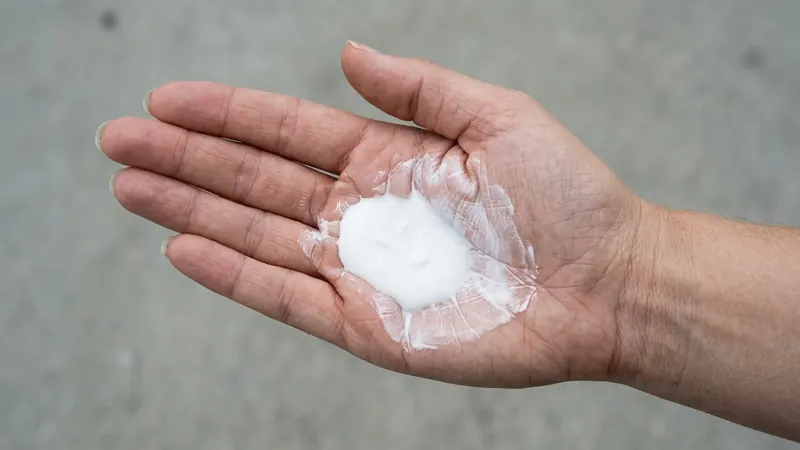
A review of sun protection describes SPF as the minimal erythemal dose on protected skin divided by the dose on unprotected skin, with the sunscreen applied at 2 mg/cm² for the test. The review equates that amount to 30 mL, about 1 oz, for the whole body, and its teaspoon rule asks for a teaspoon of sunscreen for the face, head and neck.
What the Number Means
SPF measures redness. The FDA states that SPF values are determined from a test that measures protection against sunburn, so they primarily indicate a sunscreen's UVB protection. It advises choosing a broad-spectrum sunscreen with an SPF of at least 15, and says products that are not broad spectrum or lack an SPF of at least 15 must carry a warning that they have been shown only to help prevent sunburn, not skin cancer or early skin aging.
At the test amount, the sun review reports that SPF 15, 30 and 60 allow 6.7%, 3.3% and 1.7% of UV to reach the skin. Those percentages hold only at the amount the test used.
How Much People Actually Apply
Sunscreen
The sun review states that consumers usually apply 0.5 to 1.0 mg/cm². A study in China tested sunscreens labelled SPF 4, 15, 30 and 55 at 0.5, 1.0, 1.5 and 2.0 mg/cm² in three laboratories with 40 subjects each (abstract). Protection from the SPF 4 and 15 products was linearly related to the amount applied, and from the SPF 30 and 55 products it was exponentially related, so consumers may get even lower than expected protection from high-SPF products than from low-SPF ones.
That finding qualifies a common rule of thumb. The statement that a thin layer gives about a third of the labelled SPF treats the relationship as one fixed fraction, and the study suggests the loss is larger for higher SPFs. Our article on sunscreen by skin type works through the amount question, and its one-third figure should be read with that in mind.
Foundation and Tinted Products
Data on how much makeup is applied are thinner. A systematic review of cosmetics-use surveys reports mean daily foundation use by country, with the highest, 0.67 g a day, in the United States, and about 11 times less in Singapore. These are daily consumption figures, not amounts per square centimetre. As a comparison of order of magnitude only, since grams of foundation and millilitres of sunscreen are different units: under one gram a day of foundation is small against a teaspoon of sunscreen for the face and neck.
No source opened measured how much tinted moisturizer people apply to the face in mg/cm². Whether the amount is thinner than sunscreen is a reasonable expectation, and it is not a finding.
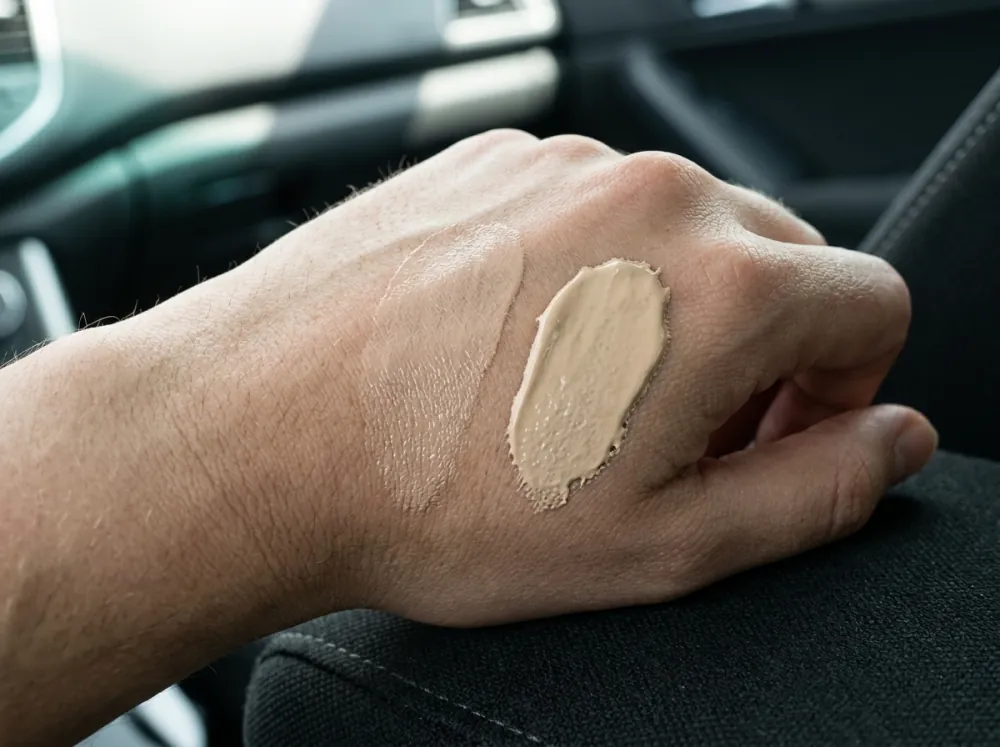
The Figure Audited: "SPF in Makeup Adds to Your Sunscreen's SPF"
The plan asked for the application-quantity evidence on this claim. The best study directly on point is a 2021 laboratory study that simulated typical use.
What the Layering Study Found
Researchers compared the SPF of sunscreens and makeup products after consecutive layering (abstract). They found:
- The SPF of each sunscreen and makeup product was dramatically lower than stated on the label at the amount a typical consumer applies.
- For high-SPF products, the drop was proportionally greater than for low-SPF products at lower doses.
- Layering sunscreen and makeup greatly increased the effective SPF compared with a single application of each product, even when each was used below the recommended amount.
The authors suggest that layering may compensate for insufficient sunscreen application by providing an extra source of UV protection and improving the evenness of coverage.
What It Does Not Show
Verdict: layering raised protection, and the claim that the SPF numbers add is not shown. The abstract reports a large increase but gives no values, so it does not say whether SPF 30 plus SPF 15 behaves like 45. The full paper is behind a bot-protection wall and could not be opened. The abstract's own explanation, more coverage and more evenness, is about amount and homogeneity, not arithmetic.
The 2021 study sits beside two others. The China study shows that the loss at low amounts depends on the SPF. The FDA states that a moisturiser or makeup with a sun-protection claim must meet drug requirements as well as cosmetic ones. As reasoning, not a finding, that means the number on it comes from the standard SPF test, not from a face in daily use. A reasonable reading is that a second layer helps mostly because the first was thin, and that labels cannot simply be summed.
Tinted Moisturizer vs Tinted Sunscreen
In the United States the line between them is drawn by the claim. The FDA explains that moisturizers and makeup marketed with sun-protection claims are cosmetic/drug products and must comply with the requirements for both cosmetics and drugs. A tinted moisturizer with an SPF on the label is therefore also a sunscreen drug product. As reasoning, not a quoted finding, "tinted moisturizer" describes texture and marketing, and the Drug Facts label describes the sunscreen.
What is tinted sunscreen? It has a specific meaning. The sun review states that tinted sunscreens are a blend of iron oxides and pigmentary titanium dioxide, and that they reduce visible-light transmission by 93 to 98%. A 2026 review gives 84 to 97% for the same property and 80 to 97% in its abstract, and says a visible-light-protective product has to be perceptible on the skin. The ranges differ by source.
A tinted SPF product can be judged by four things on a label, without trusting the word "tinted":
- A Drug Facts panel with an SPF and, for the stated protection, a broad-spectrum statement.
- Iron oxides in the ingredient list, since they are the visible-light blockers in the sources.
- A shade range, since iron oxide content tracks colour (see below).
- An amount you will actually apply. The tested amount is 2 mg/cm².
The Iron-Oxide Bonus
The visible-light literature is where a tint earns its place. The 2026 visible-light review states that tinted sunscreens with iron oxides and pigmentary titanium dioxide provide the most effective and cosmetically acceptable visible-light protection, and that visible light darkens skin in phototypes IV to VI. Our article on sunscreen for hyperpigmentation covers the evidence, including why SPF does not measure it.
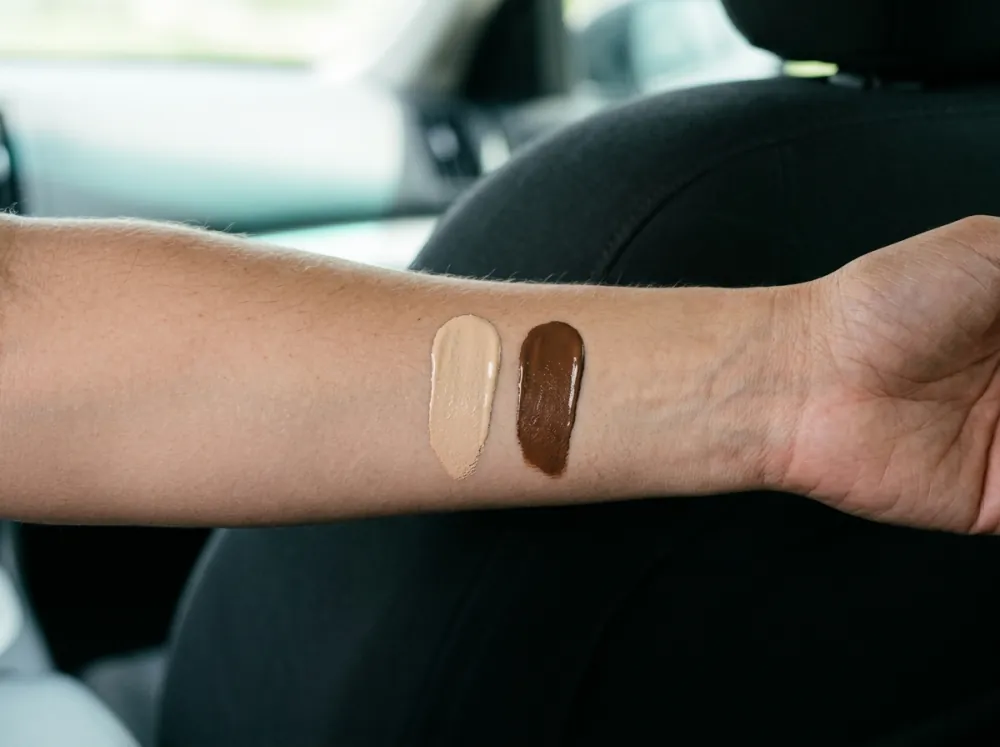
The same review covers iron-oxide foundations. It says they offer both camouflage and skin-tone-matched visible-light protection, and describes a 12-week randomised, double-blind trial in which sunscreen combined with an iron-oxide foundation improved melasma and dyschromia more than sunscreen alone. Participants chose shades matching their skin, so the iron-oxide concentrations ranged from 3% to 27%. The review concludes that such foundations should be adjuncts, always used with broad-spectrum UV sunscreens.
Two cautions follow. The iron-oxide share varies by shade, so a lighter shade of the same product may carry less of the pigment (the review's range makes this a reasonable inference, not a stated finding), and the review notes that the minimum iron oxide needed for protection has not been established. And an iron-oxide product is an addition to UV protection, not a substitute for it.
Layering Under or Over
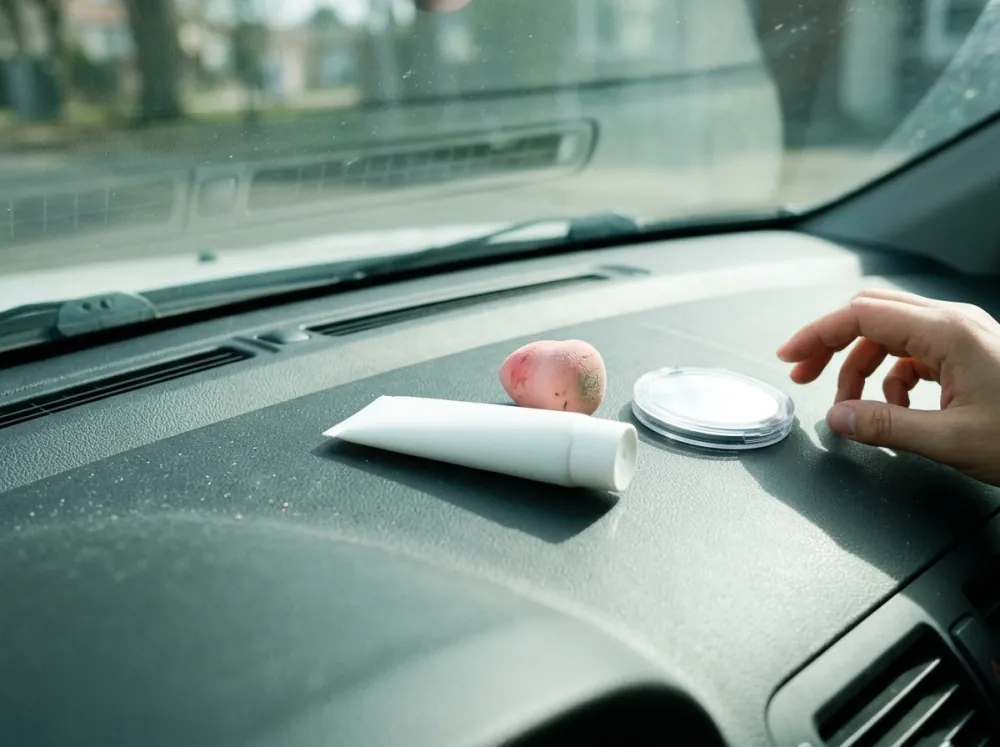
The 2021 study simulated what the authors call typical consumer use, in which sunscreen is often sequentially covered with facial makeup, so the sunscreen went first and the makeup over it. No source opened tested the reverse order, a tinted product applied before sunscreen, or what happens to the layers during reapplication. The FDA advises reapplying sunscreen at least every two hours, and the sources do not say how that works over makeup.
What follows from the sources is limited to this: layering raised effective protection in the laboratory, the main reason offered is more complete coverage, and the numbers on the labels were measured separately. Our articles on sunscreen sticks and lightweight sunscreens cover how format and texture relate to the amount applied.
Conclusion
The SPF on a tinted moisturizer is a laboratory number measured at 2 mg/cm². Consumers usually apply a quarter to a half of that, and the loss is larger for higher SPFs. A 2021 study found that layering makeup over sunscreen raised protection even when each layer was below the recommended amount, but its abstract does not show that labels add up.
One that carries an SPF is a sunscreen drug product in the US as well as a cosmetic, and the iron-oxide tint is a real bonus for pigment, as an addition to UV protection. For any tinted SPF, check the Drug Facts, the ingredient list and the shade range, and apply a sunscreen-level amount.
Photographing the face in the same place and light before and after a routine change, whether in an album or in an app like Skinic, shows whether marks are darkening or fading and gives a clinician something to look at. It cannot say whether a product meets its label. For questions about pigment or a skin condition, ask your own clinician.
Frequently asked questions
5 questions · tap one to open the answer
Is tinted moisturizer with SPF enough protection?
Does SPF in makeup add to the SPF of your sunscreen?
What is tinted sunscreen?
How much tinted moisturizer does it take for the SPF to count?
Does tinted moisturizer help with dark spots?
Medically reviewed by
Dr. M.M Hanaei
Aesthetic Physician, Dermatology Fellowship
- MD — Shahid Beheshti University of Medical Sciences (SBMU)
- MCC Licensure (Medical Council of Canada)
- Dermatology Fellowship, Switzerland
- Certified in advanced aesthetic procedures
Last reviewed 11 October 2026