Skinic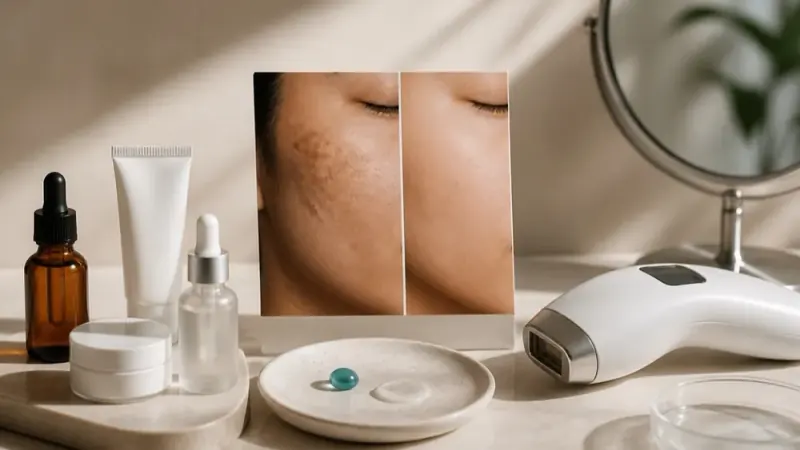
You have probably stood in a skincare aisle, overwhelmed by shelves of serums all claiming to remove dark spots on face concerns overnight. The promises are bold, the price tags are steep, and the results are rarely what the packaging suggests. The truth is more straightforward, and ultimately more useful: a small number of well-studied ingredients genuinely work, most products rely on marketing language over clinical proof, and nearly all effective treatments require 8 to 12 weeks of consistent use before you will see measurable change.
This guide cuts through the noise. You will learn exactly what dark spots are and why they form, which ingredients have real clinical trial support versus which ones are riding a trend, and why the type of dark spot you have determines which approach you should take. You will also find honest information about professional treatments, safety considerations for different skin tones, and a practical framework for building a plan you can actually stick to. No shortcuts, no miracle claims. Just clear, evidence-based guidance that helps you spend your time and money on what is most likely to work.
What Are Dark Spots and Why Do You Have Them
Not all dark spots are the same, and treating them as if they were is one of the most common reasons people spend money on products that don't work for them.
There are two primary categories to know.
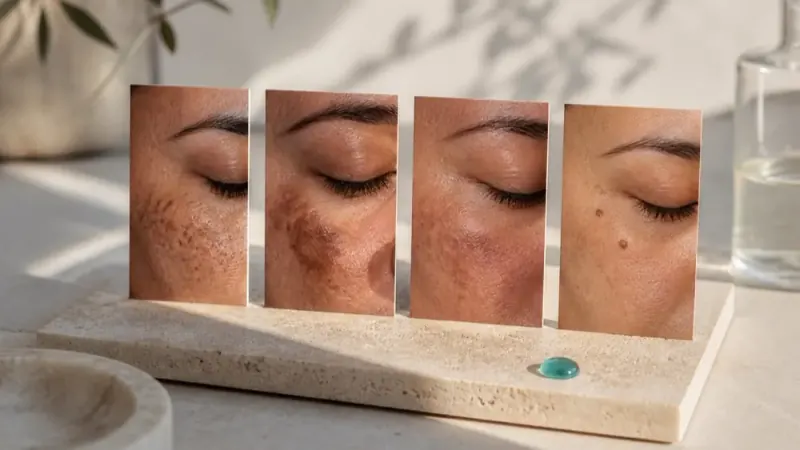
Solar lentigines (commonly called age spots or sun spots) form from cumulative UV exposure over time. Repeated sun damage stimulates melanocytes, the cells that produce pigment, to overproduce melanin in localized clusters. They typically appear on the face, hands, and shoulders, and they darken gradually over years.
Post-inflammatory hyperpigmentation (PIH) has a different origin entirely. It develops after skin inflammation or injury, whether from acne, eczema, a cut, or even an aggressive skincare treatment. The inflammatory response triggers excess melanin production and, in some cases, irregular melanin distribution deeper in the skin. The spot left behind is not the injury itself; it is the skin's pigment response to it.
Why the Distinction Matters for Treatment
These two types share a surface similarity but follow different biological pathways to get there. Solar lentigines are driven by UV-triggered melanocyte stimulation. PIH is driven by inflammation. Because the root cause differs, the treatment approach differs as well. An active that works well for sun spots may do little for PIH, and some aggressive treatments can actually worsen PIH by creating new inflammation.
Misidentifying your spot type leads directly to mismatched products and wasted money, a gap that consumer resources consistently underserve.
Skin Tone Is a Significant Factor
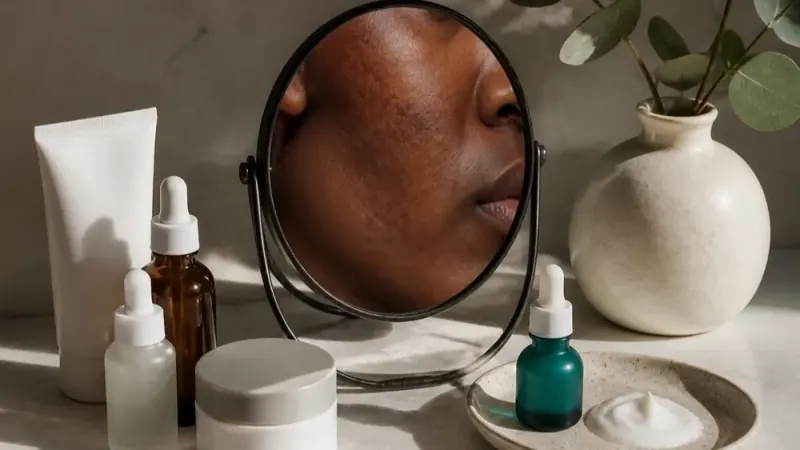
PIH is more common and more persistent in people with deeper skin tones, specifically Fitzpatrick types III through VI. Melanocytes in darker complexions produce melanin more readily in response to inflammation, and the resulting pigmentation tends to be more intense and longer-lasting.
Knowing your spot type before selecting any product or procedure is the essential first step. The Skinic app's skin analysis is built to help identify and categorize visible pigmentation concerns, so you start with the right information rather than the wrong product.
Why Dark Spot Treatments Take So Long to Work
Once you know what type of dark spot you're dealing with, the next question is always some version of: why isn't this working yet? The answer starts with basic skin biology.
Your skin's outer surface renews itself through a cycle of cell migration from the deepest layer upward. That process takes several weeks, long enough that a topical ingredient targeting excess melanin at the base of the epidermis must wait for pigment-affected cells to travel to the surface before any change becomes visible. One cycle isn't enough. Multiple cycles are required, which is why the 8-to-12-week window isn't a marketing estimate; it reflects how long the skin actually takes to show what's been happening underneath.
A 2023 peer-reviewed single-center study evaluating pigment-correcting treatment for both PIH and solar lentigines ran for 12 weeks precisely because that is the minimum window for measurable change to reach the surface.
What "measurable" actually means matters here. Clinical trials don't rely on a participant saying "it looks a bit better." They use standardized photography taken under controlled lighting, colorimetry readings that quantify skin tone numerically, or a melanin index score measured with a device. Consumer self-assessment is far less reliable, which is one reason people underestimate progress and quit early.
Quitting at week 3 or 4 is one of the most expensive habits in skincare. You restart the biological clock every time you switch products, and the cost of cycling through three or four serums before any of them reach the evidence window adds up quickly.
Clinically, the primary measurement window closes at 12 weeks; in practice, subtle edge-lightening is sometimes visible after the first month or two, but the 12-week window is the minimum for a meaningful verdict.
Commit to the window before you evaluate.
Ingredients With Strong Clinical Evidence for Dark Spots
Knowing that results take 12 weeks only matters if the ingredients you're using actually work. Most products on the market borrow the language of clinical science without the evidence to back it up. The five ingredients below are the exceptions.
Hydroquinone is the most studied topical depigmenting agent available, with decades of RCT-level evidence for both PIH and solar lentigines. It works by inhibiting tyrosinase, the enzyme central to melanin production. Prescription-strength 4% is meaningfully more effective than OTC 2% formulations and typically requires physician oversight. It remains the benchmark against which newer ingredients are tested in head-to-head clinical trials. Its regulatory status is also the clearest example of a real distinction between product tiers, which is covered in what "medical grade" skincare actually means.
Tretinoin accelerates cell turnover and disperses melanin granules within keratinocytes, speeding the process of fading pigmentation to the surface. It has a strong peer-reviewed evidence base and works synergistically with hydroquinone in combination formulations. The important caveat: tretinoin requires a gradual ramp-up. Introducing it too quickly causes irritation that can trigger new PIH, particularly in deeper skin tones.
Vitamin C (L-ascorbic acid) inhibits tyrosinase at a different point in the synthesis pathway. It is most effective in stable formulations at 10 to 20% concentration; oxidized or poorly stabilized vitamin C products deliver little benefit. It has an established mechanism and is widely used in clinical formulations, though the evidence base is less extensive than for hydroquinone or niacinamide.
Niacinamide works downstream from the other actives: rather than blocking melanin production, it prevents melanosomes from transferring from melanocytes to surrounding skin cells. A double-blind RCT found 4% niacinamide comparable to 4% hydroquinone for melasma. It is well-tolerated across all skin tones and pairs effectively with vitamin C and other actives.
Azelaic acid is uniquely suited to PIH because it addresses both pigmentation and its inflammatory trigger simultaneously. Prescription-strength formulations (15 to 20%) carry the strongest evidence, and it is generally considered safer for darker skin tones than hydroquinone.
A notable shift is underway in research: recent MDPI analysis points toward mechanism-specific formulations with controlled clinical validation, moving the field past generic "brightening" label claims toward ingredients tested against defined endpoints.
Ingredients That Rely More on Marketing Than Evidence
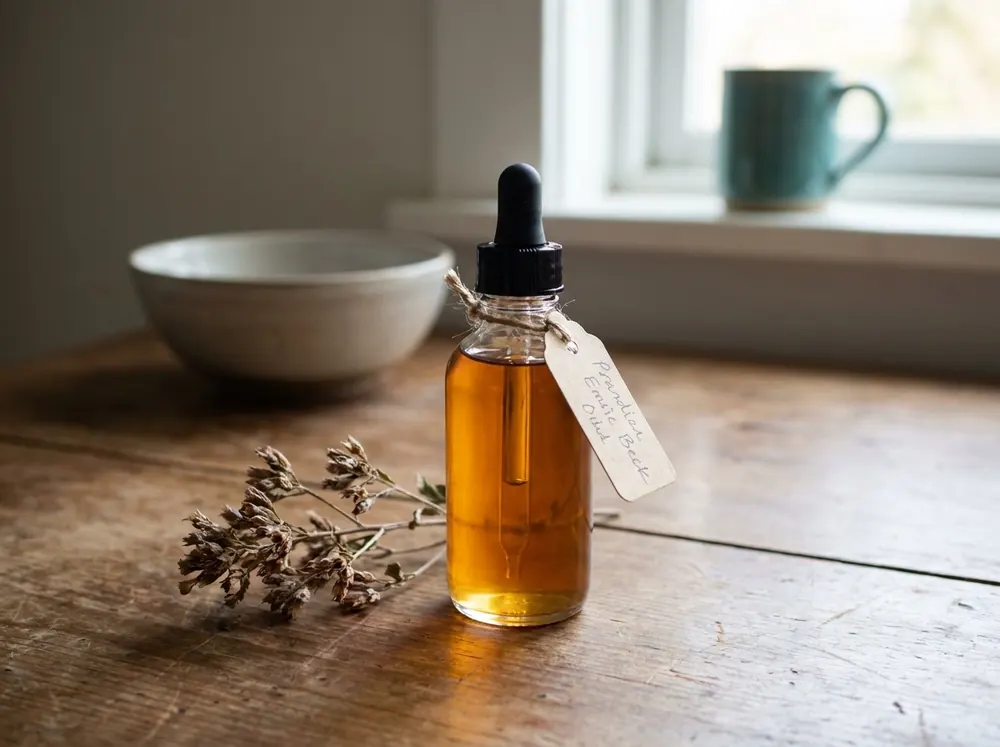
Not every ingredient on a dark spot serum label has earned its place through human clinical trials. Some are carried by strong in-vitro data, compelling brand storytelling, or the appeal of sounding "natural", without the RCT-level evidence that the actives in the previous section have accumulated.
Understanding the difference between evidence types helps you evaluate any product claim independently:
- In-vitro evidence comes from lab tests on cell cultures or enzymatic assays. It can confirm a mechanism (does this molecule inhibit tyrosinase?) but says nothing about whether the ingredient penetrates living skin at useful concentrations.
- In-vivo evidence involves studies on human subjects but may lack control groups, blinding, or defined endpoints, making results harder to trust.
- RCT-level evidence uses randomized, controlled trials with blinded assessment. This is the standard applied to hydroquinone and tretinoin. Most botanical and proprietary ingredients have not cleared this bar.
Kojic acid does inhibit tyrosinase, and some comparative research shows consistent activity in cell-based assays. The practical problems are stability and concentration. Kojic acid degrades with light and heat, and the Cosmetic Ingredient Review approves it at 1%, a threshold many finished products may not reliably reach or maintain. What the trials used, and why a soap is not what they tested, is in our kojic acid article.
Licorice root extract (glabridin) appears frequently in "clean" and "natural" formulations. Its tyrosinase-inhibiting activity is documented in vitro. High-quality human RCTs specifically measuring dark spot reduction are sparse.
Arbutin (alpha and beta) is a prodrug: skin enzymes convert it to hydroquinone, but at considerably lower concentrations than a direct hydroquinone application would deliver. Some clinical data exists; effect sizes are modest.
Proprietary brightening blends present the subtlest problem. A brand can cite individual ingredient studies to imply a combined benefit, but the formulation itself has rarely been tested as a whole in a human trial. Ingredient-level data does not equal formulation-level proof.
Evidence Tier Comparison: A Practical Reference for Dark Spots
Here's a side-by-side breakdown of the ingredients covered so far, organized by how well the clinical evidence actually holds up.
| Ingredient | Evidence Tier | Mechanism | Best For | Effective Concentration | Cost Tier |
|---|---|---|---|---|---|
| Hydroquinone | Strong RCT | Tyrosinase inhibitor | Both | 2% OTC; 4% Rx | Mid / Prescription |
| Tretinoin | Strong RCT | Accelerates cell turnover; disperses melanin | Both | 0.025–0.1% | Prescription |
| Vitamin C (L-ascorbic acid) | Strong RCT | Tyrosinase inhibitor | Both; especially UV-induced | 10–20% | Budget–Mid |
| Niacinamide | Strong RCT | Blocks melanosome transfer | Both | 4–5% | Budget |
| Azelaic acid | Strong RCT | Tyrosinase inhibitor + anti-inflammatory | PIH especially | 10% OTC; 15–20% Rx | Mid / Prescription |
| Kojic acid | Moderate | Tyrosinase inhibitor | Both | 1–4% | Budget–Mid |
| Alpha-arbutin | Moderate | Tyrosinase inhibitor (hydroquinone prodrug) | Both | 1–2% | Mid |
| Tranexamic acid | Moderate (growing) | Inhibits UV-induced plasmin activity | Melasma / PIH | 2–5% topical | Mid |
| Bakuchiol | Moderate (emerging) | Retinoid-like cell turnover support | Both | 0.5–1% | Mid |
| Licorice root extract | Limited | In-vitro tyrosinase inhibition | Both (unconfirmed) | Varies; often unstated | Budget |
| Proprietary brightening blends | Limited | Mixed; often unstated mechanisms | Unspecified | Concentrations rarely disclosed | Budget–Mid |
| General "glow" serums | Limited | No defined active mechanism | Unspecified | Not applicable | Budget–Mid |
One important caveat: a higher evidence tier does not guarantee better results on your skin. A Tier 1 ingredient in a poorly formulated product, at the wrong concentration, or at an incompatible pH can underperform a well-formulated Tier 2 option. Vitamin C, for example, degrades rapidly in unstable formulations, making the evidence largely irrelevant if the product is badly made. Skin tolerance also shapes outcomes; if an ingredient triggers irritation, it can worsen PIH rather than treat it.
Use this table as a starting filter, not a final answer.
Treating PIH vs. Solar Lentigines: Why the Approach Differs
Knowing which active belongs in your routine matters less if you're applying it to the wrong type of dark spot. As covered above, the two types respond to different treatment logic.
For PIH: Control the Trigger First
If active acne or eczema is generating new spots, treating that underlying condition is the most effective dark spot intervention available. Applying a potent brightening active directly onto inflamed skin is counterproductive; irritation amplifies melanin output and deepens the discoloration you're trying to clear. Bring the inflammation under control first, then layer in a melanin-suppressing active such as azelaic acid or niacinamide.
Deeper skin tones require additional caution here. Melanocytes in Fitzpatrick types III through VI are more reactive, meaning even a mildly irritating active can trigger a fresh cycle of PIH. Gentler actives at lower starting concentrations, combined with a longer treatment timeline, reduce this risk. Aggressive treatment that causes irritation routinely backfires, particularly in this population.
For Solar Lentigines: Sunscreen Is a Treatment, Not Just Maintenance
UV exposure is the direct cause of solar lentigines, so any topical treatment applied without daily SPF 30 or higher is working against continuous re-pigmentation. Sunscreen is not the finishing step; it is a primary treatment driver. Consistent daily use alone produces measurable fading over time by interrupting the UV signal that sustains melanin production. Add tyrosinase inhibition (vitamin C, hydroquinone) combined with accelerated cell turnover (tretinoin) for the most effective topical approach.
When to Consult a Dermatologist
Spots that are deep, expanding, or show no visible response after 12 weeks of consistent topical treatment warrant a professional evaluation. This threshold matters especially for darker skin tones, where laser modalities and chemical peel concentrations require a practitioner with specific experience in skin of color to avoid post-treatment complications.
How Combination Therapy Can Speed Up Your Results
Once you've matched your treatment to your dark spot type, the next lever is strategy: using multiple actives together rather than one at a time.
Melanin production involves several distinct steps: synthesis (the enzyme tyrosinase converts amino acids into pigment), transfer (melanosomes move from melanocytes into surrounding skin cells), and surface turnover (pigmented cells shed over time). A single ingredient addresses only one of those steps. Targeting all three simultaneously produces faster visible improvement than any monotherapy approach.
The Prescription Gold Standard
The Kligman formula, hydroquinone combined with tretinoin and a low-potency corticosteroid, remains the most clinically validated combination for melasma and PIH. As covered above, each of the Tier 1 actives targets a distinct step in this pathway. It requires physician oversight because the steroid component carries risks including skin thinning and, with prolonged use, a paradoxical darkening called ochronosis, particularly in deeper skin tones.
The OTC Stack Worth Knowing
For an accessible, non-prescription approach, three ingredients cover the same three pathways:
- Vitamin C (L-ascorbic acid): inhibits tyrosinase, targeting synthesis
- Niacinamide: blocks melanosome transfer between cells
- Glycolic or lactic acid: accelerates surface cell turnover
Each has independent clinical support; used consistently together, they address pigmentation from multiple angles.
Apply in Sequence, Not All at Once
Formulation order matters. Vitamin C is most effective at a low pH (around 3 to 3.5). Niacinamide is stable across a wider pH range. Applying vitamin C first, allowing it to absorb, then layering niacinamide helps maintain stable pH for each active. Add your chemical exfoliant in the evening rather than the same step.
What "Faster" Actually Means
Combination therapy targeting multiple steps simultaneously may produce earlier visible improvement than single-ingredient approaches, though the same 8 to 12 week commitment applies before drawing conclusions. It does not produce results in 2 to 3 weeks. Products claiming visible transformation in days are not reflecting the biology. Consistent daily use, covering all three pathway steps, is what moves the timeline forward.
Professional Treatments: When to Consider Them and What They Cost
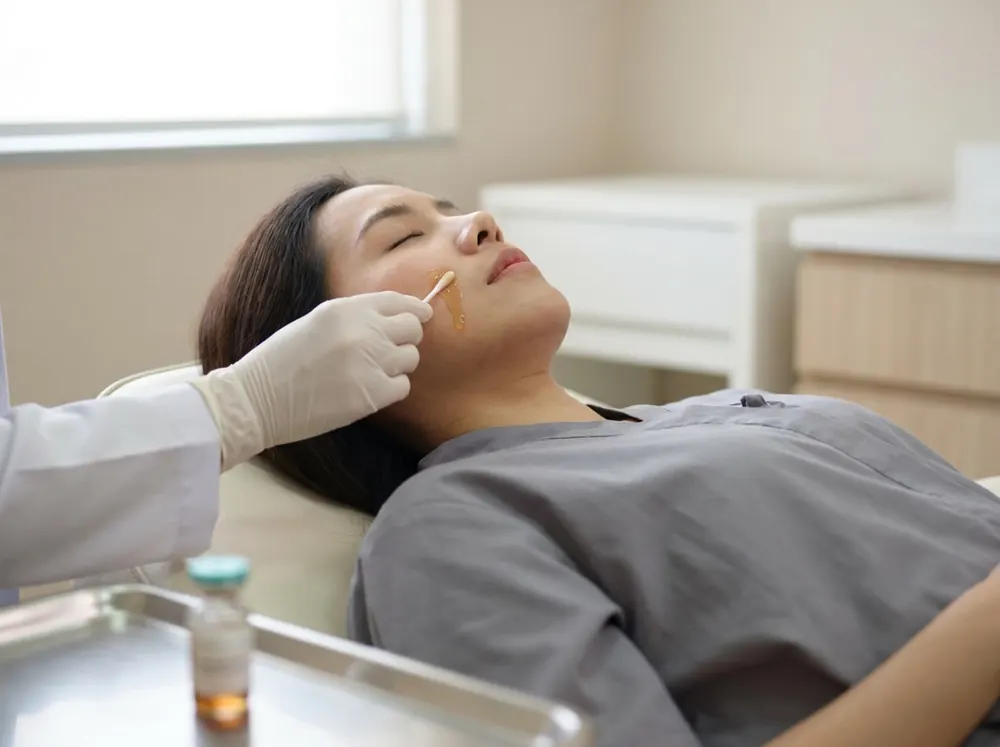
When topicals aren't producing enough progress after a full 12-week trial, professional procedures offer a more aggressive next step.
Chemical peels (glycolic, salicylic, and TCA) drive faster cell turnover than any OTC product can achieve. Costs vary widely; consult a practitioner for current pricing in your area. They work for both PIH and solar lentigines, but concentration must be carefully titrated in darker skin tones. Aggressive peels on deeper complexions can trigger post-peel PIH, worsening the exact problem you're treating.
Laser and light therapies (IPL, Q-switched Nd:YAG, fractional laser) target melanin deposits directly and are most effective for solar lentigines. Pricing varies significantly by provider, region, and modality. The PIH risk in Fitzpatrick IV through VI skin is meaningful, and practitioner experience with darker complexions is a genuine selection criterion, not a minor detail.
Microdermabrasion and microneedling are mechanical approaches with more modest evidence for dark spots specifically. Microneedling shows growing clinical support for PIH when combined with topical actives, making it the stronger option of the two for pigmentation concerns.
At-home LED devices occupy a separate category. At-home LED devices are considerably less powerful than clinical equipment, and independent clinical evidence for dark-spot-specific outcomes remains limited compared to topical and in-office interventions.
The cost-benefit case for starting with topicals is straightforward. A consistent 12-week regimen using Tier 1 actives at OTC concentrations is substantially less expensive than a single professional session. Pricing for OTC regimens varies by product and region, but the gap relative to in-office procedures is significant. Unless a dermatologist identifies a specific reason to escalate earlier, exhausting evidence-backed topicals first is the lower-risk, lower-cost sequence.
Safety and Skin Tone: What You Need to Know Before Choosing a Treatment
Choosing the right treatment isn't only about evidence tier and cost. Your skin tone is an equally important variable, and overlooking it can make dark spots worse, not better.
In deeper skin tones, where melanocytes are more reactive, any treatment that causes irritation or inflammation can trigger a fresh cycle of post-inflammatory hyperpigmentation, compounding the problem you're trying to solve.
Start with actives that are well-tolerated across all skin tones. Niacinamide, azelaic acid, vitamin C, and tranexamic acid carry strong tolerability profiles for deeper complexions and should be the first line of treatment before reaching for stronger agents. This is especially relevant if you've experienced PIH before: a gentler active used consistently will outperform an aggressive one that triggers a rebound.
Some effective actives require extra caution in deeper skin tones. High-concentration retinoids can cause initial irritation; in darker skin tones where melanocytes are more reactive, any irritation carries the risk of triggering new PIH. Start at the lowest available percentage and increase slowly. High-percentage glycolic acid peels carry the same risk. Hydroquinone warrants a separate note: long-term continuous use can occasionally cause ochronosis, a paradoxical darkening of the skin; as noted in the combination therapy section above, cycling off as directed by a physician prevents this outcome.
Procedures are a practitioner-selection issue, not a blanket contraindication. IPL and many laser modalities carry meaningful risk of PIH and hypopigmentation in Fitzpatrick IV to VI skin. The procedure itself isn't automatically off-limits; the critical variable is finding a practitioner with documented experience treating darker complexions.
The AAD maintains dedicated guidance for darker skin tone dermatology at aad.org. If you're unsure where your concerns fall, Skinic's skin analysis flags visible pigmentation as part of your skin profile, giving you something concrete to bring into a dermatologist consultation.
How to Track Your Progress Without Abandoning Too Soon
Once you've chosen the right actives for your skin tone and spot type, the next challenge is patience, and a system that keeps you from quitting too early.
Weeks 1 to 4: Don't evaluate yet. Your only goals in this phase are consistency and tolerance. If you notice redness, stinging, or new dark spots forming, that is irritation-induced PIH, not failure; dial back frequency before the irritation compounds the problem.
Weeks 4 to 8: Watch for early signals. Some users notice subtle lightening at the edges of a spot or a slight reduction in contrast against surrounding skin. At week 4, take your first standardized comparison photo. At week 8, take another. Do not rely on memory; skin change at this scale is too gradual for unaided perception to track accurately.
Weeks 8 to 12: The evidence window. Clinically, the primary measurement window closes at 12 weeks; in practice, subtle edge-lightening is sometimes visible after the first month or two, but the 12-week window is the minimum for a meaningful verdict. If no visible difference exists by week 12, the concentration may be too low or the product is not the right match; this is the appropriate point to reassess or consult a dermatologist.
Photography protocol for self-tracking. Shoot in natural daylight or consistent artificial light, from the same distance and angle every time, with no flash and no filter. Save photos with timestamps. The Skinic app is built around this kind of structured, timestamped progress tracking, making it easier to compare results objectively across the full 12-week window.
Define progress correctly. Partial fading, a visible reduction in darkness or contrast with surrounding skin, is a clinically meaningful outcome at 12 weeks. Complete elimination from topicals alone is uncommon. Expecting full erasure is the most common reason people abandon a regimen that is actually working.
Building a Realistic Dark Spot Removal Plan
Now that you have a tracking framework in place, put it to work inside a structured plan.
Step 1: Identify your dark spot type. PIH and solar lentigines respond to different actives, so misidentifying them wastes time and money. If you're unsure which you're dealing with, how Skinic works illustrates how the app's AI skin analysis can categorize visible pigmentation concerns before you buy a single product.
Step 2: Choose one or two Tier 1 actives suited to your skin tone. Niacinamide or azelaic acid are smart starting points for deeper complexions; vitamin C or a low-strength retinoid work well for lighter tones targeting solar lentigines. Resist stacking five ingredients at launch. A simple routine you use every day outperforms a complex one you use inconsistently.
Step 3: Apply SPF 30 or higher every morning without exception. This step is not optional. UV exposure continuously restimulates melanin production, and any topical treatment you apply at night is actively undermined by unprotected sun exposure the next day. Sunscreen is treatment, not afterthought.
Step 4: Commit to 12 weeks before drawing conclusions. Set a calendar reminder, take a baseline photo in week one under consistent lighting, and do not switch products before that window closes. The clinical evidence standard exists for a biological reason: surface-visible change requires multiple skin cell turnover cycles.
Step 5: Evaluate and adjust at week 12. Compare standardized photos. Meaningful progress means continued use. No visible change means it's appropriate to increase concentration if your skin tolerates it, add a complementary active, or consult a dermatologist about prescription-strength or procedural options.
The Short Version: What Actually Works
If the plan from the previous section is the map, this is the compass: a single, honest summary of what the evidence actually supports.
As established in the biology section, surface-visible change requires multiple skin cell turnover cycles, the reason the 8 to 12 week window is not negotiable. Most people who fail with dark spot treatments either quit at week three or four, or they chose an ingredient that sounds credible but has never been tested on human subjects in a controlled trial.
The five ingredients with the strongest clinical backing are hydroquinone, tretinoin, vitamin C (L-ascorbic acid), niacinamide, and azelaic acid, as covered in the ingredients section above.
A 12-week course of one or two Tier 1 OTC actives plus a daily SPF 30 is the highest-evidence first step available. Procedures have a role, but they make more sense after topicals have been given a proper trial, and as covered in the professional treatments section, the cost difference between OTC regimens and in-office sessions is substantial.
Treatment also has to match the spot type. Post-inflammatory hyperpigmentation and solar lentigines respond to different actives and timelines; choosing the wrong approach wastes both money and months.
Skinic's AI-powered skin analysis can help identify your specific pigmentation concerns, match them to evidence-backed actives, and track visible progress over time. That last part matters: objective tracking is what tells you whether your plan is working before you abandon it.
Conclusion
The clinical picture is consistent throughout this guide: match ingredient to spot type, protect the skin from UV daily, and give treatment enough time to work. The Tier 1 actives outperform the rest of the category, combination approaches target multiple pathway steps at once, and SPF is non-negotiable throughout.
Most people quit before results arrive. Don't be one of them.
Start with a high-evidence stack, track your progress objectively every two to four weeks, and reserve professional procedures for after topicals have had a full trial. Use Skinic's AI skin analysis to identify your specific spot type, build a targeted plan, and stay consistent long enough to see real results.
Frequently asked questions
5 questions · tap one to open the answer
How long does it actually take to remove dark spots on your face?
Which dark spot ingredients have real clinical evidence?
Is hydroquinone or tretinoin better for dark spots?
Do dark spot treatments work differently for darker skin tones?
Are professional treatments like lasers or chemical peels worth it for dark spots?
Medically reviewed by
Dr. M.M Hanaei
Aesthetic Physician, Dermatology Fellowship
- MD — Shahid Beheshti University of Medical Sciences (SBMU)
- MCC Licensure (Medical Council of Canada)
- Dermatology Fellowship, Switzerland
- Certified in advanced aesthetic procedures
Last reviewed 6 September 2026