Skinic
You've probably stood in the skincare aisle (or scrolled through TikTok at midnight) feeling completely overwhelmed. Serums, toners, essences, exfoliants, eye creams... where do you even begin? Here's the truth: most people don't fail at skincare because they lack the right products. They fail because they start with too many.
Building a skincare routine doesn't have to feel like a science experiment. In fact, the most effective routines come down to just three non-negotiable steps: cleanse, moisturize, and protect with SPF. Everything else? Optional.
In this guide, we're stripping skincare back to first principles. You'll learn why those three steps are the only ones your skin truly needs every day, what each one actually does, and how to figure out which specific products suit your skin type without the guesswork. We'll also cover some optional steps worth considering once you've nailed the basics, and how to build habits that actually stick.
Whether your skin is dry, oily, sensitive, or somewhere in between, a simple and sustainable skincare routine is closer than you think. Let's start from scratch.
Why Most Skincare Routines Fail Before They Start
Most people who abandon a skincare routine don't quit because they're lazy. They quit because they started with ten products on a Tuesday and couldn't face the whole thing again by Thursday.
This is the most common pattern in skincare: an enthusiastic haul, a complicated new system, and then nothing. Once a seven-step routine gets skipped for a single evening, that missed night quietly becomes permission to skip the next one too. The routine that promised transformation becomes a shelf of half-used bottles.
The skincare industry has a financial interest in this cycle. Limited-edition serums, elaborate layering systems, and trend-driven launches are designed to create the impression that more products equal better skin. They don't, but the message is everywhere, including social media, where research shows dermatologists regularly encounter misinformation influencing younger users toward increasingly complex routines.
The professional view is different. In a published survey, 91.6% of dermatologists expressed concern about multi-step routine trends, and 88.1% regularly treated complications linked to excessive product use, including irritant eczema and acne triggered by over-application. Complexity doesn't just fail to help; it frequently causes harm.
A well-followed three-step routine consistently outperforms a poorly followed ten-step one. That's not a workaround; it's the actual standard. If you want to know which of those ten steps the evidence actually backs, the ten-step routine audited step by step goes through them one at a time.
If you want to build a skincare routine that actually sticks, the first shift is accepting that complexity is optional, not required. Everything else follows from there.
What Your Skin Actually Needs Every Day
So what does your skin actually need, stripped back to basics?
Your skin runs on a 24-hour cycle. During the day, it acts as a shield, defending against UV radiation, pollution, and environmental free radicals. At night, it shifts into repair mode, regenerating cells and restoring the barrier. Research published in NIH-indexed literature confirms these circadian-driven functions are distinct and time-dependent.
That biological rhythm maps directly onto a simple routine. Morning is for protection. Evening is for repair. And both can be covered with just three products.
The three non-negotiables are:
- A cleanser to remove impurities and prepare the skin
- A moisturiser to reinforce the skin barrier
- SPF to block the UV damage that drives premature ageing and pigmentation
Dermatologists consistently point to these three steps as the functional core of any effective routine. Everything else, serums, toners, exfoliants, is an optional enhancement layered on top once these are locked in.
Starting from this foundation also makes troubleshooting far easier. When you begin with three products rather than a full product haul, you can actually tell what is working. If a problem clears up, you know why. If something causes a reaction, the source is obvious. To understand how your skin is responding at a deeper level, keep reading about what AI-powered skin analysis can reveal.
Step 1: Cleanser (The Foundation of Every Skincare Routine)

Start here: your cleanser is the reset button your skin needs before anything else can work.
A gentle, nonmedicated cleanser lifts away the day's pollutants, excess oil, and dead skin cells without disrupting your skin barrier. That last part matters more than most beginners realise. Strip the barrier and everything that follows, moisturiser, SPF, any treatment you add later, performs worse.
Choosing the Right Formula for Your Skin Type
Formulation is where skin type actually matters:
- Oily or combination skin: gel cleansers cut through excess sebum without feeling heavy
- Dry or sensitive skin: cream or milk cleansers clean effectively while preserving moisture
- Dry-prone skin specifically: look for a hydrating, soap-free formula
How Often Should You Actually Cleanse?
Twice daily is the standard recommendation, but the evening cleanse is especially important since skin does most of its repair work overnight. That process is compromised if a layer of sunscreen, pollution, and dead cells is still sitting on the surface. A rinse with water in the morning is enough for most people starting out.
The Mistake That Undoes Everything
Over-cleansing is the most common beginner error. Foaming formulas and cleansers with exfoliating acids feel thorough, but used daily they erode the skin barrier, triggering reactive oiliness and tightness. If your skin feels squeaky clean after washing, that is a warning sign, not a win. Keep reading about how AI-powered skin analysis can identify your barrier health without guesswork.
Step 2: Moisturizer (More Than Just Hydration)
Once your cleanser has done its job, moisturiser steps in to protect what's underneath.
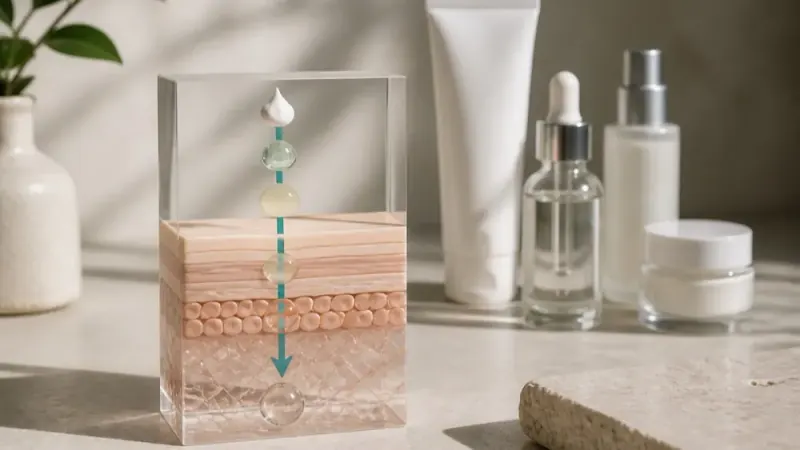
Moisturiser does more than soften skin. It reinforces the skin barrier and reduces transepidermal water loss, the passive evaporation of water through the skin's surface. When that barrier is compromised, skin becomes more reactive, tight, and prone to irritation from everyday environmental exposure. Moisturiser keeps the surface supple enough to resist that.
Choosing the right formula matters as much as using one.
- Oily or combination skin: a lightweight gel-cream absorbs quickly without clogging pores
- Dry or mature skin: a richer cream with ceramides or shea butter replenishes lipids the barrier needs to stay intact
- Sensitive skin: fragrance-free, minimal-ingredient formulas reduce the risk of irritation
Apply moisturiser promptly after cleansing while skin is still clean and receptive.
If you want to keep your routine short, look for moisturisers with functional ingredients built in. Some moisturisers include additional actives such as niacinamide, peptides, or hyaluronic acid — check the label for what's included if you want multi-tasking benefits.
On oily skin specifically: skipping moisturiser tends to backfire. A lightweight, non-comedogenic moisturiser actually helps regulate oil production rather than worsen it.
Step 3: SPF (The One Step Most People Skip and Shouldn't)
Moisturiser locks in hydration. SPF stops the damage from happening in the first place. It is the most evidence-backed step in any skincare routine, yet surveys consistently show it is the one most people skip.
Daily sunscreen rated SPF 30 or higher shields skin from UV radiation, the primary driver of premature ageing, hyperpigmentation, and long-term skin damage. What catches most people off guard is that UV exposure is cumulative. The few minutes walking to your car, sitting near a window, or grabbing a coffee outside all add up year after year.
Mineral vs. chemical: which type to choose
There are two main formulation types, and the difference matters for your skin type.
- Mineral SPF (look for zinc oxide or titanium dioxide on the label) tends to suit sensitive or acne-prone skin well because it is less likely to cause irritation.
- Chemical SPF typically feels lighter and more invisible under makeup, making it a popular choice for daily wear.
How much to apply
Most people apply far less product than is needed to achieve the rated protection — use a generous, even layer.
Most dermatologists recommend applying SPF after moisturiser in the morning; check product instructions for guidance.
Everything Else Is Optional (But Some Optional Steps Are Worth It)
Once your cleanser, moisturiser, and SPF are a genuine habit, that is the right moment to consider what else your skin might benefit from. Not before.
Toners, exfoliants, sheet masks, and facial oils are all genuinely optional for most people. They can add value, but they are enhancements layered on top of a working foundation, not substitutes for one.
Some additions are closer to conditional necessities than true extras. If you are dealing with active breakouts, a salicylic acid spot treatment or low-concentration BHA is worth adding. If your focus is fine lines and texture, retinoids are widely recommended for fine lines and texture; consult a dermatologist to find the right concentration for your skin. These are targeted tools for specific concerns, not general upgrades.
Antioxidant serums sit in useful middle ground. Antioxidant serums including vitamin C, vitamin E, and ferulic acid are popular for their complementary protective role alongside SPF, though you should add them only once the core three steps are habit.
Skin priorities also shift with age and skin type. Younger skin gets the most return from consistent sun protection and environmental defence. Acne-prone skin benefits from targeted breakout management. Mature skin can layer in ingredients that address fine lines and discoloration once the basics are solid.
The practical rule: introduce one new product at a time, give it several weeks before drawing conclusions, and only keep it if you actually notice a difference.
How to Personalize Your Routine for Skin Care Without Guessing
Knowing which products to buy is actually the easier problem. The harder part is knowing which variant of each step genuinely suits your skin.
Most beginners get this wrong, not through carelessness, but because self-diagnosis is genuinely difficult. Dehydrated skin often looks oily, prompting people to skip moisturiser entirely, which makes things worse. Sensitivity gets mistaken for acne, leading to harsh spot treatments that damage the skin barrier. A generic "combination skin" routine found online may have nothing to do with your actual skin profile.
This is where guided analysis changes things. How Skinic works is straightforward: take a guided selfie, and the AI evaluates visible skin attributes including oiliness, dryness, texture, and other concerns, then generates a personalised skin profile. Instead of guessing whether you need a gel cleanser or a cream one, a lightweight SPF or a mineral formula, you have a concrete starting point grounded in what your skin is actually showing.
That means less money spent on products that do not fit, and less time troubleshooting a routine built on assumptions.
Skinic also tracks progress over time, so you can see whether your three-step routine is producing real change rather than swapping products every few weeks on a hunch. It is worth noting that Skinic is a wellness tool, not a source of medical advice, but for building and refining a practical daily routine, removing the guesswork is exactly where it adds the most value.
The Psychology of Sticking to a Routine

Knowing what to use is only half the equation. Actually using it every day is where most beginners come unstuck.
Behaviour research from Stanford's BJ Fogg consistently shows that smaller habits require less sustained motivation to maintain. Fewer decisions, less time, lower likelihood of skipping entirely.
Remove friction wherever you can. Keep all three products on the bathroom vanity, not in a drawer or cabinet. Visible products get used; stored products get forgotten. That single environmental tweak makes a measurable difference to consistency over weeks and months.
Stack the routine onto a habit you already have. Habit stacking, pairing a new behaviour with an established one, is one of the most reliable techniques in behaviour design. Running your routine immediately after brushing your teeth anchors it to something automatic, so you stop relying on willpower to remember.
Give your skin time before drawing conclusions. Skin improvements take time to surface, so patience is essential. Many beginners quit before giving products a genuine chance. Commit to a sustained window — several weeks at minimum — before adjusting anything.
Progress that is invisible to the naked eye can still be documented. Taking regular photos or using an app like Skinic to track changes over time gives your brain the visual confirmation it needs to stay motivated through the slow early weeks.
Start Simple, Stay Consistent
Those three steps — cleanser, moisturiser, SPF — are the whole foundation. Clinical evidence consistently shows that SPF 30 alone blocks 92% of UV rays, which means you are already doing meaningful work with just that one step.
The goal on day one is not perfection. It is a routine simple enough that you will actually follow it for months.
Skinic's AI analysis, described earlier, is the fastest way to make those three choices specific to your skin.
Start with three products. Give them several weeks. Track what changes. Then, and only then, consider what to add next.
Simpler routines stick. Routines that stick deliver results. That is the whole strategy.
Conclusion
Three products, consistently applied, is the whole strategy — and Skinic's free AI analysis makes sure those three products are right for your skin.
Start small. Stay consistent. Your future skin will thank you for it.
Frequently asked questions
5 questions · tap one to open the answer
What are the three non-negotiable steps in a skincare routine?
Why do complicated skincare routines fail?
How often should beginners cleanse their face?
Should you moisturise if you have oily skin?
When should I add extra products like serums or exfoliants to my routine?
Medically reviewed by
Dr. M.M Hanaei
Aesthetic Physician, Dermatology Fellowship
- MD — Shahid Beheshti University of Medical Sciences (SBMU)
- MCC Licensure (Medical Council of Canada)
- Dermatology Fellowship, Switzerland
- Certified in advanced aesthetic procedures
Last reviewed 6 September 2026