Skinic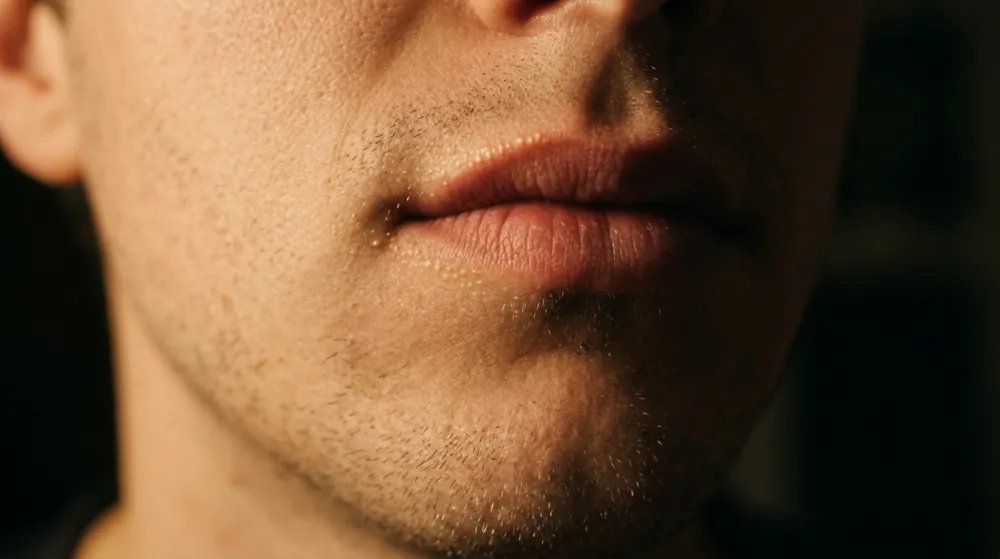
White spots on lips are most often Fordyce spots: small, slightly raised, yellowish or white bumps that DermNet describes as visible oil glands that sit in the lining of the mouth and lips without a hair follicle. DermNet states they are not a sexually transmitted disease and are not infectious, and that they are best regarded as a normal variant.
The figure usually attached to them, that they are present in 80% of adults, has no source cited on the DermNet page. Surveys that examined adult mouths found them in 1.2% and 7.9%.
This article covers what a Fordyce spot is, how it differs from milia and thrush, the sexually-transmitted-infection belief and the prevalence data behind it, why squeezing does nothing, what treatments exist, and when white spots on the lips need checking. It describes and evaluates. It does not diagnose a particular spot, and a spot you are unsure about is a question for your own clinician.
A Gland Where You Do Not Expect One
What a Fordyce Spot Is
DermNet defines Fordyce spots as visible ectopic sebaceous (oil) glands without hair follicles in the oral or genital mucosa, also called Fordyce granules. Ectopic means in an unusual place. Most oil glands sit beside a hair follicle, which is the arrangement our article on sebaceous filaments describes. These glands do not.
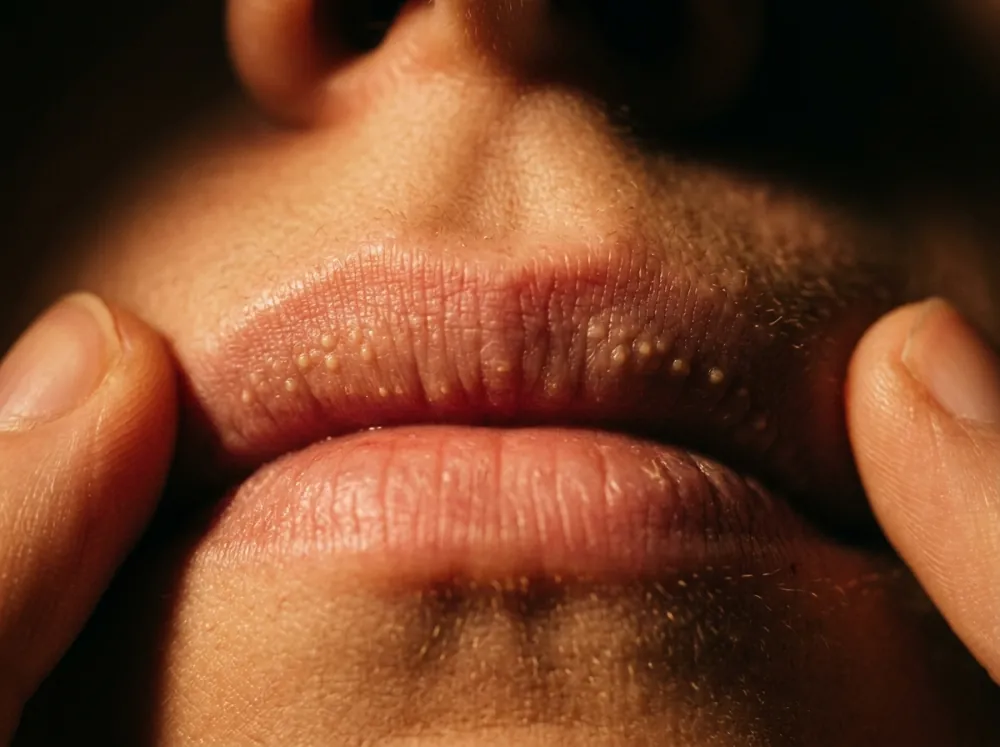
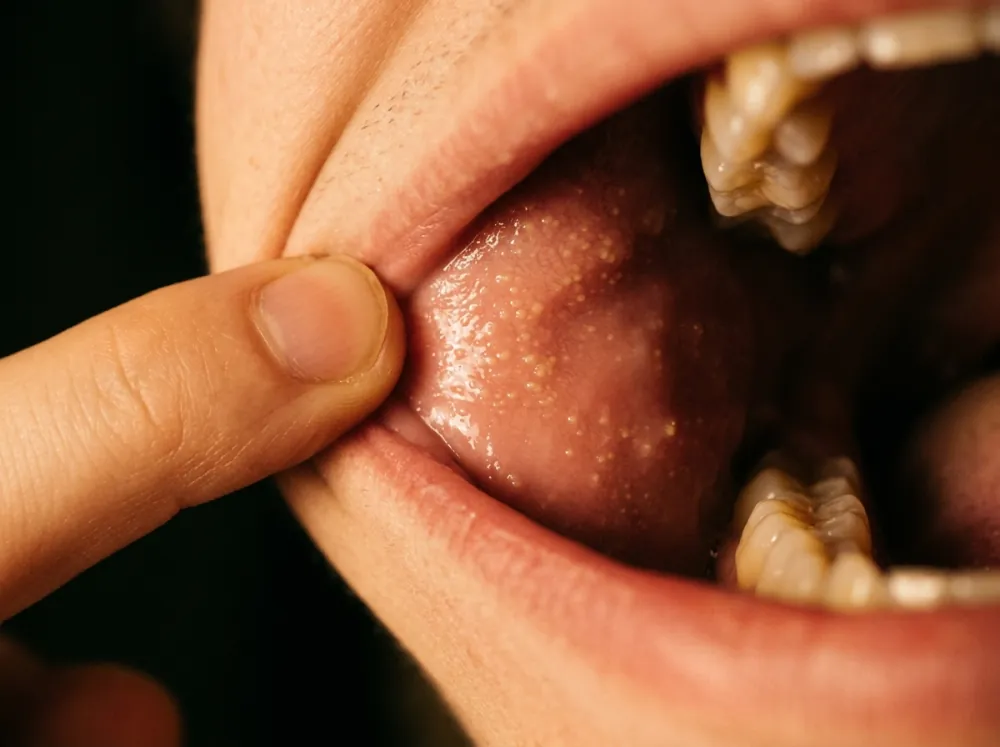
The same page gives the look: small (1 to 5 mm), slightly elevated yellowish or white papules on the inside of the cheeks and the vermilion border of the lips, singly or more often in crops of about 50 to 100. They are easier to see when the skin is stretched. Under the microscope, a biopsy shows a mature sebaceous gland just below the lining, opening directly to the surface with no hair follicle attached.
Who Has Them
DermNet states that Fordyce spots are probably present at birth and become bigger and more visible from about puberty. A case series on laser treatment adds that the gland growth at puberty responds to adrenal and gonadal androgen hormones.
Men appear to have more. In a Finnish survey of 1,961 adults aged around 46, Fordyce granules were found in 2.3% of men and 0.3% of women. The laser case series states a male-to-female ratio of 2 to 1. The two figures differ in size, and neither explains why.
Tiny white spots on lips match this description when they are small, raised, pale yellow or white, and grouped along the lip border or the inner cheek. Matching a description is not a diagnosis. DermNet says Fordyce spots are usually diagnosed by looking, and that a biopsy is rarely needed.
Fordyce, Milia or Something Else
Not every white spot on the lips is a Fordyce spot. DermNet's pages on the common look-alikes give the following contrasts.
| Fordyce spots | Milia | Oral thrush | |
|---|---|---|---|
| What it is | Ectopic oil gland | Small cyst containing keratin | Yeast overgrowth |
| Typical look | Raised yellow-white dots, 1 to 5 mm, often in crops | Tiny pearly-white bumps just under the surface | White patches that can be peeled off, leaving a raw area |
| Where | Lip border, inner cheeks | Mostly face, eyelids and cheeks; inside the mouth in newborns | Gums, tongue, inside the mouth; sore red splits at mouth corners |
| Course | Bigger and more visible from puberty | May clear in weeks or persist for months | Acute or chronic, linked to risk factors |
Milia
DermNet describes a milium as a small cyst containing keratin, usually multiple, presenting as tiny pearly-white bumps just under the surface of the skin. They arise most often on the face, particularly the eyelids and cheeks. In newborns, 40 to 50% have them, and these can arise inside the mouth on the gum margins or palate and heal within weeks of birth.
The page does not name the lip border as a site. This article does not say milia cannot occur there. Our article on milia on the face covers what is known about the facial kind.
Thrush
DermNet explains that oral candidiasis, often called thrush, is a fungal infection of the mouth whose white spots resemble the breast of the bird with the same name. In its acute form there are white patches on the gums, tongue and inside the mouth that can be peeled off, leaving a raw area. DermNet also lists angular cheilitis, which is sore red splits at each corner of the mouth.
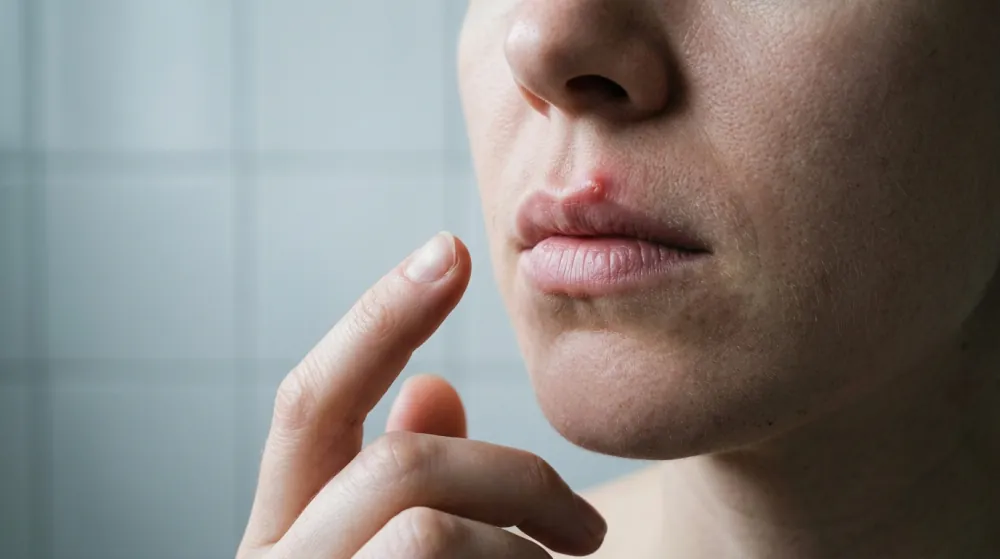
The risk factors it gives include infancy or old age, dentures, dry mouth, smoking, broad-spectrum antibiotics, inhaled corticosteroids and serious underlying disease. The peeling feature is one that clinicians use to tell patches apart. It is not a test to try at home. Blisters that tingle first belong to a different problem, covered in our article on a pimple on the lip or a cold sore.
The Figure Audited: "Fordyce Spots Are a Sign of an STI"
The belief and the prevalence figure need separate answers.
Where the Belief Comes From
No source opened for this article states where the belief started. What the sources do show is why it is easy to hold. DermNet says Fordyce spots occur on the glans and shaft of the penis, and on the vulva and vagina, as well as in the mouth, and that some sexually transmitted infections may start off looking like Fordyce spots on the genitals. So the same bumps are found in two places, and look-alikes of the genital ones are infections.
A case series on laser treatment adds that the spots were first described in 1896 on the oral mucosa and the lip border. The step from "can look like warts on the genitals" to "are a sign of infection" is inference, and the sources do not make it.
On the claim itself DermNet is explicit: Fordyce spots are not a sexually transmitted disease and they are not infectious. The page also notes that some case series have reported an association with the Muir-Torre variant of Lynch syndrome, and concludes that Fordyce spots are best regarded as a normal variant. Whether that matters for a given person, including any family history, is a question for a clinician.
Verdict: the infection claim is false. The spots are glands, and the genital look-alike risk is the reason a new genital bump deserves a proper diagnosis.
What the Prevalence Data Say
The figure attached to Fordyce spots is that 80% of adults have them. DermNet states it, and the laser case series gives 70 to 80%. Neither cites a primary source on that point. A 2006 South African study states that an earlier author, Sewerin, reported 80% on the lip border and 95% on the oral lining, peaking at 20 to 29 years (abstract), and that experienced clinicians found those figures too high for the South African population. Its own survey found 62.07% in men and 57.25% in women.
Other surveys found much less.
| Source | Population | Fordyce granules |
|---|---|---|
| Sewerin, as quoted in a 2006 study (abstract) | Not stated | 80% lip border, 95% oral lining |
| South African study, 2006 (abstract) | Selected adults | 62.07% men, 57.25% women |
| Chilean hospital patients (as cited in a Dominican study) | 300 patients over 20 | 30% |
| Dominican survey, 2021 | 248 adults, one oral medicine specialist | 7.9% |
| Finnish birth cohort, 2020 | 1,961 adults, seven general dentists | 1.2% |
The Finnish authors also list other surveys they compared: 0.5% in China, 1.9% in Slovenia, 2.8% in Turkey and 6.6% in India.
The papers do not agree and do not explain why. Reasons are plausible but are reasoning here, not findings: the surveys differ in who was examined, who examined, what size and visibility counted as a Fordyce spot, and whether the lip border was inspected separately from the inside of the mouth.
Verdict: "80% of adults" is a figure with a thin trail, and population surveys of adult mouths report far less. What can be said is that Fordyce spots are common, the share depends heavily on how they were counted, and none of the surveys opened found a sign of infection.
Why Squeezing Does Nothing Good
DermNet's advice for tiny white spots on lips is to avoid picking or squeezing them. The biopsy description explains why there is nothing to remove. A blackhead or filament is oil and cell debris sitting inside a follicle, so pressure can move it. A Fordyce spot is the gland itself, sitting just beneath the lining. That is reasoning from the biopsy description, not a measured finding.
The comparison matters because pressing a gland has only one outcome. Our article on sebaceous hyperplasia makes the same point about the larger gland-based bump on the forehead and cheeks: pressing produces inflammation, not contents. A picked spot is a wound where there was none, on a border that everyone can see. Our article on telling bumps on the face apart lays out how the main kinds differ.
Treatments Exist, and Most People Do Not Need Them
DermNet states that Fordyce spots are generally harmless and do not require treatment. It acknowledges that they can be a cosmetic concern, and that electrosurgery and vaporising laser (CO2 laser) have been used successfully to remove them.
The evidence behind that is thin. The one treatment paper opened is a case series of three men, aged 21, 25 and 28, with Fordyce spots on the upper lip. All three were treated with a CO2 laser, and no recurrence was noted at the follow-up visits, which ranged from 6 to 16 weeks. There was no control group, and the authors say they report it because treatment of this condition has hardly been published, since it is not considered a disease.
The same paper lists other options reported elsewhere: micro-punch surgery, electrodesiccation, cryotherapy, ablative laser, photodynamic therapy, topical dichloroacetic acid, topical tretinoin and oral isotretinoin. The underlying papers were not opened, so these are named and not assessed. The authors also note that deep CO2 ablation causes more thermal injury and carries more side-effect risk in Fitzpatrick skin types IV and V.
No source opened tested a cream, serum, patch or at-home product for these spots. A decision to remove tissue from a lip belongs to a clinician who has confirmed what the spots are.
When Spots on the Lips Need Checking
Fordyce spots are a normal variant. The reasons white spots on lips need to be seen come from what else can look like them.
- A patch, not dots. White patches that are sore, or that peel off leaving a raw area, match DermNet's description of thrush. A white patch that stays is a different question: in the Finnish survey, white lesions were the most common mucosal lesion (6.5%), including oral lichen planus (1.5%) and leukoplakia (0.5%), and smoking and snuff use raised the odds of having any mucosal change (odds ratios 3.0 and 2.6).
- Red as well as white. DermNet notes that, in one form of chronic candidiasis, red patches as well as white patches may indicate malignant change.
- A lip condition from sun. The Dominican survey counted actinic cheilitis, a lip condition, among potentially malignant disorders (0.3%).
- Anything new, changing or different from its neighbours. That includes a single spot that grows, bleeds or does not heal.
- New bumps on the genitals. DermNet advises that a proper diagnosis from a doctor is essential, because some infections can begin by looking like Fordyce spots.
- Blisters or tingling before a spot appears. See the article on the pimple or cold sore.
Conclusion
White spots on lips are most often Fordyce spots: normal oil glands sitting where there is no hair follicle, visible as small pale bumps, more common in men, and probably present from birth. DermNet states they are not an infection, so the belief is false, though a new genital bump deserves a proper diagnosis because infections can look similar there.
The "80% of adults" figure has no source on its page, and surveys of adult mouths found between 0.5% and 7.9%. Squeezing a gland achieves nothing. Removal by electrosurgery or laser exists, backed by a three-patient series, and most people do not need it.
Photographing a spot in the same place, distance and light, whether in a dated album or in an app like Skinic, shows whether it is changing and gives a clinician something to look at. It cannot say what the spot is. For that, ask your own clinician.
Frequently asked questions
5 questions · tap one to open the answer
What are the white spots on my lips?
Are Fordyce spots an STI?
How common are Fordyce spots?
Can you pop or remove white spots on lips?
When should white spots on the lips be checked?
Medically reviewed by
Dr. M.M Hanaei
Aesthetic Physician, Dermatology Fellowship
- MD — Shahid Beheshti University of Medical Sciences (SBMU)
- MCC Licensure (Medical Council of Canada)
- Dermatology Fellowship, Switzerland
- Certified in advanced aesthetic procedures
Last reviewed 10 October 2026