Skinic
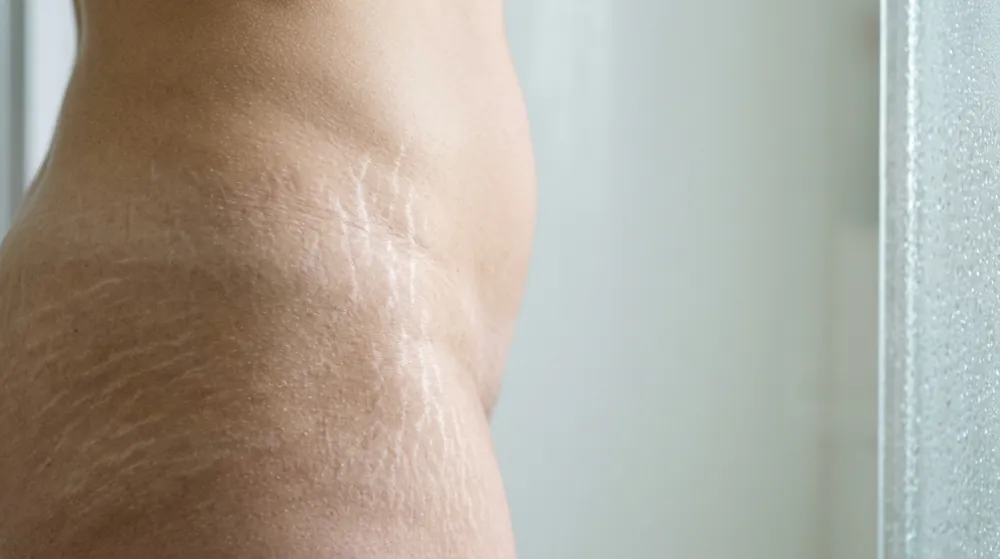
Stretch marks start as raised or flat red-to-purple lines and fade over time to pale, slightly sunken ones. The two stages respond differently to treatment, which is why most advice that treats them as one thing misleads. No cream has been shown to prevent them, a few options help the early red marks, and the older white ones respond modestly at best.
The claim this article tests is that cocoa butter prevents stretch marks. It covers red against white marks, why they form, what the trials report for prevention creams, early marks and older marks, and how to judge a claim. It evaluates evidence. It names no product, gives no strengths or schedules, and reports procedures without instructing them. Marks that are widespread, painful, appear with other symptoms, or follow steroid use are a question for your own clinician.
Red or White
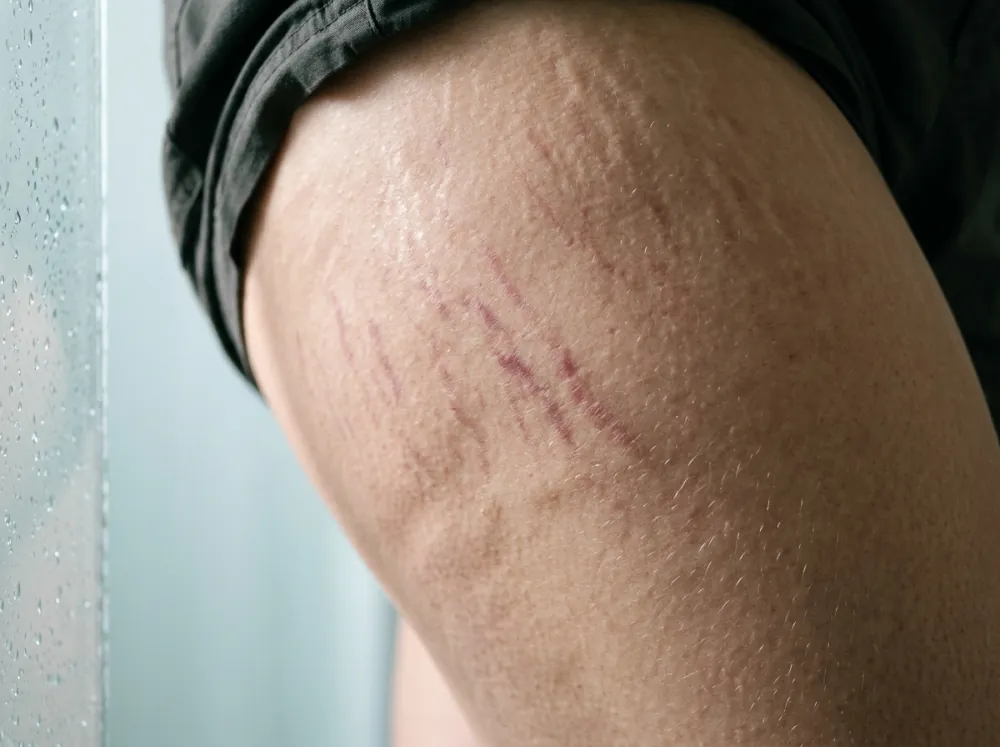
A 2016 review of topical treatments describes two stages. The early stage, striae rubrae, is red, stretched flat or slightly raised, aligned across the direction of skin tension, and sometimes itchy. The late stage, striae albae, has faded to atrophic, wrinkled, pale lines. Under the microscope the red marks show broken elastic fibres, thicker and more tightly packed collagen, and visible vessels, and the white ones look like mature, flattened dermal scars with less vascularity.
Prevalence figures vary widely, from 11% to 88% in that review, and a 2026 review puts the overall incidence at 56% (95% confidence interval 52% to 59%). The abdomen, breasts, buttocks and thighs are the commonest sites. The 2016 review adds that severity has been reported as worse in Black African women than in white women in the same region.
| Red (striae rubrae) | White (striae albae) | |
|---|---|---|
| Look | Red to purple, flat or slightly raised | Pale, sunken, wrinkled |
| Feel | Can itch | Usually not symptomatic |
| Skin | Vessels visible, inflammation | Scar-like, fewer vessels |
| What the reviews report works | Retinoid cream, some lasers and light | Devices, microneedling, fillers, in small studies |
Why They Form
The 2026 review describes stretch marks as the result of several processes acting on the dermis. Rapid expansion, as in pregnancy, puberty or fast weight change, loads the skin beyond what its collagen and elastic network tolerate. Glucocorticoids, whether taken or made in excess, weaken the skin's resistance, and the review links the marks to Cushing's syndrome and chronic steroid use. A family history is a recognised factor, although gene studies have been inconsistent. Inflammation matters early on: mast cells release an enzyme that breaks down elastic fibres.
The Cochrane review of prevention says the exact cause is unclear. That matters because a cream is usually sold on one mechanism, and the mechanisms are mixed. Our article on pimple scars covers how marks and scars differ in skin that was injured by acne, which is a different process.
Prevention Creams, Audited
The Cochrane review of topical preparations included six trials with 800 women, with searches to October 2011. Across five trials and 474 women, active preparations did not significantly reduce the development of stretch marks against placebo or no treatment (risk ratio 0.74, 95% confidence interval 0.53 to 1.03), and severity did not differ either. The authors found no high-quality evidence to support any topical preparation. Four of six trials had fewer than 100 women, and none was at low risk of bias in every domain. The products tested included a cream containing a plant extract from centella, a hyaluronic acid cream, a vitamin-based ointment, olive oil and cocoa butter.
The sources disagree on two points. The 2016 topical review rates two of the creams level 2 evidence for prevention, and reports one trial in which 10% of women in the treated group developed marks against 70% on placebo, whereas the Cochrane review pooled the trials and found no significant average difference with large heterogeneity. The 2026 review says regular olive oil in late pregnancy can significantly reduce risk in first-time mothers, whereas the 2016 review and the Cochrane pooled result found no clear effect. The 2016 review also notes that benefits in some trials might come from the massage that applying a cream involves. Our article on centella asiatica covers the plant behind one of the creams.
What Helps Early Marks
Retinoid Cream
The 2016 review found tretinoin studied in four clinical trials, with success on red marks and limited value on white ones. A 22-person randomised trial on red marks reduced the length and width of the lines, with redness or scaling in the first two months. An 11-woman randomised trial found no difference from placebo, though the authors of the review note its size. In an open-label trial in early marks, tretinoin and superficial dermabrasion were similarly effective.
A 2020 network meta-analysis of 14 randomised trials with 651 participants ranked tretinoin alone lowest among the options it compared, and ranked tretinoin plus radiofrequency highest. It did not separate red from white marks. Tretinoin is not used in pregnancy, and our articles on skincare in pregnancy and on tretinoin versus retinol cover the labelling.
Acids and Light
The 2026 review says glycolic acid can narrow both new and older marks, with improvement usually seen after about six months, and that a 585 nm pulsed dye laser and a 1540 nm erbium glass laser target red marks. It reports these statements from the literature and adds that how well they work by stage and skin type has not been fully clarified.
Procedures for Older Marks (Reported)
Lasers, Radiofrequency and Needling
The 2020 network meta-analysis found that fractional CO2 laser, platelet-rich plasma injection, carboxytherapy and bipolar radiofrequency each gave better clinical results than tretinoin alone, and that those options plus microneedling gave higher patient satisfaction than microdermabrasion or tretinoin alone. Its authors list limits: some treatments appeared in only one study, participants were unclearly blinded in most trials, and the search was restricted to English. The 2026 review adds that most studies are small, follow-up is usually three to six months, scoring is mostly subjective, and the risk of pigment change after laser is higher in darker skin.
Fillers
A systematic review of fillers found seven studies with 184 women with white marks, all reporting reductions with only mild, temporary side effects, and two cases of post-inflammatory pigment change in skin type III. It included cohort studies, retrospective studies and case reports because randomised trials were lacking, so the evidence level is low. Our article on microneedling before and after reports what microneedling studies measured in another setting.

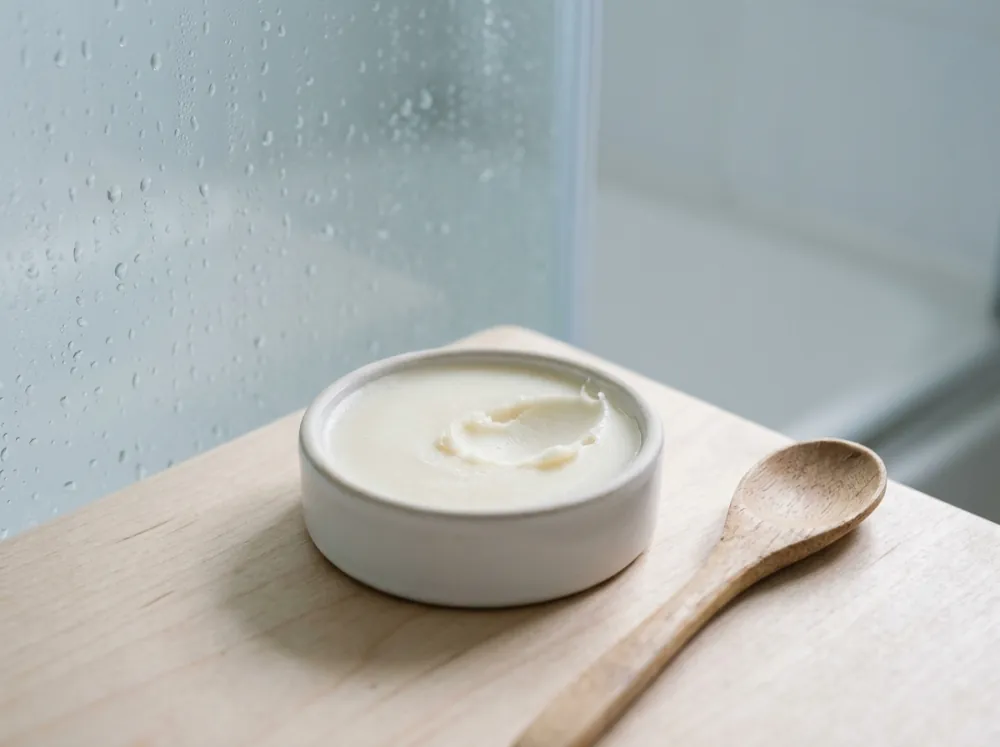
The Figure Audited: "Cocoa Butter Prevents Stretch Marks"
Verdict: not supported by the randomised trials. Findings:
- Two trials tested it, and neither reached significance. A trial in 210 first-pregnancy women (abstract) found marks in 45.1% with cocoa butter lotion against 48.8% with placebo lotion (P=0.73). A trial in 300 women (abstract) found them in 44% with cocoa butter cream against 55% with placebo cream (P=0.09).
- The second result leaned toward benefit and did not reach significance. The Cochrane review notes that its comparison cream was not a true placebo, because it contained vitamin E and other ingredients, so the test was cocoa butter against a similar cream without it.
- The pooled trials found no benefit. The Cochrane analysis of active preparations against placebo or no treatment gave a risk ratio of 0.74 (0.53 to 1.03).
- The topical review agrees. The 2016 review reports two studies of cocoa butter and no significant effect.
- The limit. The trials were in pregnancy, with products tested at one concentration each. Neither tested cocoa butter for treating existing marks, and nothing here shows it is harmful.
How to Judge a Stretch Mark Claim
- Ask whether the product's claim cites a published trial. The 2016 review notes most products state they are clinically proven and few have published trials.
- Ask whether the trial separated red from white marks. The network meta-analysis did not, and the stages respond differently.
- Ask what the comparison was. A cream compared with no treatment can win because of the massage that comes with applying it.
- Check the time frame. Procedure studies mostly follow people for three to six months.
- Check the skin type. Pigment change after procedures is more likely in darker skin.
- Do not pay for prevention. Across the trials in pregnancy, no preparation reliably prevented marks.
Conclusion
Stretch marks form when skin is stretched past what its fibres tolerate, helped by hormones, genes and inflammation, and no cream has been shown to prevent them, including cocoa butter. Early red marks have the most evidence for a retinoid cream and for some light and laser treatments, and white marks respond modestly to procedures in small studies of limited quality. Sources disagree on which creams help, and the best trials are small.
Photographing marks in the same light every few weeks, in an app like Skinic or in an album, shows whether red marks are fading on their own, which is the natural course of the early stage. For marks with other symptoms, or questions about treatment in pregnancy, ask your own clinician.
Frequently asked questions
5 questions · tap one to open the answer
Can stretch marks be prevented with creams or oils?
Does cocoa butter prevent stretch marks?
What is the difference between red and white stretch marks?
Do stretch marks go away on their own?
What procedures have evidence for stretch marks?
Medically reviewed by
Dr. M.M Hanaei
Aesthetic Physician, Dermatology Fellowship
- MD — Shahid Beheshti University of Medical Sciences (SBMU)
- MCC Licensure (Medical Council of Canada)
- Dermatology Fellowship, Switzerland
- Certified in advanced aesthetic procedures
Last reviewed 18 October 2026