Skinic
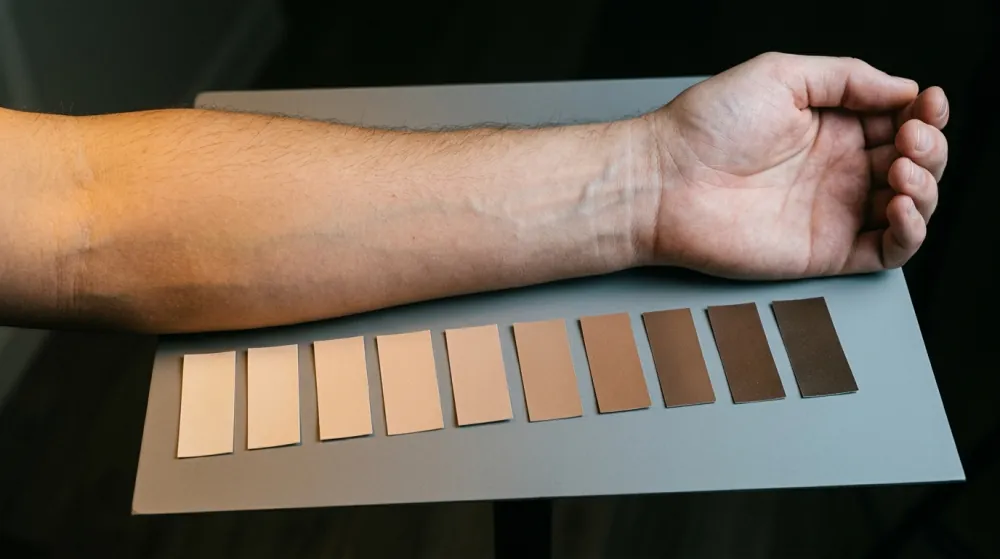
Skin tone, undertone and skin type name three different things: how light or dark the skin is, whether it leans red or yellow, and how oily, dry or reactive it is. A fourth label, the Fitzpatrick skin type, is often mistaken for the first, though it records how skin reacts to sun. Mixing them up can lead to the wrong sunscreen, the wrong shade and the wrong expectations of what a product can do.
The claim this article tests is that the vein colour on the wrist tells you your undertone. It covers what each system measures, how reliably, and what each can and cannot change in a routine. It describes and evaluates. It does not tell you which type you are, and a patch or reaction you are unsure about is a question for your own clinician.
Three Words, Three Systems
| Word | What it names | How it is measured | What it can tell you |
|---|---|---|---|
| Skin tone | How light or dark the skin is | Colorimeter (lightness, ITA°), or a swatch scale such as Monk | How visible marks are; with a colorimeter, a lab estimate of burn dose |
| Undertone | Whether skin leans red or yellow | Redness and yellowness in research; "cool, warm, neutral" in cosmetics | Makeup shade matching |
| Skin type | Oil, hydration, sensitivity, and similar | Questionnaire; devices in research | How a product may feel; weakly linked to measured values |
| Fitzpatrick type | Sun reaction: burning and tanning | Self-reported history | Sunburn tendency; not colour |
Each row has its own evidence, which the rest of the article takes in turn. A scale designed for one of them does not measure another.
Fitzpatrick Measures Burning, Not Colour
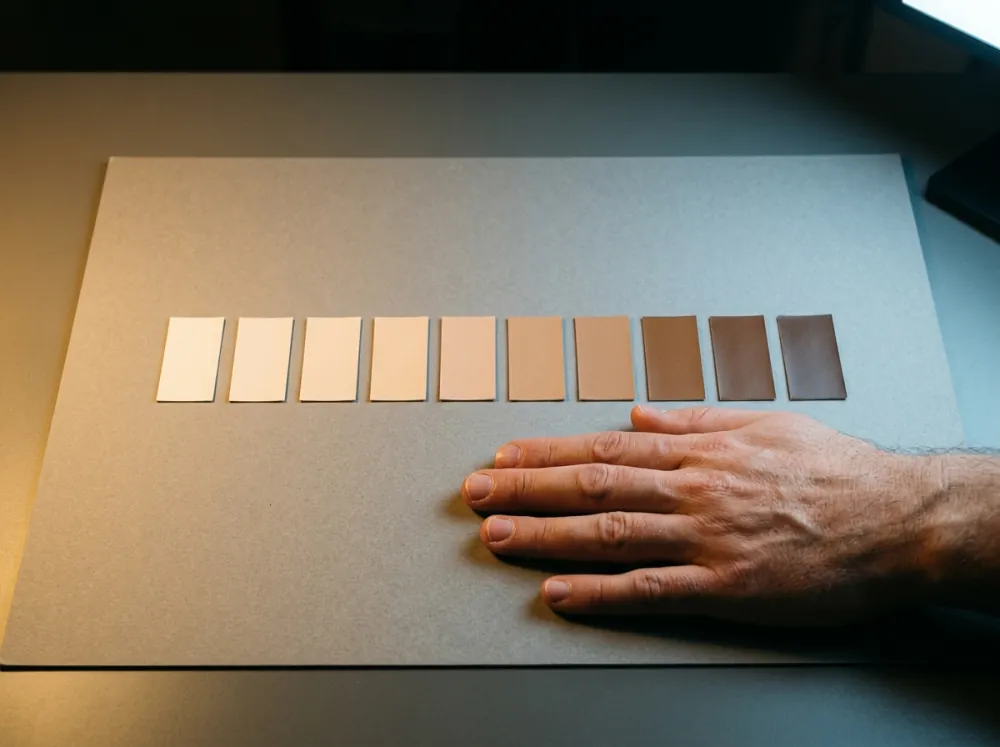
DermNet describes the Fitzpatrick phototype as a way to classify skin by its reaction to sunlight. It says the type depends on melanin, determined by constitutional colour and the effect of ultraviolet exposure, and gives six types from "always burns, does not tan" (I) to "never burns, always tans darkly" (VI). The page notes that the type is present at birth.
A 2025 study of 64 patients with 1,329 skin sites puts the scale's limits in terms of colour. Its authors write that the Fitzpatrick scale was designed to categorise photosensitivity and does not measure skin tone. When the three scales were compared against a colorimeter, Fitzpatrick types clustered worst in colour space, meaning each type spans a wide range of true skin colour. A prior study of 3,386 people found that race, sex, skin, eye and hair colour were significant but weak predictors of self-reported phototype, and 17.7% of those reporting the lightest pigmentary phenotypes identified as type V or VI. Our article on the Fitzpatrick skin type covers how the scale is used and where self-typing goes wrong.
Which One Predicts UV Response?
The two ideas the plan for this article started from, that colour and type are different and that only the type predicts UV response, are half right. The Fitzpatrick type is defined by sun reaction, and the 2014 paper says it is a stronger predictor of skin cancer risk than hair, eye or skin colour, citing earlier work. But colour has its own role: in 9,931 people tested across 12 laboratories on five continents (abstract), the Individual Typology Angle, an objective measure of skin colour, predicted the dose of UV needed to redden unprotected skin. The relationship has been written into the 2019 ISO method for testing SPF. So both relate to UV response, in different ways, and neither is the same as the other.
Undertone Is a Makeup Term
A 2024 study of skin undertones in a social-science journal gives the plainest definition found: in cosmetics marketing, redder skin is described as having cool undertones (pink, rose), yellower skin as warm (peach, gold, olive), and neutral as balancing both. In the research itself, undertone means the redness and yellowness of skin, measured in a colour space or rated against swatches, separate from lightness and darkness.
The study asked whether people perceive undertones consistently. Individual raters did not, with intraclass correlations below 0.30 for red-to-yellow, against above 0.80 for light-to-dark. Averaged across many raters the agreement was 0.95 and above, so undertone is a real, perceivable dimension, with a narrow range and noisy single judgments. The 2025 comparison of scales found the same in a clinic: two raters using a swatch guide agreed on undertone only modestly (kappa 0.37) against 0.75 for the Monk scale. The sources opened link undertone to makeup and to social perception. None links it to how skin responds to ingredients or sun.
What the Monk Scale Is For
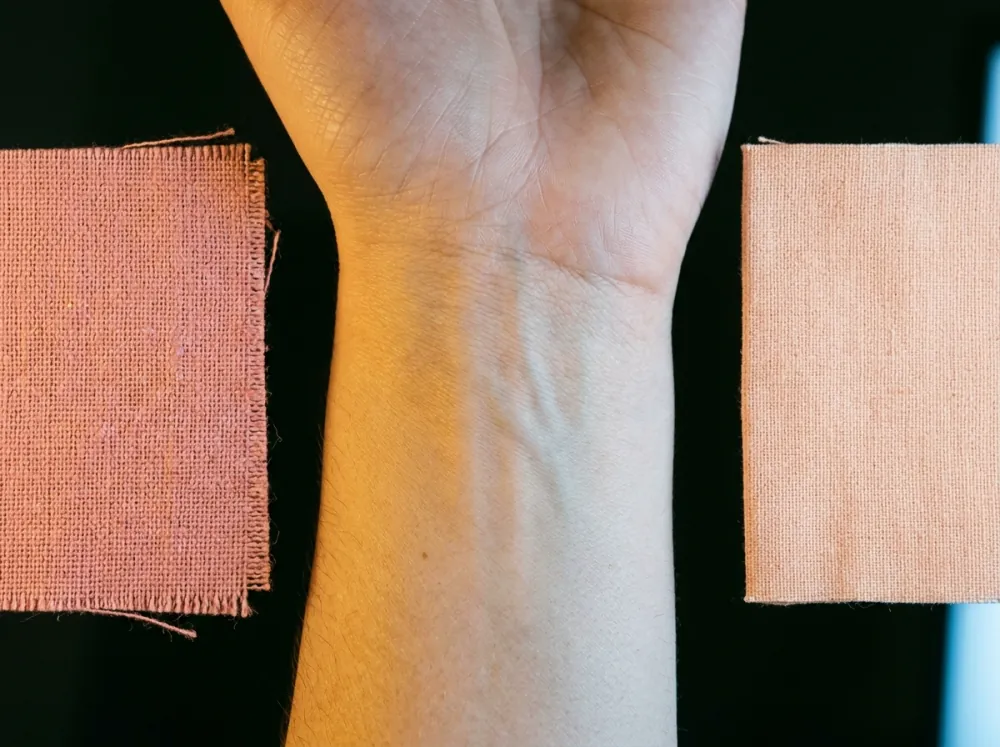
The Monk Skin Tone scale has 10 shades. The 2025 study describes it as conceived by sociologists to label images, and still being validated in different contexts. In clinic, two raters agreed at a kappa of 0.75 across body sites, higher at the abdomen, inner upper arm and forearm, and the raters were in one cultural context, which is known to affect ratings. Photography-based ratings varied with lighting.
Its use is labelling skin colour in image datasets. In the same study, Monk ratings captured differences in an AI model's melanoma classification scores better than Fitzpatrick ratings did. The authors state that the Fitzpatrick type is not a proxy for skin tone, and that colorimetry remained the gold standard for colour measurement. The Monk scale is a colour tool. It does not say how skin burns.
Skin Type Is a Different Axis
The Baumann system sorts people on four axes from a 64-item questionnaire: oily or dry, sensitive or resistant, pigmented or not, and wrinkled or tight. A 2026 study of 71 volunteers compared those scores with device measurements. The oily-to-dry score correlated weakly with sebum (r = 0.299) and not significantly with hydration or water loss. The sensitive-to-resistant score correlated moderately with water loss (0.388) and pH (0.445), and the pigmented score weakly with melanin index (0.280). The authors call the questionnaire poorly to fairly consistent with objective measures and say it needs revision. All participants were women with Fitzpatrick types II to IV at a single centre.
So "oily skin" is a self-description that tracks measured oil only loosely. Our articles on why a face is oily and on combination skin cover what is known about sebum and the zones of the face.
What Each One Changes in a Routine
Skin Tone
As reasoning, it changes how visible a mark is and how a sunscreen looks on the skin, which our articles on hyperpigmentation in brown and deep skin tones and on sunscreen without white cast address. Measured colour estimates the dose of UV that reddens skin in the lab.
Fitzpatrick Type
It describes sunburn tendency, and clinics use it to estimate initial doses for phototherapy and some devices. Everyone, including people who rarely burn, needs sun protection. The DermNet page also says darker skin is more prone to post-inflammatory pigmentation.
Undertone
It changes makeup shade choice. No source opened shows that it changes what skin care to use.
Skin Type
It changes how a product feels and what a person tolerates, and the questionnaire evidence above says to treat the label as a starting description rather than a measurement.
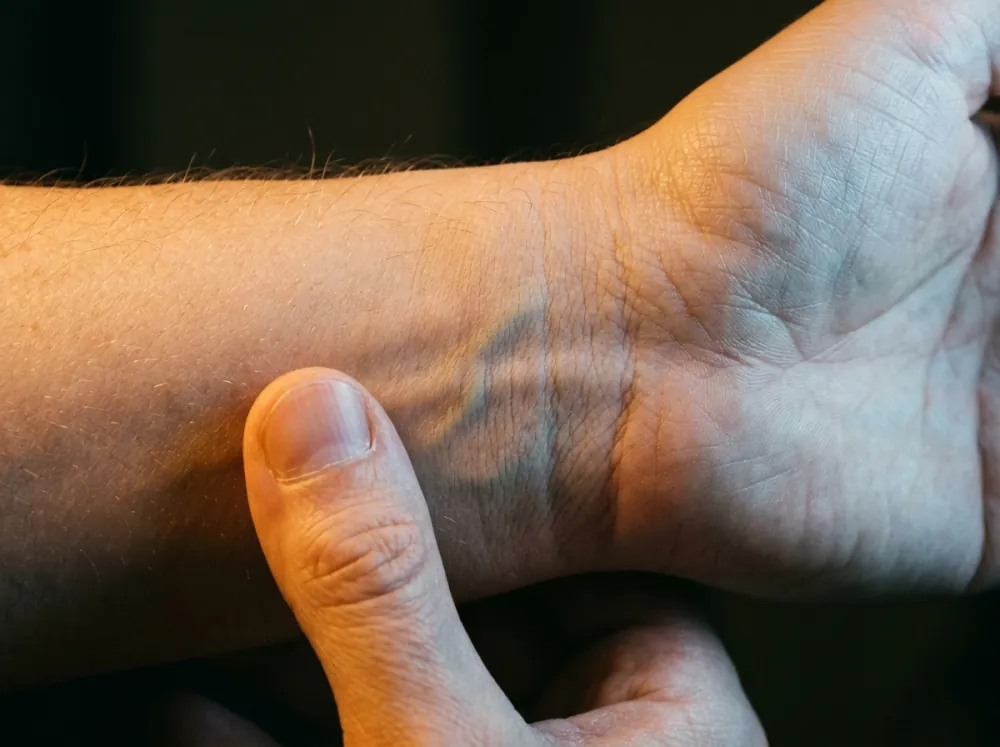
The Figure Audited: "The Vein Colour Test Tells You Your Undertone"
Verdict: unsupported. No source opened tests it, and the physics of vein colour points the other way. Findings:
- No validation. No study in the sources opened compares wrist vein colour with undertone.
- What undertone is. In research it is redness and yellowness of the skin surface, measured by instruments or against swatches. Vein colour is not part of that definition.
- What vein colour depends on. A laboratory and simulation study of why veins look blue (abstract) found that the colour of vessels is determined by scattering and absorption in skin at different wavelengths, the oxygenation of the blood, the vessel's diameter and depth, and visual perception. None of those is undertone.
- Judging undertone is noisy even for careful raters. Individual ratings had intraclass correlations below 0.30, and two raters with a swatch guide reached a kappa of 0.37. A home test inherits that noise, and lighting changes the look of both skin and veins.
- The limit. An untested method is not a disproved one. The claim may match for some people. The sources give no reason to rely on it.
Conclusion
Skin tone is colour, undertone is a red or yellow lean named mainly in makeup, skin type is a questionnaire result about oil and sensitivity, and the Fitzpatrick type is a self-reported sun reaction. The scales were built for different jobs. Monk labels colour in images, Fitzpatrick records sunburn tendency, and neither tells you your undertone. The vein test has no evidence behind it.
If you want to see how skin colour, a mark or a reaction changes over time, photographing it in the same light each week, in an app like Skinic or in an album, is a fairer record than any label. For a mark or reaction that worries you, ask your own clinician.
Frequently asked questions
5 questions · tap one to open the answer
What is the difference between skin tone and undertone?
Is the Fitzpatrick skin type the same as skin tone?
What is the Monk skin tone scale used for?
Does the vein colour test show your undertone?
Is skin type the same as skin tone?
Medically reviewed by
Dr. M.M Hanaei
Aesthetic Physician, Dermatology Fellowship
- MD — Shahid Beheshti University of Medical Sciences (SBMU)
- MCC Licensure (Medical Council of Canada)
- Dermatology Fellowship, Switzerland
- Certified in advanced aesthetic procedures
Last reviewed 16 October 2026