Skinic
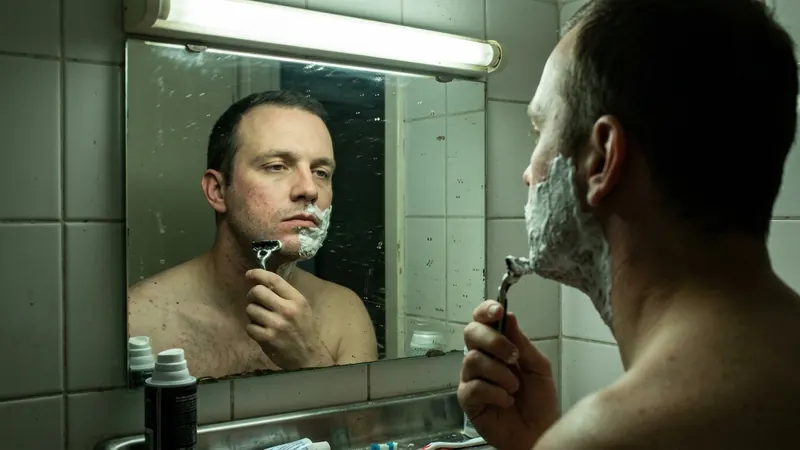
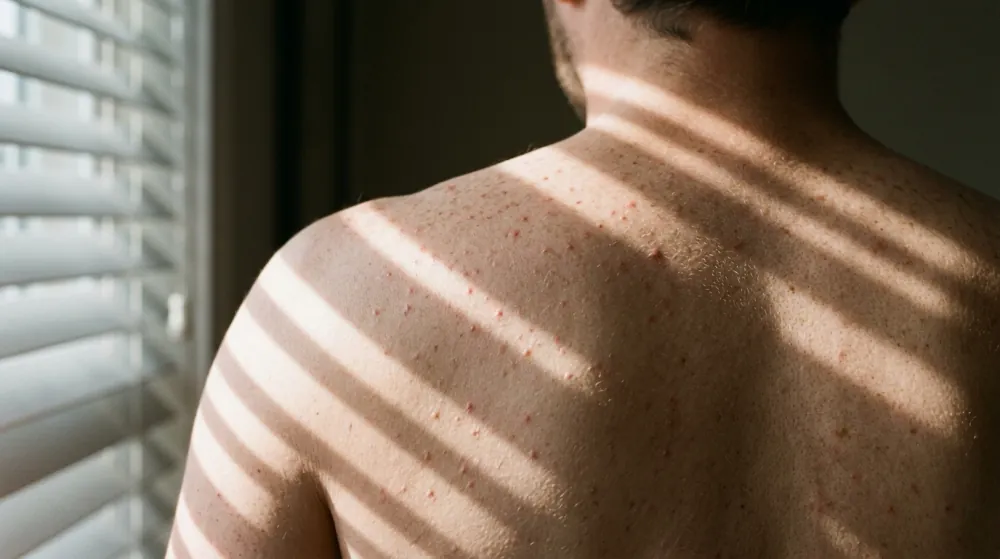
Three different things get called "razor burn". One is irritation of the skin surface that shows up within hours and clears in a day or two. One is razor bumps, an inflammatory reaction to cut hairs growing back into the skin, which appears a day or two after shaving and can last for weeks. The third is the ingrown hair itself, the single hair trapped under the skin. Telling them apart matters because they behave differently and respond to different changes.
The claim this article tests is that shaving against the grain causes ingrown hairs. It covers the three problems, what the sources report on each, what shaving technique guidance rests on, and when an ingrown hair is infected. It describes and evaluates. It names no product, and a bump that is very painful, hot, spreading or accompanied by fever is a question for your own clinician.
Three Problems After Shaving
| Razor burn | Razor bumps | Ingrown hair | |
|---|---|---|---|
| What it is | Irritation of the skin surface | An inflammatory reaction to hairs growing back in | A single hair trapped under the skin |
| When | Right after shaving | A day or two after shaving, then builds | As hair regrows |
| Looks like | Red, stinging skin | Itchy red or skin-coloured bumps and pustules | A bump, sometimes with a visible hair under the surface |
| Course | Clears within 24 to 48 hours | Chronic and relapsing while shaving continues | Settles, or becomes infected |
| Medical name | Irritant contact dermatitis, or traumatic folliculitis | Pseudofolliculitis barbae | Ingrown hair |
The sources do not agree on one label for razor burn. DermNet's shaving page calls it irritant contact dermatitis, while a 2019 review of razor bump treatment calls it traumatic folliculitis that clears within 24 to 48 hours. Both describe the same short-lived reaction.
Razor Burn
Razor burn is the immediate cost of a blade crossing skin. DermNet lists it among the side effects of shaving, with itching, nicks, blisters and pimples, ingrown hairs and irritant contact dermatitis. The 2019 review says it usually follows a close shave and clears within 24 to 48 hours, which separates it from razor bumps, where itching or pain begins a day or two after shaving and papules and pustules follow.
That timing is the practical test. Redness and stinging within hours that settle in a day or two fit irritation. Bumps that appear later and keep coming back fit the next problem. Our article on the barrier damage caused by shaving covers why the shave itself is the largest insult in a routine.
Razor Bumps
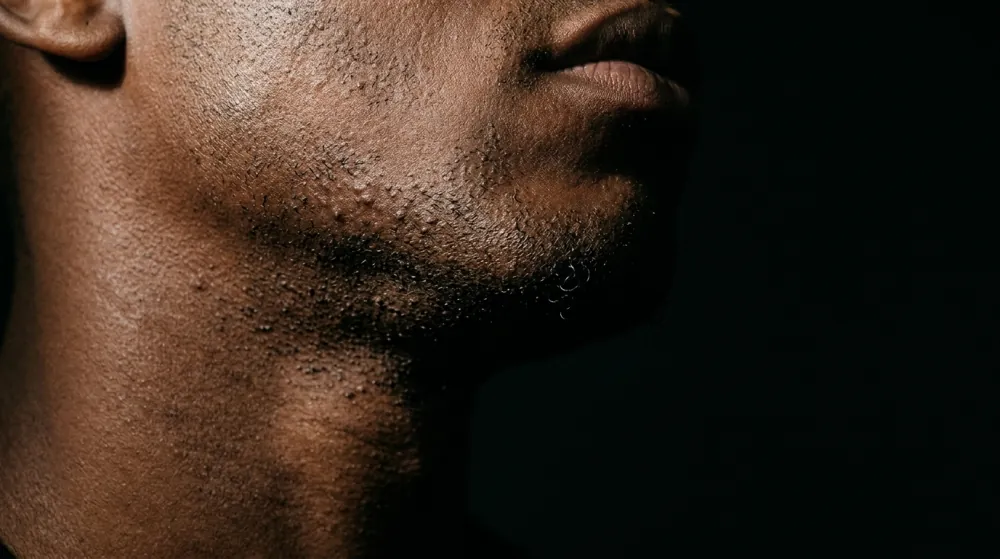
DermNet defines pseudofolliculitis barbae as a common inflammatory reaction of the hair follicle, most often on the face after shaving, and notes it can occur anywhere hair is shaved or plucked, including the underarms, groin and legs. Close shaving leaves a sharp pointed hair end, and it can re-enter the skin in one of two ways: piercing the surface from outside, or retracting beneath the surface and piercing the follicle wall from within. Either way the body treats the hair as a foreign object.
Who Gets Them
DermNet says razor bumps predominantly affect men of African ancestry, at approximately 45 to 80%, probably because tightly curled, coarse hair is more common. It names a variant in a hair follicle keratin gene as an additional risk factor, and the 2019 review puts the increase at six-fold for carriers. The sources describe it as more common with blade razors than electric shavers. The complications DermNet lists are infection of the follicles, abscess, post-inflammatory pigment change and scarring including keloids, which is why our article on hyperpigmentation in brown and deep skin tones matters to the people most affected.
Women and Other Sites
Razor bumps are not limited to the beard. A survey of 369 women at two US public clinics found 60% had experienced at least one complication of pubic hair removal, most often epidermal abrasion and ingrown hairs, and 90.7% of those with a complication shaved with a razor. Black and Hispanic women reported fewer complications than white women, and only 4% had seen a healthcare provider about one. That is a self-reported clinic sample, not a measure of razor bump rates, and it points in the opposite direction from the beard data, which this article reports without resolving.
Ingrown Hairs
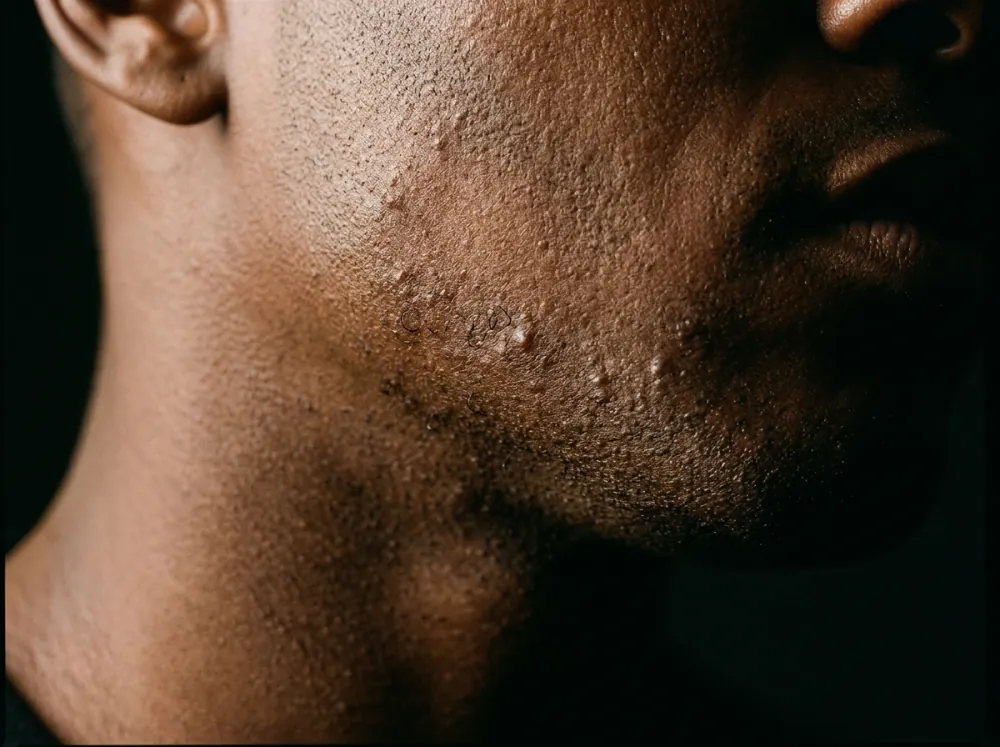
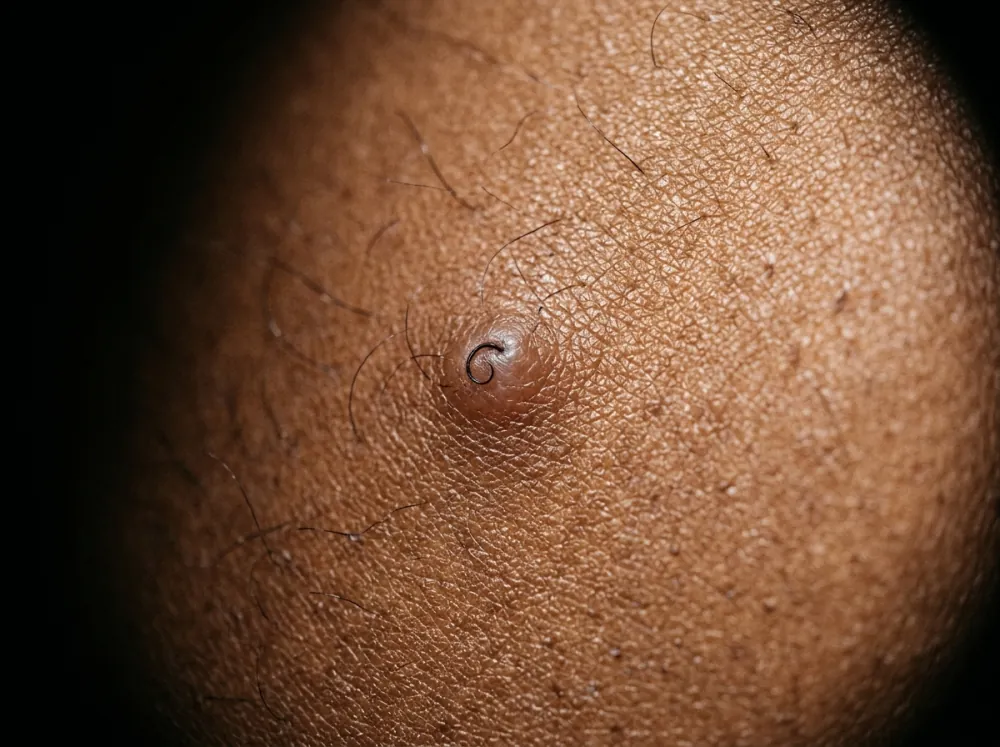
The NHS describes an ingrown hair as a bump, often itchy, where a hair has grown back into the skin, sometimes with the hair visible under the surface. On white skin the bump may look red, and on brown or black skin it may look a different colour from the surrounding skin instead of red. Coarse or curly hair makes them more likely, and they appear where skin is shaved, waxed, plucked or threaded: face and neck, legs, armpits, chest, back and pubic area.
Razor bumps are the condition and an ingrown hair is the lesion within it. A single trapped hair can occur without the pattern of repeated bumps along a shave line, and a long-running pattern of them is razor bumps. The 2019 review adds that if a trapped hair is left to grow to about 10 millimetres, it is pulled out of the inflamed bump and the lesion regresses spontaneously.
Technique First
Shaving advice here is guidance from DermNet, the NHS and a review, not a tested protocol, and it is reported as such.
- Direction. DermNet and the NHS both say to shave in the direction the hair grows. The audit below looks at the evidence for that.
- Closeness. DermNet says to avoid shaving the same area twice and leave about 1 millimetre of stubble. The NHS says not to shave too close and gives the same figure. The review says a clipper with a guard that prevents a close shave is associated with fewer razor bumps.
- Preparation. The NHS says to wet skin with warm water and use shaving gel. The review says warm water swells the hair shaft so it is cut with a blunter tip, and that dry shaving gives sharp, beveled tips that favour penetration. DermNet's shaving page adds that soap is never advised and that a one-pass shave is less irritating than repeated passes.
- Stretching and blades. DermNet and the review say not to stretch the skin, and both warn against blunt blades.
- Switching tools. DermNet and the NHS suggest trialling an electric shaver, and DermNet adds laser as an alternative.
- Stopping. DermNet calls stopping shaving the most definitive cure, though it may not suit work, cultural or personal reasons, and says it can take several weeks for inflammation to settle. The review puts it at about 12 weeks and notes symptoms may worsen for a few days first.
Shaving Frequency
The sources disagree on frequency. DermNet reduces shaving to every other day, and the NHS says not to shave every day if possible. The 2019 review says infrequent shaving lets hairs grow long enough to penetrate, so frequent shaving is encouraged with razors. A randomised trial of 90 African American men (abstract) found that those shaving 2 to 3 times a week had significantly fewer ingrown hairs over 12 weeks than those shaving daily, with no difference in papule or pustule counts. A review in a cosmetic science journal (abstract) says there is no robust evidence for curtailing shaving and that daily multiblade shaving as part of a regimen did not worsen razor bumps. These cannot all be right for the same people, and none was a large trial.
When an Ingrown Hair Is Infected
The NHS says an infected ingrown hair can be painful and may show pus in the bump, and that most ingrown hairs need no medical help. It lists reasons to see a GP: a bump or the area around it that is very painful, hot or swollen, or a high temperature, feeling hot, cold or shivery or very unwell. It advises not to scratch, pick or squeeze, because that can damage skin and lead to infection. A GP may remove the hair with a sterile needle or blade, give a steroid cream for swelling, or prescribe antibiotic cream or tablets.
DermNet lists infection of the follicles and abscess among the complications, and lists other conditions that look similar: tinea barbae, acne, folliculitis keloidalis and sarcoidosis. The review adds that a ringed, scaly lesion that is usually on one side suggests tinea barbae. Our article on folliculitis sorts the kinds. The 2019 review adds that the pustules of razor bumps are usually secondary lesions due to infection with Staphylococcus epidermidis.
The Figure Audited: "Shaving Against the Grain Causes Ingrown Hairs"
Verdict: supported by guidance and a plausible mechanism, not tested directly. "Causes" is stronger than the evidence. Findings:
- Guidance agrees. DermNet says always shave in the direction the hair grows, because going against the grain may give a closer shave but makes razor burn and razor bumps more likely. The NHS gives the same direction.
- A mechanism is proposed. The 2019 review says that pulling on the hair before cutting, by stretching the skin or shaving against the grain, makes the cut sharp tip retract into the follicle, where a curved hair can pierce the follicle wall.
- No trial isolated direction. The only randomised trial found compared shaving frequency and products, not direction.
- A review calls for that evidence. The cosmetic science review says there is a lack of robust clinical evidence for some common shaving recommendations and asks for randomised trials comparing shaving techniques, frequencies and products.
- The grain is not one direction. DermNet says hair follicles under the jawline grow in various directions, and the review says hair on the front of the neck grows at an oblique angle, so one rule cannot match every site.
- The limit. The review that proposes the mechanism discloses an honorarium from a razor company, and none of the sources measured direction. The advice is reasonable. The claim that direction alone causes ingrown hairs is not shown.
What a Clinician May Offer (Reported)
The sources describe medical options for persistent razor bumps. DermNet lists topical steroid or antimicrobial creams for mild inflammation, benzoyl peroxide and tretinoin to reduce follicle blockage, oral tetracyclines, warm compresses, and laser hair removal as a definitive option. The 2019 review adds daily glycolic acid and chemical peels, and adds that in darker skin long-pulsed lasers are particularly effective for hair removal, with pain, redness and scarring among side effects. Our article on how to exfoliate your face covers what exfoliation sources do and do not support. None of this is a recommendation. It is what a clinician may weigh for a given person.
Conclusion
Razor burn is irritation that clears in a day or two, razor bumps are a delayed, recurring reaction to hairs growing back into the skin, and an ingrown hair is the hair itself. Razor bumps are most common in people with tightly curled hair, and can leave dark marks or scars. Guidance converges on shaving with the grain, not too close, with warm water and a sharp blade, but the evidence rests on mechanism and guidance and not on direct trials, and the sources disagree on how often to shave.
Noting what you used, which direction you shaved and how the skin looked two days later, in an app like Skinic or in a notebook, is the nearest thing to a trial of your own. For a bump that is very painful, hot, swollen or comes with fever, ask your own clinician.
Frequently asked questions
5 questions · tap one to open the answer
What is the difference between razor burn and razor bumps?
Does shaving against the grain cause ingrown hairs?
How long do razor bumps last?
How can you tell if an ingrown hair is infected?
Can women get razor bumps?
Medically reviewed by
Dr. M.M Hanaei
Aesthetic Physician, Dermatology Fellowship
- MD — Shahid Beheshti University of Medical Sciences (SBMU)
- MCC Licensure (Medical Council of Canada)
- Dermatology Fellowship, Switzerland
- Certified in advanced aesthetic procedures
Last reviewed 18 October 2026