Skinic
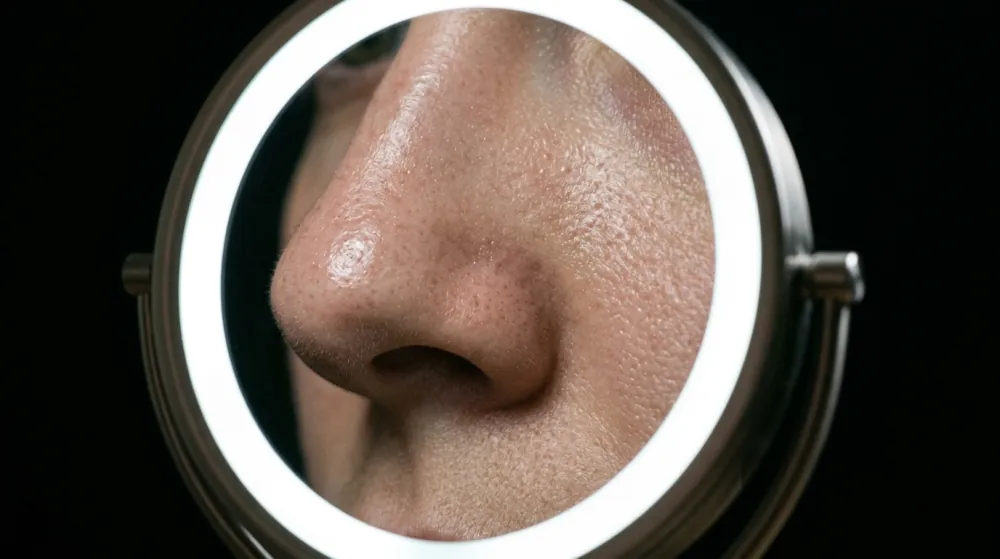
How to close pores on your face is a question with a short answer: you cannot, because a pore is a fixed opening and not a door. What changes is how big a pore looks, and that depends on how much oil it carries, how well the skin around it is supported, and how full it is.
The claim this article tests is that steam opens pores and cold water closes them. It covers what a pore is, three reasons one looks bigger than another, why apparent size moves through the day, what has measurably changed pore size, and what only hides them. It evaluates the claims. It does not tell you what to use.
Pores Do Not Open and Close
DermNet defines enlarged pores as depressions in the facial skin surface that contain one or more openings to the ducts carrying sweat and oil from their glands. The page describes a structure with an opening. It does not describe a muscle, a valve or any mechanism by which that opening widens or narrows, and none of the other sources opened for this article does either.
That is why the phrase "close pores permanently" has nowhere to land. Cleveland Clinic states the consequence in plain terms: pore size is mostly a result of genetics, so you cannot permanently shrink pores, though you can change how they look. DermNet adds that certain ethnic groups may have larger pores, and that pores often appear larger with age.
Three Reasons a Pore Looks Bigger
How Much Oil Comes Out
DermNet lists increased sebum production among the factors that lead to enlarged pores. A study of 60 volunteers measured pores with a dermoscopic video camera and sebum with a Sebumeter (abstract). Sebum output correlated most with pore size, followed by male sex, and pore size was significantly larger in the ovulation phase of the menstrual cycle. The authors concluded that sebum output, age and male sex were associated with pore size, with extra hormonal factors in women.
The sources disagree here. In 62 Thai women with self-described oily or dry skin (abstract), sebum levels were 1.6 to 2.1 times higher in the oily group, but mean pore area and clinical pore size score did not differ between the groups and did not correlate with sebum. So oil is a plausible contributor and not a settled one. Our articles on why a face is oily and on combination skin cover the oil side.
How Well the Skin Around It Is Supported
Cleveland Clinic says collagen and elastin provide structural support for pores, that they decline with age, and that sun damage breaks them down, allowing pores to widen. DermNet lists loss of skin elasticity with age and sun damage among the causes. A 2025 trial of botulinum toxin for enlarged pores describes them as often associated with increased sebum production and skin laxity.
How Full the Pore Is
DermNet lists comedogenic products and hair follicle size, and says open comedones, blackheads, can sometimes be seen within a pore. A pore with a plug in it looks different from an empty one. Our article on sebaceous filaments and blackheads covers how to tell the two apart, and the one on getting rid of blackheads covers what is known about clearing them.
The Figure Audited: "Steam Opens Pores and Cold Water Closes Them"
Verdict: no source shows a pore opening or closing. Cold has a brief tightening effect on appearance, and steam is untested in the sources opened. Findings:
- There is no mechanism in any source. Pores are described as fixed openings. None of the sources describes a way for them to open or close.
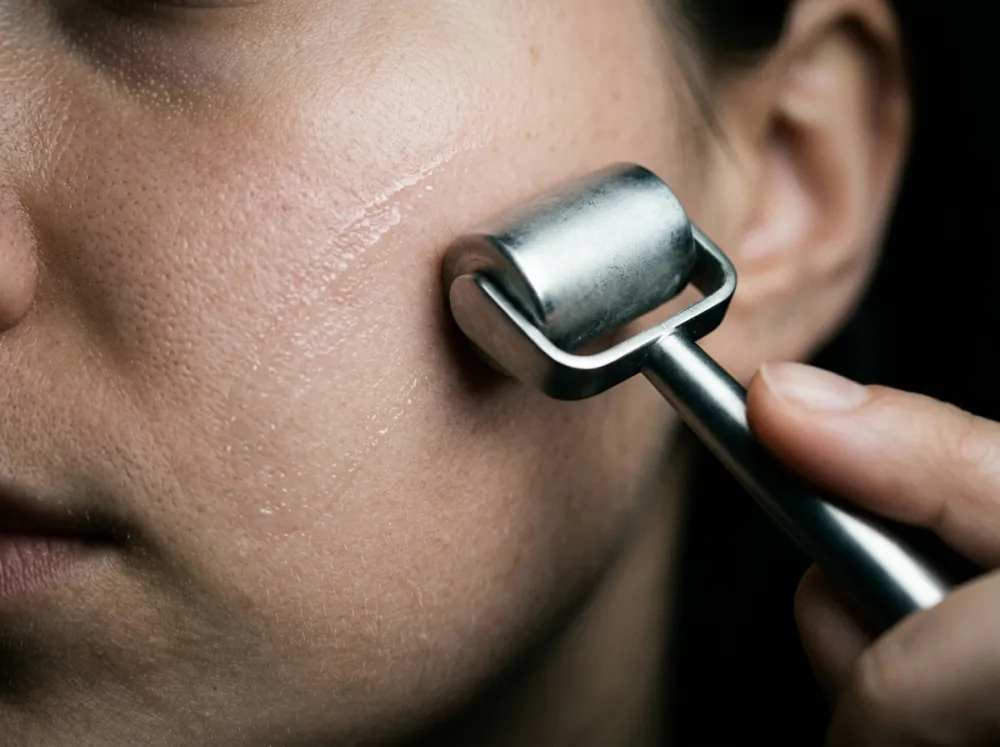
- Cold is temporary. Cleveland Clinic says an ice cube or chilled skin roller can help, but the tightening effect lasts only a few minutes and lessens once the skin warms back up.
- Steam has no data. No source opened tested steam on pore size. What that means for the claim is open, not confirmed.
- Apparent size does shift, for other reasons. The next section covers a study in which measured pore size moved through the day with the skin barrier. That is a change in how big a pore looks, and not evidence of a pore that opens and closes.
Our article on what toner does applies the same test to the toner version of this claim.
Why Pore Size Moves Through the Day
A study of 20 healthy young women measured facial skin hydration, transepidermal water loss (TEWL), pore size and redness four times a day for six weeks. Facial pore size showed morning-to-evening fluctuations. Wearing a mask for two weeks significantly increased the daily average pore size and the day's swing in pore size, redness and TEWL, and the swing in TEWL was significantly correlated with the swings in pore size and redness. Applying a moisturiser containing a ferment filtrate before the mask brought the values back toward baseline.
The authors read this as skin barrier impairment being linked to pore enlargement. Three cautions apply. It is 20 women, the imaging system was developed by the study sponsor, and the authors are employees of, or paid by, a consumer products company. The moisturiser tested was a specific product with a particular ingredient, so it does not show that moisturisers in general change pores. And apparent size on an image is not a change in the pore's structure.
For anyone tracking pores, the practical point is that the measurement moves. A photograph at 8 am and one at 6 pm may differ for reasons unrelated to any product.
What Has Measured Pore Change
DermNet says treatments focused on preventing and shrinking large pores are not very effective. It lists avoiding pore-clogging creams, weight loss, chemical peels, topical nicotinamide, plant-derived copper chlorophyllin complexes, L-carnitine and topical retinoids. The measured evidence in the sources opened is for clinic procedures.
Clinic Procedures
In a split-face randomised trial of 30 patients, intradermal botulinum toxin on one cheek and nose side and microneedling-assisted botulinum toxin on the other both reduced pore size at one month, with no significant difference between them. Three blinded dermatologists graded improvement and the study had no untreated or placebo side, so it shows the two methods are alike and not how large the effect is against nothing. People who had used retinoids in the past three months were excluded.
A split-face randomised, double-blind study of 30 people injected two hyaluronic acid fillers into the medial cheeks in three sessions four weeks apart. Pore volume on 3D imaging fell on both sides through week 32, and the filler with glycerol produced a 24.2% greater reduction than the one without. The product was supplied by the filler's manufacturer, and the authors say it took no part in the design or running of the study.
Topicals and the Gap
The plan for this article called for retinoid and niacinamide pore trials. A search found none that is controlled and specific to pores. A 30-person, 56-day emulsion study (opened, not cited) had no comparison group and mixed niacinamide with two plant extracts, and a 10-person pilot of copper chlorophyllin ran three weeks. Cleveland Clinic describes retinol and hydroxy acid peels as clearing dead cells and oil and boosting collagen, in clinician quotes and not trial data. Our article on tretinoin and retinol covers what those ingredients are shown to do.
What Only Hides Them
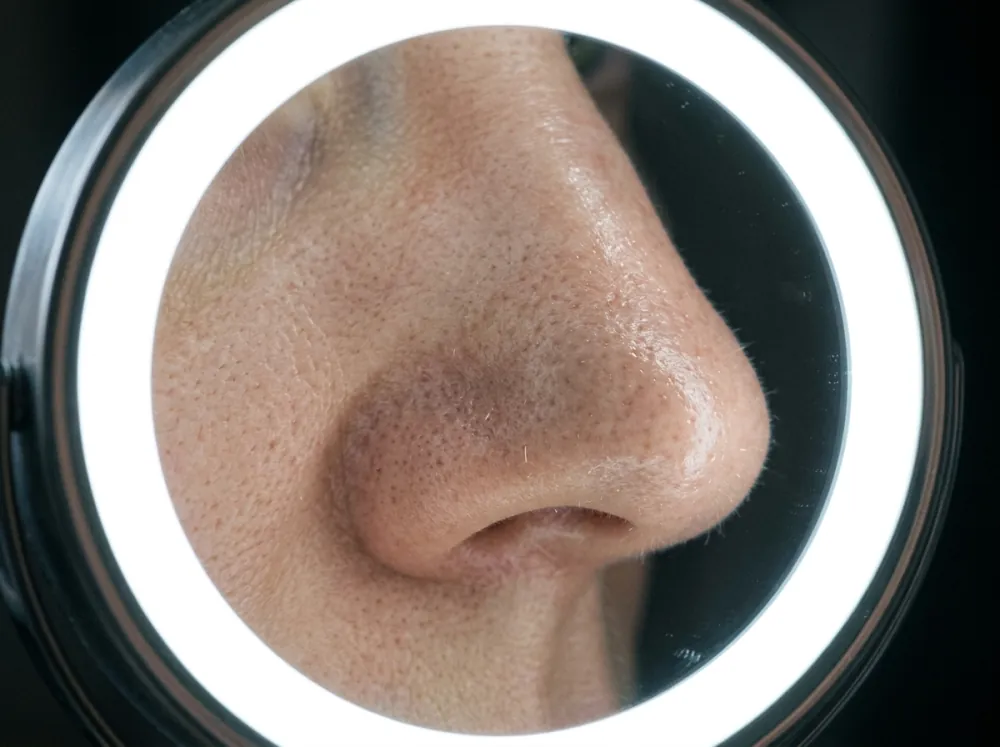
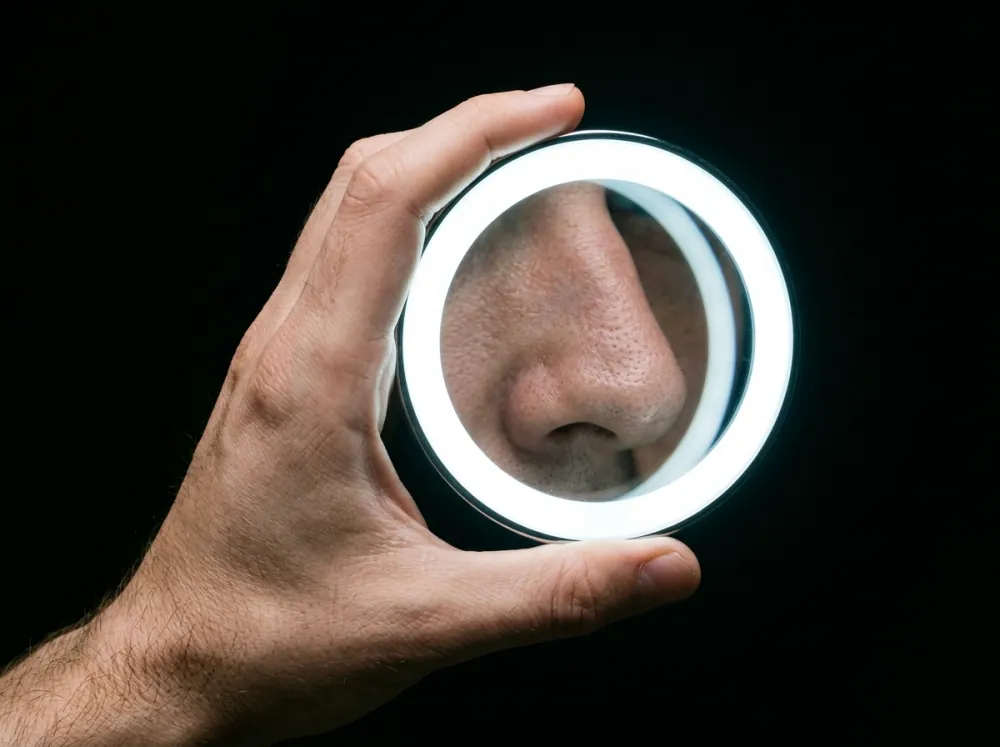
Appearance-only effects are real and short. Cleveland Clinic lists clearing pores of dead skin cells and excess oil as making them appear smaller, and the brief tightening from cold. It warns against squeezing or using an extractor tool, which it says can cause scarring and harm the skin. Its dermatologist also notes that people who inspect pores with a magnifying mirror tend to see them as far bigger than anyone else does.
As reasoning, any change that lowers a pore's fullness or the contrast around it will change how it looks without changing the opening, which fits the evidence above.
Conclusion
You cannot close a pore, because nothing opens it. How big a pore looks follows oil output, support from collagen and elastin, and how full it is, and apparent size even moves through the day with the skin barrier. The measured reductions in the sources are from clinic procedures in small trials. Cold tightens for minutes, and steam has not been tested.
If you want to know whether anything is changing, photographing the same area at the same time of day and in the same light, in an album or in an app like Skinic, gives a fairer comparison than a mirror. For pores you want to treat, ask your own clinician.
Frequently asked questions
5 questions · tap one to open the answer
Can you close your pores?
Does steam open pores and cold water close them?
What makes pores look bigger?
How can you make pores look smaller?
Do pores get bigger with age?
Medically reviewed by
Dr. M.M Hanaei
Aesthetic Physician, Dermatology Fellowship
- MD — Shahid Beheshti University of Medical Sciences (SBMU)
- MCC Licensure (Medical Council of Canada)
- Dermatology Fellowship, Switzerland
- Certified in advanced aesthetic procedures
Last reviewed 16 October 2026