Skinic

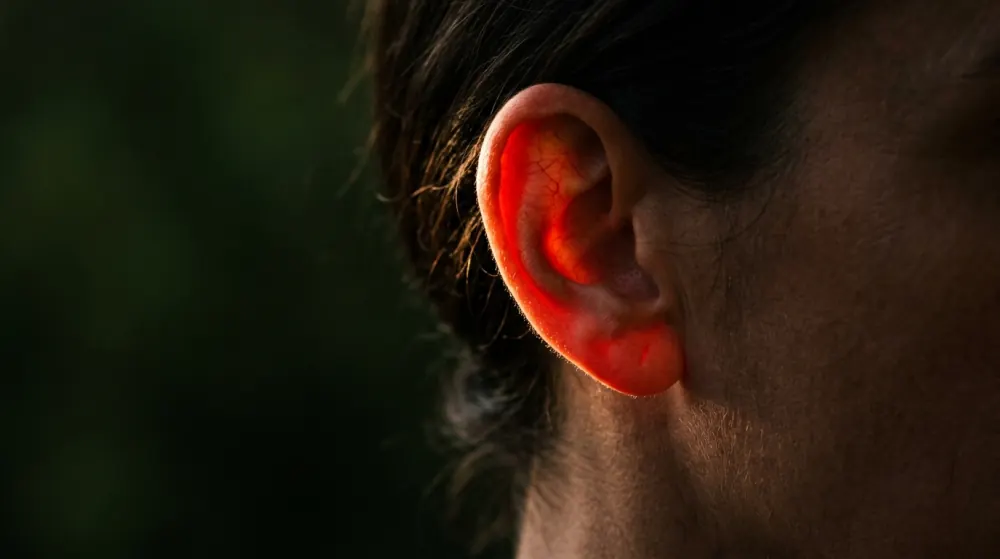
"Ozempic face" is a media name for the hollowed, aged look some people get when they lose weight quickly. It is not a diagnosis, and it is not limited to one drug. The question that matters is whether the drug does something to the skin or the face, or whether rapid weight loss does, and the studies so far have not separated the two.
The claim this article tests is that GLP-1 drugs directly age the skin. It covers what the name means, what trials and bariatric surgery show, how facial fat and ageing relate, what has been measured, and what fillers are reported to do. It evaluates evidence and reports regulatory positions. It does not say whether anyone should take, stop or avoid a drug, and it does not instruct on any filler.
A Media Name for Fat Loss
A 2025 review says the term was coined by a dermatologist to describe facial ageing in patients on GLP-1 receptor agonists, and that it was seen more in people taking a drug off-label for weight loss. A 2025 systematic review in plastic surgery journals found 23 articles, mostly correspondence, reviews and case reports, and links online searches for the term to rising searches for face fillers and plastic surgeons.
The name also uses a brand. That review notes that the FDA approves Wegovy, Saxenda and Zepbound for chronic weight management, while Ozempic and Mounjaro are approved only for type 2 diabetes. The Wegovy label lists weight reduction, cardiovascular risk reduction and a liver indication, and it was last revised in June 2026. This article reports those positions and does not say which product suits anyone.
The Drug or the Weight Loss
What the Trials Report
The Wegovy label reports mean weight change at week 68 of −14.9% against −2.4% on placebo in people with obesity or overweight and a related condition, and −9.6% against −3.4% in people who also had type 2 diabetes. Its pharmacodynamics section states that semaglutide lowers body weight with greater fat mass loss than lean mass loss. Among its listed adverse reactions is hair loss, in 3.3% of treated people against 1% on placebo, which the label says was associated with weight reduction.
A text search of the label found no facial adverse reaction. That is not evidence that faces do not change. The bariatric review below notes that trials rarely report facial fat loss as an adverse event, because it was not what they measured.
What Bariatric Surgery Shows
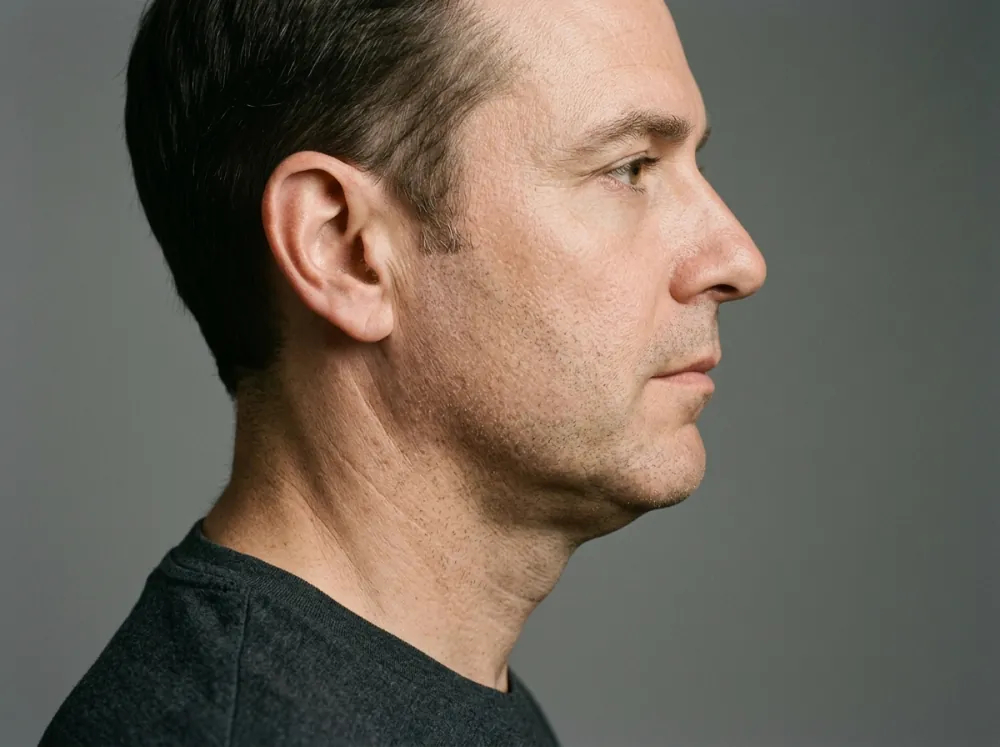
A systematic review of facial changes after massive weight loss analysed 13 studies and one conference abstract. Eleven involved bariatric surgery, and only one gave objective data on a GLP-1 drug. The studies described midface volume loss with deeper nasolabial folds and flattened cheeks, then skin laxity under the chin, and an older apparent age. One study found the massive weight loss group looked 5.1 years older than their real age, against 1.2 years in a non-massive group.
The same changes appear without any of these drugs. The review's authors caution that comparing them with ageing may not be exact, because the people losing weight tend to be younger, with better skin and ligaments.
Facial Fat Pads and Ageing
Superficial and Deep Fat
Facial fat is arranged in superficial and deep compartments. The bariatric review reports the argument, which it calls controversial, that superficial fat shrinks before deep fat in massive weight loss, producing sagging and an aged look. It adds that no researcher had quantified this.
Age and Skin Laxity
The review also reports a prospective cohort in which perceived facial age rose from 40.8 to 43.7 after surgery, and in which people over 40 were more affected by volume change than younger people. Skin that has stretched over a larger volume does not always shrink back, which is why laxity under the chin and at the jaw is a recurring finding. Our article on layers of skin covers the fat layer beneath the dermis, and the one on skin tightening covers what devices can do for mild laxity.
What Has Been Measured
| Study | Design | What it found | Limit |
|---|---|---|---|
| Midfacial volume on scans (abstract) | Retrospective, 20 people on GLP-1 drugs with scans before and after | Median midface volume fell 9.0%, superficial 11.0%, deep 7.0%. Superficial loss tracked weight loss (rho 0.59); deep loss did not. About 7% of midface volume lost per 10 kg | Small, one centre, no comparison group of people losing weight another way |
| Fat-pad volumes, reported in the bariatric review | One study of 5 people on a GLP-1 drug | Superficial temporal fat pad −41.8%, cheek fat pad −69.9% | Five people; the review could not assess it further |
| Apparent age, reported in the bariatric review | One study of people on a GLP-1 drug | They looked about 5 years older than people not taking one | Single report, subjective rating |
| Bariatric surgery studies | 11 studies | Midface loss, laxity, older apparent age | Mostly qualitative, mostly one population |
Taken together, the measured data say the face loses volume with weight loss, mostly in the superficial fat, in proportion to the weight lost. They do not say how much of that is the drug and how much is the loss.

What Fillers Do (Reported)
FDA's Position
The FDA describes dermal fillers as medical device implants approved for adults 22 and older for specific uses, including moderate to severe wrinkles and folds, lips, cheeks, chin and the back of the hand, and facial fat loss in people with HIV. It lists injection into the glabella, nose, periorbital area, forehead or neck among unapproved uses, and says no filler is approved for over-the-counter use. The page does not name weight-loss-related facial change as an approved indication, and it is dated July 2023.
Its most concerning risk is unintended injection into a blood vessel, with tissue death, vision problems including blindness, and stroke reported, although it says the chance is low. More common effects are bruising, swelling and lumps.
What Has Been Reported in GLP-1 Users
A case series of four people on GLP-1 drugs received a diluted calcium-based filler in the lower face. They lost on average 9.2% of body weight, and at six months average cheek volume was up 9.8% and jowl volume was down 55.8%, with all four rating themselves satisfied. The lead author discloses fees and grants from several filler makers. It is four people, retrospective, with no control, and the FDA page does not address dilution.
The bariatric review also reports that surgeons used facelifts and fat grafts after massive weight loss, with one cohort needing about twice as much fat as non-massive weight loss patients. The honest level of evidence for fillers in this setting is case reports and small series, not trials. Our article on under-eye wrinkles reports the filler evidence for the eye area. How sunscreen, retinoids, procedures and supplements compare on evidence is in anti-aging treatments, ranked by evidence.
The Figure Audited: "GLP-1 Drugs Directly Age the Skin"
Verdict: unproven as stated. Facial change with rapid weight loss is documented. A direct skin effect of the drug is not. Findings:
- No study separated drug from weight loss. The plastic surgery review states that evidence suggesting GLP-1 drugs preferentially cause facial fat atrophy is lacking.
- The same changes follow surgery. The bariatric review documents midface loss and laxity without any drug.
- Proposed direct mechanisms are cell-level and conflict. The 2025 mechanism review describes GLP-1 receptors on fat-derived stem cells and in the dermal fat layer, and proposes that stimulating them could reduce collagen production. It also describes lower levels of glycation products that could benefit skin, and concludes that the mechanism remains to be worked out.
- The label attributes hair loss to weight reduction and lists no facial reaction.
- The limit. No controlled study compared faces after the same weight loss with and without a drug, so neither a direct effect nor its absence has been shown.
How to Judge a Claim About Ozempic Face
- Ask what was compared. A claim that a drug ages skin needs a comparison with equal weight loss by another route.
- Check the rate and the starting point. The sources tie the look to how much and how fast weight comes off, and to age.
- Read "approved" carefully. FDA's filler approvals are for named uses and sites, and none names weight-loss-related change.
- Check for commercial ties. Filler case series often come from authors with industry relationships.
- Do not read an absence in a label as an absence in people. Trials did not measure faces.
Conclusion
Ozempic face is a name for a real pattern, the loss of facial volume and the laxity that follow quick weight loss, measured in small studies at about 7% of midface volume per 10 kg lost. Whether a GLP-1 drug adds anything beyond the weight loss is not known, and the proposed mechanisms point in both directions. The FDA position on fillers is about named uses and risks, and the evidence for fillers in this setting is case reports and small series.
Noting weight, the date and a photo taken in the same light each month, in an app like Skinic or in an album, lets you and a clinician see how fast the face is changing. Questions about starting, stopping or changing a medicine belong with the clinician who prescribes it.
Frequently asked questions
5 questions · tap one to open the answer
What is Ozempic face?
Does Ozempic directly age the skin?
How much facial volume is lost?
Do dermal fillers fix Ozempic face?
Is Ozempic face the same as facial ageing?
Medically reviewed by
Dr. M.M Hanaei
Aesthetic Physician, Dermatology Fellowship
- MD — Shahid Beheshti University of Medical Sciences (SBMU)
- MCC Licensure (Medical Council of Canada)
- Dermatology Fellowship, Switzerland
- Certified in advanced aesthetic procedures
Last reviewed 18 October 2026