Skinic
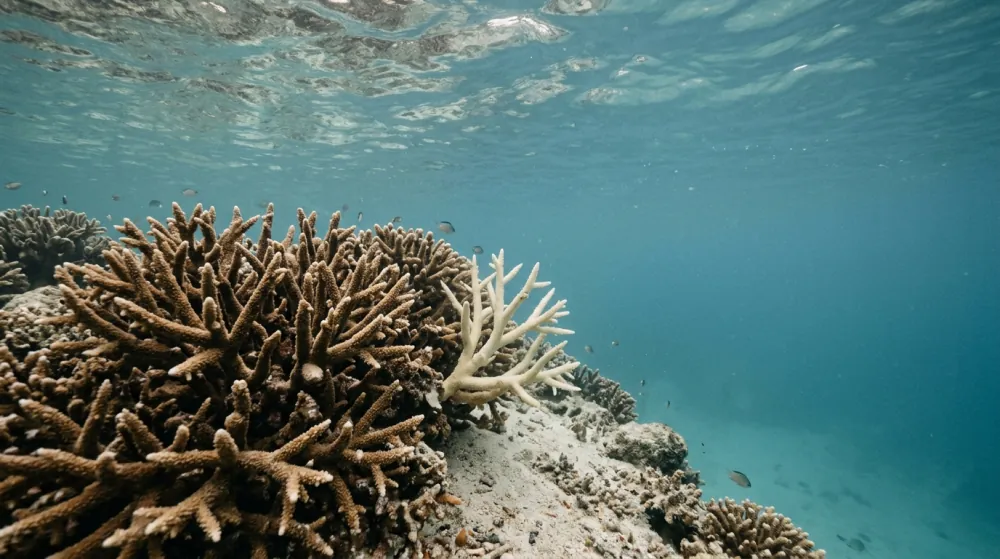
"Reef safe" is a phrase on a bottle, not a standard. No US agency defines it, tests for it or checks it. What exists is a Hawaii law that banned two ingredients, a 2022 National Academies review that found plenty of laboratory harm and thin reef data, and a coral literature in which laboratory doses and measured reef concentrations are often orders of magnitude apart.
The claim this article tests is that sunscreen is killing coral reefs. It covers the phrase, the Hawaii ban, laboratory against reef concentrations, what the National Academies said, and why mineral is not automatically reef-neutral. It reports regulatory positions and does not clear or condemn any filter. It does not argue against using sunscreen, which the National Academies rate as a high-certainty protection against skin cancer.
An Unregulated Phrase
The National Academies review states that sunscreens are regulated by the FDA as over-the-counter drugs, that the "generally recognized as safe and effective" category refers to human safety and does not consider effects on the environment, and that UV filters are not regulated as environmental pollutants by any federal statute. It adds that sunscreen labelling rules do not specify claims about environmental fate or effects such as "reef safe" or "biodegradable". Our article on mineral versus chemical sunscreen reports FDA's position on the filters themselves.
FDA did open an environmental question. In 2021 it published a notice of intent to prepare an environmental impact statement, citing questions raised about the extent to which oxybenzone and octinoxate may affect coral and coral reefs, and listing four alternatives that ranged from treating both as impermissible to treating both as permissible. A text search of FDA's current sunscreen question-and-answer page, dated 10 September 2026, found no mention of the environment, and no outcome of that statement was found in the sources read.
A 2024 review of UV filter controversies lists the marketing terms in use, including "reef-safe", "reef-friendly" and "committed to respecting marine life", and notes that one group of authors criticised those terms for lacking standardised testing on stony corals.
The Hawaii Ban
The Hawaii legislature passed a bill on 1 May 2018 banning the sale and distribution of sunscreens containing oxybenzone and octinoxate, expected to take effect in 2021, according to a 2022 review of inorganic filters. The National Academies describe it as a ban on sale without a prescription. The text of the Act could not be opened for this article because the legislature's site blocks automated access, so these descriptions rest on the two reviews.
The National Academies also report that Key West passed a local ban which a Florida law then preempted. The 2024 review adds that Aruba, Palau, Bonaire and the US Virgin Islands restricted selections of oxybenzone, octinoxate, octocrylene and 4-methylbenzylidene camphor, and that mineral filters were not mentioned in those bans. Later Hawaii bills that would extend the list were found in searches, and their outcome was not confirmed.
Lab Concentrations vs Reef Concentrations
What the Laboratory Studies Used
A 2016 coral study (abstract) exposed coral larvae and cells to oxybenzone. In light, 24-hour exposure killed half the larvae at 139 micrograms per litre, deformity began at 6.5 micrograms per litre, and cell lethality ranged from 8 to 340 micrograms per litre across seven species, with a lower-effect threshold from 0.062 to 8. The same paper reports reef contamination of 75 micrograms per litre to 1.4 milligrams per litre in the US Virgin Islands and 0.8 to 19.2 micrograms per litre in Hawaii.
What Was Measured on Reefs
A 2019 survey of 19 sites on Oahu (abstract) found total UV filters in seawater below 750 nanograms per litre. Oxybenzone was below 10 nanograms per litre at 12 sites and highest at Waikiki, at 10.9 to 136 nanograms per litre. Octinoxate could not be quantified in seawater or coral tissue. The authors describe parts-per-trillion levels. The lowest Hawaiian value in the 2016 paper, 0.8 micrograms per litre, is higher than the highest value in the 2019 survey, so the two sets of field data differ by sites and methods.
The National Academies compiled the wider data. For oxybenzone, octocrylene, homosalate, avobenzone and octinoxate, the highest measured water concentrations were in the range of 1 to 10 micrograms per litre, with most measurements below 1. The highest values were in shallow water in or near recreational areas, during the day, and modelled estimates typically exceeded measured ones.
| Concentration | |
|---|---|
| Coral larval death in the lab (oxybenzone, 24 h, light) | 139 µg/L |
| Larval deformity threshold in the lab | 6.5 µg/L |
| Highest measured, five organic filters, wide US compilation | 1–10 µg/L |
| Oxybenzone, Oahu survey, most sites | below 0.01 µg/L |
| Oxybenzone, Oahu survey, Waikiki | 0.011–0.136 µg/L |
What the 2022 National Academies Review Said
On the Science
The committee found acute toxicity under 1,000 micrograms per litre for oxybenzone, octinoxate, dioxybenzone, padimate O, zinc oxide and titanium dioxide in the presence of UV, and in a few studies avobenzone and octocrylene. It also found that chronic data are limited, that data on corals and other nonstandard species are scarce, and that for poorly soluble filters the toxic values often exceed solubility. It concluded that risk characterisation was outside its scope.
On Policy
Its first recommendation was that the Environmental Protection Agency conduct an ecological risk assessment for all marketed UV filters, calling the need urgent given local exposures and demonstrated potential for impact, with particular attention to shallow, heavily used reefs with limited water flow. It also found that temperature is a major stressor in its own right and exacerbates toxicants.
On Human Health
It rated the benefit of consistent broad-spectrum SPF 30 sunscreen against melanoma, squamous cell cancer, sunburn and photoageing as high certainty. It warned that restricting filters could lower sunscreen use and harm health, and listed scenarios of reduced use as negative for health. Bemotrizinol, added by FDA in 2026, is outside the review's list of 17 filters, and our article on bemotrizinol covers that order.
Mineral Is Not Automatically Reef-Neutral
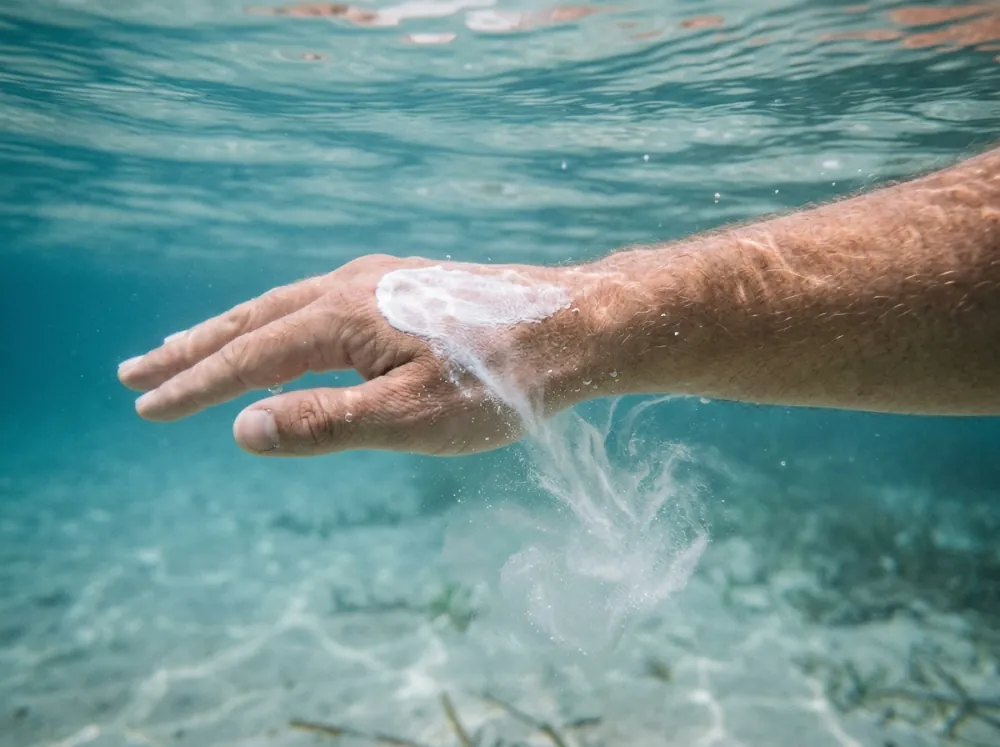
NOAA's page on skincare chemicals and coral reefs, updated 23 September 2026, says the National Academies study found specific chemical UV filters can harm aquatic life, including corals, that mineral sunscreen is considered a better option, and also lists nano titanium dioxide and nano zinc oxide among chemicals that can harm marine life. It names climate change first among the serious threats to coral ecosystems.
The literature is mixed. The 2024 review reports a laboratory study in which uncoated zinc oxide caused severe, fast bleaching in Acropora corals while two modified forms of titanium dioxide barely affected them. The 2022 review of inorganic filters says zinc oxide toxicity relates to dissolved zinc ions, and that iron-doped zinc oxide was just as toxic to sensitive marine embryos. The National Academies recommend a risk assessment for the inorganic filters too, because they showed acute toxicity under 1,000 micrograms per litre. A label saying mineral does not state particle size, coating or solubility, and the sources read do not define those words on labels. Our article on sunscreen without a white cast covers why particle size is the variable behind both cast and nano claims.
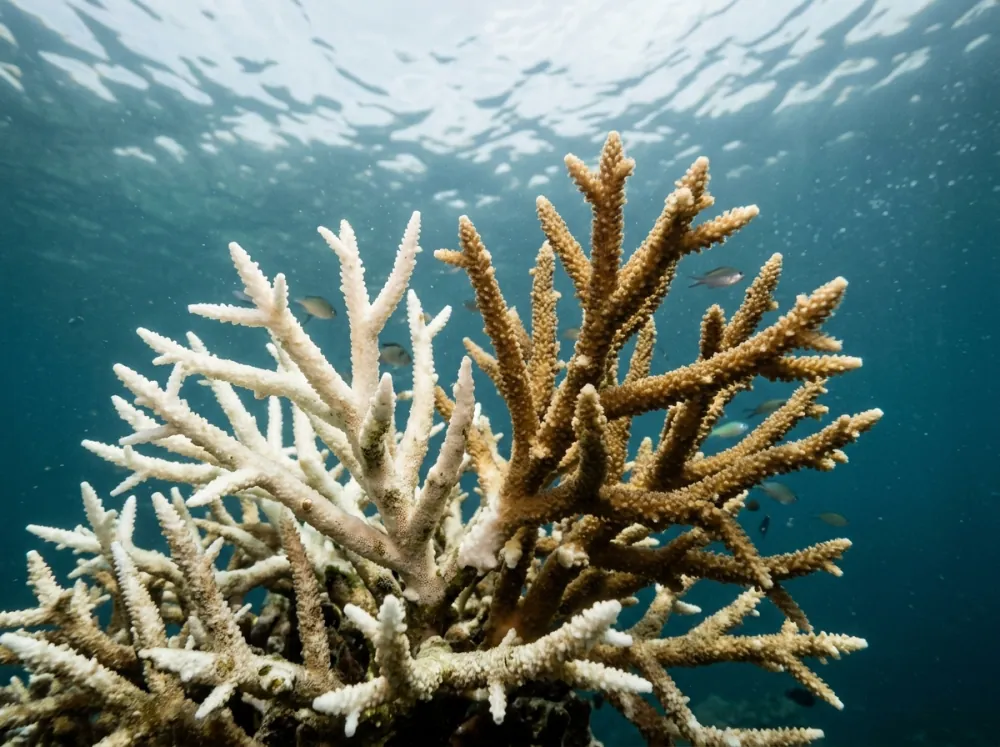
The Figure Audited: "Sunscreen Is Killing Coral Reefs"
Verdict: harm is shown in the laboratory for some filters. Reef-scale harm, and its share against ocean warming, is not established. Findings:
- Laboratory harm is documented. Oxybenzone deformed and killed coral larvae and cells in the 2016 study, mostly at higher concentrations than the Oahu survey measured.
- Field concentrations are low and variable. Parts per trillion in the 2019 Oahu survey, up to micrograms per litre in other measurements, and far higher in a few Caribbean and shallow sites.
- The National Academies call for a formal risk assessment. They found acute toxicity under 1,000 micrograms per litre for several filters and did not characterise reef risk.
- Warming sits alongside. NOAA lists climate change first among threats to coral ecosystems, and the National Academies say temperature is a major stressor that exacerbates toxicants.
- No source apportions blame. None quantified how much of any reef's decline is due to sunscreen.
- The limit. Oxybenzone and octinoxate are the most studied, mineral filters have fewer studies, and the Hawaii law text could not be opened.
How to Judge a Reef-Safe Claim
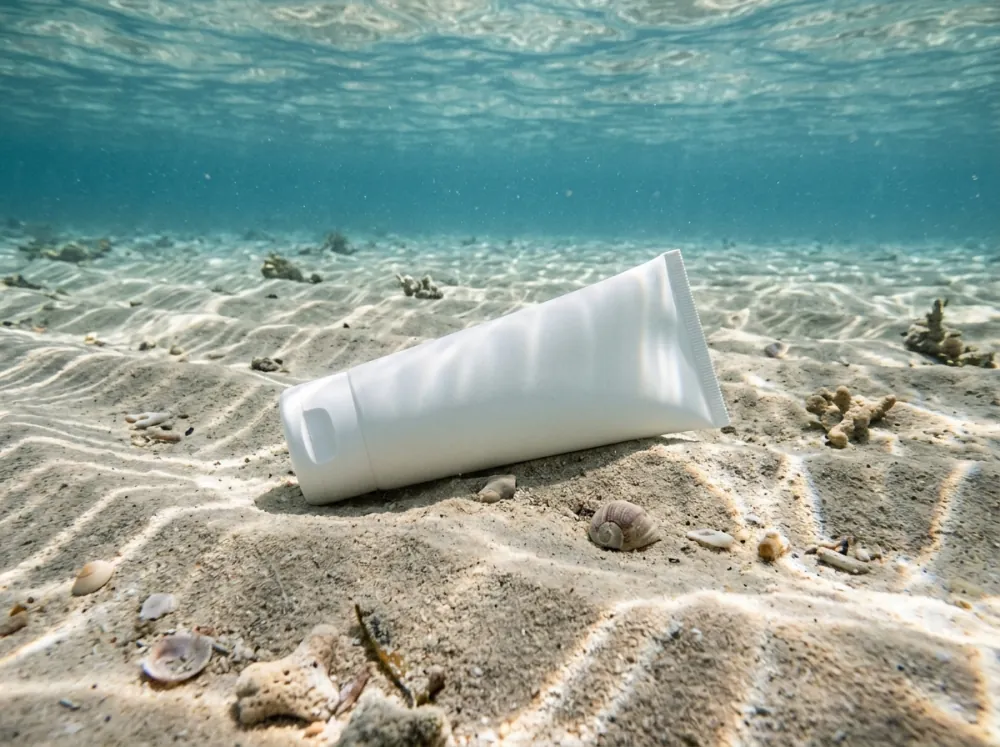
- Ask who defined the phrase. In the sources read, nobody did, and FDA labelling rules do not cover it.
- Read the filter list, not the front. A claim about two banned filters says nothing about the others.
- Treat mineral as a starting question. Particle size, coating and solubility matter to toxicity, and they are not on the front of a pack.
- Weigh the exposure setting. The National Academies single out shallow, heavily used reefs with limited water flow.
- Do not trade protection for the phrase. The review's high-certainty finding is on consistent SPF 30 broad-spectrum use, which our article on reading a sunscreen label explains, and clothing and shade are part of the regimen it describes.
Conclusion
"Reef safe" is a marketing phrase with no regulator behind it. Hawaii's law banned two organic filters, the laboratory shows harm to corals from several filters including some mineral ones, and field measurements are lower and more variable than laboratory doses. The National Academies asked for a formal risk assessment and did not conclude that sunscreen is killing reefs, while rating sunscreen's skin-cancer benefit as high certainty.
Writing down the filters in a sunscreen and how it wears, in an app like Skinic or in a notebook, shows what you are actually using more reliably than the front of a bottle. Questions about a skin reaction, or which sunscreen suits you, belong with your own clinician.
Frequently asked questions
5 questions · tap one to open the answer
What does reef safe sunscreen mean?
Which sunscreen ingredients did Hawaii ban?
Is sunscreen killing coral reefs?
Is mineral sunscreen reef safe?
Should you stop wearing sunscreen to protect reefs?
Medically reviewed by
Dr. M.M Hanaei
Aesthetic Physician, Dermatology Fellowship
- MD — Shahid Beheshti University of Medical Sciences (SBMU)
- MCC Licensure (Medical Council of Canada)
- Dermatology Fellowship, Switzerland
- Certified in advanced aesthetic procedures
Last reviewed 18 October 2026